


 Поделиться
 Поделиться
 Детали произведения

 Скачать
 Похожие работы
 Слайд-шоу
 Статистика
Seated Cupid (detail)


 Читать далее
Жикле / Арт-принт
Печать (жикле) или холст музейного качества с быстрыми сроками изготовления и широким выбором вариантов отделки. ( Купить картину ручной работы Перейти к цифровым изображениям)




































Выберите один из наших стандартных размеров, соответствующих оригинальным пропорциям произведения искусства.

Вы можете указать свои собственные размеры, чтобы репродукция идеально подошла под конкретную раму или пространство. Если выбранный вами размер не будет соответствовать пропорциям оригинала, мы либо обрежем произведение, либо дополним изображение зеркальным отражением краев или однотонной заливкой. Перед началом производства вам будет отправлен цифровой макет для утверждения.
Пожалуйста, обратите внимание, что предварительный просмотр на экране не отображает фактическую обрезку или расширение изображения. Только макет точно покажет финальную композицию.
Несмотря на возможность заказа индивидуальных размеров, мы рекомендуем выбирать размер из предопределенного списка, чтобы сохранить оригинальные пропорции.
Доставка по всему миру () за 2 недели вместо стандартных 4/5 недель. (12 Сентябрь)

Бесплатная экспресс-доставка по всему миру

Высококачественный льняной холст

Полное страхование доставки

Гарантия возмещения таможенных пошлин

Гарантия точного соответствия цветов

100-дневная политика возврата (только при обнаружении дефектов)

Гарантия возврата 100% средств

Предложение оптовых скидок
 Вариант со стеклом доступен только для размеров менее 110 см

Seated Cupid (detail)
Жикле / Арт-принт
Размер репродукции
-


Итоговая стоимость
$ 62
A Vision of Rococo Grace: The Allure of Falconet’s Cupid
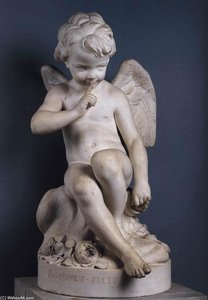
In the delicate dance of light and shadow that defines the mid-18th century, few works capture the ephemeral essence of desire as poignantly as Étienne Maurice Falconet's Seated Cupid. Created in 1757, this exquisite marble masterpiece—specifically seen here in its intimate detail—serves as a profound meditation on the dual nature of love: its capacity for serene innocence and its underlying, often mischievous, power. As one gazes upon the softly modeled features of the young god, there is an immediate sense of being transported to the gilded salons of the French Rococo, where elegance was not merely a style, but a way of life. The sculpture does not merely represent a mythological figure; it embodies a moment of quiet introspection, inviting the viewer into a private world of mythic contemplation.
The technical mastery displayed in this work is nothing short of breathtaking. Falconet, a sculptor who rose from humble beginnings as a marble cutter's assistant to become a titan of his era, utilizes the translucent properties of Carrara marble to breathe life into stone. In this detail, the artist’s ability to manipulate texture is paramount. The skin appears remarkably supple, possessing a luminous quality that suggests the warmth of living flesh beneath a cool, polished surface. Every curl of Cupid's hair is rendered with meticulous precision, creating a rhythmic vitality that contrasts beautifully with the stillness of his closed eyes. This interplay between movement and repose is a hallmark of Falconet’s genius, ensuring that even in a static medium, the subject feels caught in a fleeting, breathing moment.
Historical Splendor and the Spirit of Patronage
To understand the soul of this sculpture, one must look to the influential figure of Madame de Pompadour. As the celebrated mistress of King Louis XV, Pompadour was a formidable patron of the arts, and it was for her that Falconet breathed life into this marble Cupid. The commission reflects the height of aristocratic refinement, where art was used to decorate not just spaces, but the very atmosphere of power and pleasure. This piece embodies the Rococo ideal—a rejection of the heavy, didactic grandeur of the Baroque in favor of something more playful, sensual, and light-hearted. It is a celebration of beauty for beauty's sake, designed to delight the eye and stir the emotions of an enlightened elite.
Beyond its aesthetic charm, the sculpture carries a weight of symbolic complexity. Often referred to by the evocative nickname l’amour menaçant, or "menacing love," the work hints at the unpredictable nature of passion. While the face remains serene and almost sleeping, there is an underlying tension—a secret held within the stillness. For the modern collector or interior designer, this piece offers a sophisticated narrative element. It provides more than mere ornamentation; it introduces a sense of historical depth and intellectual curiosity into a room. Whether placed as a focal point in a classical study or as a subtle accent in a contemporary minimalist space, a high-quality reproduction of this work brings with it an aura of timelessness and the enduring magic of the French Rococo.
Похожие произведения
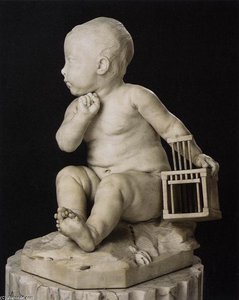
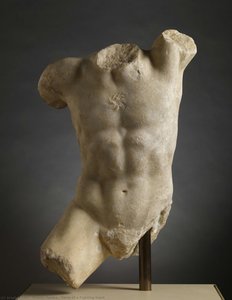
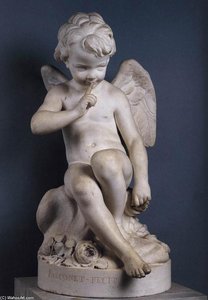
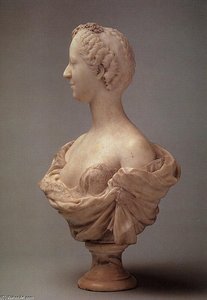

Биография художника
The Sculptor of Grandeur and Delicate Beauty
Étienne Maurice Falconet stands as a pivotal figure in the late Baroque, Rococo, and early Neoclassical periods of French sculpture. Born in Paris in 1716, his journey from a humble apprenticeship to becoming one of the most celebrated artists of his time is a testament to talent, ambition, and an extraordinary ability to capture both power and grace. Falconet’s early life was marked by practical labor; he began as a marble cutter’s assistant, a far cry from the prestigious artistic circles he would eventually command. However, his innate talent for sculpting quickly shone through, producing clay and wood figures during his leisure hours that attracted the attention of Jean-Baptiste Lemoyne the Younger. This mentorship proved crucial, providing the formal training and guidance necessary to transform a skilled craftsman into a master of fine art.
As Falconet’s reputation grew, so did his ability to navigate the shifting aesthetic tides of the 18th century. His work seamlessly bridged the gap between the ornate, playful energy of the Rococo and the disciplined, heroic ideals of Neoclassicism. Early masterpieces like Milo of Croton (1754) secured his admission to the Académie des Beaux-Arts, marking a significant milestone in his career. In this work, Falconet demonstrated a remarkable capacity for realism and emotional depth, imbuing cold stone with the visceral struggle and legendary strength of the Greek athlete. His talent for capturing human feeling through anatomical precision established him as a rising star within the Parisian art world.
A Legacy in Bronze and Porcelain
While many sculptors are remembered for a single medium, Falconet’s versatility allowed him to leave an indelible mark on both monumental bronze and delicate porcelain. Perhaps his most enduring achievement is the colossal bronze statue of Peter the Great, known as "The Bronze Horseman," located in St. Petersburg, Russia. This monumental work serves as a triumph of scale and symbolism, capturing the imperial spirit of the Russian Tsar through dynamic movement and commanding presence. It remains one of the most iconic sculptural landmarks in Europe, representing the pinnacle of his ability to execute large-scale, historical narratives.
Parallel to his monumental bronze works, Falconet played a transformative role in the Royal Sèvres porcelain manufactory. Here, he elevated small-scale sculpture to an art form in its own right, infusing delicate porcelain figures with the same grace and sophistication found in his marble works. His contributions to Sèvres helped define the aesthetic of the era, blending elegance with intricate detail. His ability to master both the massive and the miniature is reflected in a diverse body of work that includes:
- Pygmalion and Galatea: A stunning marble sculpture capturing the mythical moment Aphrodite breathes life into stone, embodying the essence of artistic creation.
- Flora: A 1751 marble masterpiece that showcases his Neoclassical mastery through serene beauty and elegant form.
- Milo of Croton: A dynamic depiction of strength and struggle that highlights his skill in capturing intense physical emotion.
Through his mastery of various scales and styles, Étienne Maurice Falconet shaped the visual language of his century. Whether through the sweeping drama of a public monument or the intimate charm of a porcelain figurine, his work continues to resonate as a profound exploration of human emotion, myth, and the enduring beauty of form.
étienne maurice falconet
1716 - 1791 , France
Основные сведения
- Artistic Movement Or Style: Baroque, Rococo, Neoclassical
- Artists Or Movements Influenced By This Artist: ['Boucher']
- Artists Who Influenced This Artist: ['Jean-Baptiste Lemoyne']
- Date Of Birth: December 1, 1716
- Date Of Death: January 24, 1791
- Full Name: Étienne Maurice Falconet
- Nationality: French
- Notable Artworks:
- Bronze Horseman Statue
- Flora
- Milo of Croton
- Place Of Birth: Paris, France
Похожие статьи

The Enduring Form: Exploring Themes & Techniques in Sculpture Across Historical Periods
Explore the rich history of sculpture from ancient masterpieces to contemporary innovations. Discover key techniques, influential artists & investment potential for discerning art collectors.
10 Iconic Marble Masterpieces That Redefined the World of Art
Journey through history with 10 legendary marble masterpieces that redefined art. From Renaissance icons to neoclassical wonders, explore the stories behind these timeless sculptures and find museum-quality art reproductions for your decor. Discover all masterpieces on ArtsDot.com.
The Enduring Allure of Marble in Art History: From Classical Sculpture to Modern Abstraction
Explore the captivating history of marble sculpture from ancient Greece to modern art. Discover renowned artists like Canova & Michelangelo, carving techniques, and investment insights at ArtsDot.

Белые шедевры: 10 знаменитых картин, покоривших мир (репродукции, декор)
Откройте для себя 10 знаменитых картин, где белый цвет – главный герой! Моне, Дега и другие мастера. История искусства, техники живописи и вдохновение для вашего интерьера. Репродукции высокого качества на ArtsDot.com

10 легендарных бронзовых скульптур, изменивших искусство навсегда | ArtsDot
Погрузитесь в мир великих бронзовых скульптур! От Давида Микеланджело до работ Родена – история искусства, техники и вдохновения. Купите репродукции шедевров для вашего интерьера на ArtsDot.com