

 Предпросмотр
 Поделиться
 Поделиться
 Детали произведения

 Скачать
 Похожие работы
 Рентгенография
 Слайд-шоу
 Статистика
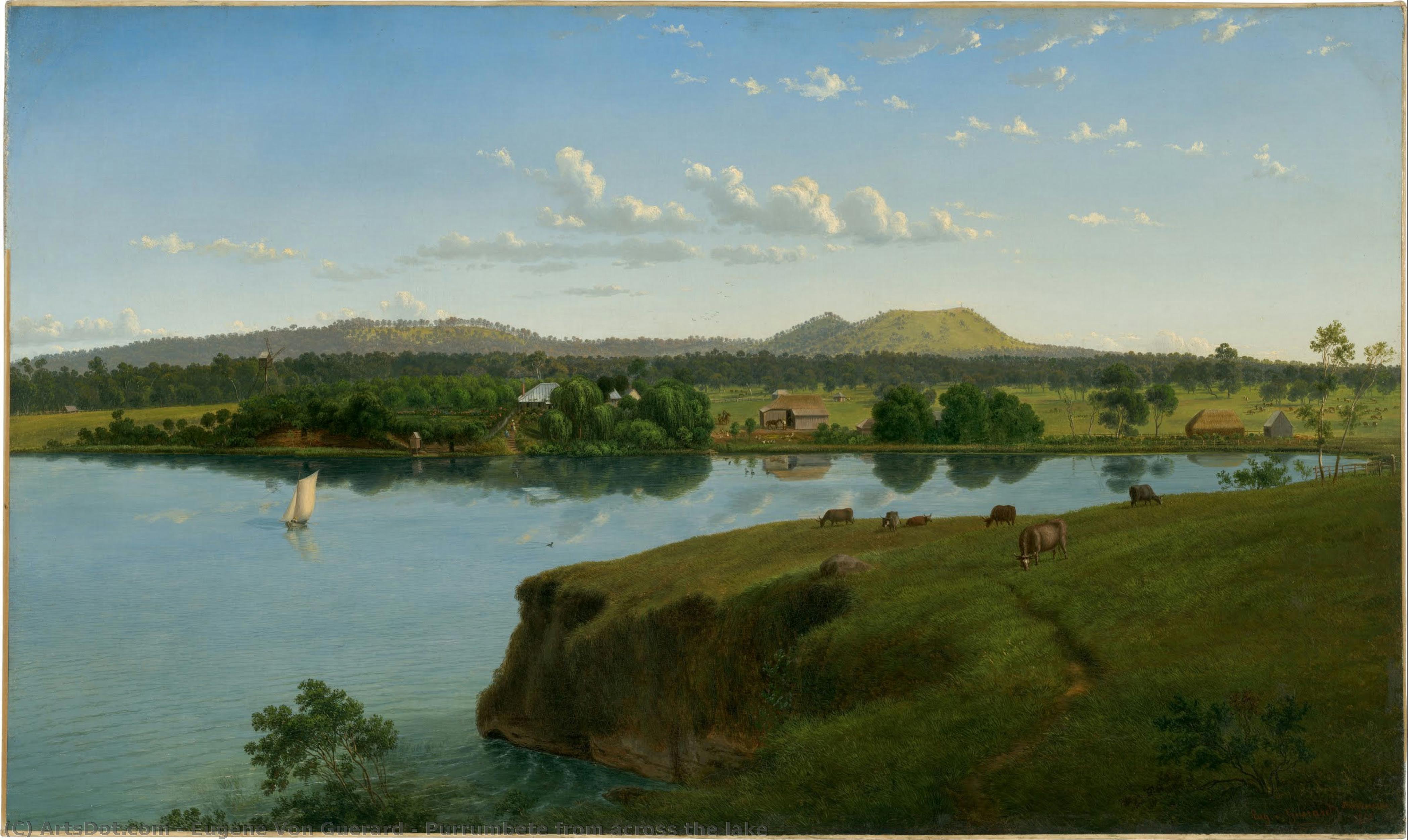
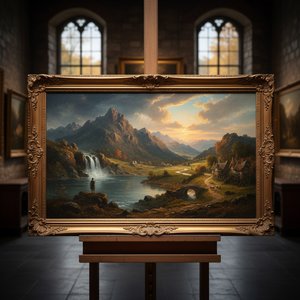
Purrumbete from across the lake
 Acrylic On Canvas
- WallArt
- Romantic Landscape
 1858
1858 855.0 x 510.0 cm
 Национальная галерея Австралии
 Читать далее
Масляная репродукция ручной работы
Картина маслом на холсте в выбранном вами размере и раме, написанная на заказ нашими художниками. ( Перейти к печати Перейти к цифровым изображениям)




P118B $10

P118H $10

P118W $10

P438Z $10

P508JH $12

P508YH $12

P805H $10

P805Z $10

P919BZ $10

P919G $10

P919XJ $10

P959ZH $10

P968JZ $12

W106C $8

W218G $10

W218JH $8

W218Y $10

W307PJ $10

W316G $10

W316PJ $8

W316Y $10

W398PJ $8

W4111J $10

W500HY $15

W500JH $15

W692G $12

W849H $8

W940BG $15

W953PJ $8




Выберите один из наших стандартных размеров, соответствующих оригинальным пропорциям произведения искусства.

Вы можете указать собственные размеры, чтобы картина идеально вписалась в выбранную раму или пространство. Если выбранный вами размер не соответствует пропорциям оригинала, мы либо обрежем полотно, либо расширим его за счет дополнительных элементов, написанных вручную. Цифровой макет будет отправлен вам на утверждение перед началом производства.
Обратите внимание, что предварительный просмотр на экране не отражает фактическую обрезку или расширение. Только макет точно покажет окончательную композицию.
Хотя доступны индивидуальные размеры, мы рекомендуем выбирать вариант из предопределенного списка, чтобы сохранить исходные пропорции.
После оформления заказа команда ArtsDot.com свяжется с клиентом по электронной почте для уточнения деталей и предоставит предварительный макет
Доставка по всему миру () за 3–4 недели вместо стандартных 5 недель. (12 Сентябрь). Без компромиссов в качестве.

Бесплатная экспресс-доставка по всему миру

Высококачественный льняной холст

Полное страхование доставки

Гарантия возмещения таможенных пошлин

Гарантия точного соответствия цветов

100-дневная политика возврата (только при обнаружении дефектов)

Гарантия возврата 100% средств

Предложение оптовых скидок
 Вариант со стеклом доступен только для размеров менее 110 см

Purrumbete from across the lake
Техника репродукции
Размер репродукции
-


Итоговая стоимость
$ 263
Purrumbete from across the lake – A Window into Victorian Australia
- Eugene von Guérard’s “Purrumbete from across the lake” is more than just a landscape painting; it's a meticulously crafted document of a pivotal moment in Australian history. Painted in 1858, this expansive artwork offers an unparalleled glimpse into the burgeoning world of Victorian pastoralism and the nascent relationship between European settlers and the vast, untamed landscapes of Australia. Born in Vienna in 1811, von Guérard arrived in Melbourne with a formidable artistic background – trained in the Romantic tradition, he brought a rigorous eye for detail and a profound appreciation for natural beauty to his new surroundings. This painting represents the culmination of his efforts to establish himself as a leading artist within this emerging landscape scene.
- The commission itself is significant. “Purrumbete from across the lake” was created for Peter and John Manifold, pioneering settlers of the Purrumbete cattle station near Camperdown. This reflects a growing trend amongst wealthy landowners to commission artists to record their properties – not merely as investments, but as statements of success and connection to the land. Von Guérard’s visit to the station, meticulously documented through preparatory sketches, reveals his dedication to accurate representation, a hallmark of his style.
A Masterclass in Romantic Landscape
Technique and Style: Von Guérard's mastery lies in his ability to seamlessly blend European artistic conventions with the unique character of the Australian landscape. Executed in oil on canvas, the painting demonstrates a remarkable level of technical skill – precise brushwork, subtle gradations of light and shadow, and an almost photographic attention to detail. His use of atmospheric perspective creates a sense of depth that draws the viewer into the scene, while his meticulous rendering of textures – from the weathered stone of the woolshed to the rippling surface of the lake – adds to the painting’s realism. The influence of the German Romantic tradition is evident in the dramatic lighting and the idealized depiction of nature, yet it's tempered by a pragmatic observation of the Australian environment. Composition: The composition itself is carefully constructed. The placement of the boats on the lake, the positioning of the figures, and the framing of Mount Leura and Mount Sugarloaf create a harmonious balance that guides the viewer’s eye across the canvas. The steep bank overlooking the scene adds to the sense of scale and grandeur, emphasizing the vastness of the landscape.Symbolism and Historical Context
- Taming the Wilderness: “Purrumbete from across the lake” embodies the Victorian era’s fascination with ‘taming’ the Australian wilderness. The presence of boats and people engaged in leisure activities suggests a controlled, cultivated landscape – a far cry from the perceived savagery of the frontier.
- Mount Leura & Mount Sugarloaf: These prominent peaks are not merely scenic backdrops; they represent the geological forces that shaped this region and hold symbolic significance within the broader narrative of Australian exploration and settlement. Their inclusion reinforces the idea of a land being actively observed and understood by European eyes.
- The Woolshed as a Focal Point: The strategically placed woolshed is a key element, representing the burgeoning pastoral industry – the economic engine driving much of Victorian expansion. It symbolizes both opportunity and exploitation, reflecting the complex social and environmental dynamics of the time.
Emotional Impact & Collecting
A Window to the Past: “Purrumbete from across the lake” offers a powerful connection to Australia’s formative years. It's a tangible link to a period of rapid change, driven by ambition, innovation, and a profound encounter between cultures. The painting evokes a sense of tranquility and nostalgia, inviting viewers to contemplate the beauty of the Australian landscape and reflect on its rich history. This large-format reproduction captures the essence of von Guérard’s masterpiece, offering an exceptional opportunity to own a piece of Australian art history. Its scale – 855 x 510 cm – makes it a truly impactful statement within any interior space, while its historical significance adds layers of depth and meaning. This artwork is not simply decoration; it's an investment in culture and heritage.Похожие произведения

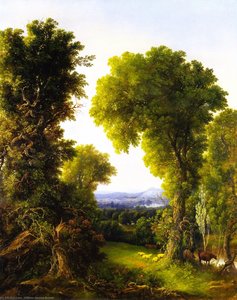
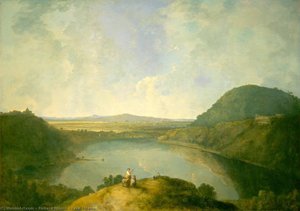
Биография художника
A Pioneer of the Australian Landscape
Johann Joseph Eugen von Guérard, known to generations as Eugene von Guérard, occupies a pivotal position in the story of Australian art. Born in Vienna in 1811, his journey was one that spanned continents and artistic movements, ultimately culminating in a profound contribution to how Australia itself came to be visualized and understood. He wasn’t merely a painter *of* landscapes; he helped forge an Australian landscape tradition, blending meticulous European techniques with the unique character of the Southern Hemisphere's vistas. His legacy isn’t simply found in the numerous works gracing major public galleries across Australia, but also in the very way Australians began to perceive their own land – not as a wilderness to be conquered, but as a place of sublime beauty and scientific interest worthy of careful observation and reverent depiction.From European Roots to Australian Shores
Von Guérard’s artistic lineage was firmly established from the outset. His father, Bernhard von Guérard, was a painter of miniatures at the court of Emperor Francis I of Austria, instilling in young Eugen an early appreciation for precision and detail. This foundation was broadened by extensive travels throughout Italy with his father beginning in 1826, exposing him to the masterpieces of Renaissance and Baroque art. He immersed himself within artistic communities in Rome during the 1830s, encountering influential figures like Johann Anton Koch and members of the Nazarene movement – a group seeking a spiritual revival in art through a return to earlier styles. These early experiences shaped his aesthetic sensibilities, fostering a deep respect for classical composition and a commitment to representing nature with fidelity. However, it was his formal training at the Kunstakademie Düsseldorf from 1841 that truly defined his artistic approach. Under Johann Wilhelm Schirmer, he embraced the principles of the Düsseldorf School – an emphasis on “elevated” subject matter presented with “truthful” realism, combining historicism, lingering Romanticism, and a burgeoning visual accuracy rooted in direct observation. This rigorous training provided him with the technical skills and philosophical framework that would underpin his later work. The lure of gold brought von Guérard to Victoria, Australia, in 1852, but it was quickly apparent that his true fortune lay not in mining, but in capturing the beauty of this new land on canvas.Documenting a Continent: Style and Themes
Initially, von Guérard’s Australian experience manifested in insightful studies of goldfields life – scenes markedly different from the grand landscapes he would later become known for. He meticulously documented the daily routines, the rugged terrain, and the determined faces of the miners, offering a stark contrast to the idealized depictions of nature prevalent at the time. However, he soon transitioned to commissioned work, documenting the estates of wealthy pastoralists – vast properties stretching across the Australian landscape. This shift allowed him to explore the broader Australian environment, capturing its diverse topography, unique flora and fauna, and dramatic light conditions. By the 1860s, von Guérard had established himself as the foremost landscape artist in the colonies, embarking on extensive tours throughout southeastern Australia and New Zealand in pursuit of striking vistas. His paintings are characterized by an extraordinary level of detail – a testament to his Düsseldorf training and his dedication to accurate observation. He wasn’t simply recreating what he saw; he was meticulously recording it, almost as if undertaking a scientific survey. This is particularly evident in his masterpiece, “View of Tower Hill” (1856), a scientifically precise depiction of the volcanic landscape in southwestern Victoria that later proved invaluable when the area was reclaimed and transformed into a state park. Von Guérard’s work reveals a sensitive perception of the natural environment, reflecting influences from European Romanticism – an appreciation for the grandeur and power of landscapes – and potentially even the environmental theories of Alexander von Humboldt, who emphasized the interconnectedness of all things in nature. His paintings often feature dramatic lighting effects, creating a sense of atmosphere and depth that draws the viewer into the scene.The Influence of Düsseldorf and Beyond
Von Guérard’s artistic style was deeply rooted in the traditions of the Düsseldorf School. He meticulously studied classical composition, employing techniques honed through years of rigorous training. His landscapes are characterized by a meticulous attention to detail – from the texture of bark on trees to the ripples of water in streams. However, he wasn't merely imitating the masters; he adapted their principles to suit the unique character of the Australian landscape. He incorporated elements of Romanticism, imbuing his paintings with a sense of drama and emotion. Furthermore, his work demonstrates an understanding of scientific observation, reflecting a growing interest in natural history during the 19th century. The influence of Johann Wilhelm Schirmer, his mentor at the Kunstakademie Düsseldorf, is evident in von Guérard’s emphasis on “truthful” realism – a commitment to accurately representing nature as he perceived it.Legacy and Enduring Influence
Eugene von Guérard’s impact on Australian art extends far beyond his individual canvases. He helped establish a distinct national landscape tradition, one that balanced European artistic techniques with uniquely Australian subject matter. The State Library of New South Wales holds an invaluable collection of 32 sketchbooks documenting his 28 years in Australia and earlier travels, offering profound insights into his working methods and observational skills. His paintings continue to command significant prices – “View of Geelong” sold for A$3.8 million in 2006 – underscoring his enduring popularity and historical importance.- Key Works: "View of Tower Hill" (1856), "Valley of the Mitta Mitta" (1866), “Mount Kosciusko” (1870), “Waterfall, Strath Creek” (1862) & “Sydney Heads” (1865).
- Influences: Düsseldorf School realism, Romanticism, Alexander von Humboldt’s theories.
- Major Collections: National Gallery of Victoria, Art Gallery of New South Wales, State Library of New South Wales.
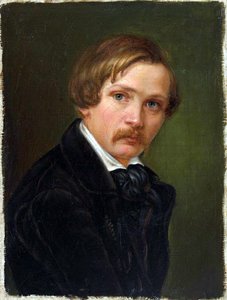
Эвге́н фон Герера́д
1811 - 1901 , Австрия
Основные сведения
- Artistic Movement Or Style: Дюссельдорфская школа
- Artists Or Movements Influenced By This Artist: ['Австралийская традиция пейзажа']
- Artists Who Influenced This Artist:
- Клод Лоррен
- Николя Пуссен
- Date Of Birth: 1811
- Date Of Death: 1901
- Full Name: Eugene von Guérard
- Nationality: Австрийский
- Notable Artworks:
- Вид на Tower Hill
- Долина Mitta Mitta
- Монт. Косцюшко
- Place Of Birth: Вена, Австрия
Похожие статьи
The Sublime and the Picturesque: Exploring Emotion & Nature in Romantic Landscape Painting
Explore the emotional power of Romantic landscape painting! Discover the sublime & picturesque aesthetics, key artists like Friedrich & Cole, and lasting influence on art history. Find your perfect piece at ArtsDot.

Джон Констебль: 25 шедевров английского пейзажа для вашего интерьера
Погрузитесь в мир английского пейзажа с Джоном Констеблом! 25 шедевров романтизма, история создания картин и вдохновение для вашего интерьера. Репродукции высокого качества на ArtsDot.com – искусство для ценителей.

Романтический пейзаж: 10 шедевров, изменивших искусство | ArtsDot.com
Погрузитесь в мир романтического пейзажа! 10 шедевров Фридриха, Тёрнера и других гениев. Узнайте историю создания культовых картин и вдохновитесь для декора интерьера. Репродукции высокого качества на ArtsDot.com.

Evocations of Place: A Historical Journey Through Landscape Art
Explore the rich history of landscape art with ArtsDot. Discover renowned artists, movements like Impressionism & Romanticism, and expert guidance for collecting timeless pieces. Find your perfect serene escape today!
The Sublime and the Picturesque: Exploring Emotion & Nature in Romantic Landscape Painting
Explore the emotional power of Romantic landscape painting! Discover the sublime & picturesque traditions, key artists like Friedrich & Cole, and find your perfect artwork at ArtsDot.