

 Предпросмотр
 Поделиться
 Поделиться
 Детали произведения

 Скачать
 Похожие работы
 Рентгенография
 Слайд-шоу
 Статистика
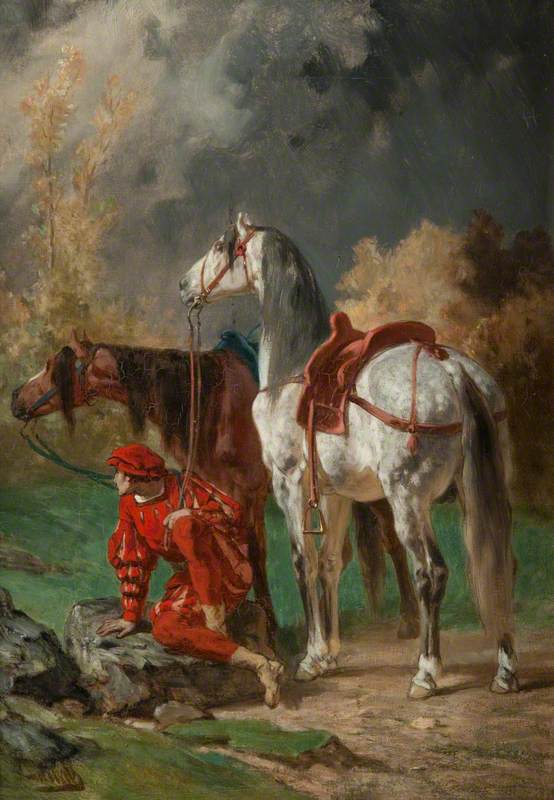
Getting Impatient
 33.0 x 23.0 cm
 Читать далее
Приобретите цифровое изображение высокого разрешения в улучшенном качестве, которое значительно превосходит онлайн-превью.
Каждый файл тщательно подготавливается нашими специалистами с использованием передовых инструментов и экспертной ручной ретуши. Мы гарантируем исключительную четкость, точную цветопередачу и детальную проработку каждого изображения.
Финальный файл доставляется по электронной почте в течение 72 часов и оптимизирован для немедленного использования в профессиональной среде, при верстке и печати. Это тот же уровень качества, которому доверяют ведущие дизайнерские студии, издательства и галереи.
Цифровое изображение
Скачайте файл высокого разрешения для личного использования, печати и творческих проектов. ( Перейти к печати Купить картину ручной работы)
Включено в каждый заказ цифровых изображений
Гарантия экспертной цифровой доставки
Выбирая ArtsDot.com, вы получаете не просто изображение — вы приобретаете профессионально обработанное цифровое произведение искусства, созданное с безупречной точностью и под защитой гарантии качества. Вот всё, что автоматически входит в ваш заказ:

Мгновенная доставка по e-mail
Ваш цифровой файл в высоком разрешении будет отправлен вам по электронной почте в течение 72 часов после оформления заказа — и сразу станет доступен для использования.

Цифровой файл с ИИ-улучшением
Ваше произведение искусства проходит профессиональную оптимизацию с использованием передовых инструментов ИИ и ручной обработки, что гарантирует максимальную детализацию, четкость и точность цветопередачи.

Бессрочная бесплатная повторная доставка
Случайно удалили или потеряли файл? Не беспокойтесь — мы отправим его вам повторно в любое время и совершенно бесплатно.

Без импортных пошлин — навсегда
Наслаждайтесь вашим произведением искусства мгновенно без таможенных пошлин, сборов или затрат на доставку — цифровые загрузки всегда не облагаются налогом.

Гарантия точности цветопередачи
Мы гарантируем, что ваше цифровое изображение максимально точно передает оригинальные цвета благодаря использованию профессиональных инструментов и систем управления цветом.

Гарантия удовлетворенности 100 дней
Если вы не будете удовлетворены своим цифровым изображением, мы внесем правки или вернем 100% стоимости в течение 100 дней — без лишних вопросов.

100% Гарантия возврата средств
Не удовлетворены покупкой? Получите полный возврат средств в течение 100 дней после получения цифрового файла — без лишних вопросов.

Скидки на оптовые заказы
Купите 3 изображения, сэкономьте 10% — Купите 5, сэкономьте 15% — Купите 10+, сэкономьте 20%. Отличное решение для творческих проектов, галерей и агентств.
Похожие произведения









Биография художника
A Life Immersed in History: The World of Évariste Vital Luminais
Évariste Vital Luminais, born in Nantes in 1821 and passing away in Paris in 1896, was a French painter who dedicated his life to vividly recreating the dramatic narratives of early French history. Often celebrated as “the Painter of the Gauls,” Luminais wasn’t merely illustrating the past; he was actively shaping its visual memory for a nation grappling with its identity in the wake of political upheaval. His lineage itself spoke to a deep engagement with French society – descended from a family steeped in parliamentary and legal tradition, his upbringing instilled within him a sense of national consciousness that would profoundly influence his artistic direction. The support of his family was crucial; recognizing his innate talent at a young age, they facilitated his move to Paris at the tender age of eighteen, setting him on a path toward formal training under the guidance of Auguste Debay, a painter and sculptor who laid the foundation for his technical skills. This initial education was further enriched by studies with Léon Cogniet, a master of historical and portraiture, and Constant Troyon, renowned for his evocative landscapes and animal paintings – a combination that would later manifest in Luminais’s ability to seamlessly blend detailed figure work with atmospheric settings.The Rise of the Painter of Gauls: Early Career & Influences
Luminais's artistic debut at the Paris Salon in 1843 marked the beginning of his public recognition, showcasing two paintings that immediately captured attention for their dynamic compositions and historical accuracy. He quickly established himself within the academic circles, consistently earning accolades with medals awarded at subsequent Salons in 1852, 1855, 1857, and 1861. However, it was his dedication to depicting the Gauls – the ancient Celtic tribes of France – that truly set him apart. This fascination wasn’t born from pure archaeological interest; rather, it coincided with a broader national movement in post-Napoleonic France to construct a heroic past, particularly one untainted by recent political failures. Historians were actively reinterpreting Gallic history, and Luminais became the visual interpreter of these new narratives. His paintings weren’t simply representations of battles or daily life; they were carefully crafted symbols intended to evoke a sense of national pride and resilience. He wasn't alone in this endeavor, but his commitment to portraying the Gauls with such fervor earned him the enduring moniker that would define his legacy. The influence of Romanticism is palpable in his early works – a dramatic use of light and shadow, emotionally charged scenes, and a focus on individual heroism all point to an artistic sensibility deeply rooted in the movement’s ideals.A Studio Divided: Paris & the Brenne Region
For over four decades, Luminais skillfully balanced his life between the bustling art scene of Paris and the tranquil countryside of Douadic, a village nestled within the Brenne region. His Parisian studio at 17 boulevard Lannes served as the hub for his large-scale historical compositions, while Douadic provided both inspiration and respite. The Brenne, recommended to him by friends Jules de Vorys and Louis Fombelle, offered a connection to nature that subtly infused his work with a sense of authenticity. This duality – the intellectual rigor of the city versus the raw beauty of the countryside – is reflected in his paintings, which often feature meticulously researched historical details set against evocative landscapes. Luminais was also a dedicated teacher, and remarkably open-minded for an academic painter of his time. He welcomed women into his studio as pupils, including Albert Maignan and Emily Sartain, challenging the conventions of the art world and fostering a new generation of artists. His willingness to share his knowledge underscores a commitment to artistic growth that extended beyond his own personal success.Themes & Techniques: Beyond the Battlefield
While Luminais is best known for his depictions of Gallic warriors clashing with Roman legions, his oeuvre extends far beyond these dramatic battle scenes. He explored themes of everyday life in early France – hunting expeditions, peasant rituals, and moments of quiet contemplation. His technique was characterized by a masterful command of color, light, and composition. He employed a rich palette, often using muted tones to create a sense of atmosphere and realism. His figures are rendered with meticulous detail, showcasing his skill as a draftsman and his dedication to historical accuracy. However, he wasn’t simply striving for photographic precision; Luminais understood the power of symbolism and used it strategically throughout his work. Paintings like *The Widow* (1865) foreshadowed elements of social realism, hinting at the hardships faced by ordinary people – a departure from the purely heroic narratives that dominated much of his earlier work. He skillfully integrated historical costumes and weaponry into scenes of rural life, making them more palatable to an Academy accustomed to grand historical themes.Legacy & Historical Significance: Shaping a National Narrative
Évariste Vital Luminais died in Paris in 1896 at the age of seventy-five, leaving behind a body of work that continues to captivate and inspire. Buried in the small cemetery of Douadic, his legacy extends far beyond the confines of art history. He was awarded the Légion d'honneur in 1869 and became a founding member of the Société des Artistes Français, solidifying his position as a leading figure within the French artistic establishment. More importantly, Luminais played a crucial role in shaping France’s visual understanding of its own past. His paintings weren’t simply historical documents; they were carefully constructed narratives designed to evoke national pride and resilience during a period of political uncertainty. He helped popularize the image of the Gauls as fierce warriors – an image that continues to resonate within French culture today. While later critics sometimes condemned his work for its academic style, Luminais’s dedication to historical accuracy, masterful technique, and profound understanding of symbolism ensure his place as a significant figure in 19th-century French painting—a true “Painter of the Gauls” who helped define a nation's identity through art.
Évariste Vital Luminais
1821 - 1896
Основные сведения
- Artistic Movement Or Style: Historical Painting
- Artists Or Movements Influenced By This Artist: ['Impressionism']
- Artists Who Influenced This Artist:
- Auguste Debay
- Léon Cogniet
- Date Of Birth: October 13, 1821
- Date Of Death: May 10 or 15, 1896
- Full Name: Évariste Vital Luminais
- Nationality: French
- Notable Artworks:
- Première Pensée pour les Énervés de Jumièges
- GAULOIS Revenant de la Chasse
- Place Of Birth: Nantes, France