

 Предпросмотр
 Поделиться
 Поделиться
 Детали произведения

 Скачать
 Похожие работы
 Рентгенография
 Слайд-шоу
 Статистика
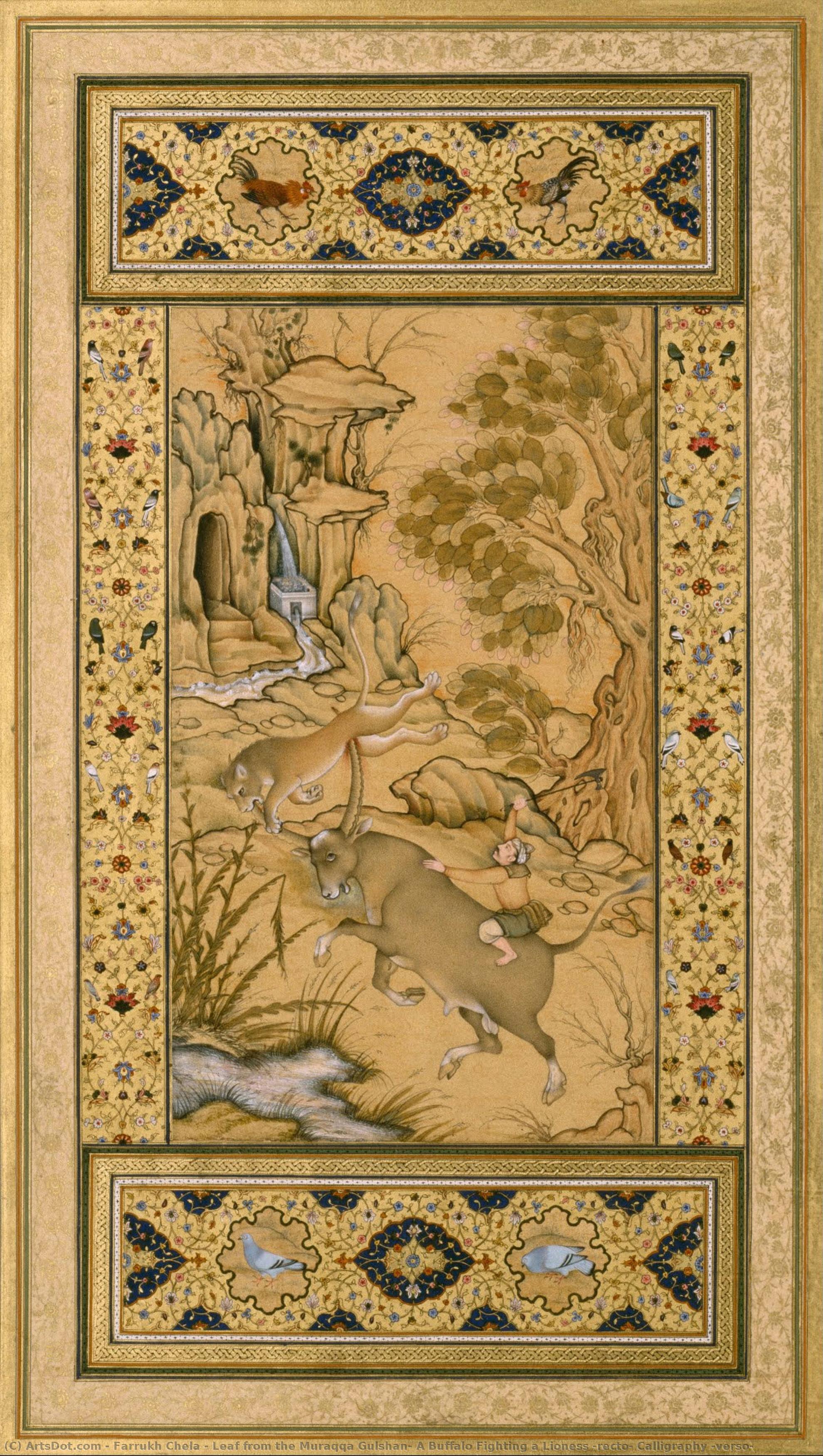
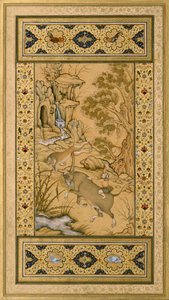
Leaf from the Muraqqa Gulshan: A Buffalo Fighting a Lioness (recto) Calligraphy (verso)


 Читать далее
Приобретите цифровое изображение высокого разрешения в улучшенном качестве, которое значительно превосходит онлайн-превью.
Каждый файл тщательно подготавливается нашими специалистами с использованием передовых инструментов и экспертной ручной ретуши. Мы гарантируем исключительную четкость, точную цветопередачу и детальную проработку каждого изображения.
Финальный файл доставляется по электронной почте в течение 72 часов и оптимизирован для немедленного использования в профессиональной среде, при верстке и печати. Это тот же уровень качества, которому доверяют ведущие дизайнерские студии, издательства и галереи.
Цифровое изображение
Скачайте файл высокого разрешения для личного использования, печати и творческих проектов. ( Перейти к печати Купить картину ручной работы)
Включено в каждый заказ цифровых изображений
Гарантия экспертной цифровой доставки
Выбирая ArtsDot.com, вы получаете не просто изображение — вы приобретаете профессионально обработанное цифровое произведение искусства, созданное с безупречной точностью и под защитой гарантии качества. Вот всё, что автоматически входит в ваш заказ:

Мгновенная доставка по e-mail
Ваш цифровой файл в высоком разрешении будет отправлен вам по электронной почте в течение 72 часов после оформления заказа — и сразу станет доступен для использования.

Цифровой файл с ИИ-улучшением
Ваше произведение искусства проходит профессиональную оптимизацию с использованием передовых инструментов ИИ и ручной обработки, что гарантирует максимальную детализацию, четкость и точность цветопередачи.

Бессрочная бесплатная повторная доставка
Случайно удалили или потеряли файл? Не беспокойтесь — мы отправим его вам повторно в любое время и совершенно бесплатно.

Без импортных пошлин — навсегда
Наслаждайтесь вашим произведением искусства мгновенно без таможенных пошлин, сборов или затрат на доставку — цифровые загрузки всегда не облагаются налогом.

Гарантия точности цветопередачи
Мы гарантируем, что ваше цифровое изображение максимально точно передает оригинальные цвета благодаря использованию профессиональных инструментов и систем управления цветом.

Гарантия удовлетворенности 100 дней
Если вы не будете удовлетворены своим цифровым изображением, мы внесем правки или вернем 100% стоимости в течение 100 дней — без лишних вопросов.

100% Гарантия возврата средств
Не удовлетворены покупкой? Получите полный возврат средств в течение 100 дней после получения цифрового файла — без лишних вопросов.

Скидки на оптовые заказы
Купите 3 изображения, сэкономьте 10% — Купите 5, сэкономьте 15% — Купите 10+, сэкономьте 20%. Отличное решение для творческих проектов, галерей и агентств.
Похожие произведения

Биография художника
The Expressive Vision of Farrukh Chela
In the vibrant, sun-drenched workshops of the Mughal Empire, amidst the scent of pigments and the rustle of fine parchment, lived a painter whose brush captured the very soul of an era. Farrukh Chela, active from approximately 1580 to 1604, was not merely a craftsman but a vital storyteller within the opulent court of Emperor Akbar. While history often reserves its highest accolades for a select few royal favorites, Chela’s legacy is etched into the very fabric of Mughal manuscript illustration. He emerged during a period of unparalleled artistic synthesis, where Persian elegance met Indian vitality, creating a visual language that was as much about emotional truth as it was about technical precision.
Though the specific details of his early life remain shrouded in the mists of the sixteenth century, his presence is felt strongly in the workshops of Fatehpur Sikri. It was here, under the patronage of Akbar, that Chela honed a style that would become uniquely his own. He was part of a grand tradition of illustrators who breathed life into epic narratives, ranging from the sacred Hindu texts of the Ramayana and Mahabharata to the sophisticated Persian tales that graced the imperial library. His work served as a bridge between cultures, translating complex religious and historical themes into miniature masterpieces that could be held in the palm of a hand.
A Style Defined by Idiosyncrasy and Motion
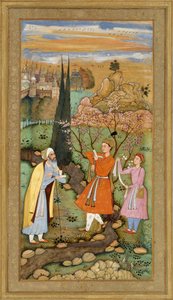
What truly distinguishes Farrukh Chela from his contemporaries is an unmistakable, almost idiosyncratic, creative spirit. While many Mughal artists sought a refined, idealized perfection, Chela often embraced a more expressive and sometimes distorted anatomy to convey movement and psychological depth. His figures are rarely static; they are caught in the heat of battle, the tension of an elephant fight, or the quiet contemplation of a garden scene. This sense of dynamism is paired with a meticulous attention to detail—the delicate curve of a flowering branch, the intricate gold chains adorning a royal elephant, or the rugged texture of a rocky hillside.
His technique often reflected the dual influences of his time. One can observe the Persian influence in his use of landscape elements, such as stylized clouds and delicate flora, which evoke a sense of poetic brevity and grace. Yet, there is an underlying Indian robustness in his characterizations. In works like Jahangir Watching an Elephant Fight, the viewer is transported into the spectacle of the court, where the tension between man and beast is rendered with such clarity that the sounds of the crowd seem almost audible. This ability to blend the decorative with the dramatic allowed him to contribute significantly to the most prestigious manuscripts of the Mughal era.
Legacy in the Imperial Archives
The historical significance of Farrukh Chela lies in his role as a foundational pillar of the Mughal school. He was a prolific contributor, lending his hand to the major illustrated projects that defined Akbar's reign. His work has survived the centuries to reside in some of the world's most prestigious institutions, ensuring that his unique vision continues to inspire scholars and art lovers alike. To study Chela is to study the heartbeat of the Mughal Renaissance.
His enduring impact can be seen through several key contributions:
- Narrative Mastery: His ability to translate complex epic poetry into visual sequences that maintain emotional continuity.
- Stylistic Innovation: The introduction of a more idiosyncratic, expressive figure style that broke away from rigid formalism.
- Cultural Synthesis: The seamless integration of Persian aesthetic sensibilities with the vibrant, naturalistic traditions of Indian painting.
- Institutional Presence: A body of work preserved in global collections such as the Art Institute of Chicago, the Freer Gallery of Art, and the Chester Beatty Library.
Though he may be described by some historians as a "quiet titan," Farrukh Chela’s voice remains loud and clear through his pigments. He remains an essential figure for anyone seeking to understand the complex, beautiful, and deeply human world of Mughal miniature painting.
farrukh chela
1604 , India
Основные сведения
- Artistic Movement Or Style: Mughal Miniature Painting
- Date Of Death: 1604
- Full Name: Farrukh Chela
- Nationality: Indian
- Notable Artworks: ['Leaf from the Muraqqa Gulshan: A Buffalo Fighting a Lioness']
- Place Of Birth: India