

 Предпросмотр
 Поделиться
 Поделиться
 Детали произведения

 Скачать
 Похожие работы
 Рентгенография
 Слайд-шоу
 Статистика
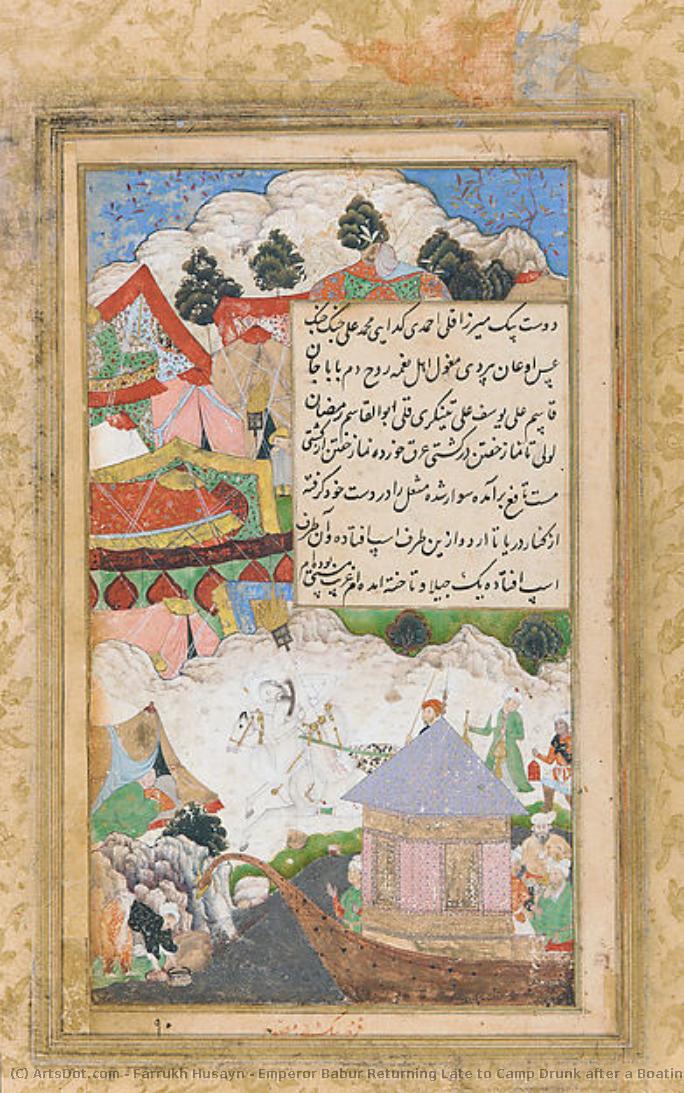
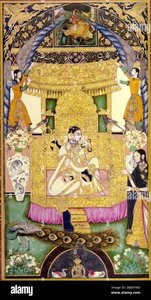
Emperor Babur Returning Late to Camp Drunk after a Boating Party in Celebration of the End of Ramadan in 1519: Folio from a Baburnama Manuscript
 1589
1589 24.0 x 14.0 cm
 Читать далее
Жикле / Арт-принт
Печать (жикле) или холст музейного качества с быстрыми сроками изготовления и широким выбором вариантов отделки. ( Купить картину ручной работы Перейти к цифровым изображениям)




































Выберите один из наших стандартных размеров, соответствующих оригинальным пропорциям произведения искусства.

Вы можете указать свои собственные размеры, чтобы репродукция идеально подошла под конкретную раму или пространство. Если выбранный вами размер не будет соответствовать пропорциям оригинала, мы либо обрежем произведение, либо дополним изображение зеркальным отражением краев или однотонной заливкой. Перед началом производства вам будет отправлен цифровой макет для утверждения.
Пожалуйста, обратите внимание, что предварительный просмотр на экране не отображает фактическую обрезку или расширение изображения. Только макет точно покажет финальную композицию.
Несмотря на возможность заказа индивидуальных размеров, мы рекомендуем выбирать размер из предопределенного списка, чтобы сохранить оригинальные пропорции.
Доставка по всему миру () за 2 недели вместо стандартных 4/5 недель. (12 Сентябрь)

Бесплатная экспресс-доставка по всему миру

Высококачественный льняной холст

Полное страхование доставки

Гарантия возмещения таможенных пошлин

Гарантия точного соответствия цветов

100-дневная политика возврата (только при обнаружении дефектов)

Гарантия возврата 100% средств

Предложение оптовых скидок
 Вариант со стеклом доступен только для размеров менее 110 см

Emperor Babur Returning Late to Camp Drunk after a Boating Party in Celebration of the End of Ramadan in 1519: Folio from a Baburnama Manuscript
Жикле / Арт-принт
Размер репродукции
-


Итоговая стоимость
$ 62
Похожие произведения



Биография художника
The Radiant Weaver of Mughal Dreams
Farrukh Husayn, known to history by the evocative name Farrukh Beg, stands as a luminous figure in the golden age of Indo-Persian art. Born around 1547 in the rugged landscapes of Tehran, his life was a grand journey across the shifting borders of empires, from the refined courts of Safavid Iran to the opulent ateliers of Mughal India. A master of the miniature, he possessed a rare ability to weave together the delicate, calligraphic precision of Persian manuscript illumination with a burgeoning sense of depth and atmosphere that would eventually redefine the aesthetic of the subcontinent. His artistry was not merely a matter of pigment on paper; it was a profound dialogue between tradition and innovation, capturing the very soul of the era he inhabited.
The foundations of his genius were laid in the vibrant artistic crucible of Khurasan. It was here that the young painter honed his craft, likely under the influence of the great poet Jami, learning to translate the rhythmic beauty of Persian verse into visual splendor. This early training instilled in him a meticulous devotion to detail—the fine curve of a blade of grass, the intricate pattern of a silk robe, and the subtle translucency of a petal. As he moved through the courts of Kabul under Mirza Muhammad Hakim, his style began to absorb the cosmopolitan energies of the Silk Road, preparing him for the monumental stage of the Mughal Empire.
A Synthesis of Empires and Styles
When Farrukh Beg entered the service of the Emperor Akbar in 1585, he brought with him a sophisticated Persian lineage that acted as a catalyst for a new artistic synthesis. His work during this period is characterized by an extraordinary fusion; he took the flat, decorative elegance of the Safavid tradition and infused it with the burgeoning naturalism favored by the Mughal masters. He was a pivotal contributor to some of the most significant historical manuscripts of the age, including the Baburnama and the Akbarnama, where his brushwork breathed life into the chronicles of imperial conquest and courtly splendor.
His technical evolution is perhaps his most enduring legacy. While his predecessors often relied on bold outlines and vibrant, unshaded colors, Farrukh Beg began to experiment with more complex techniques:
- Atmospheric Perspective: He introduced a sense of receding space, using subtle shifts in tone to suggest distance and the hazy quality of the horizon.
- Modeling and Volume: Through delicate shading, he moved away from purely two-dimensional forms, giving figures and landscapes a newfound sculptural presence.
- Textural Realism: His ability to render the tactile qualities of stone, fur, and fabric added a layer of sensory immersion to his miniature worlds.
The Master Unrivaled
The esteem in which Farrukh Beg was held reached its zenith under the reign of Emperor Jahangir. The Emperor, himself a connoisseur of immense sophistication, famously bestowed upon him the title Nadir al-asri—the "wonder of the age." This was no mere flattery; it was a recognition of an artist who had achieved a state of technical perfection that seemed to transcend his contemporaries. Even during periods of historical uncertainty, such as his documented time in the Sultanate of Bijapur under Ibrahim Adil Shah II, his distinct hand remained recognizable—a signature of elegance and structural integrity.
Beyond the technicalities of his brush, Farrukh Beg’s significance lies in his role as a bridge between cultures. He was the architect of a visual language that allowed the Persianate spirit to flourish within the Indian landscape, creating a legacy that continues to haunt and inspire the modern viewer. To look upon a work by Farrukh Beg is to witness a moment where history, poetry, and paint converged to create something truly eternal.
farrukh husayn
1547 - , Iran
Основные сведения
- Artistic Movement Or Style: Persian Miniature Art
- Artists Or Movements Influenced By This Artist: ['Mughal Painting']
- Artists Who Influenced This Artist: ['Islamic Art History']
- Date Of Birth: c. 1547
- Date Of Death: after 1615
- Full Name: Farrukh Husayn
- Nationality: Iranian
- Notable Artworks: ['Emperor Babur Returning Late to Camp Drunk after a Boating Party in Celebration of the End of Ramadan']
- Place Of Birth: Tehran, Iran