

 Предпросмотр
 Поделиться
 Поделиться
 Детали произведения

 Скачать
 Похожие работы
 Рентгенография
 Слайд-шоу
 Статистика
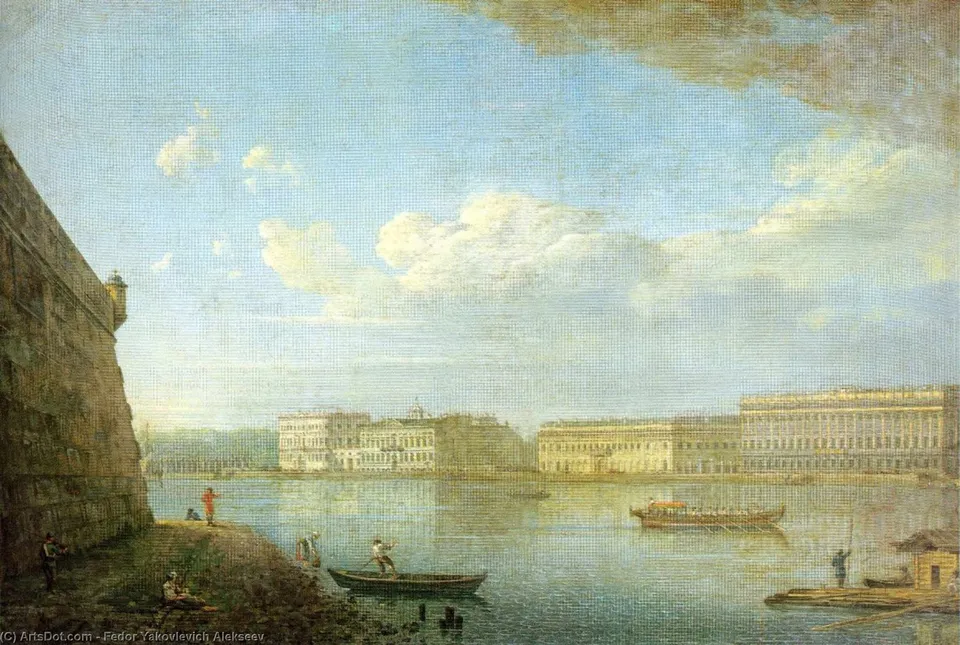
View of the Palace Sea-front From the Fortress of St. Peter and Paul
 Oil On Canvas
- WallArt
- Neoclassicism
 1791
1791- Early Modern
 70.0 x 108.0 cm
 Третьяковская галерея
 Читать далее
Жикле / Арт-принт
Печать (жикле) или холст музейного качества с быстрыми сроками изготовления и широким выбором вариантов отделки. ( Купить картину ручной работы Перейти к цифровым изображениям)




P118B $10

P118H $10

P118W $10

P438Z $10

P508JH $12

P508YH $12

P805H $10

P805Z $10

P919BZ $10

P919G $10

P919XJ $10

P959ZH $10

P968JZ $12

W106C $8

W218G $10

W218JH $8

W218Y $10

W307PJ $10

W316G $10

W316PJ $8

W316Y $10

W398PJ $8

W4111J $10

W500HY $15

W500JH $15

W692G $12

W849H $8

W940BG $15

W953PJ $8

Выберите один из наших стандартных размеров, соответствующих оригинальным пропорциям произведения искусства.

Вы можете указать свои собственные размеры, чтобы репродукция идеально подошла под конкретную раму или пространство. Если выбранный вами размер не будет соответствовать пропорциям оригинала, мы либо обрежем произведение, либо дополним изображение зеркальным отражением краев или однотонной заливкой. Перед началом производства вам будет отправлен цифровой макет для утверждения.
Пожалуйста, обратите внимание, что предварительный просмотр на экране не отображает фактическую обрезку или расширение изображения. Только макет точно покажет финальную композицию.
Несмотря на возможность заказа индивидуальных размеров, мы рекомендуем выбирать размер из предопределенного списка, чтобы сохранить оригинальные пропорции.
Доставка по всему миру () за 2 недели вместо стандартных 4/5 недель. (13 Сентябрь)

Бесплатная экспресс-доставка по всему миру

Высококачественный льняной холст

Полное страхование доставки

Гарантия возмещения таможенных пошлин

Гарантия точного соответствия цветов

100-дневная политика возврата (только при обнаружении дефектов)

Гарантия возврата 100% средств

Предложение оптовых скидок
 Вариант со стеклом доступен только для размеров менее 110 см

View of the Palace Sea-front From the Fortress of St. Peter and Paul
Жикле / Арт-принт
Размер репродукции
-


Итоговая стоимость
$ 62
A Window into Imperial Grandeur
In the delicate interplay of light and water captured within View of the Palace Sea-front From the Fortress of St. Peter and Paul, we are transported back to the golden age of the Russian Enlightenment. Painted in 1791 by the master Fedor Yakovlevich Alekseev, this oil on canvas serves as more than a mere landscape; it is a poetic meditation on the serenity and architectural majesty of Saint Petersburg. As one gazes upon the expanse of the Neva, the viewer is invited to experience the quiet dignity of an era defined by imperial ambition and neoclassical grace. The composition masterfully balances the solid, historical weight of the fortress with the fluid, ever-changing nature of the river, creating a sense of timelessness that continues to captiment the modern imagination.
Alekseev, often celebrated as The Russian Canaletto, employs a technique characterized by meticulous observation and an extraordinary ability to manipulate luminosity. The way the sunlight dances across the ripples of the water, reflecting the pale sky and the silhouettes of passing vessels, demonstrates a profound understanding of atmospheric perspective. His brushwork is precise yet fluid, allowing the viewer to discern the subtle textures of the stone fortifications and the gentle movement of the boats drifting near the shore. This mastery of light and shadow does not merely document a location; it breathes life into the scene, evoking the cool, crisp air of a Russian afternoon and the rhythmic, peaceful pulse of maritime life.
Historical Resonance and Aesthetic Elegance
Beyond its technical brilliance, the painting carries deep historical significance, acting as a visual chronicle of 18th-century Russian urban identity. The presence of the Fortress of St. Peter and Paul provides an anchor of permanence and strength, reminding us of the foundations upon which the great city was built. Amidst this monumental backdrop, the small, human elements—the solitary figure standing by the water's edge and the scattered boats—introduce a layer of intimacy and quiet contemplation. This juxtaposition between the monumental and the mundane creates a profound emotional resonance, offering a sense of peace that is both nostalgic and deeply restorative.
For the discerning collector or interior designer, this masterpiece offers an unparalleled opportunity to introduce a sense of classical sophistication into a contemporary space. The painting’s palette of soft blues, muted earth tones, and luminous highlights makes it a versatile centerpiece capable of anchoring a room with elegance. Whether placed in a formal study, a grand salon, or a curated gallery wall, a high-quality reproduction of this work brings with it the prestige of the Tretyakov Gallery and the enduring spirit of Russian Neoclassicism. It is an investment in atmosphere, providing a window into a storied past that remains as captivating today as it was over two centuries ago.
Похожие произведения



Биография художника
The Russian Canaletto: The Visionary World of Fedor Alekseev
Fedor Yakovlevich Alekseev (1753-1824) stands as a cornerstone of 18th-century Russian art, recognized primarily for his breathtaking depictions of Moscow and St. Petersburg—landscapes that earned him the prestigious moniker “The Russian Canaletto.” This title serves as a profound testament to his unparalleled skill in capturing the grandeur and serenity of the European vedute tradition. Born in Saint Petersburg during an era of immense cultural transformation, Alekseev’s artistic journey unfolded against the backdrop of Russia's burgeoning Enlightenment. His life was dedicated to documenting the architectural soul of a nation, translating the stone and mortar of imperial monuments into luminous, breathing canvases that captured both the physical reality and the atmospheric spirit of his time.
The foundations of Alekseev’s mastery were laid during his formative years in the imperial capital. While the specific details of his early childhood remain somewhat elusive, his professional trajectory was significantly shaped by his apprenticeship under Mikhail Vasilievich Zabolotsky. A celebrated figure in the Petersburg art scene, Zabolotsky instilled in Alekseev the rigorous principles of Neoclassicism and the necessity of meticulous observation. This training became the bedrock of his oeuvre, allowing him to approach a landscape not merely as a scenic view, but as a structured composition governed by mathematical precision and light. Through this disciplined lens, Alekseev learned to balance the architectural accuracy required by the era with a poetic sensibility that breathed life into every street corner and riverbank.
A Legacy of Imperial Grandeur and Architectural Splendor
Alekseev’s fame solidified through his monumental series of paintings documenting the architectural splendor of Moscow. These canvases, imbued with a palpable sense of civic pride, meticulously rendered the Kremlin, St. Basil’s Cathedral, and various bustling squares. His approach mirrored that of his Venetian counterparts, prioritizing an astonishing level of detail alongside compositional harmony. In these works, one does not simply see buildings; one experiences the weight of history and the rhythmic pulse of a city. His Moscow landscapes serve as vital historical documents, capturing a version of the city that remains frozen in time, showcasing the intricate textures of stone and the dramatic interplay of shadow and sunlight.
Parallel to his Muscovite triumphs were his equally impressive depictions of St. Petersburg—a city undergoing rapid, often radical, transformation during his lifetime. Reflecting the intellectual optimism of the Enlightenment, Alekseev skillfully portrayed the waterfront palaces and sweeping embankments that defined the imperial capital. His paintings of the Admiralty and the Palace Embankment are particularly noted for their subtle tonal gradations and masterful use of perspective. By capturing the way light dances across the Neva River and reflects off the neoclassical facades, he mirrored the era's fascination with progress and innovation. Whether documenting the Stock Exchange or the view from the Fortress of St. Peter and Paul, his work consistently projected an image of imperial Russia’s power, stability, and aesthetic sophistication.
Technique, Style, and Historical Significance
The enduring allure of Alekseev’s work lies in his painstaking technique and execution. His process was characterized by a disciplined, layered approach to glazing, which allowed him to achieve a luminous depth that few of his contemporaries could replicate. This method enabled him to capture the atmospheric nuances of the Russian climate—the soft, hazy light of a summer morning or the crisp, biting clarity of a winter afternoon. His ability to render complex architectural details while maintaining a sense of atmospheric unity is what truly distinguishes his hand. Every brushstroke was an exercise in precision, designed to guide the viewer's eye through the vast perspectives of his urban vistas.
Ultimately, the historical significance of Fedor Alekseev extends far beyond mere documentation. He was a bridge between the classical traditions of Europe and the emerging national identity of Russia. Through his eyes, the sprawling landscapes of Moscow, St. Petersburg, and even Kherson were elevated to the status of high art, worthy of the same reverence afforded to the great Italian masters. His legacy lives on in the way we perceive the historical architecture of Russia today; he did not just paint cities, he crafted an enduring visual memory of an empire at its zenith. For collectors and historians alike, his paintings remain windows into a lost world of imperial elegance and architectural triumph.
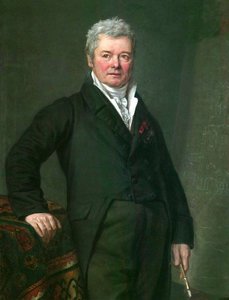
fedor yakovlevich alekseev
1753 - 1824 , Russia
Основные сведения
- Artistic Movement Or Style: Neoclassical
- Artists Or Movements Influenced By This Artist: ['Venetian Painting']
- Artists Who Influenced This Artist: ['Canaletto']
- Date Of Birth: Saint Petersburg, Russia (1753)
- Date Of Death: 1824
- Full Name: Fedor Yakovlevich Alekseev
- Nationality: Russian
- Notable Artworks:
- View of Nikolaev
- The Cathedral Square in the Moscow Kremlin
- View of Voskresenskie and Nikolskie Gate
- Place Of Birth: Saint Petersburg
Похожие статьи
Victor Vasnetsov: Myth, Nationalism & the Revival of Russian Fairy Tale Painting
Explore the captivating world of Victor Vasnetsov, a co-founder of Russian folklorist painting. Discover his iconic works, influence on national identity, and lasting legacy in this expert guide.

Пауль Клее: Топ-25 шедевров гения цвета и формы | ArtsDot
Погрузитесь в мир Пауля Клее! Топ-25 шедевров экспрессионизма и абстрактного искусства. Узнайте истории создания знаменитых картин, технику художника и вдохновитесь для интерьера. Репродукции музейного качества на ArtsDot.com.
Fyodor Rokotov: Intimacy & Enlightenment in Russian Portraiture
Explore the captivating portraits of Fyodor Rokotov, a master of 18th-century Russian art. Discover his unique psychological realism, Rococo elegance, and lasting influence on portrait painting. Learn about his iconic works & aristocratic patrons.
Ivan Bilibin: A Synthesis of Folklore, Modernism & National Identity in Russian Illustration
Explore the enchanting world of Ivan Bilibin, a master Russian illustrator who synthesized folklore, Art Nouveau & national identity. Discover his iconic fairy tale illustrations and legacy with ArtsDot.

25 Шедевров Поля Сезанна: Открывая Новую Эру в Искусстве | ArtsDot
Откройте для себя 25 величайших шедевров Поля Сезанна! Узнайте истории создания картин импрессионизма и постимпрессионизма, технику художника и вдохновение для вашего интерьера. Репродукции картин Сезанна высокого качества на ArtsDot.com.