


 Предпросмотр
 Поделиться
 Поделиться
 Детали произведения

 Скачать
 Похожие работы
 Рентгенография
 Слайд-шоу
 Статистика
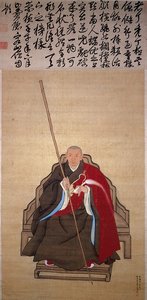
Couplet of Chinese Verse on Spiritual Enlightenment
 1656
1656 127.0 x 29.0 cm
 Читать далее
Масляная репродукция ручной работы
Картина маслом на холсте в выбранном вами размере и раме, написанная на заказ нашими художниками. ( Перейти к печати Перейти к цифровым изображениям)




































Выберите один из наших стандартных размеров, соответствующих оригинальным пропорциям произведения искусства.

Вы можете указать собственные размеры, чтобы картина идеально вписалась в выбранную раму или пространство. Если выбранный вами размер не соответствует пропорциям оригинала, мы либо обрежем полотно, либо расширим его за счет дополнительных элементов, написанных вручную. Цифровой макет будет отправлен вам на утверждение перед началом производства.
Обратите внимание, что предварительный просмотр на экране не отражает фактическую обрезку или расширение. Только макет точно покажет окончательную композицию.
Хотя доступны индивидуальные размеры, мы рекомендуем выбирать вариант из предопределенного списка, чтобы сохранить исходные пропорции.
После оформления заказа команда ArtsDot.com свяжется с клиентом по электронной почте для уточнения деталей и предоставит предварительный макет
Доставка по всему миру () за 3–4 недели вместо стандартных 5 недель. (15 Сентябрь). Без компромиссов в качестве.

Бесплатная экспресс-доставка по всему миру

Высококачественный льняной холст

Полное страхование доставки

Гарантия возмещения таможенных пошлин

Гарантия точного соответствия цветов

100-дневная политика возврата (только при обнаружении дефектов)

Гарантия возврата 100% средств

Предложение оптовых скидок
 Вариант со стеклом доступен только для размеров менее 110 см

Couplet of Chinese Verse on Spiritual Enlightenment
Техника репродукции
Размер репродукции
-


Итоговая стоимость
$ 263
Похожие произведения










Биография художника
Giuseppe Arcimboldo: The Master of Impossibility
Born in Milan in 1527, Giuseppe Arcimboldo wasn’t simply a painter; he was a visual architect of the imagination. His life and career unfolded during a period of immense artistic transition – the waning years of the Renaissance and the burgeoning arrival of Baroque style – and his unique approach to portraiture defied convention, establishing him as one of the most singular figures in Italian art history. Arcimboldo’s legacy rests not on grand historical narratives or religious commissions, but on an astonishing ability to transform everyday objects—fruits, vegetables, flowers, books, even musical instruments—into remarkably lifelike and captivating human faces. These weren't mere still lifes; they were elaborate, theatrical representations of individuals, often dignitaries and nobility, demanding a level of visual ingenuity rarely seen before or since.
His early training began under his father, Biagio Gentileschi, a painter for the Milanese Duomo. This foundation in stained glass design proved crucial, as it instilled within him an understanding of composition, color theory, and the meticulous detail required to create intricate visual narratives. Arcimboldo’s career initially focused on decorative arts – he designed elaborate window panels for churches and palaces – but his ambition quickly outgrew these commissions. He sought opportunities that allowed him to fully explore his inventive spirit, leading him to serve various patrons throughout Italy, including the powerful Duke Federico II of Mantua and later, Charles I of England.
The Art of Assemblage: Technique and Symbolism
Arcimboldo’s technique was deceptively simple in its execution, yet profoundly complex in its realization. He began with a traditional portrait sketch, meticulously planning the arrangement of his chosen objects. Then, using oil paints on wood panels, he built up layers of color and texture to mimic the appearance of natural materials – the smooth skin of fruit, the rough bark of branches, the delicate petals of flowers. Crucially, he didn’t merely *place* these elements; he integrated them seamlessly, creating a unified whole that resembled a living face. The depth of field was carefully considered, with objects placed closer to the viewer appearing larger and more prominent, while those further back receded into the background.
Beyond the technical mastery, Arcimboldo’s work is laden with symbolism. Each assemblage carried multiple layers of meaning, often reflecting the personality or role of the subject. For example, a portrait composed entirely of books might signify erudition and intellectual pursuits, while an arrangement of musical instruments could represent a musician's dedication to his craft. The use of seasonal elements—fruits in winter, flowers in spring—also held symbolic weight, referencing cycles of life, death, and rebirth. His portraits were not simply likenesses; they were carefully constructed statements about the individual’s character and status.
Notable Works and Influences
Arcimboldo's most famous works include his elaborate courtly portraits for Charles I, such as “Vertumnus” (1600) and “Diana,” which showcase his mastery of creating believable faces from seemingly disparate objects. The "Winter Trionfo" (1563), a monumental altarpiece commissioned by the Duke of Mantua, is another prime example of his inventive spirit, depicting allegorical figures representing the seasons arranged within a single, unified composition. His later works, particularly those created during his time in England, demonstrate a shift towards greater abstraction and a more playful use of materials – he even incorporated severed heads into some portraits, a shocking display for the period.
Arcimboldo’s work was influenced by several sources. The Renaissance tradition of *tronie* paintings—genre scenes depicting solitary figures in various poses—provided a foundation for his portraiture. He also drew inspiration from still life painting, particularly the works of Pieter Claesz and Ambrosius Bosschaert, who skillfully rendered the textures and colors of fruits and flowers. However, Arcimboldo’s genius lay in his ability to synthesize these influences into something entirely new – a unique visual language that challenged conventional notions of portraiture and captivated audiences with its imaginative power.
Legacy and Historical Significance
Giuseppe Arcimboldo died in 1593, leaving behind a body of work that continues to fascinate and inspire. His innovative approach to portraiture paved the way for later artists who explored themes of illusion and transformation, including René Magritte and Salvador Dalí. Arcimboldo’s portraits are not merely decorative; they are profound meditations on identity, perception, and the relationship between art and reality. He demonstrated that a single object could hold an entire world of meaning, transforming the humble into the extraordinary and solidifying his place as one of the most inventive and enduring figures in the history of Western art.
feiyin tongrong
1593 - 1661 , China
Основные сведения
- Artistic Movement Or Style: Baroque
- Artists Or Movements Influenced By This Artist: ['Italian Renaissance']
- Artists Who Influenced This Artist: ['Caravaggio']
- Date Of Birth: 1527-04-05
- Date Of Death: 1593-07-11
- Full Name: Giuseppe Arcimboldo
- Nationality: Italian
- Notable Artworks:
- Susanna and Elders
- Winter Garden
- Monarchs
- Place Of Birth: Milan, Italy