


 Поделиться
 Поделиться
 Детали произведения

 Скачать
 Похожие работы
 Слайд-шоу
 Статистика
Episode from the Story of Griselda
 Fresco
- Renaissance
 1445
1445- Renaissance
 43.0 x 49.0 cm
 Accademia Carrara
 Читать далее
Жикле / Арт-принт
Печать (жикле) или холст музейного качества с быстрыми сроками изготовления и широким выбором вариантов отделки. ( Купить картину ручной работы Перейти к цифровым изображениям)
































Выберите один из наших стандартных размеров, соответствующих оригинальным пропорциям произведения искусства.

Вы можете указать свои собственные размеры, чтобы репродукция идеально подошла под конкретную раму или пространство. Если выбранный вами размер не будет соответствовать пропорциям оригинала, мы либо обрежем произведение, либо дополним изображение зеркальным отражением краев или однотонной заливкой. Перед началом производства вам будет отправлен цифровой макет для утверждения.
Пожалуйста, обратите внимание, что предварительный просмотр на экране не отображает фактическую обрезку или расширение изображения. Только макет точно покажет финальную композицию.
Несмотря на возможность заказа индивидуальных размеров, мы рекомендуем выбирать размер из предопределенного списка, чтобы сохранить оригинальные пропорции.
Доставка по всему миру () за 2 недели вместо стандартных 4/5 недель. (13 Сентябрь)

Бесплатная экспресс-доставка по всему миру

Высококачественный льняной холст

Полное страхование доставки

Гарантия возмещения таможенных пошлин

Гарантия точного соответствия цветов

100-дневная политика возврата (только при обнаружении дефектов)

Гарантия возврата 100% средств

Предложение оптовых скидок
 Вариант со стеклом доступен только для размеров менее 110 см

Episode from the Story of Griselda
Жикле / Арт-принт
Размер репродукции
-


Итоговая стоимость
$ 62
A Renaissance Tableau: The Intimacy of Pesellino’s Narrative
In the delicate brushstrokes of Francesco di Stefano Pesellino, we find a window into the social fabric of fifteenth-century Florence. His masterpiece, Episode from the Story of Griselda, dating back to 1445, serves as more than just a mere depiction of a scene; it is a profound theatrical performance frozen in time. The painting captures a moment of quiet intensity within an architectural setting defined by elegant arches and structured spaces. As we gaze upon this fresco-style composition, we are drawn into a room where the boundaries between the viewer and the subjects blur, inviting us to eavesdrop on a conversation that has been echoing through the centuries. The arrangement of figures—some seated in contemplative stillness, others standing in animated dialogue—creates a rhythmic movement that guides the eye across the canvas, revealing a world rich with human connection and social ritual.
The technical mastery displayed in this work is a testament to Pesellino’s lineage and his training under the great Filippo Lippi. Every element, from the subtle play of light upon the men's attire to the precise rendering of the furniture, speaks to the Early Renaissance obsession with naturalism and perspective. The artist employs a meticulous approach to detail, where the texture of a hat or the fold of a garment is rendered with such clarity that one can almost feel the weight of the fabric. This precision does not merely serve an aesthetic purpose; it anchors the legendary narrative in a tangible reality, making the historical episode feel immediate and visceral. For the discerning collector, this level of detail offers a profound sense of depth, ensuring that the artwork remains captivating from every angle and under any lighting condition.
Symbolism and the Weight of Legend
Beyond its surface beauty, the painting is steeped in the moral and literary traditions of its era. The story of Griselda—a tale of extreme patience, trial, and ultimate vindication—provides a heavy emotional backdrop to the seemingly casual social gathering depicted. While the scene focuses on the interaction of men within an architectural interior, the underlying tension of the narrative permeates the atmosphere. The presence of weaponry and specific symbolic objects scattered throughout the room serves as a silent language, hinting at the themes of power, duty, and the fragility of human relationships. This layer of storytelling transforms the piece from a decorative element into a profound intellectual object, making it an ideal centerpiece for those who appreciate art that stimulates both the eye and the mind.
For interior designers and lovers of fine art, Episode from the Story of Griselda offers a unique opportunity to introduce historical gravity and classical elegance into a contemporary space. A high-quality reproduction of this work does not merely decorate a wall; it establishes a dialogue with history. The muted yet sophisticated palette and the structured composition provide a sense of stability and timelessness, making it a versatile choice for grand galleries or intimate studies alike. To possess such a piece is to hold a fragment of the Florentine Renaissance, bringing the spirit of Pesellino’s mastery into the modern home.
Похожие произведения

Биография художника
Francesco di Stefano Pesellino: A Florentine Master of Subtle Detail
Francesco di Stefano Pesellino, a name often whispered in the halls of Renaissance art history, remains a figure of captivating mystery and profound influence. Born in Florence around 1422, he emerged from a lineage steeped in artistic talent – his father, Stefano di Francesco, and his maternal grandfather, Giuliano Pesello, both renowned painters. The diminutive nickname “pesellino,” derived from his grandfather’s name, became inextricably linked to his identity, reflecting not just his familial connection but also the distinctive style he would ultimately forge. His tragically short life, ending in Florence in 1457 at the young age of thirty-five, cut short a career brimming with promise and left behind a legacy characterized by exquisite detail and an uncanny ability to capture the essence of human emotion.
Pesellino’s early artistic development was profoundly shaped by his apprenticeship under Filippo Lippi, one of Florence's most celebrated painters. This association proved pivotal, exposing him to Lippi’s innovative techniques and humanist sensibilities. However, it was his time spent in Giuliano Pesello’s studio that truly molded his unique approach. Pesello, a master of miniature painting and portraiture, instilled in Pesellino a meticulousness and an appreciation for the subtle nuances of form and color – qualities that would become hallmarks of his work. The influence of this apprenticeship is evident in Pesellino's preference for small-scale panels and his remarkable ability to render textures with astonishing realism.
A Style Defined by Precision and Intimacy
Pesellino’s artistic style is immediately recognizable, distinguished by its exceptional refinement and a deliberate avoidance of grand gestures. Unlike the more flamboyant styles prevalent during the early Renaissance, Pesellino favored a restrained elegance, focusing on precise detailing and a profound sense of intimacy. His panels rarely depict large-scale narratives; instead, he excelled at capturing small devotional scenes – predellas for altarpieces, intimate depictions of the Madonna and Child, or portraits of saints – each imbued with a quiet dignity and emotional depth. He was particularly adept at rendering fabrics, jewels, and other decorative elements with breathtaking accuracy, imbuing his works with a tactile quality that invites close examination.
Vasari, in his *Lives of the Most Excellent Painters*, Painter, Sculptors, and Architects*, famously noted Pesellino’s contribution to Lippi's altarpiece for Santa Croce. These predella scenes, now dispersed among the Uffizi Gallery in Florence, the Louvre in Paris, and the Bergamo Civic Museum, offer a compelling glimpse into Pesellino’s artistic vision. They demonstrate his mastery of composition, color harmony, and psychological realism – qualities that set him apart from his contemporaries.
The Trinity Altarpiece: A Monumental Undertaking
Perhaps Pesellino's most significant surviving work is the magnificent altarpiece with predella of the Trinity, commissioned by the confraternity of priests at Pistoia in 1455. This ambitious project, though only partially completed at his death, reveals the full extent of Pesellino’s artistic capabilities. The main panel depicts the Holy Trinity in the iconic throne of mercy motif, flanked by four standing saints and a host of angels. The sheer scale of the work – nearly square at over 1.8 meters per side – is remarkable for an artist working in the mid-fifteenth century. The meticulous detail evident in every brushstroke, from the folds of the drapery to the expressions on the faces of the saints, speaks volumes about Pesellino’s dedication and skill.
The commission itself provides a fascinating insight into the artistic patronage system of Renaissance Florence. Records unearthed by art historians document a protracted legal dispute between Pesellino's widow and his business partner over the outstanding payment for the unfinished work – a testament to the complexities of commercial transactions in that era. These records, meticulously preserved, offer a rare glimpse into the practical realities of an artist’s life and career.
Legacy and Influence
Despite his tragically short life, Francesco Pesellino left an indelible mark on the Florentine art world. His style, characterized by its meticulous detail, subtle color harmonies, and intimate emotionality, anticipated the developments of later Florentine painters such as Verrocchio and the Pollaiuoli family. He demonstrated a remarkable ability to synthesize influences from his predecessors – Lippi’s humanist sensibility, Pesello’s miniature techniques, and the emerging trends in naturalistic representation – creating a distinctly original artistic voice.
His work continues to captivate viewers today, not only for its technical brilliance but also for its profound sense of human dignity and spiritual contemplation. The surviving panels and altarpieces offer a poignant reminder of an artist whose potential was tragically cut short, yet whose legacy endures as one of the most intriguing and accomplished figures of the early Renaissance.
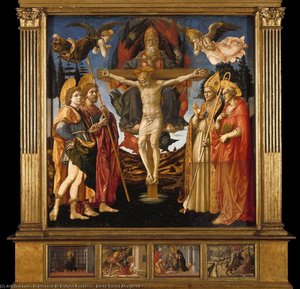
francesco di stefano pesellino
1422 - 1457
Основные сведения
- Artistic Movement Or Style: Early Renaissance, Florentine
- Artists Or Movements Influenced By This Artist:
- Verrocchio
- Pollaiuolo
- Artists Who Influenced This Artist:
- Stefano di Francesco
- Giuliano Pesello
- Filippo Lippi
- Date Of Birth: 1422
- Date Of Death: 1457
- Full Name: Francesco di Stefano Pesellino
- Nationality: Italian (Florentine)
- Notable Artworks:
- Santa Trinità Altarpiece
- Madonna and Child
- The Annunciation
- Place Of Birth: Florence, Italy
Похожие статьи

The Enduring Legacy of Fresco: Technique, History & Artistic Expression Across Cultures
Explore the rich history & enduring legacy of fresco painting! Discover ancient techniques, Giotto's masterpieces, and modern applications. Expert insights for art lovers & professionals.
The Enduring Legacy of Fresco: Technique, History & Artistic Expression
Explore the rich history & enduring artistry of fresco painting. Discover techniques from Giotto to Michelangelo, conservation efforts, & modern applications. Learn how ArtsDot brings this timeless art form to your home.

Фреска как Семейное Наследие: Сохранение Истории в Искусстве Стен
Узнайте о фресках как семейном наследии! История, техника создания, реставрация и сохранение. Экспертные советы и вдохновение для вашего дома. .

Искусство, живущее с вами: эмоциональная сила индивидуальной интерьерной фрески
Узнайте о фресках в интерьере: история, технологии, выбор и уход. Создайте уникальный дизайн с экспертами! Качество и индивидуальный подход гарантированы.

The Enduring Legacy of Fresco Painting: Techniques, History & Contemporary Relevance
Explore the rich history & enduring artistry of fresco painting – from Giotto to Michelangelo! Discover techniques, conservation efforts, & modern applications. Learn how ArtsDot brings this timeless art form to your home.