

 Предпросмотр
 Поделиться
 Поделиться
 Детали произведения

 Скачать
 Похожие работы
 Рентгенография
 Слайд-шоу
 Статистика
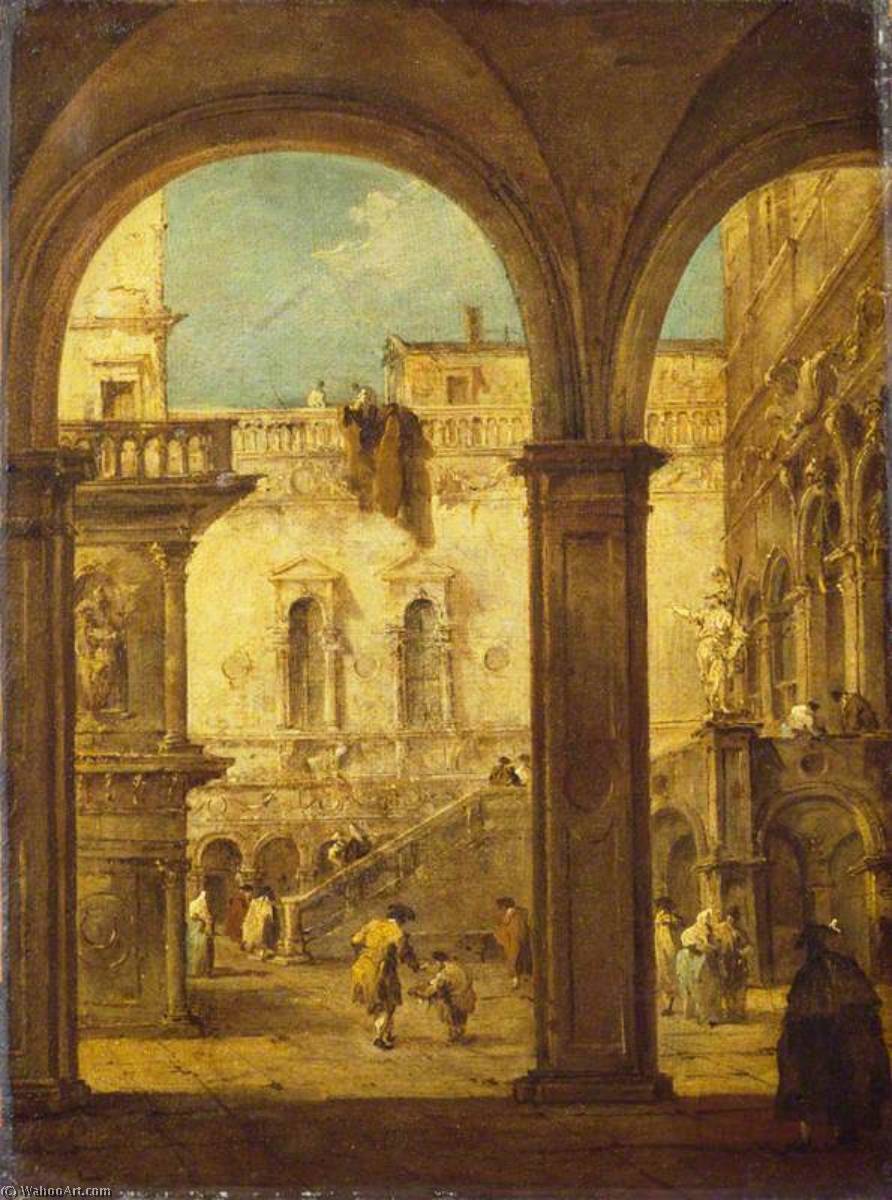
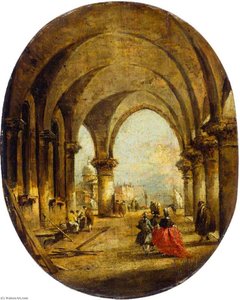
Capriccio with the Courtyard of the Doge's Palace
 Oil On Canvas
- WallArt
- Venetian Twilight
 1770
1770 39.0 x 29.0 cm
 Уоллоус Коллекшн
 Читать далее
Жикле / Арт-принт
Печать (жикле) или холст музейного качества с быстрыми сроками изготовления и широким выбором вариантов отделки. ( Купить картину ручной работы Перейти к цифровым изображениям)




P118B $10

P118H $10

P118W $10

P438Z $10

P508JH $12

P508YH $12

P805H $10

P805Z $10

P919BZ $10

P919G $10

P919XJ $10

P959ZH $10

P968JZ $12

W106C $8

W218G $10

W218JH $8

W218Y $10

W307PJ $10

W316G $10

W316PJ $8

W316Y $10

W398PJ $8

W4111J $10

W500HY $15

W500JH $15

W692G $12

W849H $8

W940BG $15

W953PJ $8




Выберите один из наших стандартных размеров, соответствующих оригинальным пропорциям произведения искусства.

Вы можете указать свои собственные размеры, чтобы репродукция идеально подошла под конкретную раму или пространство. Если выбранный вами размер не будет соответствовать пропорциям оригинала, мы либо обрежем произведение, либо дополним изображение зеркальным отражением краев или однотонной заливкой. Перед началом производства вам будет отправлен цифровой макет для утверждения.
Пожалуйста, обратите внимание, что предварительный просмотр на экране не отображает фактическую обрезку или расширение изображения. Только макет точно покажет финальную композицию.
Несмотря на возможность заказа индивидуальных размеров, мы рекомендуем выбирать размер из предопределенного списка, чтобы сохранить оригинальные пропорции.
Доставка по всему миру () за 2 недели вместо стандартных 4/5 недель. (13 Сентябрь)

Бесплатная экспресс-доставка по всему миру

Высококачественный льняной холст

Полное страхование доставки

Гарантия возмещения таможенных пошлин

Гарантия точного соответствия цветов

100-дневная политика возврата (только при обнаружении дефектов)

Гарантия возврата 100% средств

Предложение оптовых скидок
 Вариант со стеклом доступен только для размеров менее 110 см

Capriccio with the Courtyard of the Doge's Palace
Жикле / Арт-принт
Размер репродукции
-


Итоговая стоимость
$ 62
A Glimpse into Venetian Twilight: The Allure of Guardi's Capriccio
To stand before Francesco Lazzaro Guardi’s Capriccio with the Courtyard of the Doge's Palace is to step directly into a moment suspended in time—a breath caught between Venice’s glorious past and its inevitable passage into memory. This painting is more than just an architectural depiction; it is a vibrant, atmospheric meditation on life unfolding against the backdrop of monumental history. Guardi, the master chronicler of a fading era, captures the very soul of Venice during its twilight years. The scene pulses with an almost palpable energy as figures meander through the grand courtyard, framed by the ornate majesty of the Doge's Palace archway. One can almost hear the echoes of footsteps and the murmur of conversations from this 1770 masterpiece.
Mastery in Atmosphere: Technique and Subject
Guardi’s genius lies in his ability to render atmosphere with an immediacy that borders on the ephemeral. His brushwork, characteristic of the Venetian School's later period, is delicate yet robust, allowing light to play across the varied textures—the cool stone of the courtyard, the intricate carvings of the archway, and the rich fabrics worn by the assembled populace. The composition itself guides the eye through a narrative flow; from the foreground figures engaging in casual promenade to the stately statues positioned at key junctures, every element contributes to a sense of lived-in grandeur. It is this masterful handling of light and shadow, that signature *sfumato* touch applied to everyday life, that elevates this piece beyond mere portraiture or landscape.
The Symbolism of Place and People
The Doge's Palace courtyard has always been a nexus of Venetian power and daily human drama. In Guardi’s hands, the architecture becomes a silent witness to the passage of time. The presence of numerous figures—at least twelve visible in this rendition—is crucial; they are not merely decorative filler but embodiments of life continuing despite the backdrop's weight of history. These people, caught mid-stride, symbolize the enduring spirit of Venice itself. They move through the monumental permanence of stone and marble, creating a beautiful tension between the fleeting moment and eternal structure.
Bringing Venetian Romance Home
For the collector or designer seeking to infuse a space with cultured depth and historical romance, this reproduction offers an unparalleled connection to Old World artistry. Owning a piece inspired by Guardi allows one to curate not just a wall hanging, but an entire mood—one of sophisticated contemplation. The rich narrative quality ensures that the artwork invites prolonged study, rewarding the viewer with new details upon each viewing. It is a piece that whispers tales of Doges and daily life, making it a captivating focal point for any grand hall, library, or salon.
Похожие произведения
Биография художника
Francesco Guardi: A Venetian Twilight – The Last Voice of the School
Francesco Lazzaro Guardi, born into a family deeply rooted in artistic tradition on October 5th, 1712, stands as a poignant and ultimately tragic figure at the close of the illustrious Venetian School. His life unfolded against the backdrop of Venice’s slow decline – a once-dominant maritime republic grappling with political instability and economic hardship, yet retaining an undeniable beauty that Guardi sought to capture with unparalleled sensitivity. He wasn't merely a painter; he was a chronicler of this fading grandeur, a visual poet attempting to distill the essence of a city on the verge of transformation, a style that would later profoundly influence the Impressionists. The Guardi family workshop, established by his father Domenico, served as a vibrant hub of artistic production, where Francesco initially collaborated with his elder brother Gian Antonio on religious paintings – a solid foundation in technique, but it was after Gian Antonio’s untimely death in 1760 that Francesco truly discovered his own distinctive voice, turning his attention to the *vedute* – the captivating cityscape views for which he would ultimately become celebrated.From Collaboration to Individual Vision: The Seeds of Innovation
Initially, Guardi's work bore a clear and undeniable influence from Canaletto, the undisputed master of Venetian *vedute*. Both artists meticulously depicted the city’s canals, opulent palaces, and bustling piazzas with remarkable detail. However, while Canaletto prioritized topographical accuracy – striving for an almost photographic representation – Guardi gradually began to diverge, moving towards a more expressive and imaginative approach. He wasn't interested in creating mere copies; instead, he sought to convey the *feeling* of Venice – its shimmering light reflecting off the water, the hazy atmosphere that often enveloped the city, and the pervasive sense of impermanence that underscored its beauty. This shift is vividly evident in his looser brushwork, characterized by spirited, almost impulsive strokes and freely imagined architectural details—a departure from Canaletto’s more rigid approach. His skies became particularly noteworthy, frequently filled with dramatic cloud formations – hinting at impending storms or the melancholic beauty of a twilight hour. This evolution wasn't a rejection of Canaletto’s skill, but rather an organic progression, demonstrating Guardi’s growing artistic maturity and his willingness to explore new avenues of expression. The family legacy also played a crucial role; his sister Maria Cecilia’s marriage to Giovanni Battista Tiepolo, one of the leading artists of the era, fostered a rich exchange of ideas and influences within their household, further shaping Guardi's artistic development.The Doge’s Feasts: A Grand Spectacle in Paint
Guardi’s most ambitious undertaking – and arguably his masterpiece – came in 1763 with his commission for *The Doge’s Feasts*. This monumental series of twelve canvases celebrated the elaborate ceremonies surrounding the election of Alvise IV Mocenigo, the new Doge (chief magistrate) of Venice. These weren't simply documentary records; they were grand theatrical spectacles – teeming with figures in lavish costumes, overflowing with opulent details, and capturing the vibrant energy of Venetian civic life. Guardi’s skill is evident not only in his ability to depict such a complex scene with remarkable accuracy but also in his masterful use of composition and color to create a sense of movement and drama. The paintings are filled with a palpable sense of occasion – one can almost hear the music, smell the perfumes, and feel the excitement of the crowd. This project solidified Guardi’s reputation as a leading artist within Venice and demonstrated his ability to synthesize classical techniques with a distinctly personal vision.Pittura di Tocco: A Revolutionary Technique
During the creation of *The Doge's Feasts*, Guardi developed and perfected his signature style, known as *pittura di tocco* (painting of touch). This technique involved applying paint in small, broken strokes – tiny dots or dashes rather than broad brushstrokes. The result was a shimmering surface that seemed to vibrate with light and movement, creating an illusion of depth and atmosphere. It wasn’t about precise detail; instead, *pittura di tocco* prioritized capturing the *impression* of form and light—a technique remarkably ahead of its time. This innovative approach distinguished Guardi from his contemporaries and foreshadowed the artistic developments that would emerge in France during the late 18th and early 19th centuries – a style that would later be embraced by Impressionists like Monet and Degas, who recognized in Guardi’s work a kindred spirit—an artist who prioritized feeling and sensation over strict representation.A Legacy of Atmosphere and Influence: The Echoes of Venice
Francesco Guardi passed away quietly on January 1st, 1793, in the Cannaregio district of Venice – a poignant end for an artist deeply connected to his city. His paintings weren’t merely depictions of Venice; they were evocative expressions of its atmosphere—a melancholic beauty tinged with nostalgia and a subtle awareness of impending change. Unlike Canaletto, who often presented Venice bathed in bright sunlight, Guardi frequently depicted the city shrouded in twilight or veiled by clouds, emphasizing its inherent melancholy and timelessness. This atmospheric quality is what particularly resonated with the French Impressionists, who recognized in his work a profound understanding of light, color, and the fleeting nature of perception. Guardi’s influence can be seen in their own explorations of these themes – artists seeking to capture the *feeling* of a place rather than simply its appearance. His legacy endures not only through his individual masterpieces but also as a pivotal link between the classical traditions of Venetian painting and the revolutionary artistic movements that would shape the course of European art.- Key Dates: October 5, 1712: Birth; January 1, 1793: Death.
- Style: *Vedute*, *Pittura di tocco* (painting of touch).
- Influences: Canaletto, Venetian School traditions.
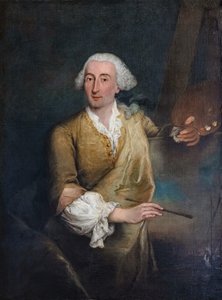
Francesco Lazzaro Guardi
1712 - 1793 , Италия
Основные сведения
- Artistic Movement Or Style: *Vedute*, *Pittura di tocco*
- Artists Or Movements Influenced By This Artist: ['Импрессионисты']
- Artists Who Influenced This Artist: ['Каналетто']
- Date Of Birth: 5 октября 1712 г.
- Date Of Death: 1 января 1793 г.
- Full Name: Francesco Lazzaro Guardi
- Nationality: Итальянец
- Notable Artworks:
- Карнавал в Венеции
- Пляж Сан-Лоренцо
- Догорание кораблей
- Place Of Birth: Венеция, Италия
Похожие статьи

The Dramatic Flourish: Exploring the Baroque Movement's Enduring Legacy in Art History
Explore the dramatic world of Baroque art! Discover iconic artists like Caravaggio & Rubens, defining techniques, and its lasting impact on art history. Expert insights for collectors & enthusiasts at ArtsDot.

Топ-25 шедевров Тинторетто: Венецианская драма и свет в вашем интерьере
Погрузитесь в мир драматизма и света с 25 шедеврами Тинторетто! Узнайте историю создания легендарных картин эпохи Возрождения. Репродукции высокого качества для вашего интерьера на ArtsDot.com.
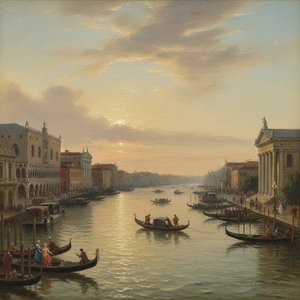
Francesco Guardi: Venetian Light, Atmospheric Perspective & the Rococo to Neoclassical Transition
Explore the captivating world of Francesco Guardi, master of Venetian light and atmosphere. Discover his transition from Rococo to Neoclassicism, influence on Impressionism & investment potential with ArtsDot.

Барочная драма: Искусство величия в современном интерьере
Погрузитесь в мир роскоши и величия барокко! Узнайте об истории стиля, ключевых элементах интерьера и архитектуре. Вдохновляйтесь с и создайте свой неповторимый дизайн.
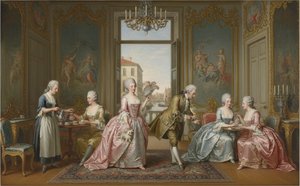
Pietro Longhi's Venetian Scenes: A Study of Rococo Society & Domestic Life
Explore the captivating world of Pietro Longhi's Venetian scenes! Discover insightful analysis of his Rococo masterpieces & social commentary on 18th-century life. Learn about this 'Venetian Hogarth' and his lasting artistic legacy.