 Предпросмотр
 Поделиться
 Поделиться
 Детали произведения

 Скачать
 Похожие работы
 Рентгенография
 Слайд-шоу
 Статистика
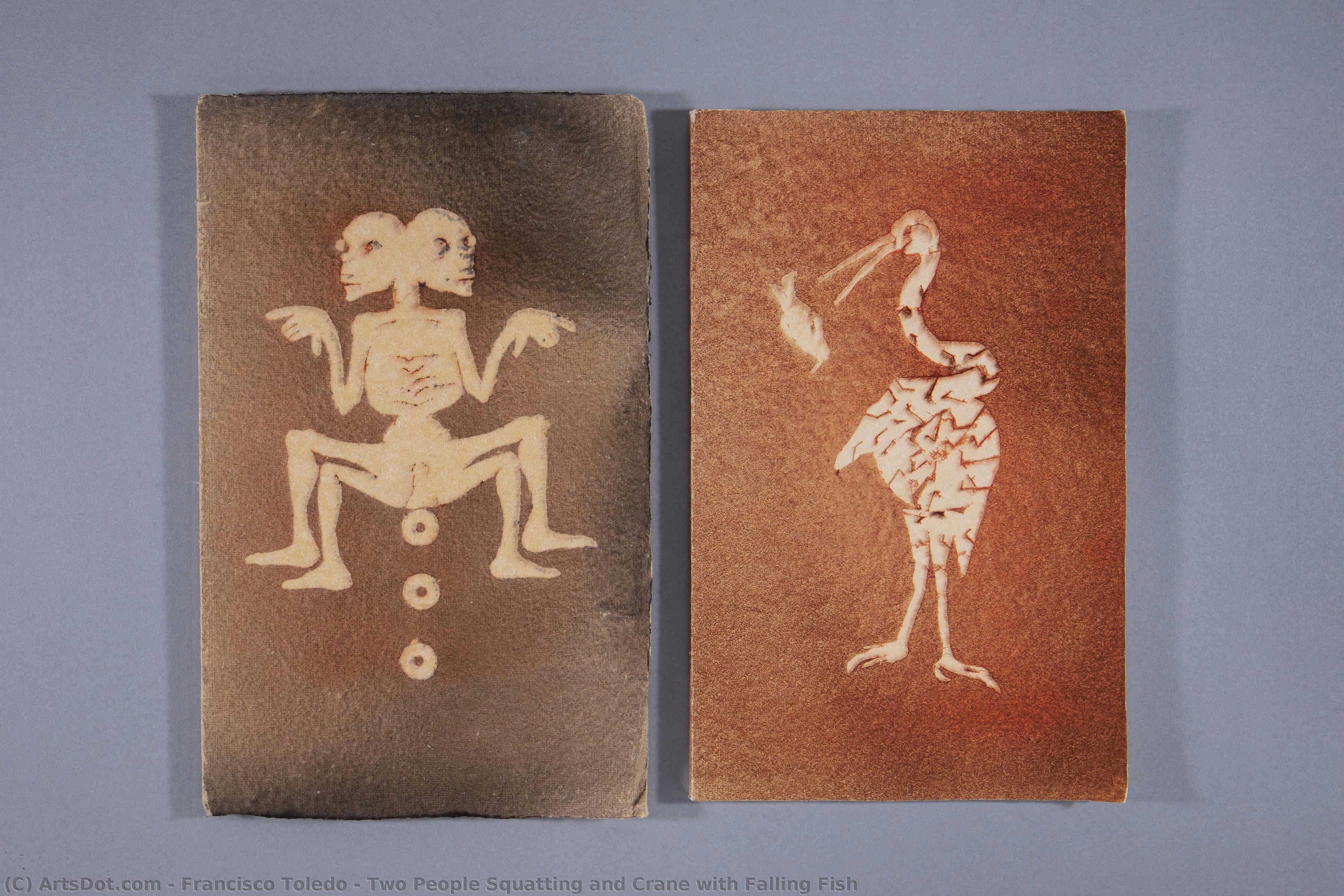
Two People Squatting and Crane with Falling Fish
 Surrealism
 2002
2002- Contemporary
 43.0 x 25.0 cm
 USC Fisher Museum of Art
 Читать далее
Жикле / Арт-принт
Печать (жикле) или холст музейного качества с быстрыми сроками изготовления и широким выбором вариантов отделки. ( Купить картину ручной работы Перейти к цифровым изображениям)




P118B $10

P118H $10

P118W $10

P438Z $10

P508JH $12

P508YH $12

P805H $10

P805Z $10

P919BZ $10

P919G $10

P919XJ $10

P959ZH $10

P968JZ $12

W106C $8

W218G $10

W218JH $8

W218Y $10

W307PJ $10

W316G $10

W316PJ $8

W316Y $10

W398PJ $8

W4111J $10

W500HY $15

W500JH $15

W692G $12

W849H $8

W940BG $15

W953PJ $8




Выберите один из наших стандартных размеров, соответствующих оригинальным пропорциям произведения искусства.

Вы можете указать свои собственные размеры, чтобы репродукция идеально подошла под конкретную раму или пространство. Если выбранный вами размер не будет соответствовать пропорциям оригинала, мы либо обрежем произведение, либо дополним изображение зеркальным отражением краев или однотонной заливкой. Перед началом производства вам будет отправлен цифровой макет для утверждения.
Пожалуйста, обратите внимание, что предварительный просмотр на экране не отображает фактическую обрезку или расширение изображения. Только макет точно покажет финальную композицию.
Несмотря на возможность заказа индивидуальных размеров, мы рекомендуем выбирать размер из предопределенного списка, чтобы сохранить оригинальные пропорции.
Доставка по всему миру () за 2 недели вместо стандартных 4/5 недель. (11 Сентябрь)

Бесплатная экспресс-доставка по всему миру

Высококачественный льняной холст

Полное страхование доставки

Гарантия возмещения таможенных пошлин

Гарантия точного соответствия цветов

100-дневная политика возврата (только при обнаружении дефектов)

Гарантия возврата 100% средств

Предложение оптовых скидок
 Вариант со стеклом доступен только для размеров менее 110 см

Two People Squatting and Crane with Falling Fish
Жикле / Арт-принт
Размер репродукции
-


Итоговая стоимость
$ 62
A Surreal Encounter with Oaxacan Mysticism
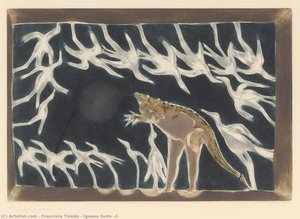
In the evocative realm of Francisco Toledo, the boundaries between the living and the spectral, the terrestrial and the aquatic, dissolve into a singular, dreamlike vision. His 2002 masterpiece, Two People Squatting and Crane with Falling Fish, serves as a profound window into the artist's unique ability to weave Zapotec folklore with a hauntingly modern surrealism. The artwork presents a dual narrative that captures the viewer in a state of quiet contemplation. On one hand, we encounter a skeletal figure, perched with a certain stoic grace upon a chair, clutching a ball—a motif that suggests the cyclical nature of life, play, and inevitable decay. This spectral presence is juxtaposed against a second, equally mesmerizing scene: a crane engaged in a primal dance with a falling fish, a moment frozen in time that speaks to the raw, unyielding rhythms of the natural world.
The composition is anchored by a deep, resonant blue background that provides much more than mere negative space. This azure expanse acts as an infinite void, lending a sense of cosmic depth and atmospheric weight to the subjects. It creates a stage where the starkness of the skeleton and the intricate details of the bird can breathe, allowing the contrast between light and shadow to heighten the emotional tension. For the collector or interior designer, this piece offers a sophisticated interplay of color and mystery, making it an ideal focal point for spaces that demand intellectual depth and a touch of the avant-garde.
Symbolism and the Soul of Mexico
To understand this work is to understand the soul of Oaxaca. Toledo, a cultural architect of his homeland, utilized imagery that transcends simple representation to tap into the collective subconscious of Mexican identity. The skeletal figure is not merely a memento mori; it is a nod to the rich tradition of Day of the Dead, where death is viewed not as an end, but as a transformation. The presence of the ball introduces an element of ritualistic play, perhaps referencing ancient Mesoamerican ballgames that bridged the gap between the human and the divine. Meanwhile, the crane and the falling fish represent the interconnectedness of all biological life—a theme of predation, survival, and the beautiful violence of nature.
The artist’s technique, even when captured in a high-quality reproduction, retains that essential tactile quality characteristic of his oeuvre. There is a deliberate, almost folk-art simplicity to the forms that belies their complex emotional resonance. The subtle details, such as the painted face on the bird, invite the observer to look closer, discovering layers of meaning within the brushstrokes. This piece does not merely decorate a room; it invites a conversation about existence, heritage, and the enduring mysteries of the earth.
An Essential Addition for Discerning Collectors
For those seeking to curate a collection that celebrates the intersection of fine art and cultural storytelling, this work by Francisco Toledo is an incomparable choice. It possesses a rare versatility, fitting seamlessly into contemporary minimalist settings where its bold blue tones can provide a striking contrast, or within more traditional, eclectic galleries where its historical echoes can be fully appreciated. Owning a reproduction of such a significant piece allows for the daily presence of Toledo’s profound legacy—a legacy defined by a deep respect for nature and an unwavering commitment to the visual language of his ancestors.
Похожие произведения

Биография художника
A Life Woven into the Soul of Oaxaca
Francisco Benjamín López Toledo, born in Juchitán de Zaragoza, Oaxaca, in 1940, wasn’t merely an artist; he was a cultural architect, a passionate advocate for his homeland, and one of Mexico's most profoundly influential contemporary figures. His life story is inextricably linked to the vibrant traditions and often-overlooked complexities of Oaxacan culture, a heritage that permeates every brushstroke, sculpted form, and woven thread of his extensive oeuvre. Toledo’s artistic journey began early, nurtured by the rich visual language of his Zapotec upbringing and formalized through studies at the Escuela de Bellas Artes de Oaxaca and later at the Centro Superior de Artes Aplicadas del Instituto Nacional de Bellas Artes in Mexico City under the guidance of Guillermo Silva Santamaría. However, formal training only provided a foundation; Toledo’s true education came from immersing himself in the world around him – the landscapes, folklore, and social realities of his native state.A Kaleidoscope of Influences
To categorize Francisco Toledo within a single artistic movement proves impossible, and perhaps even undesirable. His style is remarkably fluid, a captivating synthesis of diverse influences that reflect both his intellectual curiosity and deep-rooted cultural identity. The echoes of Pre-Columbian art resonate strongly in his work, particularly the iconography of Zapotec and other indigenous cultures, manifesting as stylized figures and symbolic motifs. This ancestral connection is beautifully interwoven with the exuberant palette and narrative spirit of Mexican folk art, creating a visual language that feels both ancient and strikingly modern. Yet, Toledo wasn’t content to simply replicate tradition; he fearlessly embraced elements of Surrealism, allowing dreamlike compositions and explorations of the subconscious to surface in his paintings and graphic works. This unique blend—a harmonious collision of history, heritage, and personal vision—defines the distinctive character of his art. He frequently employed bold lines, textured surfaces, and a deliberately limited color palette, creating images that are visually arresting and emotionally resonant. Artists who influenced this artist include Rufino Tamayo, Paul Klee, and Jean Dubuffet.Themes of Identity, Society, and Nature
Recurring themes weave through Toledo’s artistic narrative, revealing his profound engagement with the world around him. Oaxacan culture is not merely a subject matter but a living presence in his work—a celebration of traditions, beliefs, and the everyday lives of its people. Beyond aesthetic representation, Toledo used his art as a powerful vehicle for social commentary, fearlessly addressing issues such as poverty, inequality, and political corruption with both subtlety and directness. His canvases often serve as poignant reflections on the human condition, prompting viewers to confront uncomfortable truths about society. He explored themes of displacement, migration, and the impact of globalization on indigenous communities, presenting his observations with unflinching honesty and compassion. Equally prominent is his fascination with mythology and symbolism, drawing upon Zapotec lore and universal archetypes to imbue his work with layers of meaning. His imagery frequently incorporates motifs from Zapotec cosmology—representations of deities, spirits, and ancestral figures—creating visual narratives that convey profound spiritual insights. Finally, a deep reverence for nature—the landscapes, flora, and fauna of Oaxaca—is evident in his meticulous depictions of the natural world, where every plant and creature carries symbolic weight. He captured the beauty and fragility of Oaxacan ecosystems with an artist’s eye for detail and sensitivity.Major Achievements & Artistic Style
Toledo's artistic style is characterized by a distinctive blend of Surrealism, Folk Art, and Graphic Art. His paintings are marked by bold lines, textured surfaces, and a deliberately limited color palette—a stylistic choice that prioritizes emotional impact over photographic realism. Recurring motifs include stylized figures, geometric patterns, and symbolic representations of Zapotec iconography. He skillfully combined elements of Surrealist dreamscapes with the vibrant colors and narrative traditions of Mexican folk art, resulting in images that are both intellectually stimulating and aesthetically captivating. Notable artworks include “Grasshopper and Alligator,” “Two People Squatting…” and “Redes con Cangrejos…”. His graphic works—prints, etchings, and silkscreens—further solidified his reputation as a master of visual communication, employing innovative techniques to convey complex ideas with clarity and precision. He established IAGO (Instituto de Artes Gráficas de Oaxaca), MACO (Museo de Arte Contemporáneo de Oaxaca) and Patronato Pro-Defensa y Conservación del Patrimonio Cultural de Oaxaca—institutions that continue to promote artistic expression and cultural heritage in Oaxaca.Historical Significance & Legacy
Francisco Toledo’s contribution to Mexican art history is undeniable. He championed a unique artistic vision that challenged conventional notions of beauty and representation, advocating for the preservation of indigenous culture and fostering dialogue between tradition and modernity. His work has been exhibited internationally, reaching audiences across continents and cementing his place as one of Mexico's most celebrated contemporary artists. Toledo’s legacy extends beyond his artistic creations; he served as a tireless advocate for social justice and cultural empowerment, inspiring countless individuals to embrace creativity and engage in meaningful conversations about the challenges facing their communities. He died September 5th, 2019 at age 79. His enduring influence continues to inspire artists and scholars alike—a testament to the transformative power of art and the importance of honoring cultural heritage.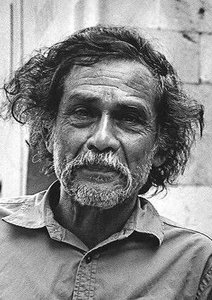
Франсиско Толедо
1940 - , Мексика
Основные сведения
- Artistic Movement Or Style: Surrealismo, Arte Popular
- Artists Who Influenced This Artist:
- Rufino Tamayo
- Paul Klee
- Jean Dubuffet
- Date Of Birth: 1940
- Full Name: Francisco Benjamín López Toledo
- Nationality: Mexicano
- Notable Artworks:
- Grillo y Cocodrilo
- Dos personas echadas...
- Redes con Cangrejos...
- Place Of Birth: Juchitán de Zaragoza, México
Похожие статьи
10 Шедевров Сюрреализма: Искусство Подсознания для Вашего Интерьера
Погрузитесь в мир сюрреализма! Откройте 10 шедевров Дали, Магритта и других гениев. Узнайте истории создания культовых картин и найдите идеальное произведение для вашего интерьера на ArtsDot.com – музейное качество, вдохновение и декор.

Топ-25 шедевров Гойи: от придворного портрета до мрачных пророчеств | ArtsDot
Погрузитесь в мир гения Франсиско Гойи! 🎨 От придворных портретов до мрачных "Капричос" – исследуйте топ-25 шедевров испанского романтизма. Купите репродукции картин Гойи музейного качества на ArtsDot.com и украсьте свой интерьер искусством.
10 Шедевров Сюрреализма: Искусство Подсознания для Вашего Интерьера
Погрузитесь в мир сюрреализма! Откройте 10 шедевров Дали, Магритта и других гениев. Узнайте истории создания культовых картин и вдохновитесь для декора интерьера. Репродукции высокого качества на ArtsDot.com.
Feathered Visions: A Historical & Artistic Exploration of Birds in Painting
Explore the rich history of birds in painting! Discover symbolism, artistic movements & master artists like Audubon. High-quality reproductions available at ArtsDot.
Revolution on Canvas: Exploring the Socio-Political Power & Artistic Legacy of Mexican Muralism
Explore the powerful world of Mexican muralism! Discover Diego Rivera, Frida Kahlo & Orozco's revolutionary art, social impact & lasting legacy. Expert insights & high-quality reproductions at ArtsDot.