


 Поделиться
 Поделиться
 Детали произведения

 Скачать
 Похожие работы
 Слайд-шоу
 Статистика
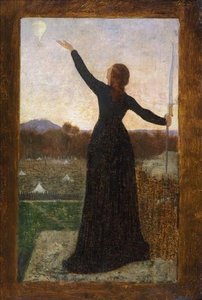
March of the Volunteers of 1792 (La Marseillaise)


 Читать далее
Приобретите цифровое изображение высокого разрешения в улучшенном качестве, которое значительно превосходит онлайн-превью.
Каждый файл тщательно подготавливается нашими специалистами с использованием передовых инструментов и экспертной ручной ретуши. Мы гарантируем исключительную четкость, точную цветопередачу и детальную проработку каждого изображения.
Финальный файл доставляется по электронной почте в течение 72 часов и оптимизирован для немедленного использования в профессиональной среде, при верстке и печати. Это тот же уровень качества, которому доверяют ведущие дизайнерские студии, издательства и галереи.
Цифровое изображение
Скачайте файл высокого разрешения для личного использования, печати и творческих проектов. ( Перейти к печати Купить картину ручной работы)
Включено в каждый заказ цифровых изображений
Гарантия экспертной цифровой доставки
Выбирая ArtsDot.com, вы получаете не просто изображение — вы приобретаете профессионально обработанное цифровое произведение искусства, созданное с безупречной точностью и под защитой гарантии качества. Вот всё, что автоматически входит в ваш заказ:

Мгновенная доставка по e-mail
Ваш цифровой файл в высоком разрешении будет отправлен вам по электронной почте в течение 72 часов после оформления заказа — и сразу станет доступен для использования.

Цифровой файл с ИИ-улучшением
Ваше произведение искусства проходит профессиональную оптимизацию с использованием передовых инструментов ИИ и ручной обработки, что гарантирует максимальную детализацию, четкость и точность цветопередачи.

Бессрочная бесплатная повторная доставка
Случайно удалили или потеряли файл? Не беспокойтесь — мы отправим его вам повторно в любое время и совершенно бесплатно.

Без импортных пошлин — навсегда
Наслаждайтесь вашим произведением искусства мгновенно без таможенных пошлин, сборов или затрат на доставку — цифровые загрузки всегда не облагаются налогом.

Гарантия точности цветопередачи
Мы гарантируем, что ваше цифровое изображение максимально точно передает оригинальные цвета благодаря использованию профессиональных инструментов и систем управления цветом.

Гарантия удовлетворенности 100 дней
Если вы не будете удовлетворены своим цифровым изображением, мы внесем правки или вернем 100% стоимости в течение 100 дней — без лишних вопросов.

100% Гарантия возврата средств
Не удовлетворены покупкой? Получите полный возврат средств в течение 100 дней после получения цифрового файла — без лишних вопросов.

Скидки на оптовые заказы
Купите 3 изображения, сэкономьте 10% — Купите 5, сэкономьте 15% — Купите 10+, сэкономьте 20%. Отличное решение для творческих проектов, галерей и агентств.
The March of Liberty: François Rude’s “La Marseillaise”
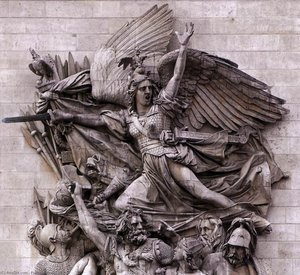
François Rude's "La Marseillaise," dramatically sculpted onto the eastern façade of Paris’s Arc de Triomphe, isn’t merely a monumental relief; it’s a visceral embodiment of revolutionary fervor and the spirit of France itself. Completed in 1836, this colossal work transcends its physical scale to become an enduring symbol of national identity, a testament to the power of collective action, and a captivating study in classical allegory infused with Romantic dynamism. Born in Dijon in 1784, Rude’s artistic journey mirrored the tumultuous shifts occurring within France – from the rigid formality of Neoclassicism to the passionate embrace of Romanticism. His early apprenticeship under François Devosges honed his technical skills, but it was his patronage by Louis Frémiet and subsequent studies with Pierre Cartellier in Paris that truly ignited his creative fire.
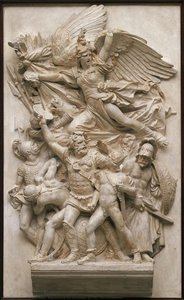
The sculpture’s subject is rooted in a pivotal moment during the French Revolution: the Battle of Valmy in 1792. The National Convention, recognizing the imminent threat posed by invading Prussian and Austrian forces, summoned the citizenry to defend the Republic. Rude masterfully captures this call to arms, depicting not a static battle scene but an eruption of patriotic energy – a surging wave of humanity propelled forward by the unwavering determination for freedom. At the sculpture’s heart stands a magnificent female figure, often interpreted as Liberty or Victory, her wings outstretched in triumphant gesture. She holds aloft a flagon overflowing with water, a potent symbol of life-giving force and purity—a direct reference to the revolutionary ideals of renewal and regeneration.
A Symphony of Movement and Emotion
Rude’s genius lies not just in his subject matter but also in his masterful execution. The relief is sculpted from limestone, meticulously carved to convey an astonishing sense of movement and dynamism. Observe how the figures are arranged – a swirling vortex of bodies, each contributing to the overall momentum. The musculature of the soldiers is rendered with remarkable realism, their faces etched with determination and urgency. The sculptor’s use of light and shadow further enhances this effect, creating a dramatic interplay that draws the viewer into the scene. Notably, Rude employed his wife, Sophie Frémiet, as a model for the central figure, imbuing her portrayal with an unparalleled sense of passion and conviction.
The composition is rich in classical allusions, yet infused with Romantic sensibilities. The figures are reminiscent of ancient Greek and Roman warriors, but their expressions and gestures betray a distinctly modern urgency. The inclusion of elements like the Phrygian cap – a symbol of liberation worn by freed slaves during the Roman Republic – adds another layer of symbolic meaning, connecting the revolutionary struggle to centuries of historical resistance against oppression. The sheer scale of the relief—measuring over 42 feet wide and 26 feet high—amplifies this impact, creating an immersive experience for the viewer.
Context and Legacy
“La Marseillaise” was commissioned during a period of political transition in France – following the Bourbon Restoration and the July Revolution of 1830. The Arc de Triomphe itself was intended to celebrate French military victories, but the sculpture’s message resonated far beyond mere glorification of war. It became a powerful symbol of national unity and republican ideals, embodying the spirit of the people rising up in defense of their liberty. The work's placement on the Arc de Triomphe ensured its constant visibility, cementing its status as one of Paris’s most iconic landmarks.
Rude’s masterpiece stands as a bridge between Neoclassicism and Romanticism, reflecting the evolving artistic landscape of 19th-century France. It's a testament to his ability to synthesize classical forms with emotional intensity, creating an artwork that continues to captivate audiences today. The sculpture’s enduring appeal lies in its universal themes – freedom, courage, and the collective will to overcome adversity—making it not just a historical artifact but a timeless expression of the human spirit.
Похожие произведения

Биография художника
Early Life and Training
- François Rude was born in Dijon, France, on January 4, 1784, the son of a coppersmith/locksmith.
- His early life involved assisting his father's trade before demonstrating artistic talent.
- He attended François Devosges’s École de Dessin in Dijon, showcasing his burgeoning skills.
- Under the patronage of Louis Frémiet, he began studying with Pierre Cartellier in Paris at the studio of Edme Gaulle in 1805.
- In 1809, his work started gaining recognition, earning him several awards.
- He won the Prix de Rome in 1812 but was unable to travel due to political conditions.
Brussels Period and Marriage
- In 1815, Rude left Paris for Rome but ended up in Brussels with the Frémiets due to political circumstances.
- He married Sophie Frémiet, an accomplished painter, forming a formidable artistic partnership.
- While in Brussels, he executed his first bust of Louis David, gaining significant notice.
Return to Paris and Major Works
- Rude and his wife returned to Paris in 1827, where they remained until his death.
- His notable works include the statue of a Neapolitan Fisherboy Playing with a Tortoise (1831-33), displayed at the Louvre.
- He was commissioned for the Arc de Triomphe, creating the iconic sculpture "La Marseillaise" (Departure of the Volunteers of 1792) completed in 1836. This is arguably his most famous and significant work.
- Other important sculptures include:
- Bust of Jacques-Louis David
- Statue of Maurice, Count of Saxony
- Head of Christ (plaster cast)
- Bust of James de Montry
- Towards the end of his career, Dijon commissioned a marble sculpture depicting Hebe, the Greek goddess of youth. Rude created the model in 1852 but died before its completion; his nephew finished it.
Style and Influences
- Rude's style bridged Neoclassicism and Romanticism.
- While initially influenced by Neoclassical principles, he increasingly embraced a dynamic and emotional style.
- His work often expressed patriotic themes, reflecting the political climate of his time.
- He was influenced by earlier sculptors like Pierre Cartellier and Edme Gaulle.
- The patronage of Louis Frémiet played a crucial role in his early development.
Later Life and Legacy
- François Rude died on November 3, 1855, in Paris.
- He is remembered for his powerful and expressive sculptures, particularly "La Marseillaise," which remains a symbol of French national identity.
- His work represents a transition from the rigid formality of Neoclassicism to the more emotive and dramatic style of Romanticism.
- Numerous busts and casts of his works are housed in museums such as Musée Rude, Musée des Beaux-Arts de Dijon, and the Louvre.
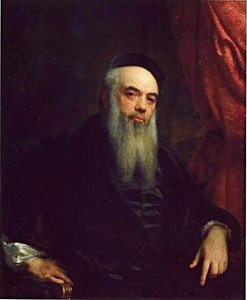
françois rude
1784 - 1855 , France
Основные сведения
- Artistic Movement Or Style: Neoclassicism & Romanticism
- Artists Who Influenced This Artist:
- Edme Gaulle
- Pierre Cartellier
- Date Of Birth: January 4, 1784
- Date Of Death: November 3, 1855
- Full Name: François Rude
- Nationality: French
- Notable Artworks:
- La Marseillaise
- Napoleon Rising to Immortality
- Head of an Ancient Warrior
- Place Of Birth: Dijon, France