


 Предпросмотр
 Поделиться
 Поделиться
 Детали произведения

 Скачать
 Похожие работы
 Рентгенография
 Слайд-шоу
 Статистика
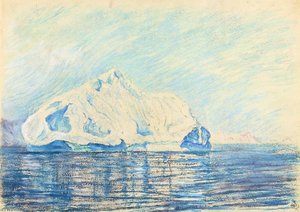
Louis Philippe Land
 1902
1902 15.0 x 23.0 cm
 Читать далее
Приобретите цифровое изображение высокого разрешения в улучшенном качестве, которое значительно превосходит онлайн-превью.
Каждый файл тщательно подготавливается нашими специалистами с использованием передовых инструментов и экспертной ручной ретуши. Мы гарантируем исключительную четкость, точную цветопередачу и детальную проработку каждого изображения.
Финальный файл доставляется по электронной почте в течение 72 часов и оптимизирован для немедленного использования в профессиональной среде, при верстке и печати. Это тот же уровень качества, которому доверяют ведущие дизайнерские студии, издательства и галереи.
Цифровое изображение
Скачайте файл высокого разрешения для личного использования, печати и творческих проектов. ( Перейти к печати Купить картину ручной работы)
Включено в каждый заказ цифровых изображений
Гарантия экспертной цифровой доставки
Выбирая ArtsDot.com, вы получаете не просто изображение — вы приобретаете профессионально обработанное цифровое произведение искусства, созданное с безупречной точностью и под защитой гарантии качества. Вот всё, что автоматически входит в ваш заказ:

Мгновенная доставка по e-mail
Ваш цифровой файл в высоком разрешении будет отправлен вам по электронной почте в течение 72 часов после оформления заказа — и сразу станет доступен для использования.

Цифровой файл с ИИ-улучшением
Ваше произведение искусства проходит профессиональную оптимизацию с использованием передовых инструментов ИИ и ручной обработки, что гарантирует максимальную детализацию, четкость и точность цветопередачи.

Бессрочная бесплатная повторная доставка
Случайно удалили или потеряли файл? Не беспокойтесь — мы отправим его вам повторно в любое время и совершенно бесплатно.

Без импортных пошлин — навсегда
Наслаждайтесь вашим произведением искусства мгновенно без таможенных пошлин, сборов или затрат на доставку — цифровые загрузки всегда не облагаются налогом.

Гарантия точности цветопередачи
Мы гарантируем, что ваше цифровое изображение максимально точно передает оригинальные цвета благодаря использованию профессиональных инструментов и систем управления цветом.

Гарантия удовлетворенности 100 дней
Если вы не будете удовлетворены своим цифровым изображением, мы внесем правки или вернем 100% стоимости в течение 100 дней — без лишних вопросов.

100% Гарантия возврата средств
Не удовлетворены покупкой? Получите полный возврат средств в течение 100 дней после получения цифрового файла — без лишних вопросов.

Скидки на оптовые заказы
Купите 3 изображения, сэкономьте 10% — Купите 5, сэкономьте 15% — Купите 10+, сэкономьте 20%. Отличное решение для творческих проектов, галерей и агентств.
A Brief Overview of the Artist
Frank Wilbert Stokes was an American sketch artist and painter who specialized in illustrations of arctic and antarctic themes. Born on November 27, 1858, in Nashville, Tennessee, Stokes developed a passion for art at a young age. His works are now highly regarded and can be found in various museums, including the Smithsonian American Art Museum.The Painting's Composition
The painting Louis Philippe Land features several icebergs scattered throughout the water, with some closer to the foreground and others further away. The sky above the scene has clouds, adding to the overall atmosphere of the painting. A mountain is visible on the horizon, creating an impressive backdrop for the ocean scene. This beautiful representation of nature showcases Stokes' skill in depicting serene environments.Reproductions Available
For art enthusiasts who appreciate Frank Wilbert Stokes' work, reproductions of Louis Philippe Land are available at https://ArtsDot.com. These handmade oil paintings can be customized to various sizes, with options for framing and artist-level oil on canvas.- Visit /art/list/?Filter=AQU29L-Frank-Wilbert-Stokes-Louis-Philippe-Land to explore reproductions of the painting.
- Learn more about Frank Wilbert Stokes and his works at https://ArtsDot.com/@/Frank-Wilbert-Stokes.
Discover more about the Smithsonian American Art Museum and its collection at https://en.wikipedia.org/wiki/Smithsonian_American_Art_Museum.
Похожие произведения









Биография художника
Frank Wilbert Stokes: Pioneer of Arctic and Antarctic Art
Born in Nashville, Tennessee, in 1858, Frank Wilbert Stokes emerged as a singular figure in the late 19th and early 20th centuries – an American artist uniquely dedicated to capturing the stark beauty and challenging conditions of the Arctic and Antarctic. His career wasn’t defined by grand, sweeping landscapes typical of many artists of his era; instead, Stokes meticulously documented expeditions, scientific discoveries, and the subtle nuances of frozen environments, establishing himself as a crucial chronicler of these remote regions. His work stands as a testament to both artistic skill and an unwavering fascination with the unexplored corners of our planet.
Stokes’s early artistic training laid the foundation for his distinctive style. He began his formal studies at the Pennsylvania Academy of the Fine Arts under the renowned Thomas Eakins, absorbing classical techniques and principles of observation. However, it was a nine-year sojourn in England and France that profoundly shaped his approach. In Paris, he immersed himself in the ateliers of the École nationale supérieure des beaux-arts, learning from Jean-Léon Gérôme – known for his historical paintings – the Académie Colarossi under Raphaël Collin, and the Académie Julian under Gustave Boulanger. Crucially, Stokes wasn’t merely replicating established styles; he was actively engaging with the burgeoning Impressionist movement, evident in his use of light, color, and a looser brushstroke that sought to capture fleeting moments and atmospheric effects. This blend of classical discipline and modern sensibility became a hallmark of his oeuvre.
Expeditions and Scientific Collaboration
Stokes’s artistic pursuits were inextricably linked to scientific exploration. His career truly blossomed during a period of intense Arctic and Antarctic research, and he actively sought opportunities to participate in these groundbreaking expeditions. In 1886 and 1892-1894, he joined Robert Peary's team on several ventures into northern Greenland, meticulously sketching the landscapes and documenting the challenges faced by the explorers. This experience instilled in him a deep respect for the harsh realities of the Arctic environment – its unrelenting cold, treacherous ice, and the resilience required to survive.
His most significant contribution came during the Swedish Antarctic Expedition led by Otto Nordenskjöld in 1902. While stationed on Snow Hill Island, Stokes didn’t just observe; he actively collected specimens of Mesozoic fossils – ammonites, bivalves, and a lobster (later identified as *Hoploparia stokesi*, named in his honor) – providing invaluable evidence for paleontological research. This collaboration between artist and scientist was rare at the time and demonstrated Stokes’s commitment to both artistic expression and scientific understanding. Later, he participated in the Amundsen-Ellsworth expeditions of 1909 and 1910, further solidifying his reputation as a skilled observer and documentarian.
Artistic Style and Techniques
Stokes’s artistic style can be characterized by its meticulous detail, atmospheric perspective, and a subtle yet powerful sense of drama. His sketches, often rendered in chalk or charcoal, captured the textures of ice, snow, and rock with remarkable accuracy. He employed a muted color palette – predominantly blues, grays, and whites – to convey the coldness and vastness of the Arctic and Antarctic landscapes. While influenced by Impressionism, his work never succumbed to fleeting effects; instead, he carefully constructed compositions that conveyed a sense of stability and permanence, reflecting the enduring nature of these frozen environments.
His paintings, particularly those created during the American Museum of Natural History murals in 1909 and 1910, showcased his ability to translate three-dimensional space onto a two-dimensional surface. He skillfully used light and shadow to create depth and volume, capturing the dramatic interplay of sunlight on ice and snow. The influence of classical composition is evident in his carefully balanced arrangements and attention to detail.
Legacy and Recognition
Frank Wilbert Stokes’s work has been recognized for its historical significance and artistic merit. A substantial collection of his sketches and paintings resides within the Smithsonian American Art Museum, a testament to his enduring legacy. His meticulous documentation of Arctic and Antarctic expeditions provided invaluable visual records of these remote regions during a period when exploration was still in its early stages.
Beyond his artistic achievements, Stokes’s collaboration with scientists like Stuart Weller highlights the importance of interdisciplinary research. *Hoploparia stokesi*, named after him, stands as a lasting reminder of his contribution to paleontology and underscores the interconnectedness of art and science. Frank Wilbert Stokes remains an important figure in American art history – a pioneer who dared to venture into the frozen frontiers and capture their beauty with unwavering dedication.
frank wilbert stokes
1858 - 1955
Основные сведения
- Artistic Movement Or Style: Impressionist & Sketching
- Artists Or Movements Influenced By This Artist:
- Impressionism
- Arctic Art
- Artists Who Influenced This Artist:
- Thomas Eakins
- Jean-Léon Gérôme
- Raphaël Collin
- Gustave Boulanger
- Date Of Birth: November 27, 1858
- Date Of Death: 1955
- Full Name: Frank Wilbert Stokes
- Nationality: American
- Notable Artworks:
- Iceberg Summer Arctic
- King Oscar II Land
- An Iceberg off Palmer Island
- Place Of Birth: Nashville, Tennessee, USA