

 Предпросмотр
 Поделиться
 Поделиться
 Детали произведения

 Скачать
 Похожие работы
 Рентгенография
 Слайд-шоу
 Статистика
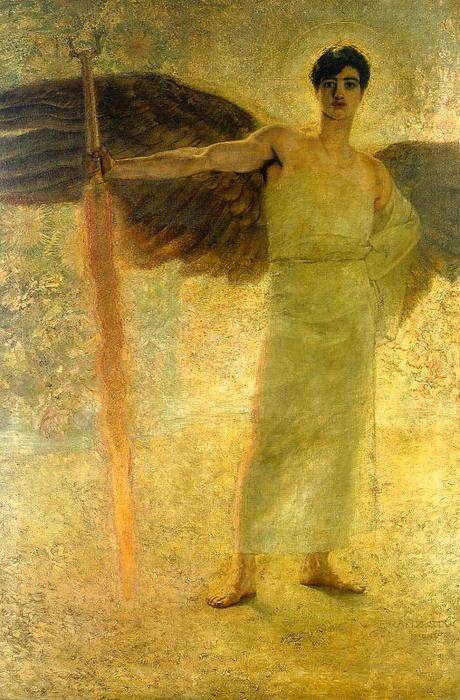
The Guardian of Paradise
 Oil On Canvas
- WallArt
- Symbolism
 1889
1889 250.0 x 167.0 cm
 Музей Вилла Штук
 Читать далее
Приобретите цифровое изображение высокого разрешения в улучшенном качестве, которое значительно превосходит онлайн-превью.
Каждый файл тщательно подготавливается нашими специалистами с использованием передовых инструментов и экспертной ручной ретуши. Мы гарантируем исключительную четкость, точную цветопередачу и детальную проработку каждого изображения.
Финальный файл доставляется по электронной почте в течение 72 часов и оптимизирован для немедленного использования в профессиональной среде, при верстке и печати. Это тот же уровень качества, которому доверяют ведущие дизайнерские студии, издательства и галереи.
Цифровое изображение
Скачайте файл высокого разрешения для личного использования, печати и творческих проектов. ( Перейти к печати Купить картину ручной работы)
Включено в каждый заказ цифровых изображений
Гарантия экспертной цифровой доставки
Выбирая ArtsDot.com, вы получаете не просто изображение — вы приобретаете профессионально обработанное цифровое произведение искусства, созданное с безупречной точностью и под защитой гарантии качества. Вот всё, что автоматически входит в ваш заказ:

Мгновенная доставка по e-mail
Ваш цифровой файл в высоком разрешении будет отправлен вам по электронной почте в течение 72 часов после оформления заказа — и сразу станет доступен для использования.

Цифровой файл с ИИ-улучшением
Ваше произведение искусства проходит профессиональную оптимизацию с использованием передовых инструментов ИИ и ручной обработки, что гарантирует максимальную детализацию, четкость и точность цветопередачи.

Бессрочная бесплатная повторная доставка
Случайно удалили или потеряли файл? Не беспокойтесь — мы отправим его вам повторно в любое время и совершенно бесплатно.

Без импортных пошлин — навсегда
Наслаждайтесь вашим произведением искусства мгновенно без таможенных пошлин, сборов или затрат на доставку — цифровые загрузки всегда не облагаются налогом.

Гарантия точности цветопередачи
Мы гарантируем, что ваше цифровое изображение максимально точно передает оригинальные цвета благодаря использованию профессиональных инструментов и систем управления цветом.

Гарантия удовлетворенности 100 дней
Если вы не будете удовлетворены своим цифровым изображением, мы внесем правки или вернем 100% стоимости в течение 100 дней — без лишних вопросов.

100% Гарантия возврата средств
Не удовлетворены покупкой? Получите полный возврат средств в течение 100 дней после получения цифрового файла — без лишних вопросов.

Скидки на оптовые заказы
Купите 3 изображения, сэкономьте 10% — Купите 5, сэкономьте 15% — Купите 10+, сэкономьте 20%. Отличное решение для творческих проектов, галерей и агентств.
Franz Ritter von Stuck: A Vision of Mythic Beauty
Franz Ritter von Stuck (1863-1928), born in Tettenweis, Bavaria, stands as a pivotal figure in the German Symbolist movement—a reaction against realism and naturalism that sought to express profound spiritual truths through evocative imagery and stylized forms. His artistic journey began modestly, influenced by his father’s role as a forester, yet quickly propelled him toward Munich's artistic milieu where he honed his skills at the School of Applied Arts and subsequently the Academy of Fine Arts. Crucially, Stuck found inspiration in Arnold Böcklin’s haunting landscapes—a connection that instilled within him an unwavering dedication to capturing ethereal beauty and conveying symbolic narratives. This formative influence would permeate his entire oeuvre, establishing him as “Prince of Art” during his lifetime and securing his legacy as one of the most significant artists of his era.The Guardian of Paradise: A Symphony of Texture and Light
“The Guardian of Paradise,” completed in 1889, exemplifies Stuck’s signature style—a masterful blend of Symbolism and early Art Nouveau aesthetics. This monumental oil painting depicts a male figure, likely an angel or deity, positioned centrally within a darkened landscape dominated by swirling clouds and stylized foliage. Stuck's technique is characterized by thick impasto application of paint, resulting in a surface texture that is remarkably tactile—a deliberate choice designed to heighten visual impact and imbue the artwork with palpable energy. The artist skillfully employs lines – predominantly organic and flowing – particularly evident in the wings and drapery—to create a sense of movement and otherworldly grace. Shapes are largely curvilinear, mirroring the undulating contours of nature and contributing to the painting’s dreamlike atmosphere.Symbolism Embodied: Mythological Narrative and Spiritual Resonance
The artwork's symbolism transcends mere visual representation; it delves into profound spiritual themes. The angel’s posture—a gesture of contemplation and guardianship—communicates a sense of serenity and divine authority. Furthermore, the sword he holds serves as a potent emblem of righteousness and defense against darkness—reflecting the broader Symbolist preoccupation with confronting existential anxieties and asserting moral values. Stuck's meticulous attention to detail—from the luminous glow emanating from the angel’s form to the subtle interplay of light and shadow—reinforces this symbolic dimension, inviting viewers to contemplate questions of faith, morality, and the eternal quest for beauty.Technique and Material Considerations
Stuck’s masterful execution relies on traditional oil paint techniques combined with innovative textural approaches. The extensive impasto layering creates a dramatic contrast between illuminated areas and shadowed recesses—enhancing depth and dimensionality without resorting to conventional perspective methods. Materials utilized include high-quality linseed oil, pigments derived from natural sources (primarily ultramarine blue and ochre), and canvas stretched tautly on a wooden frame. This meticulous attention to craftsmanship underscores Stuck’s commitment to conveying not only visual splendor but also the emotional resonance inherent in his artistic vision.A Timeless Masterpiece: Emotional Impact and Artistic Legacy
“The Guardian of Paradise” continues to captivate audiences today with its arresting beauty and evocative symbolism—a testament to Stuck's enduring artistic genius. Its melancholic grandeur, combined with its masterful depiction of ethereal light and flowing forms, speaks to the deepest aspirations of the human spirit. As a cornerstone of German Symbolism, it serves as an inspiration for artists seeking to explore themes of mythology, spirituality, and the sublime—solidifying Stuck’s place among the most influential figures in European art history.Похожие произведения
Биография художника
Franz Ritter von Stuck: The Last Prince of Munich’s Art
Franz Ritter von Stuck, a name that echoes through the halls of German Symbolism and Art Nouveau, was more than just an artist; he was a cultural phenomenon, a “Prince of Art” as he was affectionately known during his lifetime. Born in 1863 in the tranquil Bavarian village of Tettenweis, nestled amidst rolling hills near Passau, Stuck’s journey from a young caricature artist to a celebrated painter, sculptor, and architect is a testament to both innate talent and an unwavering commitment to artistic innovation. Initially destined for a life following his father as a forester, a path dictated by the rural traditions of his upbringing, young Franz quickly revealed an undeniable passion for drawing – a spark that would irrevocably alter the course of his destiny. This early aptitude led him to Munich, a city brimming with artistic energy and opportunity, where he first enrolled at the School of Applied Arts in 1878 and later pursued formal training at the prestigious Academy of Fine Arts from 1882-1884, absorbing the influence of Arnold Böcklin’s hauntingly beautiful mythological scenes – a formative experience that would profoundly shape his artistic vision. Stuck wasn't merely an imitator; he skillfully synthesized these influences into something uniquely his own, forging a distinctive style characterized by classical precision blended with Symbolist mystery and a profound exploration of human emotion.The Rise to Prominence: A Master of Myth and Emotion
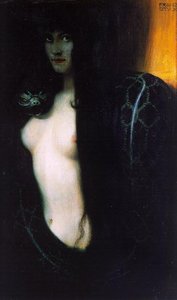
Stuck’s ascent to artistic prominence was remarkably swift and dramatic. His breakthrough arrived in 1889 with *The Guardian of Paradise*, an arresting painting exhibited at the Munich Glass Palace, instantly captivating critics and securing him a gold medal – a recognition that catapulted him into the heart of Munich's vibrant art scene. This wasn’t simply a technically proficient work; it was a declaration of artistic intent – a bold assertion of a new voice blending classical rigor with mythological subject matter and an undercurrent of Symbolist intrigue. He quickly became a central figure in challenging the conservative norms of the time, co-founding the Munich Secession in 1892 alongside like-minded artists determined to break free from the constraints of academic tradition and champion modern artistic expression. This act of rebellion coincided with his exploration into sculpture, debuting with *Athlete* (1892), a dynamic bronze figure that demonstrated his remarkable versatility as an artist. However, it was *The Sin* (1893) – a visceral depiction of temptation and moral struggle – that truly cemented his reputation as a master of Symbolist painting, captivating audiences with its dramatic intensity, psychological depth, and unsettling beauty. This period marked the full flowering of Stuck’s unique style—a potent combination of sensuality, classical form, and symbolic resonance, reflecting both his fascination with ancient myths and his exploration of the darker aspects of human nature.Themes and Influences: A World of Desire and Myth
The artistic universe of Franz von Stuck is profoundly shaped by recurring motifs that reveal his deep engagement with timeless themes. Mythology served as a constant source of inspiration, drawing from Greek, Roman, and biblical narratives which he reimagined with a distinctly personal flair – transforming familiar stories into hauntingly beautiful allegories. These weren’t mere retellings; they were explorations of the human condition filtered through the lens of ancient myths, imbued with his own emotional intensity and symbolic language. Equally prominent was his fascination with sensuality and the *femme fatale*—a recurring figure in his paintings, powerfully embodied in numerous depictions of Salome – a character representing desire, danger, and moral ambiguity. These works weren’t simply about physical beauty; they delved into the psychological complexities of female power and its potential for both allure and destruction. Underlying all this was a deep reverence for classical art—evident in his meticulous technique, anatomical accuracy, and compositional rigor, influenced by artists like Arnold Böcklin and Gustave Moreau. However, Stuck wasn’t merely an imitator; he skillfully synthesized these influences into something uniquely his own, forging a distinctive style that resonated with the spirit of the age.A Knight of Art: Honors and Legacy
In 1895, Franz von Stuck took on another crucial role – that of teacher at the Munich Academy, where he became a highly respected instructor, not only imparting technical skills but also encouraging his students to explore their individual artistic visions. Among those who benefited from his guidance were luminaries such as Paul Klee, Hans Purrmann, and Josef Albers—demonstrating the breadth of his influence. His dedication to art was further recognized in 1905 when he was ennobled, becoming “Ritter von Stuck” – a testament to his growing prestige and contribution to German culture. He continued to receive accolades throughout Europe, solidifying his position as one of the leading artists of his time. His Villa Stuck in Munich, designed by himself, stands as a lasting monument to his life and work—a stunning example of Art Nouveau architecture that showcases his artistic vision and technical mastery. The villa’s interior design, furniture, and overall aesthetic reflect his deep understanding of art and its potential to transform the everyday world. Franz von Stuck died on August 30, 1928, in Munich; his funeral address memorialized him as “the last prince of art of Munich’s great days.” His legacy endures not only through his paintings and sculptures but also through the countless artists he inspired—ensuring that the spirit of Franz von Stuck continues to resonate within the art world today.Major Works and Enduring Significance
- The Guardian of Paradise (1889): A seminal work showcasing his early mastery of color, composition, and mythological themes.
- Dissonance (1893): An unsettling portrayal embodying emotional turmoil through a woman playing the violin – a powerful example of his Symbolist style.
- Salome (various versions): Perhaps his most iconic work, depicting the biblical story with striking sensuality and psychological depth, exploring themes of desire, temptation, and destruction.
- Athlete (1892): A dynamic bronze sculpture demonstrating his skill in three-dimensional form and capturing a sense of movement and power.
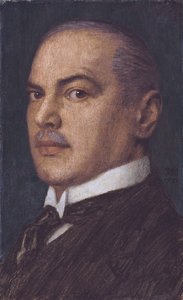
Франц Риттер фон Штук
1863 - 1928 , Германия
Основные сведения
- Artistic Movement Or Style: Символизм, модерн
- Artists Or Movements Influenced By This Artist: ['Клее, Кандинский']
- Artists Who Influenced This Artist:
- Арнольд Бёклин
- Прерафаэлиты
- Date Of Birth: 23 февраля 1863
- Date Of Death: 30 августа 1928
- Full Name: Franz Ritter von Stuck
- Nationality: Немецкий
- Notable Artworks:
- «Хранительница рая»
- «Саломея»
- Грех»»
- Place Of Birth: Теттенвей, Германия