

 Поделиться
 Поделиться
 Детали произведения

 Скачать
 Похожие работы
 Слайд-шоу
 Статистика
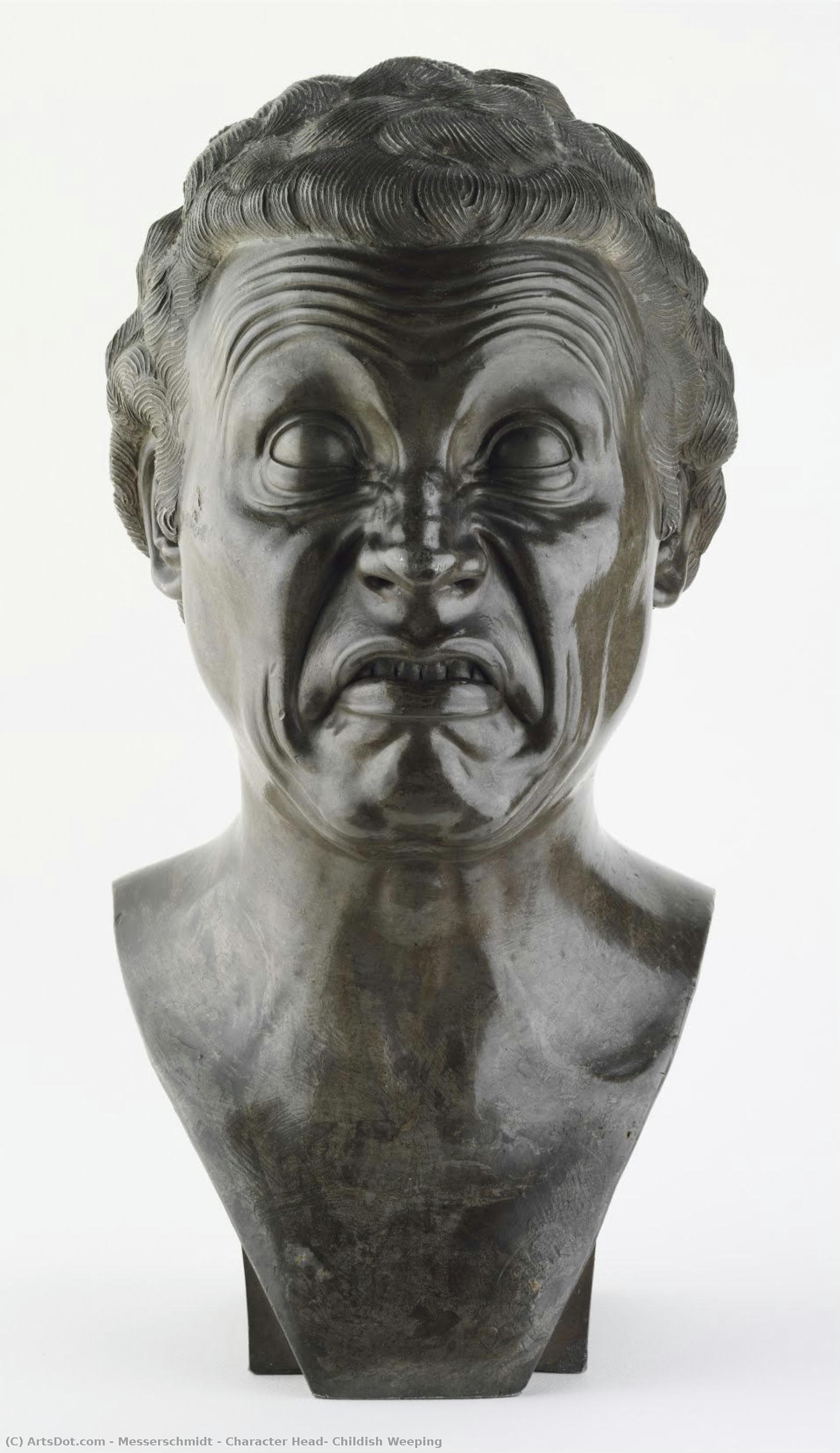
Character Head: Childish Weeping
 Sculpture Bronze
- Sculpture
- Expressionism
 1783
1783 45.0 x 22.0 cm
 Музей искусств Будапешта
 Читать далее
Жикле / Арт-принт
Печать (жикле) или холст музейного качества с быстрыми сроками изготовления и широким выбором вариантов отделки. ( Купить картину ручной работы Перейти к цифровым изображениям)




































Выберите один из наших стандартных размеров, соответствующих оригинальным пропорциям произведения искусства.

Вы можете указать свои собственные размеры, чтобы репродукция идеально подошла под конкретную раму или пространство. Если выбранный вами размер не будет соответствовать пропорциям оригинала, мы либо обрежем произведение, либо дополним изображение зеркальным отражением краев или однотонной заливкой. Перед началом производства вам будет отправлен цифровой макет для утверждения.
Пожалуйста, обратите внимание, что предварительный просмотр на экране не отображает фактическую обрезку или расширение изображения. Только макет точно покажет финальную композицию.
Несмотря на возможность заказа индивидуальных размеров, мы рекомендуем выбирать размер из предопределенного списка, чтобы сохранить оригинальные пропорции.
Доставка по всему миру () за 2 недели вместо стандартных 4/5 недель. (11 Сентябрь)

Бесплатная экспресс-доставка по всему миру

Высококачественный льняной холст

Полное страхование доставки

Гарантия возмещения таможенных пошлин

Гарантия точного соответствия цветов

100-дневная политика возврата (только при обнаружении дефектов)

Гарантия возврата 100% средств

Предложение оптовых скидок
 Вариант со стеклом доступен только для размеров менее 110 см

Character Head: Childish Weeping
Жикле / Арт-принт
Размер репродукции
-


Итоговая стоимость
$ 62
Franz Xaver Messerschmidt’s “Childish Weeping”: A Portrait of Psychological Intensity
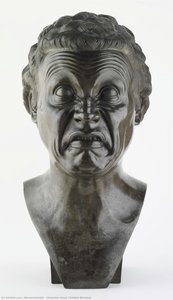
The bronze bust of “Character Head: Childish Weeping,” created by Franz Xaver Messerschmidt in 1783, stands as a singular testament to the burgeoning fascination with psychological exploration within European sculpture. More than simply capturing a likeness—though its face possesses undeniable realism—the piece embodies a profound preoccupation with emotion, foreshadowing the expressive fervor of Expressionism decades before its formal articulation. This artwork isn’t merely aesthetically pleasing; it's a conduit for confronting uncomfortable truths about human vulnerability and despair.A Sculptor Haunted by Obsession
Messerschmidt’s life was tragically curtailed by illness—a mysterious ailment that abruptly halted his promising academic career in Munich. Despite this premature demise, he cemented his reputation as an artist unlike any other, primarily through the production of his iconic “Character Heads.” These busts are not celebratory depictions; they represent a deliberate attempt to distill human emotion into its most distilled form – raw grief, terror, and profound sorrow—a daring stylistic choice that challenged prevailing artistic conventions. The unsettling gaze emanating from the sculpted face compels viewers to confront their own anxieties about mortality and suffering.The Mannerist Influence: Distortion as Expression
Messerschmidt’s sculptural technique exemplifies the influence of Mannerism, a movement characterized by stylized forms, exaggerated proportions, and deliberate distortions intended to heighten emotional impact. Unlike the idealized figures favored by Neoclassical sculptors—who sought harmony and rationality—Messerschmidt deliberately manipulated anatomy to convey psychological states. The rough texture of the bronze surface reflects this artistic ethos; it’s not polished or smoothed but retains subtle imperfections that underscore the sculpture's inherent materiality and contribute to its dramatic atmosphere. Lines are powerfully defined, particularly in the facial muscles and hair, creating a palpable sense of tension and conveying the overwhelming force of emotion.Symbolism Beyond Representation
The “Character Head: Childish Weeping” transcends mere visual representation; it operates on a symbolic level. The exaggerated expression—the downturned mouth, furrowed brow, glistening eyes—represents not just sadness but also a deeper contemplation of existential anguish. Messerschmidt’s intention was to depict the human psyche at its most vulnerable, confronting viewers with uncomfortable questions about grief and loss. The sculpture's somber palette – dominated by browns and grays – reinforces this mood, mirroring the bleakness of the subject matter. It speaks to a universal experience of sorrow, capturing it in a way that anticipates the psychological depth explored by later artists.A Legacy of Emotional Resonance
“Childish Weeping” remains an enduring masterpiece due to its unparalleled ability to evoke empathy and provoke introspection. Its stylistic boldness—the Mannerist distortion—combined with its profound thematic concerns—the exploration of human emotion—solidifies Messerschmidt’s place as a visionary artist who anticipated the expressive currents of the 19th century. It continues to inspire artists and collectors alike, serving as a poignant reminder that art can illuminate the darkest recesses of the human experience.Похожие произведения
Биография художника
Franz Xaver Messerschmidt (1736-1783): Master Sculptor of Haunting ‘Character Heads’ – Intensely Expressive Busts Exploring Human Emotion & Psychology. A Unique Precursor to Expressionism
Franz Xaver Messerschmidt, born in the Bavarian village of Wiesensteig in 1736, stands apart from his contemporaries as a sculptor whose oeuvre possesses an unsettling blend of technical brilliance and psychological depth. He wasn’t merely responding to stylistic trends—a pivotal figure bridging the opulent Baroque and the nascent Neoclassical eras—but an artist who seemed to anticipate the visceral emotional core of Expressionism decades before its formal articulation. His life, interwoven with artistic ambition and escalating mental instability, constitutes a compelling narrative inextricably linked to his most enduring legacy: the “Character Heads,” busts that capture human emotion in states of raw, almost unbearable intensity. Examining Messerschmidt’s trajectory reveals not only an exceptional craftsman but also a man grappling with profound existential questions—a visionary whose work continues to provoke contemplation and inspire artistic exploration.Early Years & Artistic Training
Messerschmidt's formative years were steeped in familial tradition; he commenced his sculptural apprenticeship under the tutelage of Johann Baptist Straub, his uncle, who practiced in Munich. This initial encounter instilled within him a foundational understanding of Baroque techniques—particularly evident in commissions for Empress Maria Theresa—where bronze busts and reliefs adhered to the conventions of courtly representation championed by artists like Balthasar Ferdinand Moll. He honed these skills further through subsequent apprenticeships with Philipp Jakob Straub in Graz, and culminated his formal training at the Academy of Fine Arts Vienna, guided by Jacob Schletterer. These early endeavors showcased a demonstrable proficiency in prevailing Baroque aesthetics—a stylistic commitment reflected in works celebrating imperial power and status—demonstrating Messerschmidt’s mastery of classical sculptural principles. The influence of Balthasar Ferdinand Moll is palpable in his initial output, highlighting the artistic milieu that shaped his formative years.The Genesis of Disquiet: The Character Heads
Around 1769-1770, a dramatic transformation occurred within Messerschmidt’s artistic vision—a rupture from the stylistic norms of his time and the beginning of an intensely personal journey. While continuing to accept traditional portrait commissions, he embarked upon the creation of what would become his defining achievement: the “Character Heads.” These busts defied conventional portraiture; they weren't intended to flatter or commemorate but rather to confront viewers with representations of extreme emotional states—laughter bordering on hysteria, grief etched into every line, and grimaces of anguish. This stylistic shift wasn’t simply a matter of artistic experimentation; it stemmed from a deeper preoccupation with exploring the human psyche—a quest for capturing not idealized beauty but authentic emotion. Accounts from contemporaries attest to Messerschmidt's peculiar method: he reportedly pinched his own ribs while observing his facial expressions in a mirror, attempting to replicate them precisely in marble or bronze. This self-imposed challenge underscores his conviction that sculpture could penetrate the surface of appearance and access the innermost recesses of human experience—a radical departure from prevailing artistic conventions. Furthermore, Messerschmidt’s philosophical underpinning—inspired by Hermetic teachings—suggested a desire to decode universal truths about emotion through visual representation.A Synthesis of Baroque & Neoclassical Influences
Messerschmidt's oeuvre demonstrates a remarkable synthesis of Baroque and Neoclassical influences. Initially trained in the Baroque style, exemplified by Moll’s monumental sculptures for the imperial court—particularly the bronze busts of Maria Theresa and her consort—he embraced neoclassical ideals during his formative years at Vienna, absorbing the principles of clarity, balance, and rationalism championed by artists like Antonio Canova. This duality is evident in his early works—such as the portraits commissioned for Viennese nobility—where he skillfully blended Baroque ornamentation with Neoclassical compositional rigor. However, it was his exploration of psychological expression that truly distinguished Messerschmidt from his peers—a preoccupation that would culminate in the creation of his iconic Character Heads.The Character Heads: A Legacy of Emotion
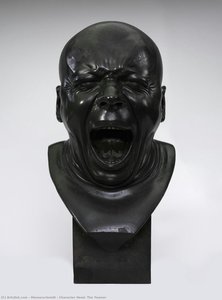
The “Character Heads,” produced between 1769 and 1783, represent Messerschmidt’s artistic apex—a testament to his unparalleled ability to convey profound emotion through sculptural form. These busts weren't mere representations of faces; they were embodiments of psychological states—fear, despair, ecstasy—rendered with astonishing precision and unsettling realism. The method by which Messerschmidt approached this task—pinching his ribs while observing his own facial contortions in a mirror—revealed not only his artistic technique but also his philosophical conviction that sculpture could unlock the secrets of human emotion. As Ernst Kris theorized, Messerschmidt’s obsession with capturing “canonical grimaces”—the full spectrum of human expressions—was linked to paranoid ideas and hallucinations—a disturbing insight into the artist's mental state and its profound influence on his creative output. Despite facing expulsion from the Academy of Fine Arts in 1774 due to mounting financial difficulties, Messerschmidt persevered in his artistic endeavors until his untimely death in 1783—leaving behind a body of work that continues to fascinate scholars and artists alike. His legacy resides not solely in his technical mastery but also in the enduring power of his sculptures to provoke contemplation and illuminate the complexities of human experience—a singular contribution to art history that secures Messerschmidt’s place as a precursor to Expressionism and an unforgettable voice of the Enlightenment. ## Key Works & Their Significance- The Yawner (1775): Demonstrates Messerschmidt's ability to capture fleeting moments of physical and emotional release, showcasing his mastery of anatomical detail and expressive form.
- Character Head: Childish Weeping (1783): Exemplifies profound sorrow through meticulous rendering of facial features—a poignant illustration of Messerschmidt’s exploration of psychological emotion.
Франц Хайзер Мессершмидт
1736 - 1783 , Германия
Основные сведения
- Artistic Movement Or Style: Поздний барокко, неоклассицизм
- Artists Or Movements Influenced By This Artist: ['Экспрессионизм']
- Artists Who Influenced This Artist:
- Йоганн Баптист Штрауб
- Филипп Яков Штрауб
- Якоб Шлеттерер
- Date Of Birth: Февраль 6, 1736 г.
- Date Of Death: Август 19, 1783 г.
- Full Name: Franz Xaver Messerschmidt
- Nationality: Немецкий
- Notable Artworks:
- «Утомленный»
- Плачущий ребенок
- Элияху увеличивается масло печали
- Place Of Birth: Вайсенштайн, Германия
Похожие статьи

10 легендарных бронзовых скульптур, изменивших искусство навсегда | ArtsDot
Погрузитесь в мир великих бронзовых скульптур! От Давида Микеланджело до работ Родена – история искусства, техники и вдохновения. Купите репродукции шедевров для вашего интерьера на ArtsDot.com

The Enduring Legacy of Bronze: A Historical & Artistic Exploration for the Collector
Explore the rich history & enduring appeal of bronze sculpture with expert insights for collectors at ArtsDot. Learn about casting techniques, iconic artists, collecting tips & contemporary interpretations.

The Enduring Legacy of Bronze Sculpture: A Collector's Guide to Form & Cultural Significance
Explore the rich history & enduring appeal of bronze sculpture with expert insights for collectors at ArtsDot. Learn about casting techniques, iconic artists, and collecting tips to build a discerning art collection.
The Enduring Legacy of Bronze: History, Technique & Artistic Expression for the Collector
Explore the rich history & enduring appeal of bronze sculpture with expert insights for collectors at ArtsDot. Learn about casting techniques, iconic artists, and collecting tips.

10 легендарных бронзовых шедевров, изменивших искусство | ArtsDot
Погрузитесь в мир великих бронзовых шедевров! От Давида Донателло до Мыслителя Родена – узнайте историю создания, технику и значение легендарных скульптур. Вдохновение для интерьера и музейное качество репродукций на ArtsDot.com.