

 Предпросмотр
 Поделиться
 Поделиться
 Детали произведения

 Скачать
 Похожие работы
 Рентгенография
 Слайд-шоу
 Статистика
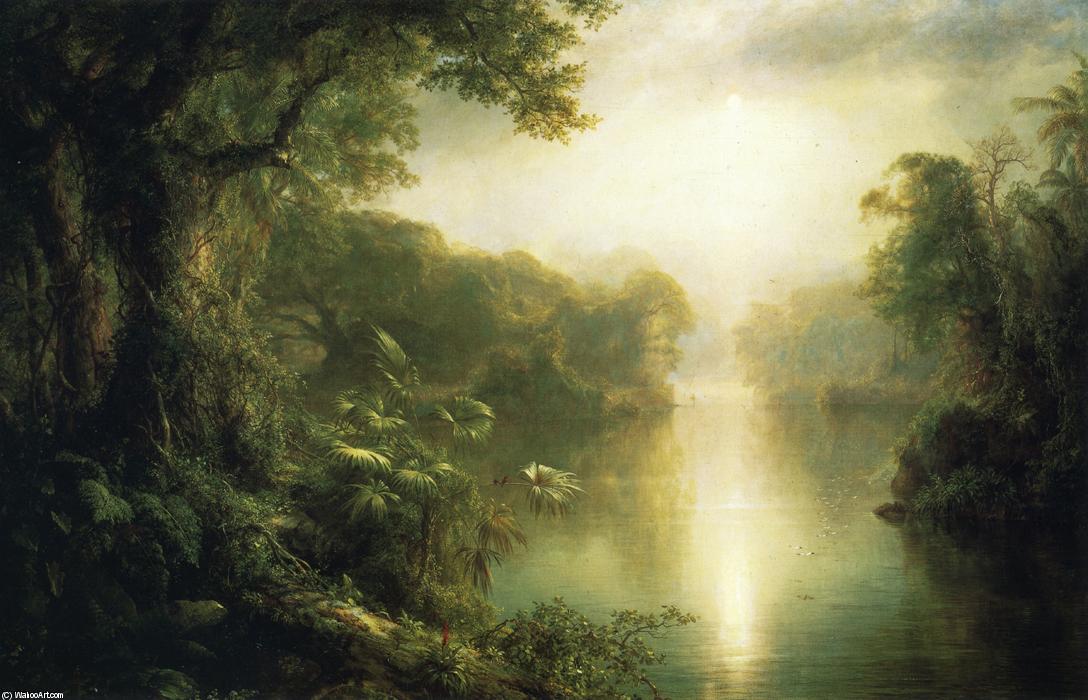
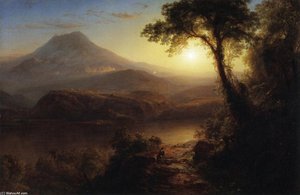
El Rio de Luz (also known as The River of Light)


 Читать далее
Приобретите цифровое изображение высокого разрешения в улучшенном качестве, которое значительно превосходит онлайн-превью.
Каждый файл тщательно подготавливается нашими специалистами с использованием передовых инструментов и экспертной ручной ретуши. Мы гарантируем исключительную четкость, точную цветопередачу и детальную проработку каждого изображения.
Финальный файл доставляется по электронной почте в течение 72 часов и оптимизирован для немедленного использования в профессиональной среде, при верстке и печати. Это тот же уровень качества, которому доверяют ведущие дизайнерские студии, издательства и галереи.
Цифровое изображение
Скачайте файл высокого разрешения для личного использования, печати и творческих проектов. ( Перейти к печати Купить картину ручной работы)
Включено в каждый заказ цифровых изображений
Гарантия экспертной цифровой доставки
Выбирая ArtsDot.com, вы получаете не просто изображение — вы приобретаете профессионально обработанное цифровое произведение искусства, созданное с безупречной точностью и под защитой гарантии качества. Вот всё, что автоматически входит в ваш заказ:

Мгновенная доставка по e-mail
Ваш цифровой файл в высоком разрешении будет отправлен вам по электронной почте в течение 72 часов после оформления заказа — и сразу станет доступен для использования.

Цифровой файл с ИИ-улучшением
Ваше произведение искусства проходит профессиональную оптимизацию с использованием передовых инструментов ИИ и ручной обработки, что гарантирует максимальную детализацию, четкость и точность цветопередачи.

Бессрочная бесплатная повторная доставка
Случайно удалили или потеряли файл? Не беспокойтесь — мы отправим его вам повторно в любое время и совершенно бесплатно.

Без импортных пошлин — навсегда
Наслаждайтесь вашим произведением искусства мгновенно без таможенных пошлин, сборов или затрат на доставку — цифровые загрузки всегда не облагаются налогом.

Гарантия точности цветопередачи
Мы гарантируем, что ваше цифровое изображение максимально точно передает оригинальные цвета благодаря использованию профессиональных инструментов и систем управления цветом.

Гарантия удовлетворенности 100 дней
Если вы не будете удовлетворены своим цифровым изображением, мы внесем правки или вернем 100% стоимости в течение 100 дней — без лишних вопросов.

100% Гарантия возврата средств
Не удовлетворены покупкой? Получите полный возврат средств в течение 100 дней после получения цифрового файла — без лишних вопросов.

Скидки на оптовые заказы
Купите 3 изображения, сэкономьте 10% — Купите 5, сэкономьте 15% — Купите 10+, сэкономьте 20%. Отличное решение для творческих проектов, галерей и агентств.
The River of Light: A Journey into Frederic Church’s Soul
Frederic Edwin Church's *El Rio de Luz* – often referred to as *The River of Light* – isn’t merely a landscape painting; it’s an immersive experience, a portal into the heart of the Amazon rainforest and, perhaps surprisingly, into the artist’s own deeply felt spirituality. Completed in 1877, this monumental canvas transcends simple representation, becoming a vibrant testament to the interconnectedness of nature, humanity, and the divine – a core tenet of the Hudson River School movement to which Church belonged. The painting's genesis lies in sketches Church meticulously created during his extensive travels through South America decades earlier, a process that allowed him to distill the essence of these exotic locales and translate them onto canvas with breathtaking precision and emotional resonance. It’s a work that demands contemplation, inviting viewers to lose themselves within its luminous depths and ponder the profound beauty and mystery of the natural world.A Symphony of Light and Color
Church's mastery lies not just in his technical skill but in his ability to capture and manipulate light – a signature element of the Hudson River School. *El Rio de Luz* is dominated by an extraordinary, almost ethereal glow that seems to emanate from within the scene itself. The sunlight, fractured and diffused through the dense foliage, creates a dazzling interplay of color: vibrant greens, rich browns, and shimmering golds dance across the canvas, evoking the humid atmosphere and dappled light of the rainforest floor. Notice how Church employs a technique known as “lost-edge blending,” where colors are subtly layered to create an illusion of depth and softness, mimicking the way light filters through leaves and branches. The use of complementary colors – particularly the juxtaposition of blues and oranges – intensifies the visual impact, drawing the eye deeper into the painting’s intricate details. The composition is carefully balanced, guiding the viewer's gaze along the river’s course, punctuated by the subtle presence of two figures, likely enjoying a moment of quiet contemplation amidst this overwhelming beauty.Symbolism and Spiritual Resonance
Beyond its purely aesthetic qualities, *El Rio de Luz* is laden with symbolism, reflecting Church’s evolving spiritual beliefs and his fascination with the natural world as a reflection of God's creation. The painting can be interpreted as an allegory for humanity’s relationship with nature – a reminder of our place within a vast and interconnected ecosystem. The river itself represents the flow of life, while the dense vegetation symbolizes both the abundance and the challenges of the wilderness. Crucially, Church was deeply influenced by the writings of Alexander von Humboldt, whose theories emphasized the unity of science, nature, and spirituality. This influence is evident in the painting’s depiction of a vibrant, teeming ecosystem – a microcosm of the entire planet. The subtle cross formed by the sunlight filtering through the trees has been interpreted as a symbol of Christ's sacrifice and resurrection, adding another layer of meaning to this already complex work.Historical Context and Artistic Legacy
*El Rio de Luz* was created during a period of significant social and political upheaval in America – the aftermath of the Civil War and the rise of industrialization. Many artists, including Church, sought solace and inspiration in nature as a counterpoint to the rapid changes occurring in society. The Hudson River School’s emphasis on romantic landscapes reflected a desire to reconnect with the natural world and celebrate its beauty before it was irrevocably altered by progress. Despite initial mixed reviews – some critics found the painting overly detailed and melodramatic – *El Rio de Luz* eventually gained recognition as one of Church's most important works, solidifying his reputation as a leading figure in American landscape art. Today, it remains a powerful testament to the enduring appeal of nature’s beauty and the transformative power of artistic vision. Reproductions of this iconic painting continue to captivate audiences worldwide, offering a glimpse into a bygone era and reminding us of the profound connection between humanity and the natural world.Похожие произведения

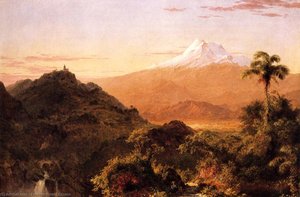
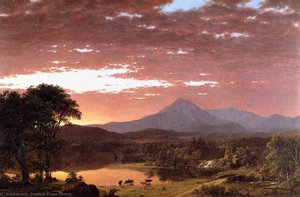
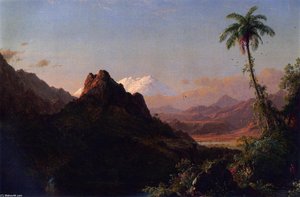
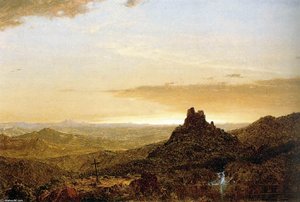
Биография художника
A Pioneer of American Landscape: The Life and Art of Frederic Edwin Church
Frederic Edwin Church, born in Hartford, Connecticut, on May 4th, 1826, emerged as a pivotal figure in the blossoming landscape tradition of 19th-century America. His lineage was steeped in New England history—a direct descendant of Puritan pioneers—and his family’s prosperity afforded him opportunities rare for aspiring artists of the time. This financial stability allowed Church to dedicate himself wholeheartedly to his artistic pursuits, a path that would ultimately lead him to become one of the most celebrated and influential painters of the Hudson River School. His early training began at the age of eighteen under the tutelage of Thomas Cole, the very founder of this distinctly American art movement. These formative years spent in Catskill, New York, were crucial, instilling in Church a deep reverence for nature and a commitment to capturing its grandeur on canvas. The apprenticeship wasn’t merely technical; it was an immersion into a philosophy that saw landscape not just as scenery, but as a reflection of the divine and a symbol of national identity.The Rise of a Master: Style and Influences
Church quickly distinguished himself from his contemporaries through a remarkable ability to blend meticulous realism with a romantic sensibility. His paintings are characterized by an astonishing level of detail, capturing the textures of foliage, the play of light on water, and the imposing scale of mountains with breathtaking accuracy. He meticulously rendered every leaf, every ripple, every shadow, creating images that seemed almost photographic in their precision. However, this wasn’t simply photographic representation; Church infused his work with a dramatic flair, employing sweeping panoramic views, vibrant color palettes—often utilizing a technique called “lost and found edges” to create an illusion of depth—and a masterful command of atmospheric perspective. He was deeply influenced by the scientific explorations of Alexander von Humboldt, whose writings on the interconnectedness of nature resonated profoundly with the artist. Church saw in Humboldt’s observations a way to bridge the gap between art and science, believing that painting could not only depict beauty but also convey complex ecological relationships. This influence is evident in his later expeditions to South America and his attempts to capture the grandeur and diversity of those landscapes—from towering volcanoes to lush rainforests. His paintings often featured dramatic lighting effects, simulating the golden hour or the ethereal glow of twilight, further enhancing their emotional impact.Ventures into the Wild: Travels and Major Works
Church’s ambition extended beyond the familiar landscapes of New England and New York. Driven by a thirst for firsthand experience and inspired by Humboldt's writings, he embarked on daring expeditions to remote corners of the world. These journeys—to South America in 1853 and 1857, and later to the Arctic regions—provided him with an unparalleled wealth of visual material. The Heart of the Andes, completed in 1859, is perhaps his most ambitious undertaking, a monumental canvas that sought to encapsulate the entire ecosystem of the Andean mountains. The painting was exhibited in a specially constructed gallery, illuminated by skylights, creating an immersive experience for viewers and solidifying Church’s reputation as a master showman as well as an artist. The sheer scale of the work—nearly ten feet wide—and its intricate detail demanded that visitors approach it with reverence, almost as if entering another world. Similarly, his series of paintings inspired by his Arctic travels, such as *Icebergs: The North* (1872), demonstrated his versatility and willingness to tackle challenging subjects. These works weren’t merely depictions of remote landscapes; they were statements about the power and fragility of nature, reflecting a growing environmental consciousness in the mid-19th century. He meticulously documented the shifting ice formations, capturing their immense size and the dramatic interplay of light and shadow.A New Approach to Exhibition: The Power of Spectacle
Church revolutionized the way art was presented by staging his major works as special events rather than simply hanging them in galleries. He understood that a painting could be more than just an object; it could be an experience. His exhibition of *The Heart of the Andes* in New York City in 1859, for example, was a sensation—drawing over twelve thousand visitors and generating enormous public excitement. The gallery itself was designed to enhance the viewing experience, with darkened walls and strategically placed skylights that mimicked the natural light of the Andean mountains. Church’s approach challenged the traditional model of art appreciation, transforming it into a communal event. He effectively created “art as spectacle,” captivating audiences with his dramatic presentations and solidifying his position as one of the most popular artists of his time.Legacy and Impact on American Art
Frederic Edwin Church’s influence on American landscape painting is undeniable. He elevated the genre to new heights of artistic achievement and popular acclaim, inspiring generations of artists to explore the beauty and majesty of the natural world. His innovative exhibition practices—presenting single paintings in dramatic settings—set a precedent for future art displays and helped to cultivate a broader public appreciation for art. Beyond his painting, Church was also a dedicated conservationist, advocating for the preservation of Niagara Falls and playing a role in the establishment of national parks. He understood that art could be a powerful tool for raising awareness about environmental issues and inspiring action. His home, Olana, designed and built with his own hands overlooking the Hudson River, stands as a testament to his artistic vision and his deep connection to the landscape.- Church’s work bridged the gap between Romanticism and Realism.
- He pioneered immersive exhibition techniques that captivated audiences.
- His advocacy for conservation foreshadowed the modern environmental movement.
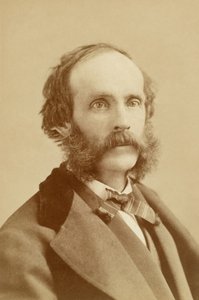
Фредерик Эдвин Керш
1826 - 1900 , США
Основные сведения
- Artistic Movement Or Style: Художественная школа Гудзон
- Artists Or Movements Influenced By This Artist: ['Американская живопись пейзажа']
- Artists Who Influenced This Artist:
- Томас Коул
- А. фон Гумбольдт
- Date Of Birth: 4 мая 1826 г.
- Date Of Death: 7 апреля 1900 г.
- Full Name: Фредерик Эдвин Керш
- Nationality: Американский
- Notable Artworks:
- Оксбоу
- Сердце Андes
- Ледяные глыбы
- Place Of Birth: Гартифорд, США