 Предпросмотр
 Поделиться
 Поделиться
 Детали произведения

 Скачать
 Похожие работы
 Рентгенография
 Слайд-шоу
 Статистика
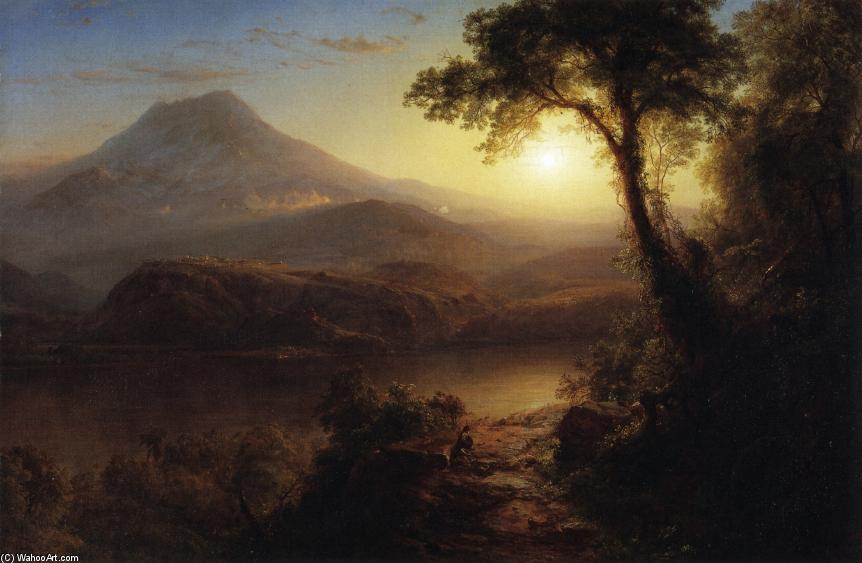
Tropical Scenery (also known as South American Landscape)


 Читать далее
Масляная репродукция ручной работы
Картина маслом на холсте в выбранном вами размере и раме, написанная на заказ нашими художниками. ( Перейти к печати Перейти к цифровым изображениям)




P118B $10

P118H $10

P118W $10

P438Z $10

P508JH $12

P508YH $12

P805H $10

P805Z $10

P919BZ $10

P919G $10

P919XJ $10

P959ZH $10

P968JZ $12

W106C $8

W218G $10

W218JH $8

W218Y $10

W307PJ $10

W316G $10

W316PJ $8

W316Y $10

W398PJ $8

W4111J $10

W500HY $15

W500JH $15

W692G $12

W849H $8

W940BG $15

W953PJ $8




Выберите один из наших стандартных размеров, соответствующих оригинальным пропорциям произведения искусства.

Вы можете указать собственные размеры, чтобы картина идеально вписалась в выбранную раму или пространство. Если выбранный вами размер не соответствует пропорциям оригинала, мы либо обрежем полотно, либо расширим его за счет дополнительных элементов, написанных вручную. Цифровой макет будет отправлен вам на утверждение перед началом производства.
Обратите внимание, что предварительный просмотр на экране не отражает фактическую обрезку или расширение. Только макет точно покажет окончательную композицию.
Хотя доступны индивидуальные размеры, мы рекомендуем выбирать вариант из предопределенного списка, чтобы сохранить исходные пропорции.
После оформления заказа команда ArtsDot.com свяжется с клиентом по электронной почте для уточнения деталей и предоставит предварительный макет
Доставка по всему миру () за 3–4 недели вместо стандартных 5 недель. (12 Сентябрь). Без компромиссов в качестве.

Бесплатная экспресс-доставка по всему миру

Высококачественный льняной холст

Полное страхование доставки

Гарантия возмещения таможенных пошлин

Гарантия точного соответствия цветов

100-дневная политика возврата (только при обнаружении дефектов)

Гарантия возврата 100% средств

Предложение оптовых скидок
 Вариант со стеклом доступен только для размеров менее 110 см

Tropical Scenery (also known as South American Landscape)
Техника репродукции
Размер репродукции
-


Итоговая стоимость
$ 263
A Window to a Lost Paradise: Exploring Frederic Edwin Church’s Tropical Scenery
Frederic Edwin Church's "Tropical Scenery," often referred to as “South American Landscape,” isn’t merely a painting; it’s an immersive experience. Completed in 1873, this monumental canvas transports the viewer to a vibrant, almost hallucinatory vista of the Andes Mountains and their surrounding wilderness – a world brimming with lush vegetation, cascading waterfalls, and the promise of untamed beauty. More than just a depiction of a landscape, it’s a testament to Church's mastery of light, color, and his profound connection to the natural world, reflecting the burgeoning Romantic movement in American art and a fascination with the exotic and unexplored.
Church’s artistic journey was deeply intertwined with scientific exploration. He corresponded regularly with Alexander von Humboldt, whose theories about the interconnectedness of nature profoundly influenced Church's approach to painting. Humboldt championed the idea that artists could accurately represent the diversity of the natural world through visual observation and meticulous detail – a philosophy that fueled Church’s ambition to capture the grandeur and complexity of landscapes across continents. This intellectual framework is evident in “Tropical Scenery,” where every leaf, every ripple of water, feels painstakingly rendered, contributing to an overwhelming sense of realism despite the painting's heightened emotional impact.
The Language of Light: Technique and Color
Church’s technique is nothing short of revolutionary for his time. He employed a layering method known as “imbuement,” meticulously building up thin glazes of color over multiple sessions, often weeks or months. This process allowed him to achieve an unparalleled luminosity – the light seems to emanate from within the canvas itself. The vibrant hues—the deep greens of the foliage, the fiery oranges and reds of the sunset, the cool blues of the distant mountains—are not simply applied; they’re blended and modulated with astonishing subtlety. Notice how the sunlight filters through the trees, creating dappled patterns on the ground, or how the mist clings to the lower slopes, softening the contours of the landscape.
Crucially, Church wasn't interested in a straightforward representation of reality. He used color and light to evoke an emotional response – a sense of awe, wonder, and perhaps even a touch of melancholy. The dramatic sunset, for instance, isn’t just a beautiful spectacle; it suggests the fleeting nature of beauty and the passage of time. The painting's scale—typically over seven feet tall—further enhances this immersive effect, drawing the viewer into the heart of the scene.
Symbolism and the Spirit of Exploration
Beyond its technical brilliance, “Tropical Scenery” is rich in symbolic meaning. The towering Andes Mountains represent both the power and majesty of nature, as well as a sense of human insignificance in comparison. The waterfalls symbolize renewal and transformation, while the dense vegetation hints at hidden mysteries and unexplored territories. The inclusion of figures – small groups of people observing the landscape – subtly underscores humanity’s desire to connect with and understand the natural world. These figures are not dominant; they serve as a reminder of our place within this vast and awe-inspiring panorama.
Furthermore, the painting can be interpreted as an allegory for America's westward expansion. The untamed wilderness depicted in “Tropical Scenery” mirrors the challenges and opportunities presented by the frontier – a landscape ripe with potential but also fraught with danger. Church’s work reflects the nation’s burgeoning spirit of exploration and its belief in progress, while simultaneously acknowledging the profound respect that should be afforded to the natural world.
A Legacy of Beauty: Reproductions and Appreciation
Today, “Tropical Scenery” remains one of Frederic Edwin Church's most celebrated works, housed at the Brooklyn Museum. The impact of this painting extends far beyond the walls of that institution, inspiring artists, designers, and art lovers alike. High-quality reproductions offer a remarkable opportunity to experience the beauty and emotional depth of this masterpiece in your own home. Whether you’re seeking a stunning addition to your living room or simply yearning for a connection with nature's grandeur, a faithful reproduction of “Tropical Scenery” is a timeless treasure.
Похожие произведения
Биография художника
A Pioneer of American Landscape: The Life and Art of Frederic Edwin Church
Frederic Edwin Church, born in Hartford, Connecticut, on May 4th, 1826, emerged as a pivotal figure in the blossoming landscape tradition of 19th-century America. His lineage was steeped in New England history—a direct descendant of Puritan pioneers—and his family’s prosperity afforded him opportunities rare for aspiring artists of the time. This financial stability allowed Church to dedicate himself wholeheartedly to his artistic pursuits, a path that would ultimately lead him to become one of the most celebrated and influential painters of the Hudson River School. His early training began at the age of eighteen under the tutelage of Thomas Cole, the very founder of this distinctly American art movement. These formative years spent in Catskill, New York, were crucial, instilling in Church a deep reverence for nature and a commitment to capturing its grandeur on canvas. The apprenticeship wasn’t merely technical; it was an immersion into a philosophy that saw landscape not just as scenery, but as a reflection of the divine and a symbol of national identity.The Rise of a Master: Style and Influences
Church quickly distinguished himself from his contemporaries through a remarkable ability to blend meticulous realism with a romantic sensibility. His paintings are characterized by an astonishing level of detail, capturing the textures of foliage, the play of light on water, and the imposing scale of mountains with breathtaking accuracy. He meticulously rendered every leaf, every ripple, every shadow, creating images that seemed almost photographic in their precision. However, this wasn’t simply photographic representation; Church infused his work with a dramatic flair, employing sweeping panoramic views, vibrant color palettes—often utilizing a technique called “lost and found edges” to create an illusion of depth—and a masterful command of atmospheric perspective. He was deeply influenced by the scientific explorations of Alexander von Humboldt, whose writings on the interconnectedness of nature resonated profoundly with the artist. Church saw in Humboldt’s observations a way to bridge the gap between art and science, believing that painting could not only depict beauty but also convey complex ecological relationships. This influence is evident in his later expeditions to South America and his attempts to capture the grandeur and diversity of those landscapes—from towering volcanoes to lush rainforests. His paintings often featured dramatic lighting effects, simulating the golden hour or the ethereal glow of twilight, further enhancing their emotional impact.Ventures into the Wild: Travels and Major Works
Church’s ambition extended beyond the familiar landscapes of New England and New York. Driven by a thirst for firsthand experience and inspired by Humboldt's writings, he embarked on daring expeditions to remote corners of the world. These journeys—to South America in 1853 and 1857, and later to the Arctic regions—provided him with an unparalleled wealth of visual material. The Heart of the Andes, completed in 1859, is perhaps his most ambitious undertaking, a monumental canvas that sought to encapsulate the entire ecosystem of the Andean mountains. The painting was exhibited in a specially constructed gallery, illuminated by skylights, creating an immersive experience for viewers and solidifying Church’s reputation as a master showman as well as an artist. The sheer scale of the work—nearly ten feet wide—and its intricate detail demanded that visitors approach it with reverence, almost as if entering another world. Similarly, his series of paintings inspired by his Arctic travels, such as *Icebergs: The North* (1872), demonstrated his versatility and willingness to tackle challenging subjects. These works weren’t merely depictions of remote landscapes; they were statements about the power and fragility of nature, reflecting a growing environmental consciousness in the mid-19th century. He meticulously documented the shifting ice formations, capturing their immense size and the dramatic interplay of light and shadow.A New Approach to Exhibition: The Power of Spectacle
Church revolutionized the way art was presented by staging his major works as special events rather than simply hanging them in galleries. He understood that a painting could be more than just an object; it could be an experience. His exhibition of *The Heart of the Andes* in New York City in 1859, for example, was a sensation—drawing over twelve thousand visitors and generating enormous public excitement. The gallery itself was designed to enhance the viewing experience, with darkened walls and strategically placed skylights that mimicked the natural light of the Andean mountains. Church’s approach challenged the traditional model of art appreciation, transforming it into a communal event. He effectively created “art as spectacle,” captivating audiences with his dramatic presentations and solidifying his position as one of the most popular artists of his time.Legacy and Impact on American Art
Frederic Edwin Church’s influence on American landscape painting is undeniable. He elevated the genre to new heights of artistic achievement and popular acclaim, inspiring generations of artists to explore the beauty and majesty of the natural world. His innovative exhibition practices—presenting single paintings in dramatic settings—set a precedent for future art displays and helped to cultivate a broader public appreciation for art. Beyond his painting, Church was also a dedicated conservationist, advocating for the preservation of Niagara Falls and playing a role in the establishment of national parks. He understood that art could be a powerful tool for raising awareness about environmental issues and inspiring action. His home, Olana, designed and built with his own hands overlooking the Hudson River, stands as a testament to his artistic vision and his deep connection to the landscape.- Church’s work bridged the gap between Romanticism and Realism.
- He pioneered immersive exhibition techniques that captivated audiences.
- His advocacy for conservation foreshadowed the modern environmental movement.
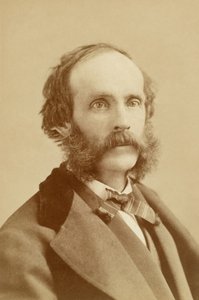
Фредерик Эдвин Керш
1826 - 1900 , США
Основные сведения
- Artistic Movement Or Style: Художественная школа Гудзон
- Artists Or Movements Influenced By This Artist: ['Американская живопись пейзажа']
- Artists Who Influenced This Artist:
- Томас Коул
- А. фон Гумбольдт
- Date Of Birth: 4 мая 1826 г.
- Date Of Death: 7 апреля 1900 г.
- Full Name: Фредерик Эдвин Керш
- Nationality: Американский
- Notable Artworks:
- Оксбоу
- Сердце Андes
- Ледяные глыбы
- Place Of Birth: Гартифорд, США
Похожие статьи
David Johnson: A Luminist Master of the Hudson River School & Beyond
Explore the captivating landscapes of David Johnson, a key figure in the Hudson River School & Luminism movement. Discover his artistic evolution, legacy, and how to collect his works with ArtsDot.
Школа реки Гудзон: 10 шедевров, изменивших американскую живопись | ArtsDot
Погрузитесь в мир Школы реки Гудзон! 10 шедевров Томаса Коула, Фредерика Чёрча и других мастеров американского романтизма. Купите репродукции картин высокого качества для вашего интерьера на ArtsDot.com.
The Sublime Landscape: Exploring the Hudson River School Movement
Explore the captivating world of the Hudson River School! Discover the history, artists, and defining characteristics of this iconic American art movement. Learn about Romanticism's influence & find inspiration for your collection.
Robert Spencer: Luminism, Narrative & the American Landscape Tradition
Explore the captivating world of Luminism & the Hudson River School with our expert analysis. Discover the history, artists, and enduring beauty of 19th-century American landscape painting. Find museum-quality reproductions at ArtsDot.
Thomas Worthington Whittredge: Capturing the American Pastoral Ideal with Luminist Light
Explore the luminous landscapes of Thomas Worthington Whittredge, a key figure in the Hudson River School and master of Luminism. Discover his captivating paintings & legacy with ArtsDot.