

 Предпросмотр
 Поделиться
 Поделиться
 Детали произведения

 Скачать
 Похожие работы
 Рентгенография
 Слайд-шоу
 Статистика
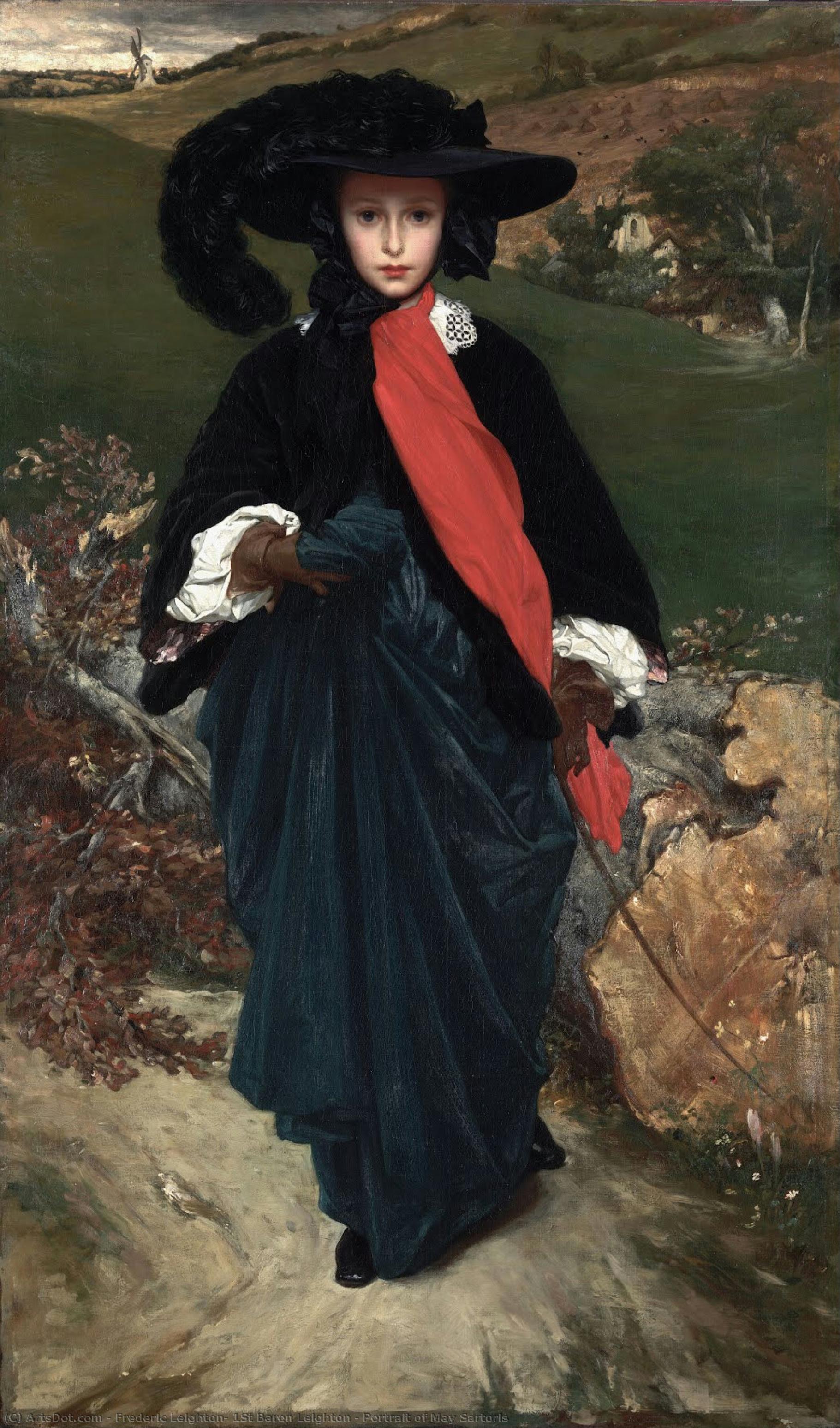
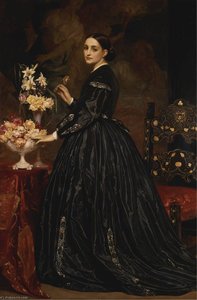
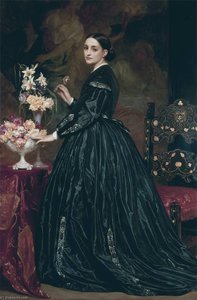
Portrait of May Sartoris
 Oil On Canvas
- WallArt
- Academic Realism
 1860
1860 152.0 x 90.0 cm
 Кимбелл Арт-музей
 Читать далее
Приобретите цифровое изображение высокого разрешения в улучшенном качестве, которое значительно превосходит онлайн-превью.
Каждый файл тщательно подготавливается нашими специалистами с использованием передовых инструментов и экспертной ручной ретуши. Мы гарантируем исключительную четкость, точную цветопередачу и детальную проработку каждого изображения.
Финальный файл доставляется по электронной почте в течение 72 часов и оптимизирован для немедленного использования в профессиональной среде, при верстке и печати. Это тот же уровень качества, которому доверяют ведущие дизайнерские студии, издательства и галереи.
Цифровое изображение
Скачайте файл высокого разрешения для личного использования, печати и творческих проектов. ( Перейти к печати Купить картину ручной работы)
Включено в каждый заказ цифровых изображений
Гарантия экспертной цифровой доставки
Выбирая ArtsDot.com, вы получаете не просто изображение — вы приобретаете профессионально обработанное цифровое произведение искусства, созданное с безупречной точностью и под защитой гарантии качества. Вот всё, что автоматически входит в ваш заказ:

Мгновенная доставка по e-mail
Ваш цифровой файл в высоком разрешении будет отправлен вам по электронной почте в течение 72 часов после оформления заказа — и сразу станет доступен для использования.

Цифровой файл с ИИ-улучшением
Ваше произведение искусства проходит профессиональную оптимизацию с использованием передовых инструментов ИИ и ручной обработки, что гарантирует максимальную детализацию, четкость и точность цветопередачи.

Бессрочная бесплатная повторная доставка
Случайно удалили или потеряли файл? Не беспокойтесь — мы отправим его вам повторно в любое время и совершенно бесплатно.

Без импортных пошлин — навсегда
Наслаждайтесь вашим произведением искусства мгновенно без таможенных пошлин, сборов или затрат на доставку — цифровые загрузки всегда не облагаются налогом.

Гарантия точности цветопередачи
Мы гарантируем, что ваше цифровое изображение максимально точно передает оригинальные цвета благодаря использованию профессиональных инструментов и систем управления цветом.

Гарантия удовлетворенности 100 дней
Если вы не будете удовлетворены своим цифровым изображением, мы внесем правки или вернем 100% стоимости в течение 100 дней — без лишних вопросов.

100% Гарантия возврата средств
Не удовлетворены покупкой? Получите полный возврат средств в течение 100 дней после получения цифрового файла — без лишних вопросов.

Скидки на оптовые заказы
Купите 3 изображения, сэкономьте 10% — Купите 5, сэкономьте 15% — Купите 10+, сэкономьте 20%. Отличное решение для творческих проектов, галерей и агентств.
A Glimpse into Victorian Society: Frederic Leighton’s ‘Portrait of May Sartoris’
Frederic Leighton's “Portrait of May Sartoris,” painted around 1860, is more than just a likeness; it’s a meticulously crafted window into the social and artistic currents of mid-Victorian England. Leighton, already establishing himself as a leading figure in the Aesthetic Movement, sought to capture not merely appearance but also an atmosphere – a sense of delicate beauty intertwined with the poignant awareness of time's passage. The painting depicts May Sartoris, the young daughter of Adelaide Sartoris, a celebrated hostess and socialite whose circle included Leighton himself. This connection imbued the portrait with a subtle layer of aristocratic intrigue, reflecting the era’s fascination with both artistic patronage and the complexities of high society.
- Historical Context: The mid-19th century was a period of immense social change in Britain, marked by rapid industrialization, evolving class structures, and a burgeoning interest in art and beauty. Leighton’s work reflects this shift, embracing the ideals of the Aesthetic Movement – an emphasis on beauty, sensuality, and emotional expression, often drawing inspiration from classical mythology and literature.
- The Sartoris Circle: Adelaide Sartoris's salon was renowned for its artistic gatherings, providing Leighton with invaluable exposure to influential figures in London’s cultural scene. The portrait itself can be viewed as a testament to this social connection, subtly showcasing the influence of wealth and refinement.
A Study in Academic Realism – Technique and Composition
Leighton's mastery lies not just in capturing a subject’s likeness but in rendering it with an almost photographic realism, tempered by a distinctly academic approach. The painting is executed primarily in oil on canvas, utilizing layered brushstrokes and glazing techniques to build up depth and luminosity. Notice the meticulous attention to detail – the delicate folds of May's dress, the subtle texture of her skin, and the intricate patterns of the background landscape. The composition itself is carefully balanced, with May occupying a significant portion of the canvas while the surrounding elements provide context without overwhelming the subject.
The artist employs a flattened perspective, characteristic of portraiture from this era, creating a sense of intimacy and immediacy. Atmospheric perspective – the softening of distant features – subtly recedes into the background, drawing the viewer’s eye towards May's face. The use of light is particularly noteworthy; it’s soft and diffused, casting gentle shadows that enhance the three-dimensionality of the figure and create a mood of quiet contemplation.
Symbolism and Emotional Resonance – A Fragile Beauty
Beyond its technical brilliance, “Portrait of May Sartoris” is rich in symbolic meaning. The fallen tree in the background immediately evokes themes of mortality and the fleeting nature of beauty—a poignant reminder that even youthful grace is subject to time’s relentless march. May's expression is serene yet melancholic, hinting at a quiet awareness of her own vulnerability. Her gaze, direct and slightly averted, suggests both introspection and a subtle reserve.
The setting – a country residence in Hampshire – further reinforces the painting’s themes of nostalgia and domesticity. It speaks to a world of privilege and refinement, yet also hints at the isolation inherent in such an environment. The overall effect is one of understated elegance and profound emotional depth—a testament to Leighton's ability to imbue his subjects with a sense of timelessness.
A Legacy of Beauty – Reproduction and Appreciation
Frederic Leighton’s “Portrait of May Sartoris” remains a captivating example of Victorian portraiture, admired for its technical skill, evocative symbolism, and enduring beauty. Today, high-quality reproductions offer an accessible way to experience this masterpiece firsthand. When selecting a reproduction, consider the artist's interpretation – ensuring it faithfully captures Leighton’s nuanced approach to light, color, and composition. This painting serves as a poignant reminder of a bygone era, inviting us to contemplate the complexities of beauty, mortality, and the enduring power of art.
Похожие произведения

Биография художника
early life and education
frederic leighton, a renowned british painter, draughtsman, and sculptor, was born on december 3, 1830, in scarborough, united kingdom. his family's wealth, courtesy of his grandfather's successful medical practice for russian tsars, provided him with the means to pursue his artistic endeavors. leighton received his early education at university college school, london, followed by artistic training under eduard von steinle and giovanni costa.artistic career
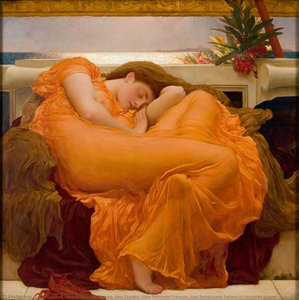
leighton's works, characterized by their academic style, often depicted historical, biblical, and classical subject matter. his paintings were highly popular and expensive during his lifetime, but fell out of favor in the early 20th century. notable works include:- june flaming (1895; museo de arte de ponce), a masterpiece showcasing leighton's skill with vibrant colors.
- after vespers (1871; princeton university art museum), a poignant piece reflecting the artist's ability to capture emotional depth.
- cymon and iphigenia (218 x 390 cm, art gallery of new south wales, sydney, australia), a sculpture that marked the beginning of a renaissance in british sculpture, known as the new sculpture.
achievements and legacy
leighton was elected president of the royal academy in 1878, a position he held until his death. he also designed elizabeth barrett browning's tomb for robert browning in the english cemetery, florence, in 1861. leighton's contributions to british art are undeniable, with his works representing britain at the 1900 paris exhibition. important links:- discover frederic leighton's "the bath of psyche" (tate britain, london, united kingdom)
- explore frederic leighton's artworks on ArtsDot
- read more about frederic leighton on wikipedia
museums and collections
leighton's works can be found in various museums, including the tate britain (london, united kingdom), princeton university art museum (united states), and the art gallery of new south wales (sydney, australia). his legacy continues to inspire artists and art enthusiasts alike. lord frederic leighton, a true master of british victorian art, left an indelible mark on the world of painting and sculpture.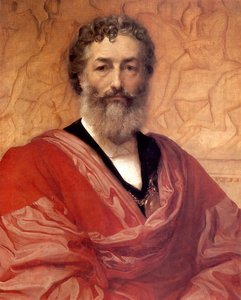
frederic leighton, 1st baron leighton
1830 - 1896 , United Kingdom
Основные сведения
- Artistic Movement Or Style: Academic Painting
- Artists Or Movements Influenced By This Artist:
- Pre-Raphaelites
- New Sculpture
- Artists Who Influenced This Artist:
- Eduard von Steinle
- Giovanni Costa
- Date Of Birth: December 3, 1830
- Date Of Death: January 25, 1896
- Full Name: Frederic Leighton, 1st Baron Leighton
- Nationality: British
- Notable Artworks:
- June Flaming
- After Vespers
- Cymon and Iphigenia
- Place Of Birth: Scarborough, United Kingdom