


 Предпросмотр
 Поделиться
 Поделиться
 Детали произведения

 Скачать
 Похожие работы
 Рентгенография
 Слайд-шоу
 Статистика
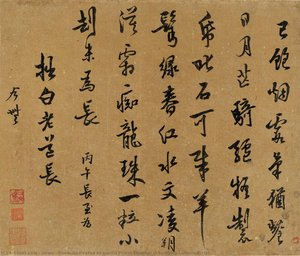
Chinese style poem on kaishi paper. By Fujiwara no Sukemasa

 Читать далее
Приобретите цифровое изображение высокого разрешения в улучшенном качестве, которое значительно превосходит онлайн-превью.
Каждый файл тщательно подготавливается нашими специалистами с использованием передовых инструментов и экспертной ручной ретуши. Мы гарантируем исключительную четкость, точную цветопередачу и детальную проработку каждого изображения.
Финальный файл доставляется по электронной почте в течение 72 часов и оптимизирован для немедленного использования в профессиональной среде, при верстке и печати. Это тот же уровень качества, которому доверяют ведущие дизайнерские студии, издательства и галереи.
Цифровое изображение
Скачайте файл высокого разрешения для личного использования, печати и творческих проектов. ( Перейти к печати Купить картину ручной работы)
Включено в каждый заказ цифровых изображений
Гарантия экспертной цифровой доставки
Выбирая ArtsDot.com, вы получаете не просто изображение — вы приобретаете профессионально обработанное цифровое произведение искусства, созданное с безупречной точностью и под защитой гарантии качества. Вот всё, что автоматически входит в ваш заказ:

Мгновенная доставка по e-mail
Ваш цифровой файл в высоком разрешении будет отправлен вам по электронной почте в течение 72 часов после оформления заказа — и сразу станет доступен для использования.

Цифровой файл с ИИ-улучшением
Ваше произведение искусства проходит профессиональную оптимизацию с использованием передовых инструментов ИИ и ручной обработки, что гарантирует максимальную детализацию, четкость и точность цветопередачи.

Бессрочная бесплатная повторная доставка
Случайно удалили или потеряли файл? Не беспокойтесь — мы отправим его вам повторно в любое время и совершенно бесплатно.

Без импортных пошлин — навсегда
Наслаждайтесь вашим произведением искусства мгновенно без таможенных пошлин, сборов или затрат на доставку — цифровые загрузки всегда не облагаются налогом.

Гарантия точности цветопередачи
Мы гарантируем, что ваше цифровое изображение максимально точно передает оригинальные цвета благодаря использованию профессиональных инструментов и систем управления цветом.

Гарантия удовлетворенности 100 дней
Если вы не будете удовлетворены своим цифровым изображением, мы внесем правки или вернем 100% стоимости в течение 100 дней — без лишних вопросов.

100% Гарантия возврата средств
Не удовлетворены покупкой? Получите полный возврат средств в течение 100 дней после получения цифрового файла — без лишних вопросов.

Скидки на оптовые заказы
Купите 3 изображения, сэкономьте 10% — Купите 5, сэкономьте 15% — Купите 10+, сэкономьте 20%. Отличное решение для творческих проектов, галерей и агентств.
Похожие произведения




Биография художника
The Poet of Elegance: The Life and Legacy of Fujiwara no Sukemasa
In the golden twilight of the Heian period, an era defined by unparalleled aesthetic refinement and the delicate whispers of the imperial court, one name emerged as a beacon of calligraphic mastery: Fujiwara no Sukemasa. Known also by the evocative name Sari, he was far more than a mere statesman; he was a virtuoso of the brush, a man whose ink flowed with the grace of the natural world and the structured elegance of Japanese tradition. As one of the legendary Sanseki, or "Three Brush Traces," alongside Ono no Michikaze and Fujiwara Yukinari, Sukemasa helped forge a distinct national identity in art, moving away from heavy Chinese influences toward a uniquely Japanese fluidity known as wayōshodō.
Born in 944 into the illustrious Fujiwara clan, Sukemasa’s very existence was steeped in the politics and prestige of the imperial court. His lineage provided him with an education that blended military discipline—inherited from his father, the major general Fujiwara no Atsutoshi—with the profound scholarly pursuits required of a high-ranking noble. This duality of character, a blend of strength and sensitivity, would later manifest in his calligraphy. Following the death of his biological father, he was adopted by the powerful Fujiwara no Saneyori, a move that catapulted him into the inner sanctums of power. By his early twenties, Sukemasa had already ascended to the rank of chamberlain, placing him at the heart of imperial life where every brushstroke and poetic verse carried immense social weight.
A Master of Flow and Form
The true genius of Sukemasa lay in his ability to command the kana script, a phonetic Japanese writing system that demanded a delicate touch and an intuitive sense of rhythm. Unlike the more rigid, structural styles of earlier eras, Sukemasa’s work embraced a lyrical movement. His calligraphy was characterized by a seamless transition between characters, where the energy of one stroke seemed to bleed poetically into the next, creating a visual melody on the paper. This technique allowed him to capture not just words, but the very essence of the emotions expressed within them—a quality that earned him his reputation as a "poet of elegance."
His artistic development was deeply intertwined with the shifting political tides of the reigns of Emperors Kazan and Ichijō. While his career in the bureaucracy saw periods of both rapid ascent and frustrating stagnation, his artistic output remained a constant source of brilliance. He navigated a court where influence was often dictated by familial ties, and though he occasionally found himself overshadowed by ambitious relatives of the throne, his mastery of the brush remained unassailable. To witness a piece of Sukemasa’s calligraphy is to experience the jōdai-yō style—an ancient, refined way of writing that prioritized harmony, balance, and a profound connection to the ephemeral beauty of the moment.
Historical Significance and Enduring Spirit
The historical importance of Fujiwara no Sukemasa cannot be overstated. He was a pivotal figure in the transition of Japanese calligraphy from an imitation of continental styles to a self-assured, indigenous art form. Through his work, the brush became a tool for expressing the uniquely Japanese sensibilities of mono no aware—the pathos of things and the bittersweet realization of impermanence. His legacy is preserved not only in the physical remnants of his ink on paper but in the very DNA of Japanese aesthetic tradition.
Even as the political structures of the Heian period eventually gave way to new eras, the "Three Brush Traces" remained the standard against which all subsequent calligraphers were measured. Sukemasa’s life, marked by both the heights of imperial prestige and the quiet struggles of a dedicated artist, serves as a testament to the power of creative devotion. He remains an eternal figure in the annals of art history, reminding us that true elegance is found in the perfect balance between disciplined technique and the free, uninhibited spirit of the soul.
fujiwara no sukemasa
Japan
Основные сведения
- Artistic Movement Or Style: Kana Script
- Artists Or Movements Influenced By This Artist: ['Shodoka Artist']
- Artists Who Influenced This Artist:
- Ono no Michikaze
- Fujiwara Yukinari
- Date Of Death: August 19, 998
- Full Name: Fujiwara no Sukemasa
- Nationality: Japanese
- Notable Artworks: ['Rirakujō']
- Place Of Birth: Japan