


 Предпросмотр
 Поделиться
 Поделиться
 Детали произведения

 Скачать
 Похожие работы
 Рентгенография
 Слайд-шоу
 Статистика
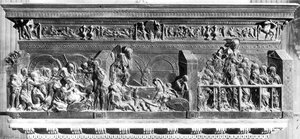
Feast in the House of Ulysses


 Читать далее
Жикле / Арт-принт
Печать (жикле) или холст музейного качества с быстрыми сроками изготовления и широким выбором вариантов отделки. ( Купить картину ручной работы Перейти к цифровым изображениям)
































Выберите один из наших стандартных размеров, соответствующих оригинальным пропорциям произведения искусства.

Вы можете указать свои собственные размеры, чтобы репродукция идеально подошла под конкретную раму или пространство. Если выбранный вами размер не будет соответствовать пропорциям оригинала, мы либо обрежем произведение, либо дополним изображение зеркальным отражением краев или однотонной заливкой. Перед началом производства вам будет отправлен цифровой макет для утверждения.
Пожалуйста, обратите внимание, что предварительный просмотр на экране не отображает фактическую обрезку или расширение изображения. Только макет точно покажет финальную композицию.
Несмотря на возможность заказа индивидуальных размеров, мы рекомендуем выбирать размер из предопределенного списка, чтобы сохранить оригинальные пропорции.
Доставка по всему миру () за 2 недели вместо стандартных 4/5 недель. (14 Сентябрь)

Бесплатная экспресс-доставка по всему миру

Высококачественный льняной холст

Полное страхование доставки

Гарантия возмещения таможенных пошлин

Гарантия точного соответствия цветов

100-дневная политика возврата (только при обнаружении дефектов)

Гарантия возврата 100% средств

Предложение оптовых скидок
 Вариант со стеклом доступен только для размеров менее 110 см

Feast in the House of Ulysses
Жикле / Арт-принт
Размер репродукции
-


Итоговая стоимость
$ 62
Похожие произведения

Биография художника
A Neoclassical Voice Amidst Russian Reform
Fyodor Petrovich Tolstoy (1783-1873) stands as a singular figure in 19th-century Russian art—a sculptor whose meticulous craftsmanship and unwavering adherence to classical ideals offered a profound counterpoint to the burgeoning Romantic fervor sweeping across Europe. Born into the illustrious and aristocratic Tolstoy family, his lineage traced back to influential landowners who wielded considerable sway within the Imperial Court. This noble upbringing instilled in him a disciplined intellect and an appreciation for artistic excellence from a remarkably young age. His father, Count Pyotr Andreyevich Tolstoy, served as Vice-Chancellor of Saint Petersburg University and held a prominent position in the Ministry of War Supplies, shaping Fyodor's worldview through early exposure to discussions on governance, societal responsibility, and the weight of historical legacy.
The seeds of his artistic journey were sown in the intimate setting of his childhood home. Evidence from his earliest sketches, which are now preserved within the esteemed Tretyakov Gallery, suggests that Fyodor’s inclinations were nurtured by his mother, Elizabeth Barbot-de-Marni. Recognizing his innate talent, she encouraged him to pursue painting with great diligence, providing a foundation of technical skill that would later expand into much more complex mediums. His education was remarkably comprehensive, far beyond the mere strokes of a brush; he immersed himself in the study of mathematics, astronomy, political economy, zoombology, archaeology, and numismatics. This multidisciplinary approach cultivated a discerning aesthetic sensibility, allowing him to approach sculpture and medal-making with a scientific precision that few of his contemporaries could match.
Mastery of Form and the Classical Ideal
As his career progressed, Tolstoy became a master of diverse and delicate mediums, including wax reliefs, watercolours, medallions, and silhouettes. His work is distinguished by a certain cool detachment and an economical use of form that epitomizes the Neoclassical style. While the era around him began to embrace the emotional turbulence and dramatic shadows of Romanticism, Tolstoy remained steadfast in his commitment to the clarity and balance of antiquity. This dedication was perhaps most evident in his celebrated wax reliefs, such as The Battle at Borodino (1817). In this work, he does not merely depict a pivotal moment of the Napoleonic Wars; rather, he constructs a carefully controlled tableau of chaos, using the soft, malleable nature of wax to capture the intensity of the conflict through a lens of disciplined composition.
His contributions to the art of the medal were equally transformative. As a pioneer of medal working in Russia, he brought a level of detail and historical gravity to the medium that elevated it from mere ornamentation to a significant form of historical documentation. His ability to translate monumental events into small, portable, yet deeply expressive objects allowed him to capture the spirit of his age with an intimacy that larger-scale monuments often lacked. This technical mastery was complemented by his long-standing leadership within the artistic community, having served as the Vice-President of the Imperial Academy of Arts for forty years between 1828 and 1868.
Legacy and Historical Significance
The life of Fyodor Petrovich Tolstoy was a bridge between the rigid traditions of the past and the evolving identity of the Russian Empire. His career spanned nearly a century of profound social and political change, yet his artistic output remained anchored in the enduring power of classical principles. Through his work, he provided a sense of continuity and stability, reflecting the values of an era that sought to find order within the shifting tides of history.
Today, the significance of his oeuvre is recognized through several key achievements:
- Foundational Role in Russian Numismatics: He is credited with establishing and refining the art of medal-making within the Russian imperial tradition.
- Institutional Leadership: His four-decade tenure as Vice-President of the Imperial Academy of Arts allowed him to shape the direction of artistic education and standards in Russia.
- Preservation of History: Through his wax reliefs and medallions, he created a permanent, tactile record of significant historical milestones, such as the 1812 uprising and the Battle of Borodino.
- Stylistic Integrity: He remains one of the most pure representatives of Neoclassicism in Russia, offering a sophisticated alternative to the more emotive movements of his time.
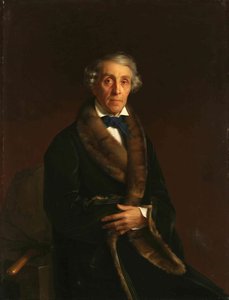
fyodor petrovich tolstoy
1783 - 1873
Основные сведения
- Artistic Movement Or Style: Neoclassical
- Artists Or Movements Influenced By This Artist: ['Classical Art']
- Artists Who Influenced This Artist: ['Orest Kiprensky']
- Date Of Birth: February 21, 1783
- Date Of Death: April 25, 1873
- Full Name: Fyodor Petrovich Tolstoy
- Nationality: Russian
- Notable Artworks:
- The Battle at Borodino
- The Uprising in 1812
- Place Of Birth: St. Petersburg, Russia