

 Предпросмотр
 Поделиться
 Поделиться
 Детали произведения

 Скачать
 Похожие работы
 Рентгенография
 Слайд-шоу
 Статистика
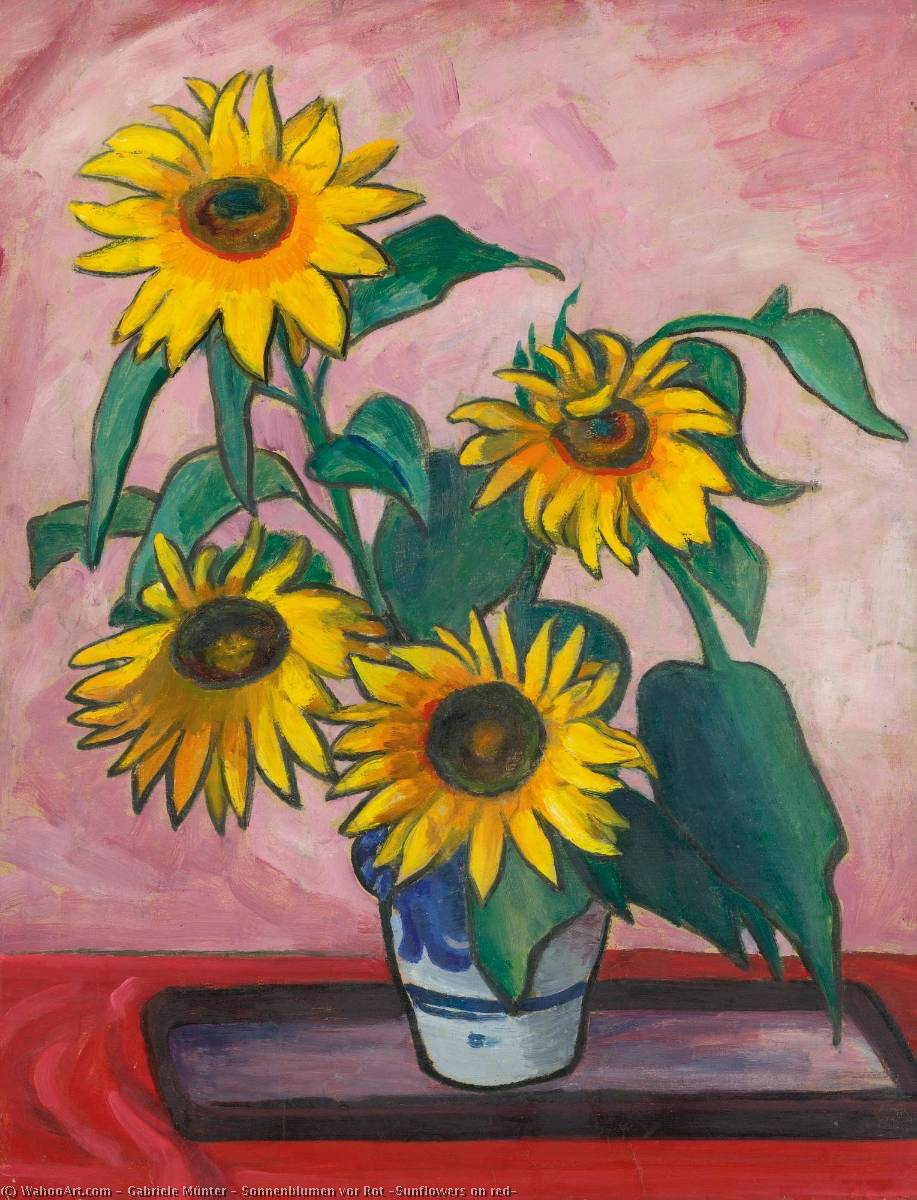
Sonnenblumen vor Rot (Sunflowers on red)
 1946
1946 64.0 x 50.0 cm
 Читать далее
Приобретите цифровое изображение высокого разрешения в улучшенном качестве, которое значительно превосходит онлайн-превью.
Каждый файл тщательно подготавливается нашими специалистами с использованием передовых инструментов и экспертной ручной ретуши. Мы гарантируем исключительную четкость, точную цветопередачу и детальную проработку каждого изображения.
Финальный файл доставляется по электронной почте в течение 72 часов и оптимизирован для немедленного использования в профессиональной среде, при верстке и печати. Это тот же уровень качества, которому доверяют ведущие дизайнерские студии, издательства и галереи.
Цифровое изображение
Скачайте файл высокого разрешения для личного использования, печати и творческих проектов. ( Перейти к печати Купить картину ручной работы)
Включено в каждый заказ цифровых изображений
Гарантия экспертной цифровой доставки
Выбирая ArtsDot.com, вы получаете не просто изображение — вы приобретаете профессионально обработанное цифровое произведение искусства, созданное с безупречной точностью и под защитой гарантии качества. Вот всё, что автоматически входит в ваш заказ:

Мгновенная доставка по e-mail
Ваш цифровой файл в высоком разрешении будет отправлен вам по электронной почте в течение 72 часов после оформления заказа — и сразу станет доступен для использования.

Цифровой файл с ИИ-улучшением
Ваше произведение искусства проходит профессиональную оптимизацию с использованием передовых инструментов ИИ и ручной обработки, что гарантирует максимальную детализацию, четкость и точность цветопередачи.

Бессрочная бесплатная повторная доставка
Случайно удалили или потеряли файл? Не беспокойтесь — мы отправим его вам повторно в любое время и совершенно бесплатно.

Без импортных пошлин — навсегда
Наслаждайтесь вашим произведением искусства мгновенно без таможенных пошлин, сборов или затрат на доставку — цифровые загрузки всегда не облагаются налогом.

Гарантия точности цветопередачи
Мы гарантируем, что ваше цифровое изображение максимально точно передает оригинальные цвета благодаря использованию профессиональных инструментов и систем управления цветом.

Гарантия удовлетворенности 100 дней
Если вы не будете удовлетворены своим цифровым изображением, мы внесем правки или вернем 100% стоимости в течение 100 дней — без лишних вопросов.

100% Гарантия возврата средств
Не удовлетворены покупкой? Получите полный возврат средств в течение 100 дней после получения цифрового файла — без лишних вопросов.

Скидки на оптовые заказы
Купите 3 изображения, сэкономьте 10% — Купите 5, сэкономьте 15% — Купите 10+, сэкономьте 20%. Отличное решение для творческих проектов, галерей и агентств.
Похожие произведения

Биография художника
A Pioneer of Expressionist Vision
Gabriele Münter stands as a pivotal figure in the vibrant landscape of early 20th-century German art, a painter whose contributions to Expressionism were long overshadowed but are now rightfully celebrated. Born in Berlin in 1877 into an upper-middle-class family, Münter navigated a world that presented significant obstacles for women pursuing artistic careers. Yet, supported by her family’s belief in her talent, she embarked on a journey of self-discovery and artistic innovation that would place her at the heart of some of the most groundbreaking movements in modern art. Her story is one of resilience, independence, and a relentless pursuit of visual expression, defying societal expectations and forging a unique path within the male-dominated art world of her time. From early training to her pivotal role in Der Blaue Reiter (The Blue Rider), Münter’s life was inextricably linked with artistic exploration and a commitment to pushing the boundaries of what painting could be.Formative Years and the Influence of Kandinsky
Münter's artistic education began with private tutoring, followed by formal studies at the Düsseldorf studio of Ernst Bosch and later at the Damenschule (Women’s School) in Munich. However, it was her encounter with Wassily Kandinsky that proved truly transformative. She joined his Phalanx school in 1901, where she absorbed the principles of Post-Impressionism and experimented with innovative techniques like using palette knives to apply paint—a method that would become a hallmark of her style. Their professional relationship quickly blossomed into a deep personal connection, lasting over a decade and profoundly influencing both their artistic trajectories. Kandinsky became not only her mentor but also her companion in exploration, encouraging her to embrace spontaneity and capture fleeting moments with confidence. He famously imparted “the technique of swimming”—a metaphor for working swiftly and intuitively, allowing the painting to emerge organically from the artist’s immediate experience. This emphasis on directness and emotional resonance would define much of Münter's subsequent work. Their travels together, particularly to the Bavarian village of Murnau in 1908, proved crucial; she purchased a house there that became her lifelong sanctuary and source of inspiration.Murnau and the Essence of Expression
The period Münter spent in Murnau marked a turning point in her artistic development. Immersed in the natural beauty of the Bavarian Alps, she developed a distinctive style characterized by bold colors—blues, greens, yellows, and pinks—and simplified forms. Her landscapes during this time weren’t merely representations of scenery; they were emotional responses to it, imbued with a sense of imaginative freedom. She drew inspiration from various sources: Gauguin's vibrant palette, the boldness of Fauvism, and, significantly, Bavarian folk art, particularly the tradition of *Hinterglasmalerei* (reverse-glass painting). This technique, involving applying paint to glass and viewing it from the back, imparted a unique luminosity and flatness to her compositions. Münter’s work in Murnau represented an opposition to the prevailing trends of German modernism, seeking instead a more direct connection to nature and a celebration of local culture. It was here that she truly began to define her own artistic voice, independent yet deeply connected to the broader Expressionist movement.Der Blaue Reiter and Beyond
As a founding member of Der Blaue Reiter in 1911, Münter played an integral role in shaping one of the most influential art groups of the early 20th century. Alongside Kandinsky, Franz Marc, and others, she advocated for spiritual content in art and explored non-representational forms. She contributed significantly to the group’s manifesto and exhibitions, championing a new vision of artistic expression that prioritized inner experience over objective reality. However, after World War I and the dissolution of her relationship with Kandinsky, Münter experienced a period of relative artistic inactivity. She returned to Murnau in the late 1920s and resumed painting with renewed vigor, continuing to create vibrant landscapes and portraits reflecting scenes from her beloved Bavarian surroundings. Despite facing challenges during the Nazi era—including the closure of an exhibition of her work—she persevered, maintaining her commitment to artistic creation. Her later years brought increasing recognition for her contributions, culminating in a retrospective exhibition at the Städtische Galerie im Lenbachhaus in Munich in 1957.A Lasting Legacy
Gabriele Münter’s legacy extends far beyond her association with Kandinsky and Der Blaue Reiter. She was a courageous artist who defied convention, forging her own path in a world that often sought to limit women's creative expression. Her bold use of color, simplified forms, and evocative landscapes continue to inspire artists today. She is remembered not only for her artistic achievements but also for her unwavering dedication to her craft and her pioneering spirit. Münter’s work offers a powerful testament to the importance of individual vision and the enduring power of art to capture the essence of human experience. Her paintings are windows into a world seen through uniquely expressive eyes, inviting viewers to connect with the emotional core of her artistic journey—a journey that continues to resonate with audiences more than half a century after her death. She remains a vital voice in the history of modern art, a true pioneer whose contributions deserve continued recognition and celebration.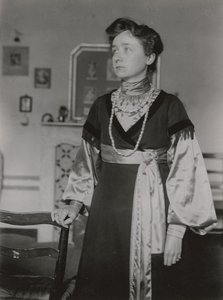
Gabriele Münter
1877 - 1962 , Germany
Основные сведения
- Artistic Movement Or Style: Expressionism
- Artists Or Movements Influenced By This Artist: ['Der Blaue Reiter']
- Artists Who Influenced This Artist:
- Gauguin
- Matisse
- Date Of Birth: 1877
- Date Of Death: 1962
- Full Name: Gabriele Münter
- Nationality: German
- Notable Artworks:
- Landscape with Farmhouse
- Kochel
- Gabriele Munter
- Place Of Birth: Berlin, Germany