

 Предпросмотр
 Поделиться
 Поделиться
 Детали произведения

 Скачать
 Похожие работы
 Рентгенография
 Слайд-шоу
 Статистика
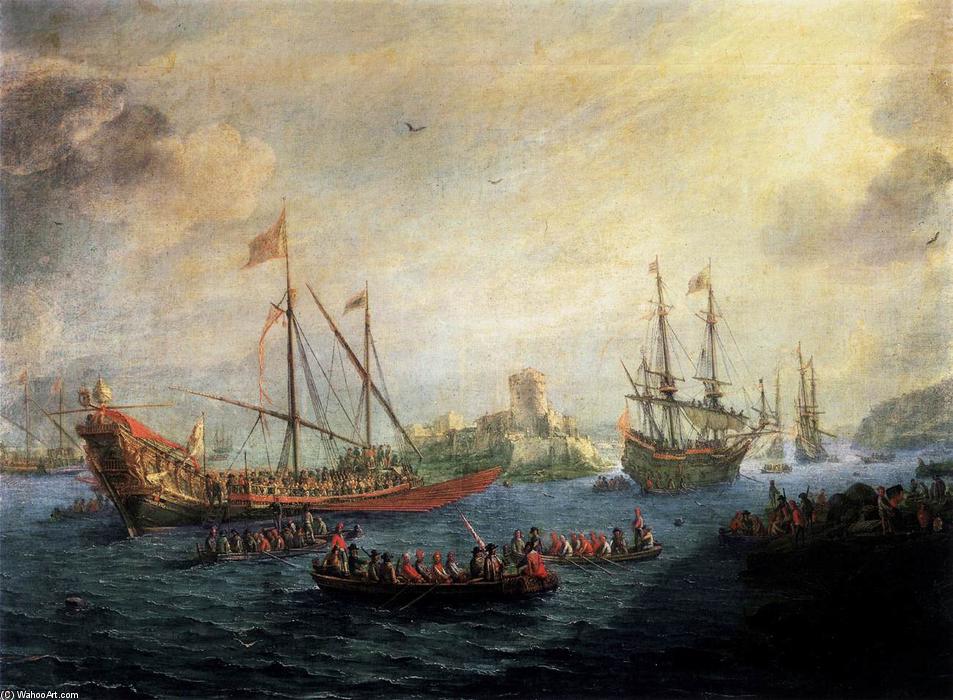
Seascape
 1650
1650 87.0 x 108.0 cm
 Музей Прадо
 Читать далее
Масляная репродукция ручной работы
Картина маслом на холсте в выбранном вами размере и раме, написанная на заказ нашими художниками. ( Перейти к печати Перейти к цифровым изображениям)




P118B $10

P118H $10

P118W $10

P438Z $10

P508JH $12

P508YH $12

P805H $10

P805Z $10

P919BZ $10

P919G $10

P919XJ $10

P959ZH $10

P968JZ $12

W106C $8

W218G $10

W218JH $8

W218Y $10

W307PJ $10

W316G $10

W316PJ $8

W316Y $10

W398PJ $8

W4111J $10

W500HY $15

W500JH $15

W692G $12

W849H $8

W940BG $15

W953PJ $8




Выберите один из наших стандартных размеров, соответствующих оригинальным пропорциям произведения искусства.

Вы можете указать собственные размеры, чтобы картина идеально вписалась в выбранную раму или пространство. Если выбранный вами размер не соответствует пропорциям оригинала, мы либо обрежем полотно, либо расширим его за счет дополнительных элементов, написанных вручную. Цифровой макет будет отправлен вам на утверждение перед началом производства.
Обратите внимание, что предварительный просмотр на экране не отражает фактическую обрезку или расширение. Только макет точно покажет окончательную композицию.
Хотя доступны индивидуальные размеры, мы рекомендуем выбирать вариант из предопределенного списка, чтобы сохранить исходные пропорции.
После оформления заказа команда ArtsDot.com свяжется с клиентом по электронной почте для уточнения деталей и предоставит предварительный макет
Доставка по всему миру () за 3–4 недели вместо стандартных 5 недель. (12 Сентябрь). Без компромиссов в качестве.

Бесплатная экспресс-доставка по всему миру

Высококачественный льняной холст

Полное страхование доставки

Гарантия возмещения таможенных пошлин

Гарантия точного соответствия цветов

100-дневная политика возврата (только при обнаружении дефектов)

Гарантия возврата 100% средств

Предложение оптовых скидок
 Вариант со стеклом доступен только для размеров менее 110 см

Seascape
Техника репродукции
Размер репродукции
-


Итоговая стоимость
$ 263
Похожие произведения








Биография художника
The Mariner of Antwerp: The Life and Legacy of Gaspar van Eyck
In the golden age of the Flemish Baroque, few artists captured the untamed spirit of the ocean with as much precision and passion as Gaspar van Eyck. Known to history as a master of maritime subjects, his brush possessed the unique ability to translate the rhythmic violence of naval combat and the serene vastness of the sea into enduring visual poetry. Born in Antwerp around 1613, Van Eyck was immersed in an environment where the pulse of international trade and the salt of the North Sea defined daily existence. His lineage was one of craftsmanship; the son of Nicolaas van Eyck, a tailor from Liège, and Joanna Ros, a woman of the wealthy bourgeoisie, Gaspar inherited a profound respect for meticulous detail and technical excellence that would become the hallmark of his seafaring canvases.
The foundations of his artistry were laid within the prestigious Guild of Saint Luke in Antwerp. In 1625, his name was inscribed as a pupil under the tutelage of Andries van Eertvelt, the preeminent marine painter of the era. This apprenticeship was more than mere instruction; it was an initiation into a specialized language of waves, wind, and rigging. Under Eertvelt’s guidance, Van Eyck learned to observe the subtle shifts in light upon cresting swells and the dramatic tension of sails caught in a gale. His development was further enriched by the influence of his uncle, Jan Carel van Eyck, ensuring that his early works were steeped in the sophisticated stylistic precepts of the Flemish tradition, blending the lingering elegance of Mannerism with an emerging, visceral realism.
A Journey Through Europe: Genoa and Madrid
Van Eyck’s artistic evolution was profoundly shaped by his travels, which expanded his horizons far beyond the docks of Antwerp. In 1632, a pivotal chapter began when he journeyed to Genoa. This Mediterranean sojourn placed him within the vibrant orbit of the de Wael brothers, Cornelis and Lucas, whose workshop served as a cosmopolitan hub for Flemish artists traversing Europe. Collaborating with these masters allowed Van Eycept to absorb the luminous qualities of Italian light and the grander scale of Mediterranean maritime life. It was during this period that his work began to reflect a more complex interplay of atmosphere and motion, moving beyond mere documentation toward a more emotive representation of the sea.
The wanderlust of the artist eventually led him to the Spanish court, where he found himself in Madrid during the years 1649 and 1650. Working alongside the painter Giovanni di Filippo del Campo, Van Eyck navigated the high-stakes world of royal commissions, likely contributing to works that demanded a sense of grandeur and imperial might. This exposure to the Spanish aesthetic—characterized by a certain dramatic gravity—infused his naval battle scenes with an added layer of tension and historical weight. Whether depicting the churning waters of the North Sea or the sun-drenched horizons of the South, his ability to adapt his technique to different cultural atmospheres demonstrated a remarkable versatility that few of his contemporaries could claim.
The Final Horizon: Legacy and Historical Significance
As the later years of his life approached, Van Eyck returned to the familiar landscapes of the Low Countries. By 1656, he had relocated to Brussels, where he remained until his passing in the early 1670s. While biographical records suggest a life marked by personal hardship—including periods of mental illness and the guardianship of his brother, Hendrick—his artistic output remained a testament to his resilience and dedication to his craft. Though many of his works were lost to the passage of time, those that survive continue to offer invaluable insights into the maritime history and aesthetic sensibilities of the 17th century.
The historical significance of Gaspar van Eyck lies in his role as a specialist who elevated the marine genre within the Flemish Baroque. He did not merely paint ships; he painted the very essence of the sea's power and the human struggle against the elements. His legacy is found in:
- Technical Mastery: The precise rendering of naval architecture, rigging, and the fluid dynamics of water.
- Genre Specialization: His contribution to the development of the "sea-fight" as a dramatic and commercially viable subject in European art.
- Artistic Lineage: Maintaining and evolving the traditions established by Andries van Eertvelt for a new generation of maritime observers.
Today, when we gaze upon a Van Eyck seascape, we are not just looking at a historical document, but experiencing the turbulent beauty of an era defined by exploration, conflict, and the eternal, restless motion of the deep.

gaspard van eyck
1613 - 1673 , Belgium
Основные сведения
- Artistic Movement Or Style: Mannerism
- Artists Or Movements Influenced By This Artist: ['Claude Lorrain']
- Artists Who Influenced This Artist: ['Andries van Eertvelt']
- Date Of Birth: February 6, 1613
- Date Of Death: December 1674
- Full Name: Gaspar van Eyck
- Nationality: Flemish
- Notable Artworks:
- Mediterranean Coast Scene
- Naval Battle between Turks and Maltese
- Place Of Birth: Antwerp, Belgium