 Предпросмотр
 Поделиться
 Поделиться
 Детали произведения

 Скачать
 Похожие работы
 Рентгенография
 Слайд-шоу
 Статистика
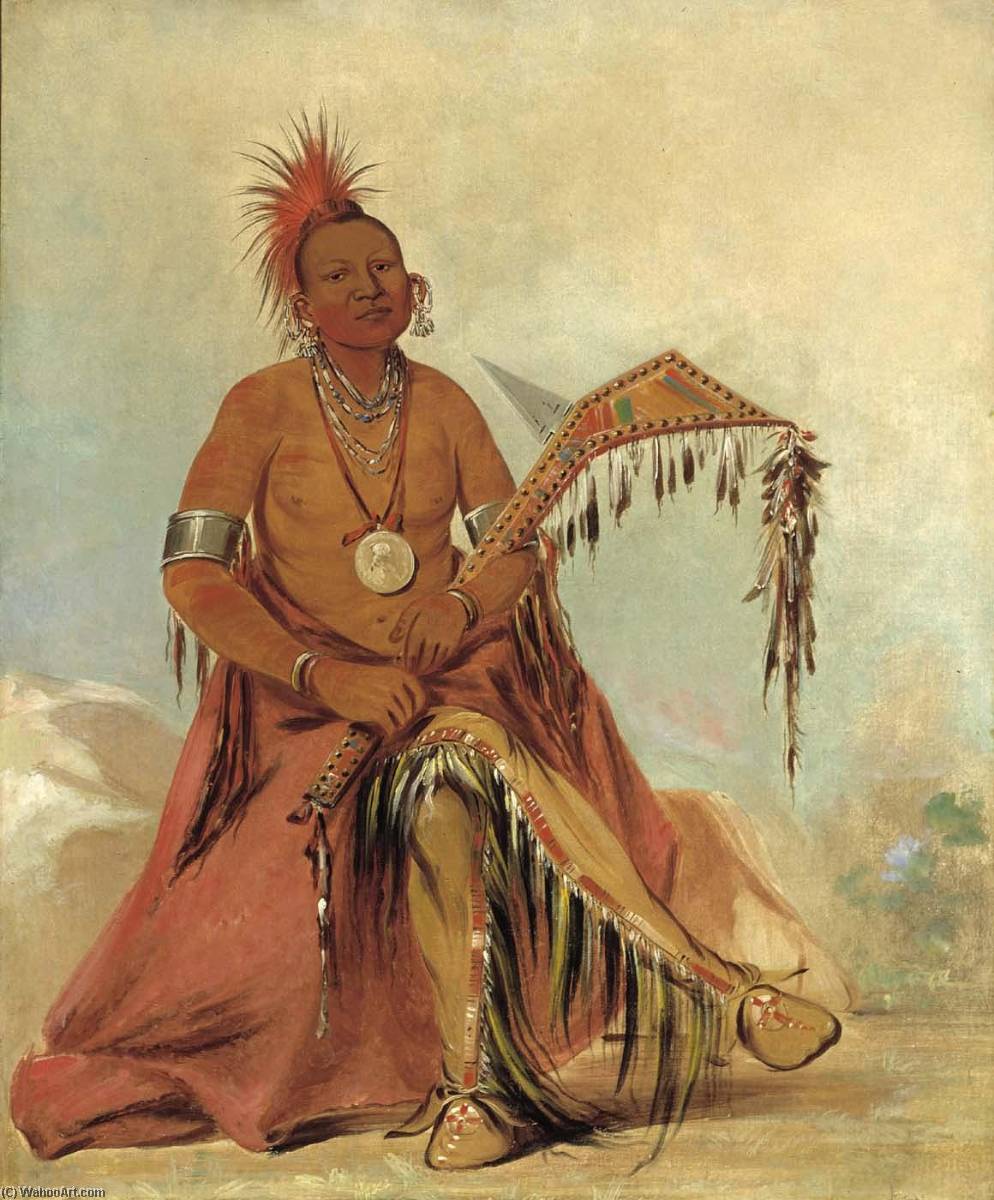
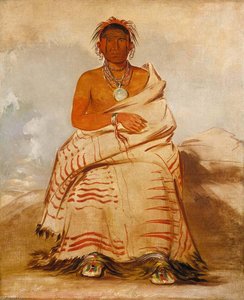
Cler mónt, First Chief of the Tribe
 Oil
Oil- WallArt
- Realism
 1834
1834- 19th Century
 74.0 x 61.0 cm
 Читать далее
Жикле / Арт-принт
Печать (жикле) или холст музейного качества с быстрыми сроками изготовления и широким выбором вариантов отделки. ( Купить картину ручной работы Перейти к цифровым изображениям)




P118B $10

P118H $10

P118W $10

P438Z $10

P508JH $12

P508YH $12

P805H $10

P805Z $10

P919BZ $10

P919G $10

P919XJ $10

P959ZH $10

P968JZ $12

W106C $8

W218G $10

W218JH $8

W218Y $10

W307PJ $10

W316G $10

W316PJ $8

W316Y $10

W398PJ $8

W4111J $10

W500HY $15

W500JH $15

W692G $12

W849H $8

W940BG $15

W953PJ $8




Выберите один из наших стандартных размеров, соответствующих оригинальным пропорциям произведения искусства.

Вы можете указать свои собственные размеры, чтобы репродукция идеально подошла под конкретную раму или пространство. Если выбранный вами размер не будет соответствовать пропорциям оригинала, мы либо обрежем произведение, либо дополним изображение зеркальным отражением краев или однотонной заливкой. Перед началом производства вам будет отправлен цифровой макет для утверждения.
Пожалуйста, обратите внимание, что предварительный просмотр на экране не отображает фактическую обрезку или расширение изображения. Только макет точно покажет финальную композицию.
Несмотря на возможность заказа индивидуальных размеров, мы рекомендуем выбирать размер из предопределенного списка, чтобы сохранить оригинальные пропорции.
Доставка по всему миру () за 2 недели вместо стандартных 4/5 недель. (13 Сентябрь)

Бесплатная экспресс-доставка по всему миру

Высококачественный льняной холст

Полное страхование доставки

Гарантия возмещения таможенных пошлин

Гарантия точного соответствия цветов

100-дневная политика возврата (только при обнаружении дефектов)

Гарантия возврата 100% средств

Предложение оптовых скидок
 Вариант со стеклом доступен только для размеров менее 110 см

Cler mónt, First Chief of the Tribe
Жикле / Арт-принт
Размер репродукции
-


Итоговая стоимость
$ 62
A Glimpse into a Vanishing World
In the profound stillness of George Catlin’s 1834 masterpiece, Cler mónt, First Chief of the Tribe, we are invited to witness a moment of quiet dignity that transcends the boundaries of time. The painting presents a striking portrait of a Native American leader, seated with a grounded, meditative grace upon the earth. As he sits with legs crossed, cradling a ceremonial drum, there is an immediate sense of presence that commands the viewer's attention. Catlin does not merely paint a subject; he captures a soul in repose. The intricate details of the Chief’s traditional attire—from the delicate patterns of his clothing to the symbolic weight of his headdress and ornaments—serve as a visual testament to a rich, complex cultural heritage that was already facing the encroaching tides of change during the mid-19th century.
The artistry of this piece lies in Catlin’s ability to blend meticulous ethnographic documentation with deep emotional resonance. His technique, characterized by a keen eye for texture and light, brings the craftsmanship of the drum and the tactile quality of the tribal regalia to life. Every bead, every strand of hair, and every fold in the fabric is rendered with a devotion that speaks to the artist's mission: to preserve the essence of the American frontier. For the discerning collector or interior designer, this work offers more than just aesthetic beauty; it provides a window into a historical narrative, making it a profound focal point for any space dedicated to history, culture, or the celebration of human resilience.
The Legacy of George Catlin
To understand the power of this portrait, one must consider the man behind the brush. George Catlin was far more than a painter; he was a self-appointed historian of the American West. Driven by an urgent conviction that the traditions of Native American tribes were slipping away, Catlin abandoned a legal career to document the lives, customs, and faces of those he encountered on the frontier. This painting is a product of that profound calling. The way the light falls upon the Chief’s features reflects Catlin's unique ability to find the humanity within the historical record, transforming a portrait into an enduring legacy. For those seeking to adorn their homes with art that tells a story, this reproduction offers a rare opportunity to possess a piece of American history, imbued with the spirit of a legendary artist and the dignity of a lost era.
Integrating such a powerful work into a modern interior requires an appreciation for its scale and emotional weight. The 74 x 61 cm composition is substantial enough to anchor a room, providing a sense of gravitas and intellectual depth. Whether placed in a study, a library, or a grand living space, the painting acts as a conversation piece that invites contemplation on themes of identity, heritage, and the passage of time. It is an investment in art that does not merely decorate a wall but enriches the very atmosphere of a home.
Похожие произведения
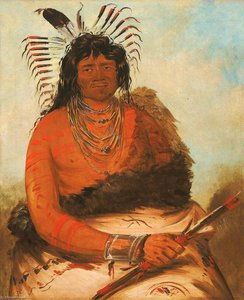
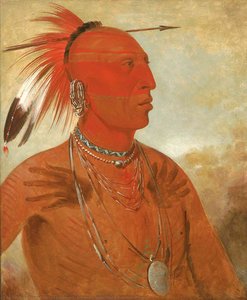
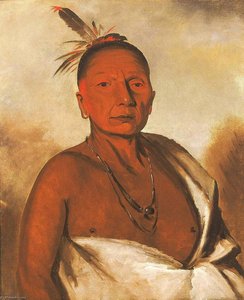
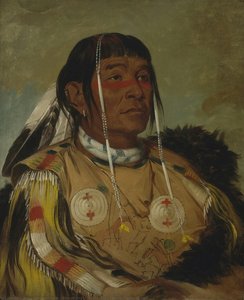
Биография художника
Early Life and the Call of the Frontier
George Catlin, born in Wilkes-Barre, Pennsylvania, in 1796, was destined for a life profoundly shaped by the vastness and mystery of the American West. His childhood wasn’t one of privilege or refinement; instead, it was steeped in tales spun by his mother, Polly Sutton – a woman who herself had been captured as a young girl during an Indian raid, a harrowing experience that indelibly colored her son's imagination. These stories, filled with both danger and a strange, compelling beauty, ignited within Catlin a deep fascination for the frontier—a land perceived as simultaneously threatening and utterly romantic. Initially trained in law, he found himself drawn not to the ordered world of legal arguments but to the vibrant, untamed spirit of the West. After only two years practicing law, a powerful artistic impulse took hold, compelling him to abandon his legal career and dedicate himself to capturing the essence of Native American life before it vanished forever. This wasn’t merely an aesthetic pursuit; it was driven by a profound sense of urgency—a premonition that westward expansion would irrevocably alter these cultures, silencing their voices and erasing their traditions. His early artistic endeavors focused on engravings depicting scenes along the Erie Canal, demonstrating his technical skill in line work and attention to detail – qualities he would later translate into his monumental paintings. These initial works served as a crucial foundation, honing his observational abilities and establishing a deep commitment to visually documenting a way of life he felt compelled to preserve.Documenting a Vanishing World: The Indian Gallery
Catlin’s most enduring legacy is undoubtedly “The Indian Gallery,” an extraordinary collection of over 500 paintings that served as a visual testament to Native American life and culture during the 1830s, 40s, and 50s. He embarked on five ambitious expeditions into the heart of the American West – traveling up the Missouri River and venturing into territories inhabited by tribes such as the Mandan, Sioux, Blackfeet, and Choctaw. Crucially, Catlin didn’t simply observe from a distance; he immersed himself within these communities, participating in ceremonies, witnessing daily life, and forging genuine relationships with tribal leaders. He sought to understand their customs, beliefs, and social structures, striving to represent them not as exotic primitives but as complex individuals with rich cultural traditions. His paintings are remarkable for their realism – a departure from the romanticized depictions prevalent at the time – and their vibrant use of color, capturing not only physical likenesses but also a palpable sense of dignity and spiritual depth. Works like Sham Fight, Mandan Boys (1832-1833) vividly portray a playful mock battle among young warriors, showcasing their athleticism and communal spirit. Similarly, his portrait of Mó-sho-la-túb-bee, He Who Puts Out and Kills, Chief of the Tribe (1839) conveys both authority and wisdom through the subject’s intense gaze and powerful presence. Catlin's meticulous attention to detail – including elaborate backgrounds depicting landscapes, tipis, and ceremonial objects – provides a rich context for understanding his subjects and their environment.A Revolutionary Approach to Portraiture
Catlin’s approach to portraiture was revolutionary for its time. He rejected the traditional European style of formal poses and idealized features, instead opting for dynamic compositions that captured Native Americans in action—hunting, dancing, playing games, or engaging in everyday activities. He often placed his subjects within their natural surroundings, emphasizing their connection to the land and highlighting the beauty of the American West. This wasn’t simply a stylistic choice; it reflected Catlin's belief that Native Americans should be represented authentically, without resorting to stereotypes or caricatures. He meticulously researched tribal customs and traditions, ensuring that his paintings accurately depicted their clothing, adornments, and rituals. His portraits weren’t merely likenesses; they were attempts to convey the spirit and essence of each individual, capturing not just their physical appearance but also their personality and cultural identity. This commitment to authenticity earned him both admiration and criticism – some praised his artistic skill and sensitivity, while others accused him of exploiting Native Americans for personal gain.Challenges and Recognition: A Life Dedicated to Preservation
Despite the undeniable merit of “The Indian Gallery” and Catlin’s unwavering dedication, he faced significant obstacles throughout his career. He initially envisioned donating his collection to the U.S. government as a permanent record of Native American culture, but his proposals were repeatedly rejected – largely due to bureaucratic inertia and a lack of understanding of the historical significance of his work. Undeterred, Catlin took his paintings on an extensive tour across America and Europe during the 1840s and 50s, showcasing them in prestigious galleries and museums. These exhibitions garnered considerable attention, introducing audiences to a world they had previously only encountered through secondhand accounts or sensationalized newspaper articles. He also published several influential books, including Manners, Customs, and Condition of the North American Indians (1841) and Last Rambles Amongst the Indians of the Rocky Mountains and the Andes (1868), which further solidified his reputation as a leading authority on Native American culture. However, financial difficulties persisted throughout his life, forcing him to resort to increasingly desperate measures – including creating a smaller “cartoon collection” of over 400 paintings in order to recoup some of his investment. This period was marked by a poignant irony: a man dedicated to preserving a vanishing world found himself struggling for his own survival.Legacy and Historical Significance
George Catlin died in Jersey City, New Jersey, in 1872, leaving behind a legacy that continues to resonate today. While his work wasn’t fully appreciated during his lifetime, it has since been recognized as an invaluable historical record of Native American life before the devastating impact of westward expansion. His paintings offer a rare and intimate glimpse into cultures that were often misrepresented or ignored in mainstream narratives – providing crucial insights into their customs, beliefs, social structures, and artistic traditions. Works like Prairie Meadows Burning (1832) capture not only the landscape but also the profound connection between Native Americans and their environment, while Medicine Buffalo of the Sioux (1839) portrays a powerful leader with dignity and authority. Catlin’s meticulous documentation played a vital role in shaping public perception of Native Americans, challenging prevailing stereotypes and fostering a greater understanding of their rich cultural heritage. He wasn't simply an artist; he was a chronicler, a witness, and a passionate advocate for a vanishing way of life – a legacy that continues to inspire artists, historians, and anyone interested in preserving the stories of diverse cultures.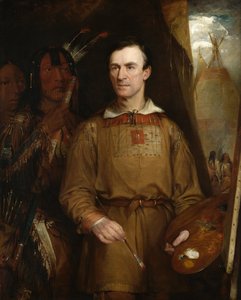
Джордж Катлин
1796 - 1872 , США
Основные сведения
- Artistic Movement Or Style: Фронтьерная живопись
- Date Of Birth: 1796
- Full Name: George Catlin
- Nationality: Американский
- Notable Artworks:
- Шэм-файт, мальчики Манданы
- Горение Prairie Meadows
- Пипстоун-кварцир, Котау дес Прайрийз
- Place Of Birth: Вильсба́рре, США
Похожие статьи

Grant Wood & American Regionalism: Identity, Myth & the Rural Landscape
Explore the world of Grant Wood & American Regionalism with ArtsDot. Discover the symbolism behind 'American Gothic', recurring themes, and the movement's lasting impact on art history. High-quality reproductions available.
James Otto Lewis: Navigating American Modernism Through Regional Identity & Stylistic Innovation
Explore the captivating portraits of James Otto Lewis, a pivotal figure bridging 19th-century realism & American Modernism. Discover his groundbreaking work documenting Native American culture and regional identity.
George Catlin: Witnessing & Representing Indigenous Life on the American Frontier
Explore the captivating art of George Catlin, renowned for his vivid portraits & landscapes documenting Native American life on the frontier. Discover a vanishing world through stunning paintings and historical context.

Жорж Брак: 25 шедевров кубизма для ценителей искусства и интерьера
Откройте для себя 25 шедевров Жоржа Брака – пионера кубизма! Узнайте историю создания культовых картин, технику и влияние французского художника на искусство XX века. Репродукции высокого качества для вашего интерьера на ArtsDot.com.

Жорж Сёра: 25 шедевров великого мастера пуантилизма | ArtsDot
Откройте для себя 25 шедевров Жоржа Сёра – пионера пуантилизма! Узнайте историю создания культовых картин, технику письма и влияние импрессионизма. Репродукции высокого качества на ArtsDot.com. Искусство для вашего интерьера.