 Предпросмотр
 Поделиться
 Поделиться
 Детали произведения

 Скачать
 Похожие работы
 Рентгенография
 Слайд-шоу
 Статистика
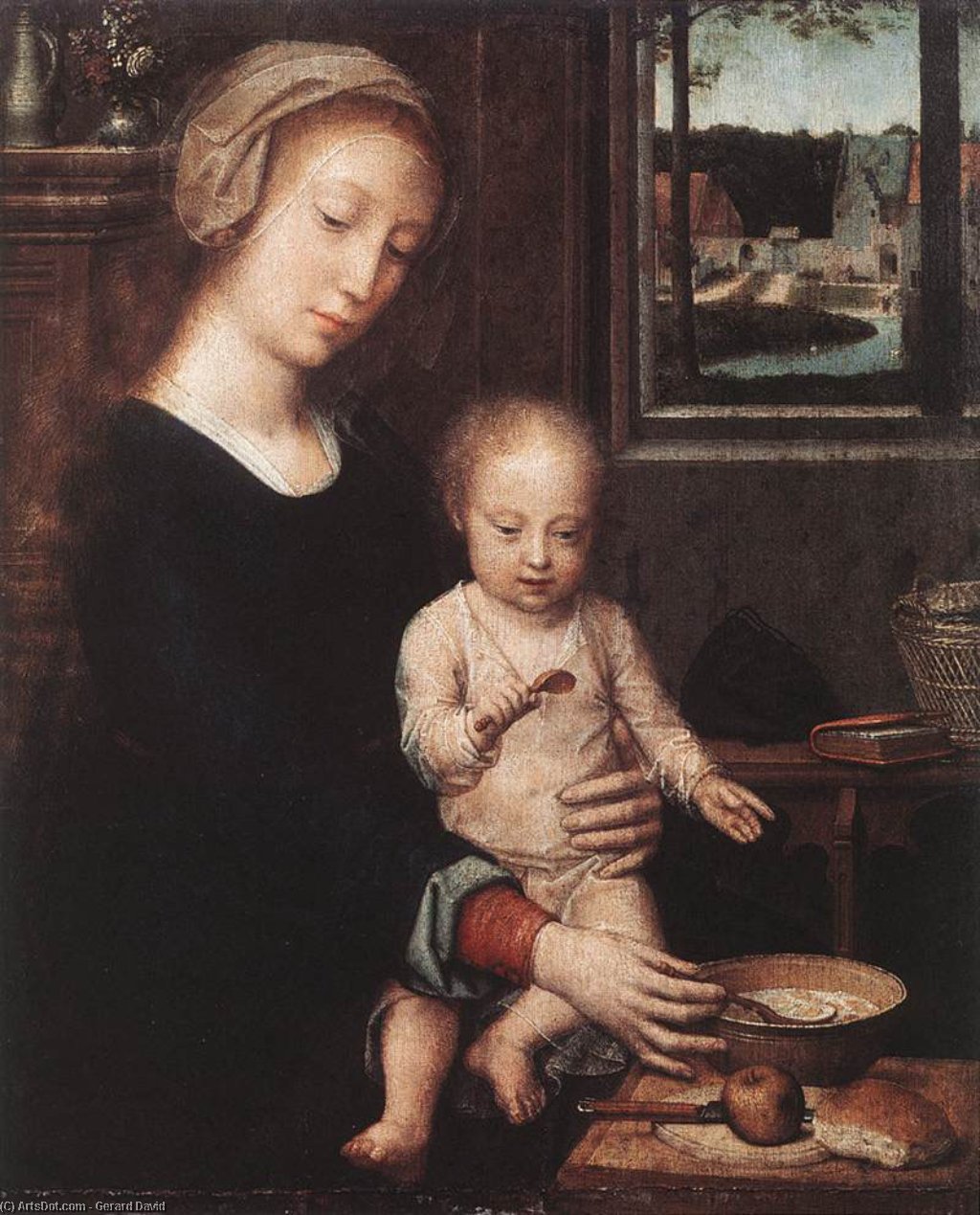
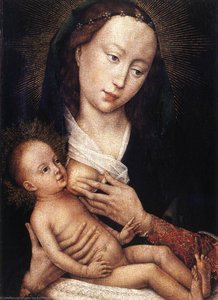
Madonna and Child with the Milk Soup
 Acrylic On Canvas
- WallArt
- Early Netherlandish Painting
 1520
1520 35.0 x 29.0 cm
 Музеи Брюссельские Королевские
 Читать далее
Масляная репродукция ручной работы
Картина маслом на холсте в выбранном вами размере и раме, написанная на заказ нашими художниками. ( Перейти к печати Перейти к цифровым изображениям)




P118B $10

P118H $10

P118W $10

P438Z $10

P508JH $12

P508YH $12

P805H $10

P805Z $10

P919BZ $10

P919G $10

P919XJ $10

P959ZH $10

P968JZ $12

W106C $8

W218G $10

W218JH $8

W218Y $10

W307PJ $10

W316G $10

W316PJ $8

W316Y $10

W398PJ $8

W4111J $10

W500HY $15

W500JH $15

W692G $12

W849H $8

W940BG $15

W953PJ $8




Выберите один из наших стандартных размеров, соответствующих оригинальным пропорциям произведения искусства.

Вы можете указать собственные размеры, чтобы картина идеально вписалась в выбранную раму или пространство. Если выбранный вами размер не соответствует пропорциям оригинала, мы либо обрежем полотно, либо расширим его за счет дополнительных элементов, написанных вручную. Цифровой макет будет отправлен вам на утверждение перед началом производства.
Обратите внимание, что предварительный просмотр на экране не отражает фактическую обрезку или расширение. Только макет точно покажет окончательную композицию.
Хотя доступны индивидуальные размеры, мы рекомендуем выбирать вариант из предопределенного списка, чтобы сохранить исходные пропорции.
После оформления заказа команда ArtsDot.com свяжется с клиентом по электронной почте для уточнения деталей и предоставит предварительный макет
Доставка по всему миру () за 3–4 недели вместо стандартных 5 недель. (12 Сентябрь). Без компромиссов в качестве.

Бесплатная экспресс-доставка по всему миру

Высококачественный льняной холст

Полное страхование доставки

Гарантия возмещения таможенных пошлин

Гарантия точного соответствия цветов

100-дневная политика возврата (только при обнаружении дефектов)

Гарантия возврата 100% средств

Предложение оптовых скидок
 Вариант со стеклом доступен только для размеров менее 110 см

Madonna and Child with the Milk Soup
Техника репродукции
Размер репродукции
-


Итоговая стоимость
$ 263
A Domestic Revelation: Gerard David’s “Madonna and Child with the Milk Soup”
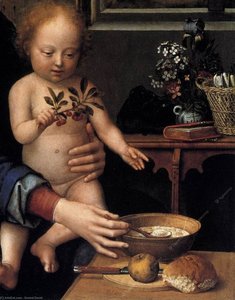
Gerard David's "Madonna and Child with the Milk Soup," painted circa 1520, isn’t merely a devotional image; it’s a carefully constructed tableau of domesticity rendered in the luminous, deeply felt style that defined early Netherlandish painting. Far removed from the grand, often austere settings typical of many religious scenes of the era, this work places the Virgin Mary and infant Jesus within a remarkably intimate interior – a humble dining room bathed in soft light. This deliberate choice immediately establishes a connection with the viewer, inviting us into a scene that feels both familiar and profoundly spiritual. The painting’s power lies not just in its beauty but in its quiet observation of everyday life imbued with sacred significance.
The composition is remarkably detailed, almost obsessively so. David meticulously depicts the objects within the room: a simple wooden table laden with three bowls – one holding what appears to be a nourishing soup, another containing bread, and a third holding a small earthenware jug; a prayer book resting open on its cover; a console against the wall displaying a basket of flowers. Each element is rendered with astonishing realism, from the texture of the linen clothing to the subtle reflections in the windowpane. This level of detail wasn’t simply for aesthetic pleasure; it served to elevate the mundane into the sacred, suggesting that even the most ordinary aspects of life could be imbued with divine grace.
The Flemish Light and a Revolutionary Approach
David's mastery lies in his manipulation of light – a technique he termed “Flemish Light.” Unlike the flat, generalized illumination common in earlier painting styles, David employs subtle gradations of tone and color to create a sense of depth and atmosphere. The light streams through the window, casting soft shadows across the room and illuminating the figures with a gentle warmth. This masterful use of light not only enhances the realism of the scene but also evokes a feeling of serenity and contemplation. Furthermore, David’s decision to depict a domestic scene – a mother feeding her child – was a radical departure from established conventions. While religious subjects were prevalent, they were often presented in grand, formal settings. David's choice to place the Madonna and Child within a humble dining room challenged traditional notions of piety and suggested that faith could be found not only in elaborate rituals but also in the simple act of nurturing and care.
Symbolism Woven into Everyday Life
The details within the painting are rich with symbolic meaning. The soup itself, often interpreted as a reference to the Eucharist – the body and blood of Christ – underscores the central theme of nourishment and salvation. The prayer book symbolizes faith and devotion, while the flowers represent beauty and purity. Even the placement of the objects on the table—the bread, the jug, and the bowl—can be seen as alluding to the elements of the Holy Trinity. The inclusion of two other figures in the background – a man seated at the table and another standing near the window – adds another layer of complexity to the scene, suggesting a family unit centered around faith and love. The presence of these secondary figures subtly shifts the focus from solely the Virgin and Child to a broader representation of domestic harmony and spiritual connection.
A Legacy of Quiet Devotion
“Madonna and Child with the Milk Soup” is more than just a beautiful painting; it’s a profound meditation on faith, family, and the everyday miracles that surround us. Gerard David's innovative approach to composition, his masterful use of light, and his subtle deployment of symbolism combine to create an image of enduring power and beauty. Reproductions of this work capture only a fraction of its original impact, but they offer a window into the artistic genius of one of the most important figures in the early Netherlandish Renaissance. It remains a testament to David’s ability to transform the familiar into the sublime, reminding us that spirituality can be found not just in grand cathedrals and elaborate rituals, but also in the quiet moments of domestic life.
Похожие произведения
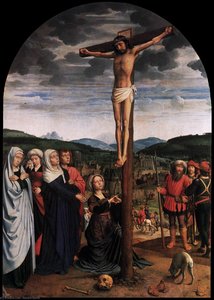
Биография художника
A Master of Flemish Light: The Enigmatic World of Gerard David
Gerard David, a name that resonates with the brilliance of early Netherlandish painting, remains an artist shrouded in intriguing mystery. Born around 1460 in Oudewater, Netherlands, his life story is pieced together from fragmented archival records and the eloquent testimony of his art. Unlike some contemporaries whose lives are richly documented, David’s personal narrative is sparse, allowing his paintings to speak volumes where biographical details fall silent. What is known suggests a remarkably successful career, likely managing workshops in both Antwerp and Bruges – centers of artistic innovation during the Renaissance. His reputation experienced an ebb in the 17th century, only to be gloriously resurrected by 19th-century art historians who recognized his unique contributions to the Northern Renaissance. He was inducted as a free master into the Corporation of Imagemakers and Saddlers in Bruges in 1484, marking a pivotal moment in his ascent. His later involvement with the Antwerp guild in 1515 further solidifies his standing within the artistic community.Formative Influences and Artistic Development
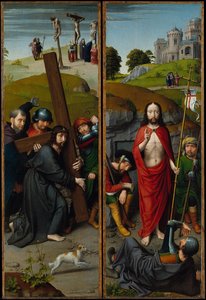
David’s artistic journey began under influences that shaped the very foundation of his style. Early works reveal a clear debt to painters like Jacob Janszoon, Dieric Bouts, and Geertgen tot Sint Jans – masters who instilled in him a meticulous attention to detail and a sensitivity to religious narrative. It is believed he spent time in Haarlem absorbing these lessons before relocating to Bruges, a vibrant hub of artistic exchange attracting talent from across Europe. Here, David encountered the masterpieces of Jan van Eyck, Rogier van der Weyden, and Hans Memling, absorbing their techniques while forging his own distinct path. He didn’t merely imitate; he synthesized these influences into something uniquely his own – a style characterized by luminous color, serene compositions, and an increasingly sophisticated understanding of landscape. His early paintings demonstrate this evolution, moving from the doll-like figures reminiscent of Haarlem traditions towards more sculptural forms grounded in their environment. This transition is visible in works like *Christ Nailed to the Cross*, where the influence of Bouts’ spatial construction blends with David’s emerging coloristic sensibility. The meticulous detail and realistic portrayal of textures—the rough wood of the cross, the folds of Christ's garment—are hallmarks of his early style, reflecting a deep respect for the materials he worked with.Innovation in Landscape and Religious Narrative
Gerard David’s artistic signature lies in his innovative approach to both landscape and religious subject matter. He wasn’t simply depicting backgrounds; he was creating immersive environments that enhanced the emotional resonance of his scenes. His landscapes are not merely decorative, but integral components of the narrative, often imbued with symbolic meaning. This fascination with natural settings – dense forests, rolling hills, expansive skies – set him apart from many of his contemporaries and foreshadowed the development of landscape as a distinct genre. Consider *View in a Forest*, outer wing of a triptych; it’s not simply a backdrop but a world unto itself, rendered with meticulous detail and atmospheric perspective. The interplay of light and shadow, the suggestion of depth, and the careful selection of flora all contribute to the painting's evocative power. Within his religious works, David demonstrated a remarkable ability to convey both profound spirituality and human emotion. Paintings like *The Marriage of St. Catherine* exemplify this skill. The scene is rendered with exquisite detail, yet it’s the subtle expressions on the figures’ faces – their piety, contemplation, or gentle joy – that truly captivate the viewer. He possessed a gift for imbuing his sacred subjects with a sense of quiet dignity and relatable humanity. His *Virgin Among the Virgins*, donated to the Carmelite nuns of Sion at Bruges, is another testament to his skill, featuring a self-portrait within the painting itself – a rare and intimate gesture from an artist of his time. This innovative inclusion not only highlights David’s confidence but also invites the viewer into a dialogue with the artist himself.Major Achievements and Artistic Style
David's career spanned several decades, during which he produced a remarkably diverse body of work. He is particularly celebrated for his altarpieces – monumental paintings designed to be displayed in churches and cathedrals. The *Judgment of Cambyses*, consisting of two large panels, showcases his mastery of composition, color, and dramatic storytelling. The scene depicts the pharaoh Cambyses’s brutal judgment of Amun-Ra, a powerful depiction of divine justice and human folly. Similarly, the triptych of the *Baptism of Christ* is a masterpiece of detail and emotional intensity, capturing the serene beauty of the biblical event. David's style can be characterized by several key features: his use of rich, jewel-toned colors; his meticulous attention to detail—particularly in rendering fabrics, textures, and facial expressions; and his innovative approach to landscape, as seen in works like *View in a Forest*. He was also a skilled draftsman, producing numerous drawings that served as studies for his paintings. His work reflects the influence of both late medieval traditions and emerging Renaissance ideals, creating a unique synthesis of styles.Legacy and Enduring Influence
Though his fame waned for a period after his death in 1523, Gerard David’s influence on subsequent generations of artists is undeniable. His innovative use of color, his masterful handling of light and shadow, and his pioneering approach to landscape all left an indelible mark on the development of Flemish painting. He paved the way for artists who would further explore the expressive potential of natural settings, such as Jacob Patinir and Jacob van Ruisdael.- A Bridge Between Traditions: David successfully bridged the gap between the late medieval tradition and the emerging Renaissance style.
- Influence on Landscape Painting: His detailed and atmospheric landscapes foreshadowed the development of landscape as a distinct genre.
- Masterful Colorist: He was renowned for his vibrant palette and skillful use of color to create emotional impact.
Exploring Further
- ArtsDot.com: Discover an extensive collection of Gerard David’s paintings, including *The Adoration of the Magi*.
- View in a Forest: Explore this stunning Northern Renaissance landscape painting.
- The Early Netherlandish Art Movement: Delve deeper into the artistic context of David’s work.
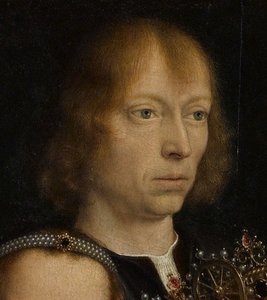
Гердар Дэвид
1450 - 1523 , Нидерланды
Основные сведения
- Artistic Movement Or Style: Раннефламандская живопись
- Artists Or Movements Influenced By This Artist:
- Иоганн ван Эйк
- Робьер ван дер Вейден
- Artists Who Influenced This Artist:
- Якоб Янссон
- Дирик Боутс
- Гертген донт Синт Яанс
- Date Of Birth: c. 1460
- Date Of Death: 1523
- Full Name: Gerard David
- Nationality: Нидерландский
- Notable Artworks:
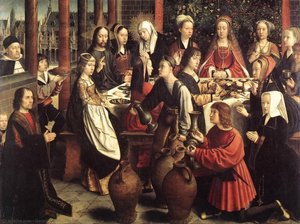
- Свадьба при Кане
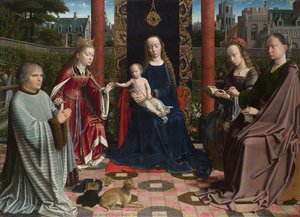
- Мадонна на небесах
- Суд над Камиллой
- Place Of Birth: Оудвейтер, Нидерланды
Похожие статьи
Sacred Narratives Embodied: A Comprehensive Exploration of Religious Iconography in Art History
Explore the rich history of religious iconography in art! Discover symbolism, movements & masterpieces from Byzantine to Renaissance periods. Expert insights for collectors and enthusiasts at ArtsDot.
Рафаэль: 25 шедевров великого художника для ценителей искусства и декора интерьера
Погрузитесь в мир Рафаэля! 25 величайших шедевров эпохи Возрождения, полные гармонии и красоты. Узнайте истории создания картин, технику живописи и вдохновитесь для декора интерьера. Репродукции высокого качества на ArtsDot.com.
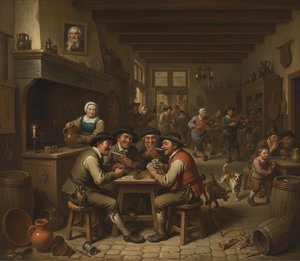
David Teniers II: Master of Flemish Genre & Social Commentary
Explore the captivating world of David Teniers II, a leading Flemish Baroque painter renowned for his lively genre scenes & insightful social commentary. Discover his masterpieces and legacy with ArtsDot.
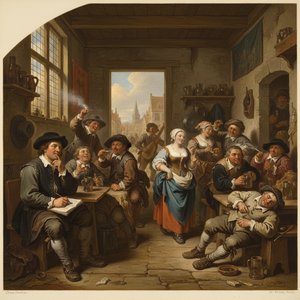
David Teniers the Younger: Genre Painting & Social Commentary in Baroque Flanders
Explore the captivating world of David Teniers the Younger, a leading Flemish Baroque painter. Discover his genre scenes, social commentary, and lasting influence on 17th-century art. Learn about his life, techniques & legacy.
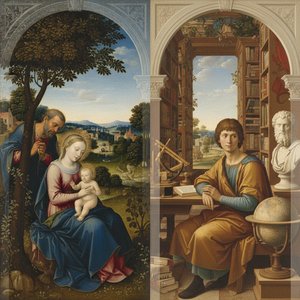
Gerard David: Bridging Late Medieval Tradition with Early Renaissance Humanism
Explore the captivating world of Gerard David, a pivotal figure bridging late medieval artistry with the Early Renaissance. Discover his innovative techniques, religious masterpieces, and enduring legacy – a must-read for discerning art collectors.