


 Предпросмотр
 Поделиться
 Поделиться
 Детали произведения

 Скачать
 Похожие работы
 Рентгенография
 Слайд-шоу
 Статистика
The Suitor's Visit (detail)


 Читать далее
Приобретите цифровое изображение высокого разрешения в улучшенном качестве, которое значительно превосходит онлайн-превью.
Каждый файл тщательно подготавливается нашими специалистами с использованием передовых инструментов и экспертной ручной ретуши. Мы гарантируем исключительную четкость, точную цветопередачу и детальную проработку каждого изображения.
Финальный файл доставляется по электронной почте в течение 72 часов и оптимизирован для немедленного использования в профессиональной среде, при верстке и печати. Это тот же уровень качества, которому доверяют ведущие дизайнерские студии, издательства и галереи.
Цифровое изображение
Скачайте файл высокого разрешения для личного использования, печати и творческих проектов. ( Перейти к печати Купить картину ручной работы)
Включено в каждый заказ цифровых изображений
Гарантия экспертной цифровой доставки
Выбирая ArtsDot.com, вы получаете не просто изображение — вы приобретаете профессионально обработанное цифровое произведение искусства, созданное с безупречной точностью и под защитой гарантии качества. Вот всё, что автоматически входит в ваш заказ:

Мгновенная доставка по e-mail
Ваш цифровой файл в высоком разрешении будет отправлен вам по электронной почте в течение 72 часов после оформления заказа — и сразу станет доступен для использования.

Цифровой файл с ИИ-улучшением
Ваше произведение искусства проходит профессиональную оптимизацию с использованием передовых инструментов ИИ и ручной обработки, что гарантирует максимальную детализацию, четкость и точность цветопередачи.

Бессрочная бесплатная повторная доставка
Случайно удалили или потеряли файл? Не беспокойтесь — мы отправим его вам повторно в любое время и совершенно бесплатно.

Без импортных пошлин — навсегда
Наслаждайтесь вашим произведением искусства мгновенно без таможенных пошлин, сборов или затрат на доставку — цифровые загрузки всегда не облагаются налогом.

Гарантия точности цветопередачи
Мы гарантируем, что ваше цифровое изображение максимально точно передает оригинальные цвета благодаря использованию профессиональных инструментов и систем управления цветом.

Гарантия удовлетворенности 100 дней
Если вы не будете удовлетворены своим цифровым изображением, мы внесем правки или вернем 100% стоимости в течение 100 дней — без лишних вопросов.

100% Гарантия возврата средств
Не удовлетворены покупкой? Получите полный возврат средств в течение 100 дней после получения цифрового файла — без лишних вопросов.

Скидки на оптовые заказы
Купите 3 изображения, сэкономьте 10% — Купите 5, сэкономьте 15% — Купите 10+, сэкономьте 20%. Отличное решение для творческих проектов, галерей и агентств.
A Quiet Intimacy: The Soul of Dutch Domesticity
In the soft, amber glow of a seventeenth-century interior, Gerard ter Borch’s “The Suitor's Visit” invites us to witness a moment suspended in time. Painted in 1658, this masterpiece serves as a profound window into the Dutch Golden Age, a period when the burgeoning merchant class sought art that mirrored their own refined, private worlds. Rather than grand mythological battles or sweeping religious epics, Ter Borch turns his gaze inward, capturing the subtle, psychological dance of human interaction. The scene unfolds with a quiet elegance, presenting a man formally dressed, bowing respectfully before a woman seated at a table playing a lute. A third figure stands silently in the background, observing the interaction with palpable apprehension, creating a narrative tension that lingers long after the first glance.
The composition is a masterclass in understated drama. The dark brown wall serves as a dramatic backdrop, emphasizing the pale skin tones of the subjects and highlighting the delicate fabric draped across the table—a deliberate choice reflecting the wealth and refinement of the depicted household. Notably, a window with a partially drawn curtain introduces an element of exteriority, subtly suggesting the influence of nature on human experience, a recurring motif in Baroque art. This interplay of light and shadow, known as chiaroscuro, does more than just define form; it creates an atmosphere of secrecy and shared intimacy, making the viewer feel like an unobserved witness to a private social ritual.
Technique and the Mastery of Texture
Ter Borch's technique exemplifies the hallmarks of Baroque realism, achieved through the painstaking layering of glazes. His ability to render textures is nothing short of extraordinary; one can almost feel the crispness of the white cuffs on the man's black coat and the smooth, cool surface of the porcelain or fine linens present in the room. This meticulous attention to detail was a hallmark of his style, allowing him to elevate genre painting—the depiction of everyday life—into a high art form that explored the nuances of human emotion and social convention.
For the discerning collector or interior designer, the brilliance of this work lies in its ability to anchor a space with both sophistication and warmth. The palette, dominated by deep earth tones, rich blacks, and luminous highlights, offers a timeless aesthetic that complements both classical and contemporary settings. A high-quality reproduction of this detail allows the intricate textures and the soft, painterly light to breathe within a modern home, providing a focal point that sparks conversation and invites contemplation.
A Legacy of Psychological Insight
Beyond its technical brilliance, “The Suitor's Visit” is celebrated for its profound psychological insight. Ter Borch was a pioneer who established a new framework for subject matter, taking figures into the sanctum of the home and expertly hinting at their inner lives. The subtle facial expressions—the respect in the suitor's bow, the focused grace of the woman at her lute, and the watchful eye of the observer—convey a complex web of social expectations and personal desires. It is this emotional depth that makes Ter Borch’s work so enduring; he captures not just what people looked like, but how they felt within the rigid structures of their society.
To possess a reproduction of such a piece is to bring a fragment of history's most refined era into one's personal environment. It is an invitation to appreciate the beauty found in the quiet, the domestic, and the deeply human. Whether used to add a layer of historical gravity to a study or to provide a soft, narrative texture to a living space, this work remains a testament to the power of art to transform the ordinary into the extraordinary.
Похожие произведения

Биография художника
Gerard ter Borch - A Pioneer of Dutch Genre Painting
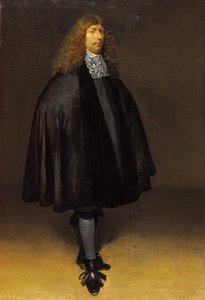
Gerard ter Borch (Dutch: Gerard Terburg; December 1617 – 8 December 1681) was an influential and pioneering Dutch genre painter who lived in the Dutch Golden Age. He influenced fellow Dutch painters Gabriel Metsu, Gerrit Dou, Eglon van der Neer and Johannes Vermeer.According to Arthur K. Wheelock Jr., Ter Borch “established a new framework for subject matter, taking people into the sanctum of the home”, showing the figures’ uncertainties and expertly hinting at their inner lives. His influence as a painter, however, was later surpassed by Vermeer.
Biography
Gerard ter Borch was born in December 1617 in Zwolle in the province of Overijssel in the Dutch Republic. He received an excellent education from his father Gerard ter Borch the Elder, also an artist, and developed his talent very early. The inscription on a study of a head proves that Ter Borch was at Amsterdam in 1632, where he studied possibly under Willem Cornelisz Duyster or Pieter Codde. Duyster's influence can be traced in a picture bearing the date 1638, in the lonides Bequest (Victoria and Albert Museum), London. In 1634 he studied under Pieter de Molijn in Haarlem. A record of this Haarlem period is the Consultation (1635) at the Berlin Gallery. In 1635 he was in London, and subsequently he travelled in Germany, France, Spain and Italy. His sister Gesina also became a painter. It is certain that he was in Rome in 1641, when he painted the small portraits on copper of Jan Six ,A Young Lady (Six Collection, Amsterdam) and the portrait of a Gentleman (DMK Collection Nuermberg).At this time Ter Borch was invited to visit Madrid, where he received employment and the honour of knighthood from Philip IV, but, in consequence of an intrigue, it is said, he was obliged to return to the Netherlands. He seems to have resided for a time in Haarlem; but he finally settled in Deventer, where he became a member of the town council, as which he appears in the portrait now in the gallery of the Hague.
Notable Works and Achievements
- The Letter: A masterpiece showcasing ter Borch's skill in capturing texture and light.
- The Gallant Conversation: Engraved by johann georg wille, this piece exemplifies the artist’s ability to convey nuanced emotions.
- Man on horseback (1634): An early work demonstrating ter Borch's emerging talent.
- Adrian Pauw's arrival in münster (1646): A significant piece that highlights the artist’s narrative capabilities.
Museums and Collections Featuring Ter Borch’s Work
- The Hermitage: With six of his works, it boasts one of the largest collections.
- Berlin Museum: Features six pieces, showcasing ter Borch's international appeal.
- Getty Center: Three of his paintings are part of this esteemed collection.
Legacy and Impact
Ter Borch’s influence on Dutch painters like Gabriel Metsu, Gerrit Dou, Eglon van der Neer, and Johannes Vermeer is well-documented. His innovative approach to genre painting has made him a pivotal figure in the history of art.
Геррит тер Борх
1617 - 1681 , Нидерланды
Основные сведения
- Artistic Movement Or Style: Голландская золотая эпоха
- Artists Or Movements Influenced By This Artist: ['Ян Вермер']
- Artists Who Influenced This Artist:
- Вилем Корнелис Дуйстер
- Пьер Кодде
- Date Of Birth: Декабрь 1617 г.
- Date Of Death: 8 декабря 1681 г.
- Full Name: Gerard ter Borch
- Nationality: Нидерландцы
- Notable Artworks:
- Письмо
- Галантный разговор
- Place Of Birth: Зволь, Нидерланды