

 Предпросмотр
 Поделиться
 Поделиться
 Детали произведения

 Скачать
 Похожие работы
 Рентгенография
 Слайд-шоу
 Статистика
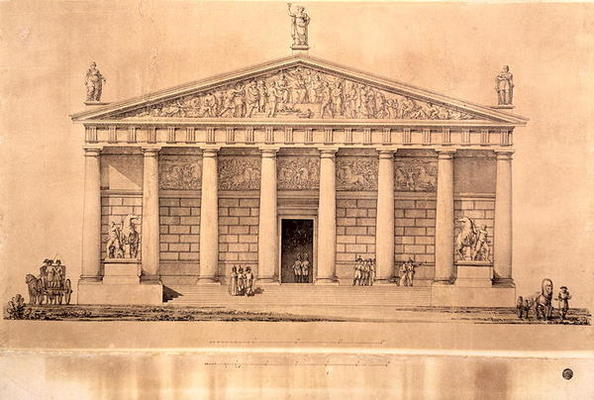
The Riding School Of The Imperial Guards, St. Petersburg (engraving)
 Читать далее
Масляная репродукция ручной работы
Картина маслом на холсте в выбранном вами размере и раме, написанная на заказ нашими художниками. ( Перейти к печати Перейти к цифровым изображениям)
































Выберите один из наших стандартных размеров, соответствующих оригинальным пропорциям произведения искусства.

Вы можете указать собственные размеры, чтобы картина идеально вписалась в выбранную раму или пространство. Если выбранный вами размер не соответствует пропорциям оригинала, мы либо обрежем полотно, либо расширим его за счет дополнительных элементов, написанных вручную. Цифровой макет будет отправлен вам на утверждение перед началом производства.
Обратите внимание, что предварительный просмотр на экране не отражает фактическую обрезку или расширение. Только макет точно покажет окончательную композицию.
Хотя доступны индивидуальные размеры, мы рекомендуем выбирать вариант из предопределенного списка, чтобы сохранить исходные пропорции.
После оформления заказа команда ArtsDot.com свяжется с клиентом по электронной почте для уточнения деталей и предоставит предварительный макет
Доставка по всему миру () за 3–4 недели вместо стандартных 5 недель. (13 Сентябрь). Без компромиссов в качестве.

Бесплатная экспресс-доставка по всему миру

Высококачественный льняной холст

Полное страхование доставки

Гарантия возмещения таможенных пошлин

Гарантия точного соответствия цветов

100-дневная политика возврата (только при обнаружении дефектов)

Гарантия возврата 100% средств

Предложение оптовых скидок
 Вариант со стеклом доступен только для размеров менее 110 см

The Riding School Of The Imperial Guards, St. Petersburg (engraving)
Техника репродукции
Размер репродукции
-


Итоговая стоимость
$ 263
Похожие произведения
Биография художника
The Palladian Visionary of Imperial Russia
Giacomo Antonio Domenico Quarenghi stands as a singular figure in the annals of European architecture, recognized universally as “the last of the and great architects of Italy” and arguably the foremost practitioner of the Neoclassical style during his era. He indelibly shaped the cityscape of Saint Petersburg and cemented Russia’s reputation for monumental grandeur under Catherine II—a legacy that continues to inspire architectural scholarship today. Born in Rota d'Imagna, near Bergamo, Quarenghi descended from an aristocratic family with roots stretching back centuries. While initially destined for legal or ecclesiastical pursuits, his artistic inclinations gained precedence through a formative apprenticeship under Giuseppe Reggi, a student of the legendary Antonio Canaletto. This early exposure instilled in him a profound appreciation for disegno—the art of drawing—which would become an indispensable tool throughout his prolific career.
The pivotal moment in Quarenghi’s life arrived in 1763 when he traveled to Rome, a city pulsating with intellectual ferment and revived classical ideals. Enrolling at Anton Raphael Mengs’ studio, he honed his painting skills alongside fellow aspiring artists before progressing to architectural studies under Paolo Posí. However, it was the serendipitous encounter with Andrea Palladio's Quattro Libri d'Architettura that irrevocably altered his trajectory. This profound connection to Palladian principles would later define his approach to structure and symmetry, allowing him to translate the ancient language of Rome into the burgeoning imperial landscape of the East.
A Grand Journey to the Russian Empire
The course of architectural history was forever changed in 1779 when Baron Friedrich Grimm secured Quarenghi’s invitation to Russia by the Empress Catherine II. This transition from the sun-drenched landscapes of Italy to the frost-touched grandeur of Saint Petersburg marked the beginning of a golden age for Russian Neoclassicism. Named the “Grand Architect of all the Russias,” Quarenghi brought with him a refined sense of proportion and an ability to command space through elegance rather than mere excess. His arrival coincided with a period of intense imperial expansion, where architecture served as a vital tool for projecting power, stability, and cultural sophistication.
His early commissions were nothing short of legendary, establishing the Palladian style within the Russian court. Among these were:
- The English Palace at Peterhof: A seminal work that introduced a new level of refined classicism to the imperial retreats.
- The Hermitage Theatre: A masterpiece of theatrical design that remains a testament to his ability to blend functionality with aesthetic splendor.
- The Bourse and State Bank: Massive, authoritative structures that demonstrated his mastery over civic and economic monuments.
A Lasting Legacy in Stone and Watercolor
Beyond the heavy stone of his buildings, Quarenghi’s artistic soul was expressed through delicate watercolors and precise drawings. His ability to capture the essence of a structure—such as the grand facade of the Smolny Institute or the sweeping vistas of the Moscow Kremlin—allowed him to document both the architectural intent and the atmospheric reality of his era. His works, ranging from topographical illustrations like the Panorama of the Villages of Kolomenskoye and Dyakovo to detailed designs for triumphal arches, reveal an artist deeply attuned to the interplay of light, shadow, and urban life.
Quarenghi’s influence extended far beyond his own lifetime. By integrating the rigorous logic of Italian Neoclassicism with the monumental scale required by the Russian Empire, he created a unique architectural dialect. His works, such as the Academy of Sciences and various bridges across the Neva, continue to stand as silent witnesses to an era of unparalleled ambition. He did not merely build structures; he crafted an identity for a nation, leaving behind a blueprint of elegance that remains etched into the very heart of Saint Petersburg.
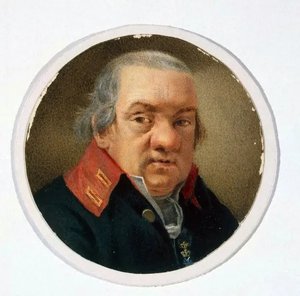
Giacomo Quarenghi
1744 - 1817 , Italy
Основные сведения
- Artistic Movement Or Style: Neoclassical
- Artists Or Movements Influenced By This Artist: ['Antoine Decrezet']
- Artists Who Influenced This Artist: ['Andrea Palladio']
- Date Of Birth: 1744
- Date Of Death: 1817
- Full Name: Giacomo Antonio Domenico Quarenghi
- Nationality: Italian
- Notable Artworks:
- Pella palace
- Panorama of the Villages of Kolomenskoye and Dyakovo
- Design of a Triumphal Arch
- Place Of Birth: Rota d'Imagna, Italy