

 Предпросмотр
 Поделиться
 Поделиться
 Детали произведения

 Скачать
 Похожие работы
 Рентгенография
 Слайд-шоу
 Статистика
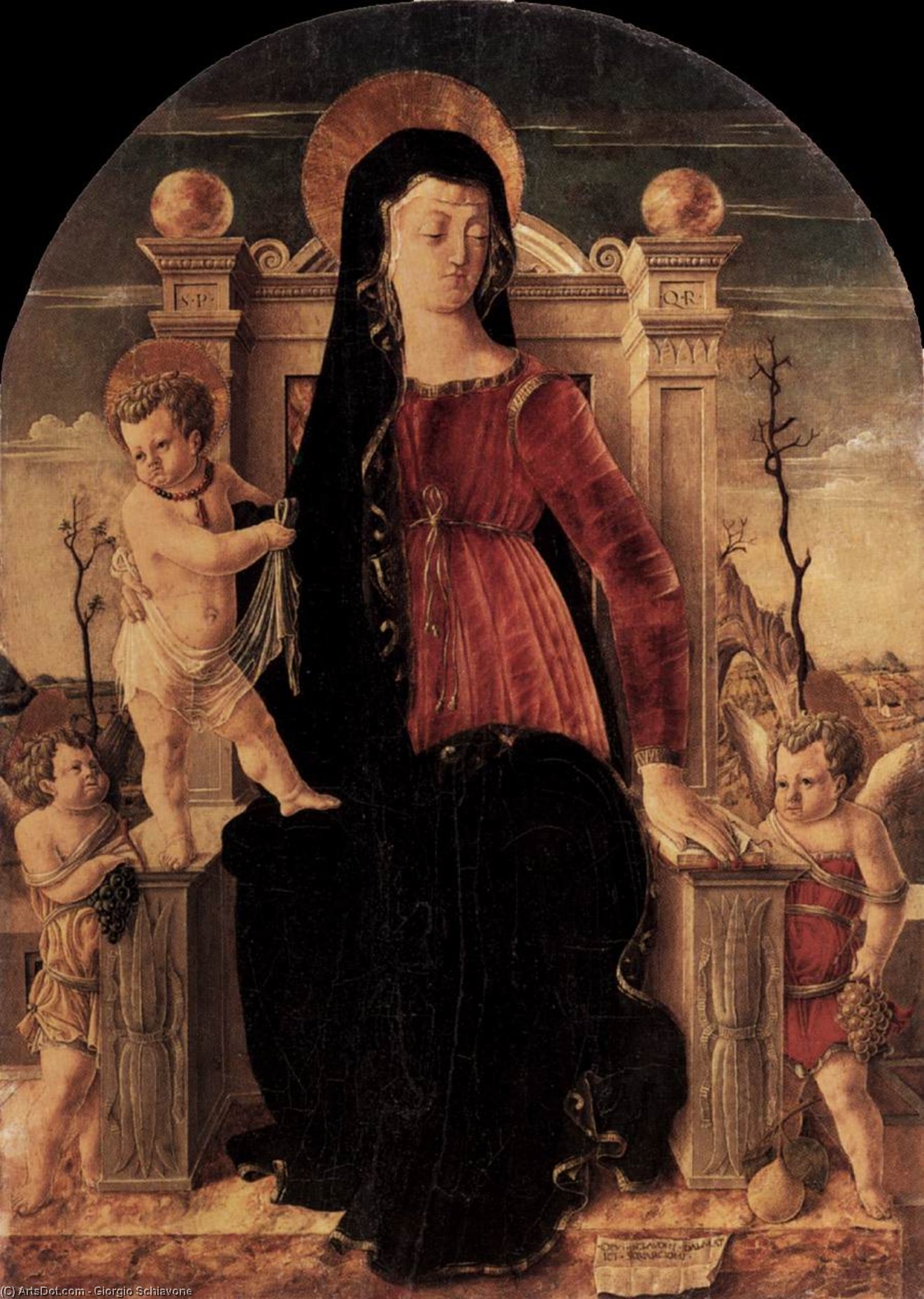
Virgin and Child Enthroned
 Oil On Canvas
- WallArt
- Late Gothic Renaissance
 1456
1456 81.0 x 57.0 cm
 Стейтлешские музеи Берлина
 Читать далее
Жикле / Арт-принт
Печать (жикле) или холст музейного качества с быстрыми сроками изготовления и широким выбором вариантов отделки. ( Купить картину ручной работы Перейти к цифровым изображениям)




P118B $10

P118H $10

P118W $10

P438Z $10

P508JH $12

P508YH $12

P805H $10

P805Z $10

P919BZ $10

P919G $10

P919XJ $10

P959ZH $10

P968JZ $12

W106C $8

W218G $10

W218JH $8

W218Y $10

W307PJ $10

W316G $10

W316PJ $8

W316Y $10

W398PJ $8

W4111J $10

W500HY $15

W500JH $15

W692G $12

W849H $8

W940BG $15

W953PJ $8




Выберите один из наших стандартных размеров, соответствующих оригинальным пропорциям произведения искусства.

Вы можете указать свои собственные размеры, чтобы репродукция идеально подошла под конкретную раму или пространство. Если выбранный вами размер не будет соответствовать пропорциям оригинала, мы либо обрежем произведение, либо дополним изображение зеркальным отражением краев или однотонной заливкой. Перед началом производства вам будет отправлен цифровой макет для утверждения.
Пожалуйста, обратите внимание, что предварительный просмотр на экране не отображает фактическую обрезку или расширение изображения. Только макет точно покажет финальную композицию.
Несмотря на возможность заказа индивидуальных размеров, мы рекомендуем выбирать размер из предопределенного списка, чтобы сохранить оригинальные пропорции.
Доставка по всему миру () за 2 недели вместо стандартных 4/5 недель. (11 Сентябрь)

Бесплатная экспресс-доставка по всему миру

Высококачественный льняной холст

Полное страхование доставки

Гарантия возмещения таможенных пошлин

Гарантия точного соответствия цветов

100-дневная политика возврата (только при обнаружении дефектов)

Гарантия возврата 100% средств

Предложение оптовых скидок
 Вариант со стеклом доступен только для размеров менее 110 см

Virgin and Child Enthroned
Жикле / Арт-принт
Размер репродукции
-


Итоговая стоимость
$ 62
A Vision of Divine Grace: Exploring Giorgio Schiavone’s “Virgin and Child Enthroned”
Giorgio Schiavone's "Virgin and Child Enthroned," painted around 1456-61, is more than just a religious depiction; it’s a profound meditation on motherhood, faith, and the enduring power of divine grace. Created during the vibrant Venetian Renaissance, this painting offers a glimpse into the artistic sensibilities of a master who seamlessly blended the weighty traditions of his predecessors with a uniquely personal vision. The work, now housed at the National Gallery in London, immediately captivates with its serene beauty and meticulous detail – a testament to Schiavone’s skill as both a painter and a keen observer of human emotion.
The composition itself is carefully orchestrated. Mary, rendered with an almost ethereal quality, sits upon a richly ornamented throne, her posture radiating quiet dignity and maternal tenderness. Her infant son, Jesus, nestled securely in her arms, embodies innocence and vulnerability. The arrangement isn’t merely decorative; it speaks to the central tenets of Christian iconography – Mary as the New Eve, bearing the salvation of humanity within her womb, and Christ as the embodiment of divine love. Schiavone's use of color is restrained yet masterful, dominated by deep reds and blues that evoke a sense of solemnity and reverence, punctuated by the warm glow of gold accents highlighting the throne and Mary’s garments.
The Painter’s Hand: Technique and Style
Schiavone's artistic lineage is complex and fascinating. He began his training under Squarcione in Padua, absorbing the master’s innovative approach to modeling form and creating atmospheric depth – techniques that are immediately evident in “Virgin and Child Enthroned.” However, Schiavone quickly developed a distinct style, drawing heavily from Mantegna's meticulous realism and incorporating Venetian artistic conventions. The painting showcases his mastery of *sfumato*, the subtle blending of colors to create soft transitions and a hazy atmosphere, particularly noticeable around Mary’s face and hands. The figures possess a remarkable sense of volume and solidity, achieved through careful attention to light and shadow – a hallmark of Schiavone's approach.
Furthermore, Schiavone demonstrates an impressive understanding of perspective, creating a believable three-dimensional space within the confines of the panel. The intricate details—the folds of Mary’s robes, the delicate features of the infant Jesus, and the elaborate ornamentation of the throne—are rendered with painstaking precision, reflecting the artist's dedication to his craft. The painting is executed in tempera on wood, a medium favored by Venetian artists during this period, allowing for rich colors and luminous effects.
A Window into Renaissance Venice: Context and Symbolism
To fully appreciate “Virgin and Child Enthroned,” it’s crucial to understand the cultural context in which it was created. Venice at the mid-15th century was a thriving center of art, commerce, and diplomacy – a melting pot of influences from across Europe. Schiavone's work reflects this dynamism, blending Byzantine traditions with Italian Renaissance ideals. The painting’s subject matter—the Virgin Mary and Child—was immensely popular during this period, serving as a powerful symbol of faith, hope, and divine protection.
Beyond the purely religious symbolism, the painting also offers insights into the social values of the time. Mary's role as a devoted mother underscores the importance of family life and the sanctity of motherhood. The throne itself symbolizes Mary’s elevated status as Queen of Heaven, while the angels flanking her represent divine guardianship. Even seemingly minor details—the clock on the upper left corner, a symbol of temporal awareness—contribute to the painting's layered meaning.
An Enduring Legacy: Emotional Impact and Artistic Significance
“Virgin and Child Enthroned” continues to resonate with viewers centuries after its creation. Its serene beauty, coupled with its profound symbolism, evokes a sense of peace, reverence, and spiritual contemplation. The painting’s emotional impact is undeniable – it invites us to reflect on the themes of motherhood, faith, and the enduring power of divine love. Giorgio Schiavone's masterpiece stands as a testament to his artistic genius and a poignant reminder of the enduring legacy of the Venetian Renaissance.
Похожие произведения
Биография художника
The Venetian Soul of a Dalmatian Master
In the luminous tapestry of the Renaissance, few figures bridge the cultural divide between the Adriatic coast and the Italian mainland as elegantly as Giorgio Schiavone. Born Juraj Ćulinović in the scenic town of Skradin around 1433 or 1436, this master emerged from the Dalmatian landscape to become a pivotal voice in the Venetian Renaissance. His early years were steeped in the burgeoning artistic traditions of his homeland, where he likely received his first lessons under Dujam Vušković. This foundational period in Dalmatia provided him with a unique perspective, blending the rugged, spiritual intensity of the Balkan coast with the sophisticated humanism that was beginning to sweep through the Italian peninsula.
The trajectory of Schiavone’s life changed irrevocably when he moved to Italy in 1456. Seeking the pinnacle of artistic instruction, he entered the prestigious Paduan studio of Francesco Squarcione. It was here, amidst the scent of pigments and the rigorous study of classical antiquity, that Schiavondere’s style began to crystallize. Under Squarcione’s tutelage, he mastered the art of sculptural modeling and atmospheric perspective—techniques that would become the hallmarks of his mature work. His time in Padua was not merely an education but a transformative encounter with the Paduan school's meticulous realism, an influence that would later allow him to infuse his religious subjects with a profound sense of physical presence and weight.
A Synthesis of Style and Spirit
As Schiavone’s career progressed, his artistry became a sophisticated dialogue between different regional influences. While his roots remained in the Dalmatian tradition, his heart beat with the rhythms of Venice. He moved through the great artistic centers of the era, including Venice and Padua, absorbing the innovations of luminaries such as Giovanni Bellini and Andrea Mantegna. This synthesis resulted in a style that was uniquely his own: a blend of Mantegna’s disciplined, almost architectural precision with the soft, emotive luminosity characteristic of Venetian painting. His compositions often utilized the pyramidal structure to create a sense of divine stability, guiding the viewer's eye toward the sacred subjects at the center of his devotion.
Technically, Schiavone was a master of texture and light. He frequently employed the impasto technique, layering paint with a deliberate thickness to capture the play of light across surfaces, lending a tactile quality to his figures. His color palette was often a study in controlled elegance, utilizing muted, earthy tones that were punctuated by sudden, vibrant bursts of crimson or gold. This careful balance served to heighten the emotional resonance of his work; when he depicted a saint or a Madonna, the viewer did not merely see a figure, but felt the weight of their spiritual contemplation and the warmth of their humanity.
Legacy and Artistic Significance
The works of Giorgio Schiavone stand as enduring monuments to a period of intense cultural exchange. His ability to navigate between the identities of Sclavonus and Georgius Dalmaticus mirrors his artistic ability to bridge the gap between the North Italian and Dalmatian schools. Some of his most enduring achievements include:
- The Madonna and Child: A quintessential example of his devotional mastery, where the use of a coral necklace on the Christ Child serves as both a realistic detail and a symbolic ward against evil.
- Religious Iconography: His ability to translate complex theological themes into accessible, visually stunning altarpieces that commanded reverence in cathedrals from Šibenik to Venice.
- The Influence of Squarcione: His role in carrying the rigorous, sculptural traditions of the Paduan workshop into the broader Mediterranean landscape.
Though much of his life was spent navigating the complexities of trade, land ownership, and even legal disputes with his former mentor, Schiavone’s true legacy lies in the silent, powerful presence of his canvases. He remains celebrated as the most significant Dalmatian painter of the 15th century, a man whose brush captured the serene beauty and the profound spiritual fervor of a Renaissance caught between two worlds.
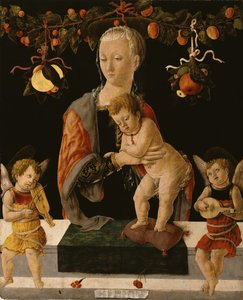
Giorgio Schiavone
1437 - 1504 , Italy
Основные сведения
- Artistic Movement Or Style: Renaissance art; Venetian school
- Artists Or Movements Influenced By This Artist: Mantegna
- Artists Who Influenced This Artist: Squarcione
- Date Of Birth: ca. 1436
- Date Of Death: 1504
- Full Name: Giorgio Ćulinović
- Nationality: Croatian
- Notable Artworks:
- Saint Sebastian
- Saint Anthony of Padua
- The Virgin and Child
- Place Of Birth: Scardone, Italy
Похожие статьи

Фра Анджелико: Топ-25 шедевров эпохи Возрождения для вашего интерьера
Погрузитесь в мир Фра Анджелико! Топ-25 шедевров Возрождения – религиозные фрески, алтари и картины с ангелами. Узнайте историю искусства и вдохновитесь для декора дома. Репродукции картин высокого качества на ArtsDot.com.
Vittore Carpaccio: Venetian Renaissance Narrative & the Poetics of Detail
Explore the captivating world of Vittore Carpaccio, a master storyteller of the Venetian Renaissance. Discover his intricate details, narrative cycles like 'The Legend of St. Ursula,' and unique artistic style.

Джотто ди Бондоне: 25 шедевров великого флорентийского мастера | ArtsDot
Погрузитесь в мир Джотто ди Бондоне! 25 величайших шедевров флорентийского мастера – фрески, картины, религиозная живопись. Узнайте историю создания и значение каждой работы. Репродукции картин высокого качества для вашего интерьера на ArtsDot.com
The Golden Light of Innovation: Exploring the Venetian Renaissance Art Movement (1430–1580)
Explore the Golden Age of Venetian art (1430–1580). Discover Giorgione, Titian & Tintoretto's techniques, the 'colorito' revolution, and lasting influence. Expert insights for collectors & enthusiasts.

Топ-25 шедевров Тинторетто: Венецианская драма и свет в вашем интерьере
Погрузитесь в мир драматизма и света с 25 шедеврами Тинторетто! Узнайте историю создания легендарных картин эпохи Возрождения. Репродукции высокого качества для вашего интерьера на ArtsDot.com.