 Предпросмотр
 Поделиться
 Поделиться
 Детали произведения

 Скачать
 Похожие работы
 Рентгенография
 Слайд-шоу
 Статистика
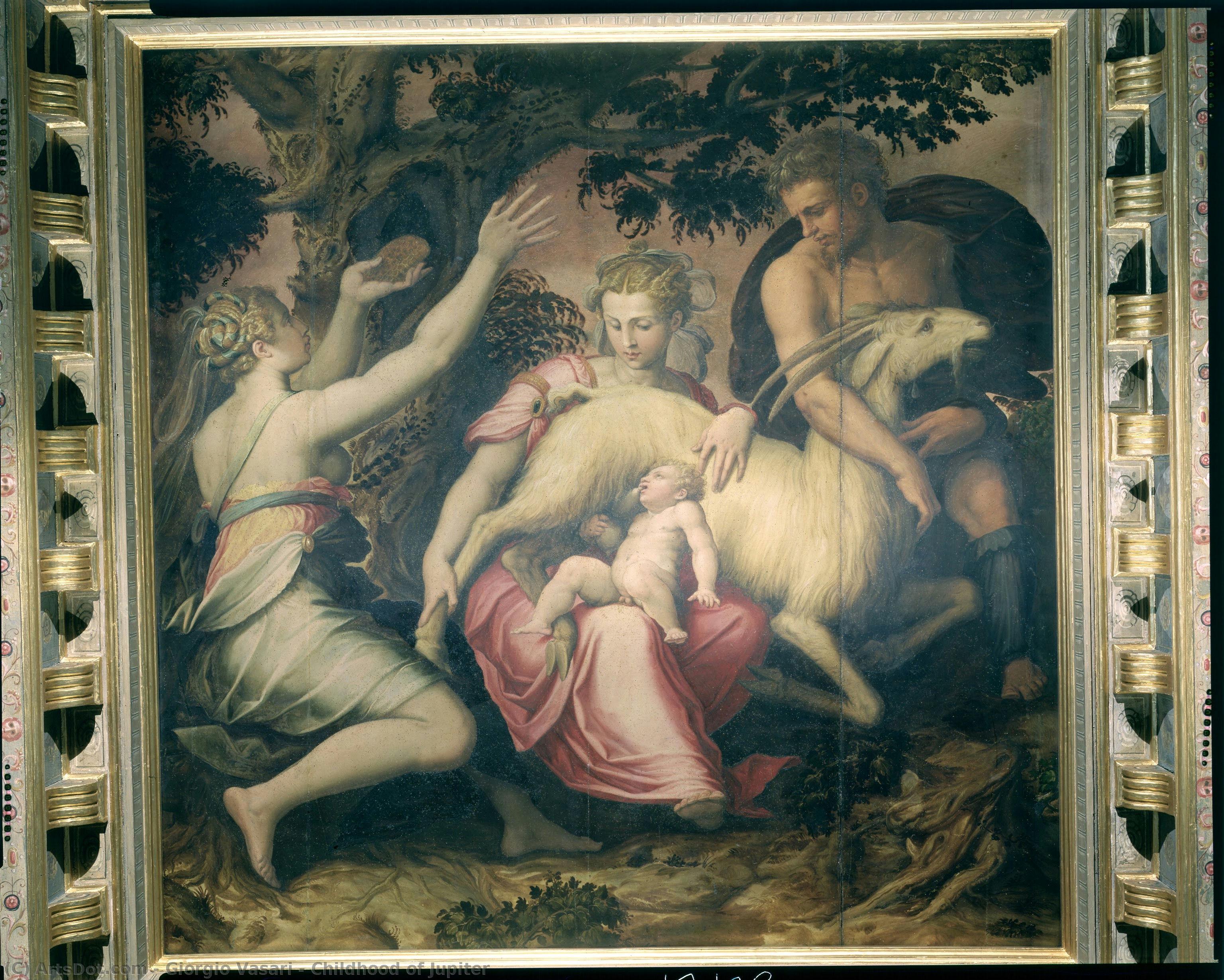
Childhood of Jupiter


 Читать далее
Масляная репродукция ручной работы
Картина маслом на холсте в выбранном вами размере и раме, написанная на заказ нашими художниками. ( Перейти к печати Перейти к цифровым изображениям)




P118B $10

P118H $10

P118W $10

P438Z $10

P508JH $12

P508YH $12

P805H $10

P805Z $10

P919BZ $10

P919G $10

P919XJ $10

P959ZH $10

P968JZ $12

W106C $8

W218G $10

W218JH $8

W218Y $10

W307PJ $10

W316G $10

W316PJ $8

W316Y $10

W398PJ $8

W4111J $10

W500HY $15

W500JH $15

W692G $12

W849H $8

W940BG $15

W953PJ $8




Выберите один из наших стандартных размеров, соответствующих оригинальным пропорциям произведения искусства.

Вы можете указать собственные размеры, чтобы картина идеально вписалась в выбранную раму или пространство. Если выбранный вами размер не соответствует пропорциям оригинала, мы либо обрежем полотно, либо расширим его за счет дополнительных элементов, написанных вручную. Цифровой макет будет отправлен вам на утверждение перед началом производства.
Обратите внимание, что предварительный просмотр на экране не отражает фактическую обрезку или расширение. Только макет точно покажет окончательную композицию.
Хотя доступны индивидуальные размеры, мы рекомендуем выбирать вариант из предопределенного списка, чтобы сохранить исходные пропорции.
После оформления заказа команда ArtsDot.com свяжется с клиентом по электронной почте для уточнения деталей и предоставит предварительный макет
Доставка по всему миру () за 3–4 недели вместо стандартных 5 недель. (10 Сентябрь). Без компромиссов в качестве.

Бесплатная экспресс-доставка по всему миру

Высококачественный льняной холст

Полное страхование доставки

Гарантия возмещения таможенных пошлин

Гарантия точного соответствия цветов

100-дневная политика возврата (только при обнаружении дефектов)

Гарантия возврата 100% средств

Предложение оптовых скидок
 Вариант со стеклом доступен только для размеров менее 110 см

Childhood of Jupiter
Техника репродукции
Размер репродукции
-


Итоговая стоимость
$ 263
A Vision of Divine Childhood: *Childhood of Jupiter* by Giorgio Vasari
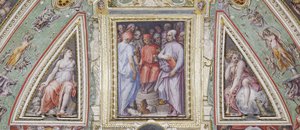
Giorgio Vasari’s *Childhood of Jupiter*, painted in 1556, is more than simply a depiction of a mythological scene; it's a profound meditation on the origins of power and the enduring symbolism of childhood within the context of the High Renaissance. Executed as a fresco, this artwork transports us to a moment of nascent divinity – Jupiter, destined to become the king of the gods, presented in an intimate and vulnerable state. The painting’s immediate impact lies in its carefully constructed composition, dominated by a central female figure cradling what is unmistakably the infant Jupiter. This maternal representation immediately establishes a connection between divine authority and nurturing care, a theme prevalent throughout Renaissance art.
Technique and Materials: Fresco at the Heart of the Matter
Vasari’s masterful use of fresco technique is central to understanding the work's longevity and impact. Fresco painting involves applying pigments directly onto wet plaster, creating a bond between the paint and the wall surface that ensures remarkable durability. This method, favored by artists like Michelangelo, demanded meticulous planning and execution, as changes were difficult – if not impossible – once the plaster had dried. The vibrant colors achieved through this process, particularly the rich reds and blues, contribute to the painting’s enduring visual power. The artist's skillful handling of light and shadow further enhances the three-dimensional quality of the figures, imbuing them with a palpable sense of realism despite their mythological subject matter.
Symbolism and Narrative
Beyond its technical brilliance, *Childhood of Jupiter* is rich in symbolic meaning. The presence of the three sheep – a recurring motif in Vasari’s work and throughout Renaissance art – adds layers to the narrative. Sheep were traditionally associated with innocence, purity, and sacrifice, subtly foreshadowing Jupiter's future role as a protector and judge. The women surrounding the infant god represent both earthly and divine influence; they embody the nurturing forces that shape destiny. The scene’s overall atmosphere evokes a sense of reverence and awe, inviting viewers to contemplate the very foundations of power and legitimacy.
Historical Context: Vasari's Renaissance Vision
Painted in 1556, *Childhood of Jupiter* reflects the intellectual currents of the High Renaissance. Vasari was deeply invested in celebrating classical mythology as a means of exploring human virtues and moral lessons. His work aligns with the broader humanist movement that emphasized reason, observation, and an appreciation for ancient Greek and Roman culture. Furthermore, Vasari’s own career – as both an artist and a historian – underscores the Renaissance ideal of the “universal man,” capable of excelling in multiple fields. This fresco stands as a testament to his artistic vision and his commitment to preserving and celebrating the legacy of the great masters.
Похожие произведения

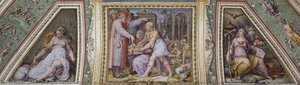
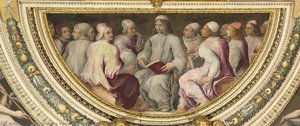
Биография художника
A Life Woven into the Renaissance Fabric
Giorgio Vasari, born in Arezzo, Tuscany, on July 30, 1511, was more than simply a painter; he was a quintessential embodiment of the Italian Renaissance spirit. His life unfolded as a vibrant tapestry woven with threads of artistic creation, architectural innovation, insightful historical writing, and an unwavering dedication to celebrating the masters who came before him. From his earliest training under Guglielmo da Marsiglia, a skilled artisan in stained glass, young Giorgio’s path was steered towards visual artistry. However, it was his move to Florence at sixteen that truly ignited his potential. Immersing himself within the dynamic circle of Andrea del Sarto and absorbing the influences of Rosso Fiorentino and Jacopo Pontormo, Vasari began a journey that would see him become one of the most influential figures of his era. His formative years were also deeply marked by the patronage and friendship of the powerful Medici family, a relationship that would shape both his career and his perspective on art’s role in society.The Artist's Hand and Eye
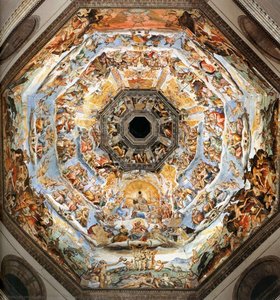
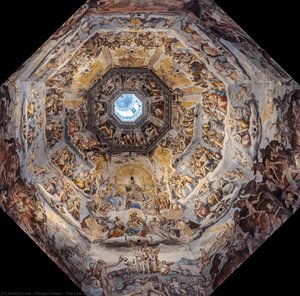
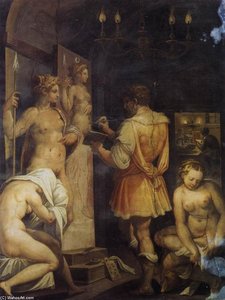
Vasari’s artistic style is often categorized as Mannerist, reflecting the prevailing aesthetic trends of the mid-16th century. His paintings are characterized by elongated figures, dynamic compositions, and a sophisticated use of color—qualities highly admired during his lifetime. While perhaps not achieving the same level of enduring fame as some of the artists he chronicled, Vasari’s skill was undeniable. Notable works such as *The Studio of the Painter*, a fresco housed in Casa Vasari in Arezzo, offer a fascinating glimpse into the artistic practices of the time. The sheer scale and ambition of his frescoes for the Palazzo Vecchio in Florence, undertaken between 1555 and 1572, demonstrate his mastery of large-scale decorative schemes. His final monumental undertaking, *The Last Judgement*, adorning the cupola of Florence Cathedral—completed after his death by Federico Zuccari—stands as a testament to his unwavering commitment to grand artistic visions. Beyond painting, Vasari’s architectural contributions were equally significant. He designed the elegant loggia of the Palazzo degli Uffizi, transforming it into a public piazza and creating a vital link within Florence's urban landscape. Perhaps most famously, he conceived and oversaw the construction of the Vasari Corridor, a secret passageway connecting the Uffizi Gallery with the Palazzo Pitti—a feat of engineering and architectural ingenuity that continues to captivate visitors today.A Historian Forging a Legacy
However, it is arguably as an art historian that Giorgio Vasari secured his most lasting legacy. His monumental work, *Lives of the Most Excellent Painters, Sculptors, and Architects*, published in 1550 (with a revised edition in 1568), revolutionized the way art was understood and appreciated. This groundbreaking text wasn’t merely a collection of biographies; it established a narrative framework for the development of Italian Renaissance art, tracing its evolution from the early masters like Cimabue and Giotto to his contemporaries Michelangelo and Raphael. Vasari's work introduced the very concept of the “Renaissance” – a rebirth of classical ideals—and laid the foundation for modern art history as a discipline. While acknowledging that Vasari’s accounts are not without their biases and inaccuracies, particularly concerning artists predating his own time, the impact of *Lives* remains profound. It provided a crucial historical context for artistic creation, elevating the status of artists from skilled craftsmen to intellectual figures worthy of scholarly attention.Influences and Enduring Significance
Vasari’s artistic development was profoundly shaped by his exposure to the works of Renaissance masters. His visit to Rome in 1529, where he studied the art of Raphael and other High Renaissance artists, proved pivotal. He absorbed their principles of composition, anatomical accuracy, and idealized beauty, incorporating them into his own style. Michelangelo, whom Vasari greatly admired, exerted a particularly strong influence on both his painting and architecture. The grandeur and dynamism characteristic of Michelangelo’s work are evident in many of Vasari’s projects. Beyond specific artists, the broader intellectual currents of the Renaissance—humanism, classical learning, and a renewed interest in empirical observation—also informed Vasari's approach to art and history. Giorgio Vasari died on June 27, 1574, in Florence, leaving behind a multifaceted legacy that continues to resonate today. He was not only a talented artist and architect but also a pioneering historian whose writings shaped our understanding of one of the most transformative periods in Western art history. His work remains essential for anyone seeking to explore the rich cultural heritage of the Italian Renaissance.Major Achievements
- The Studio of the Painter (1563): This monumental fresco, housed in Casa Vasari in Arezzo, is a cornerstone of his artistic output, offering an unparalleled insight into the practices and theories of painting during the Renaissance.
- Frescoes for the Palazzo Vecchio (1555-1572): Vasari’s ambitious frescoes decorating the halls of Florence's town hall showcase his mastery of large-scale decorative schemes and his ability to integrate narrative and symbolism into monumental works.
- The Last Judgement (1573-1579): This colossal fresco on the cupola of Florence Cathedral, completed after his death by Federico Zuccari, represents Vasari’s ultimate architectural and artistic ambition – a testament to his vision and skill.
- The Uffizi Gallery (1560-1579): His design for the Uffizi Palace fundamentally reshaped Florence's urban landscape, creating a harmonious blend of architecture and public space.
- Lives of the Most Excellent Painters, Sculptors, and Architects (1550, 1568): This seminal work established a new paradigm for art historical writing, shaping our understanding of Renaissance artists and their contributions.
Key Influences
- Guglielmo da Marsiglia: Vasari’s early training under the stained-glass master instilled in him a deep appreciation for craftsmanship and technical skill.
- Andrea del Sarto: His time with Andrea del Sarto exposed him to Florentine artistic traditions and fostered his understanding of composition and color theory.
- Raphael & Michelangelo: Vasari’s admiration for these High Renaissance masters profoundly influenced his own style, particularly in terms of anatomical accuracy and idealized beauty.
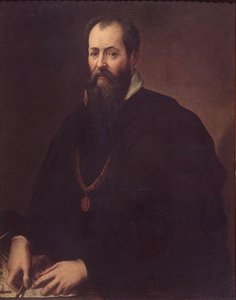
Джорджо Вазари
1511 - 1574 , Италий
Основные сведения
- Artistic Movement Or Style: Маньеризм
- Artists Or Movements Influenced By This Artist: ['Ренессанс']
- Artists Who Influenced This Artist:
- Андреа дель Сарто
- Микеланджело
- Date Of Birth: 30 июля 1511 г.
- Date Of Death: 27 июня 1574 г.
- Full Name: Giorgio di Antonio Vasari
- Nationality: Итальянец
- Notable Artworks:
- Студия художника
- Последний суд
- Place Of Birth: Ареццо, Италия
Похожие статьи

Фреска как Семейное Наследие: Сохранение Истории в Искусстве Стен
Узнайте о фресках как семейном наследии! История, техника создания, реставрация и сохранение. Экспертные советы и вдохновение для вашего дома. .
Возвращение фрески: почему настенные росписи становятся новым символом роскоши
Узнайте о возрождении фрески как символа роскоши! Экспертные статьи о технике, дизайне и применении в интерьере отелей. Закажите уникальную фреску с .

The Enduring Legacy of Fresco: Technique, History & Artistic Expression Across Cultures
Explore the rich history & enduring legacy of fresco painting! Discover ancient techniques, Giotto's masterpieces, and modern applications. Expert insights for art lovers & professionals.

The Enduring Legacy of Fresco Painting: Techniques, History & Contemporary Relevance
Explore the rich history & enduring artistry of fresco painting – from Giotto to Michelangelo! Discover techniques, conservation efforts, & modern applications. Learn how ArtsDot brings this timeless art form to your home.
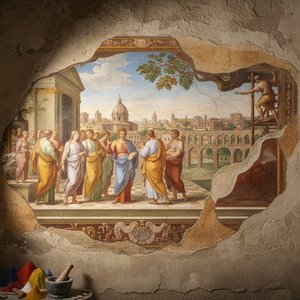
The Enduring Legacy of Fresco: Technique, History & Artistic Expression
Explore the rich history & enduring artistry of fresco painting. Discover techniques from Giotto to Michelangelo, conservation efforts, & modern applications. Learn how ArtsDot brings this timeless art form to your home.