Предпросмотр
 Поделиться
 Поделиться
 Детали произведения

 Скачать
 Похожие работы
 Рентгенография
 Слайд-шоу
 Статистика
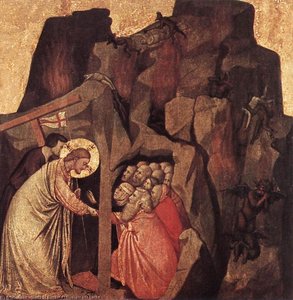
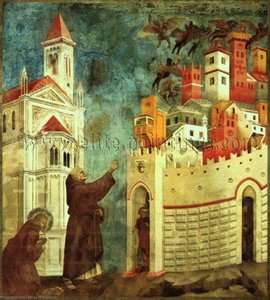
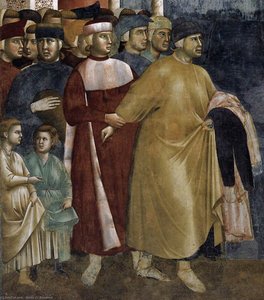
Apparition to Fra Agostino and to Bishop Guido of Arezzo
 Acrylic On Canvas
- WallArt
- Proto Renaissance
 1300
1300- Renaissance
 270.0 x 230.0 cm
 Читать далее
Жикле / Арт-принт
Печать (жикле) или холст музейного качества с быстрыми сроками изготовления и широким выбором вариантов отделки. ( Купить картину ручной работы Перейти к цифровым изображениям)




P118B $10

P118H $10

P118W $10

P438Z $10

P508JH $12

P508YH $12

P805H $10

P805Z $10

P919BZ $10

P919G $10

P919XJ $10

P959ZH $10

P968JZ $12

W106C $8

W218G $10

W218JH $8

W218Y $10

W307PJ $10

W316G $10

W316PJ $8

W316Y $10

W398PJ $8

W4111J $10

W500HY $15

W500JH $15

W692G $12

W849H $8

W940BG $15

W953PJ $8




Выберите один из наших стандартных размеров, соответствующих оригинальным пропорциям произведения искусства.

Вы можете указать свои собственные размеры, чтобы репродукция идеально подошла под конкретную раму или пространство. Если выбранный вами размер не будет соответствовать пропорциям оригинала, мы либо обрежем произведение, либо дополним изображение зеркальным отражением краев или однотонной заливкой. Перед началом производства вам будет отправлен цифровой макет для утверждения.
Пожалуйста, обратите внимание, что предварительный просмотр на экране не отображает фактическую обрезку или расширение изображения. Только макет точно покажет финальную композицию.
Несмотря на возможность заказа индивидуальных размеров, мы рекомендуем выбирать размер из предопределенного списка, чтобы сохранить оригинальные пропорции.
Доставка по всему миру () за 2 недели вместо стандартных 4/5 недель. (15 Сентябрь)

Бесплатная экспресс-доставка по всему миру

Высококачественный льняной холст

Полное страхование доставки

Гарантия возмещения таможенных пошлин

Гарантия точного соответствия цветов

100-дневная политика возврата (только при обнаружении дефектов)

Гарантия возврата 100% средств

Предложение оптовых скидок
 Вариант со стеклом доступен только для размеров менее 110 см

Apparition to Fra Agostino and to Bishop Guido of Arezzo
Жикле / Арт-принт
Размер репродукции
-


Итоговая стоимость
$ 62
A Window Into Faith and Humanity: Giotto’s “Apparition to Fra Agostino and to Bishop Guido of Arezzo”
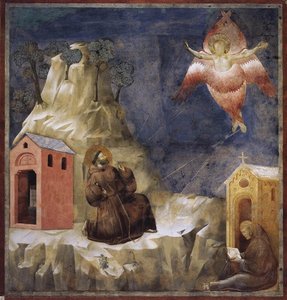
Giotto di Bondone's "Apparition to Fra Agostino and to Bishop Guido of Arezzo," painted in 1300, isn’t merely a fresco; it’s a profound distillation of the Proto-Renaissance spirit – a moment where the burgeoning desire for naturalism collided with enduring religious devotion. Measuring a modest 270 x 230 centimeters, this work resides within the Basilica of Saint Francis in Assisi, yet its impact resonates far beyond the confines of that sacred space. Giotto, a name synonymous with artistic revolution, masterfully captures an ethereal encounter, a pivotal scene from the Legend of St. Francis, and in doing so, offers us a rare glimpse into the evolving sensibilities of 14th-century Italy. The painting’s power lies not just in its depiction of divine intervention but also in Giotto's innovative approach to portraying human emotion and spatial depth – elements that would become hallmarks of the Renaissance itself. The scene unfolds within what appears to be a simple, yet carefully constructed church interior. Three men stand prominently at the forefront, their gestures imbued with a palpable sense of urgency and reverence. The central figure, his hand raised towards the heavens, embodies a fervent plea for divine guidance – a gesture that speaks volumes about the era’s deep-seated faith and its yearning for connection with the spiritual realm. Notice the subtle variations in their clothing and posture; Giotto doesn't present them as identical figures but rather as individuals responding uniquely to this extraordinary event. The background, though less detailed than the foreground, is populated by a group of onlookers, each reflecting a range of emotions – surprise, contemplation, and perhaps even a touch of fear. A figure lies prostrate on a bed, possibly representing a sick or dying individual seeking miraculous healing, while another stands nearby, offering support. This arrangement immediately establishes a narrative tension: the promise of salvation juxtaposed with the vulnerability of human existence. Giotto’s genius isn't simply in his ability to render figures realistically; it’s in how he uses light and shadow to create an atmosphere of profound solemnity. The fresco technique itself, utilizing pigments mixed with lime and plaster applied directly to wet wall surfaces, lends a remarkable luminosity to the scene. The colors are muted yet evocative – earthy browns, deep blues, and subtle greens – contributing to the painting’s overall sense of gravity and reverence. Crucially, Giotto departs significantly from the stylized, flat figures characteristic of Byzantine art, which heavily influenced his early training under Cimabue. Instead, he imbues his subjects with a remarkable degree of volume and three-dimensionality, creating an illusion of space that was revolutionary for its time. The use of *chiaroscuro* – the dramatic contrast between light and dark – further enhances this effect, drawing the viewer’s eye to key figures and emphasizing the emotional intensity of the moment. Beyond the immediate depiction of the apparition, "Apparition to Fra Agostino and to Bishop Guido of Arezzo" is rich in symbolic meaning. The gesture of prayer, central to the composition, represents a fundamental human desire for connection with the divine. The setting within a church underscores the sacred nature of the event, while the presence of the bishop – a symbol of authority and spiritual guidance – highlights the importance of religious leadership. Furthermore, the scene can be interpreted as an allegory for the transformative power of faith, suggesting that even in times of uncertainty and suffering, divine intervention can offer hope and solace. Giotto’s work stands as a testament to his ability to seamlessly blend religious narrative with human emotion, solidifying his place as one of the most influential artists in Western art history – a pioneer who laid the groundwork for the Renaissance's embrace of naturalism and humanistic ideals.Giotto: A Revolutionary Vision
Born around 1267 in Florence, Giotto di Bondone’s early life remains shrouded in some mystery, though legend speaks of his artistic talent blossoming from a young age – sketching sheep on rocks to capture the attention of the renowned painter Cimabue. Cimabue, recognizing Giotto's exceptional potential, took him under his wing, providing him with formal training in the Byzantine style that dominated Italian art at the time. However, Giotto quickly began to challenge these conventions, seeking a more naturalistic and emotionally resonant approach to painting. This shift is powerfully evident in "Apparition," where figures possess a palpable sense of humanity – their faces conveying a range of emotions with remarkable subtlety. His early works, including frescoes in the Scrovegni Chapel in Padua, demonstrated his mastery of perspective and spatial depth, techniques that would become central to Renaissance art. Giotto’s influence extended far beyond his own lifetime, shaping the work of countless artists who followed him, cementing his legacy as a pivotal figure in the transition from medieval to modern art.The Fresco Technique: A Window into the Past
Giotto's masterful use of fresco is integral to understanding the painting’s enduring power. The *fresco* technique involves applying pigments mixed with water to wet plaster, creating a durable and permanent image directly on the wall surface. This method demanded meticulous planning and execution, requiring Giotto to work quickly and precisely. The layering of colors – starting with lighter tones and gradually building up to darker shades – created an illusion of depth and volume, enhancing the sense of realism in his figures. The fresco medium itself contributes to the painting’s luminous quality, imbuing it with a subtle glow that seems to emanate from within. Examining the texture of the paint reveals the artist's deliberate hand, adding another layer of appreciation for this ancient technique.Exploring Giotto’s Legacy: Beyond “Apparition”
“Apparition to Fra Agostino and to Bishop Guido of Arezzo” is just one example of Giotto’s prolific and diverse body of work. Other notable masterpieces include the frescoes in the Scrovegni Chapel, which depict scenes from the life of Christ and the Virgin Mary; “Faith,” “Justice,” “Inconstancy,” and “Miracle of Nazareth.” These works showcase Giotto's evolving style and his increasing mastery of perspective, composition, and human emotion. His influence can be seen throughout the subsequent generations of Renaissance artists, including Masaccio, Botticelli, and Leonardo da Vinci. For those seeking to delve deeper into Giotto’s life and work, resources such as the Wikipedia article on Giotto (https://en.wikipedia.org/wiki/Giotto) and the Web Gallery of Art (http://www.wga.hu/art/g/giotto/) offer invaluable insights into his artistic journey and enduring legacy. And for a closer look at this specific work, consider visiting ArtsDot.com to explore high-quality reproductions that capture the essence of Giotto’s revolutionary vision.Похожие произведения

![Legend Of St Francis - [21] - Apparition To Fra Agostino And To Bishop Guido Of Arezzo — Джотто Ди Бондоне, Proto-renaissance](/media/artworks/images-thumb/8a/06/8a0632ef03ba49f12919faa78718a88b.jpg)
Биография художника
Жизнь и Ранние Годы Джото ди Бондоне
Джото ди Бондоне, родившийся около 1267 года в холмистой Тоскане недалеко от Флоренции, стал, пожалуй, самой значительной фигурой в переходе от средневековых художественных традиций к эпохе Возрождения. Его ранняя жизнь окутана легендами – рассказывают о пастушке, обнаружившем невероятно реалистичных овец, нарисованных на скалах, что привлекло внимание флорентийского мастера Чимабуэ. Правда или вымысел, эта история отражает суть гения Джото: врожденную способность улавливать естественный мир с беспрецедентным реализмом и эмоциональной глубиной. Став учеником Чимабуэ, Джото быстро превзошел своего учителя, усвоив технические навыки, но выбрав свой собственный путь. В то время доминирующий византийский стиль предпочитал стилизованные фигуры, приплюснутую перспективу и роскошные золотые фоны – символы духовного трансцендентности, а не земного представления. Однако Джото стремился изображать человечество не как эфирные иконы, а как личностей, наполненных чувствами, существующих в осязаемом пространстве.
Разрыв с Византийской Традицией: Новый Реализм
Художественная революция Джото была не внезапным переворотом, а постепенной эволюцией. Его ранние работы уже намекали на предстоящие изменения, демонстрируя растущий акцент на объеме, весе и правдоподобной анатомии. Он начал рассматривать свет и тень не просто как декоративные элементы, а как инструменты для скульптурного формирования форм и создания глубины. Этот зарождающийся реализм очевиден в его вкладе во фрески Верхней базилики Святого Франциска Ассизского – хотя авторство остается спорным, многие ученые узнают руку Джото в сценах, которые резко отличаются от преобладающей византийской эстетики. Он не просто отвергал традицию; он строил на ней, наполняя устоявшиеся формы новым чувством человечности и эмоционального резонанса. Он понимал силу повествования, создавая композиции, которые рассказывали истории не через жесткую символику, а через выразительные жесты, правдоподобные взаимодействия и тщательно продуманные декорации.
Капелла Скровеньи: Шедевр Повествования
Шедевром Джото, и, возможно, одним из самых важных произведений западного искусства в истории, является цикл фресок, украшающий капеллу Скровеньи (также известную как Арена), расположенную в Падуе. Завершенный около 1305 года, этот захватывающий дух сериал изображает жизнь Христа и Девы Марии с революционным уровнем реализма и эмоциональной интенсивности. Каждая сцена разворачивается как тщательно поставленная драма, населенная фигурами, которые являются не просто представлениями религиозных архетипов, а полностью реализованными людьми, испытывающими радость, печаль, страх и надежду. *Страшный Суд*, доминирующий на одной из стен, является мощным свидетельством мастерства Джото в передаче как божественного величия, так и уязвимости человечества перед лицом его окончательного суда. Использование перспективы, хотя и не математически точное по более поздним стандартам Возрождения, создает убежительную иллюзию глубины, вовлекая зрителя в повествование. Фигуры заземлены, их тела обладают весом и объемом, а их выражения передают спектр эмоций, невиданных ранее в религиозном искусстве.
За Пределами Фресок: Архитектура и Наследие
Таланты Джото простирались за пределы живописи; он также был уважаемым архитектором. В 1334 году ему было поручено спроектировать кампанилу – колокольню – Флорентийского собора, проект, который продемонстрировал его инновационный подход к архитектурной форме. Хотя он умер до ее завершения, его проекты заложили основу для этого культового флорентийского ориентира. Его влияние на последующие поколения художников неизмеримо. Он преодолел разрыв между средневековым и эпохой Возрождения, прокладывая путь мастерам, таким как Мазаччо, Леонардо да Винчи и Микеланджело. Вазари в своей основополагающей работе *Жизни художников* приписал Джото «предоставление живописи великого искусства делать вещи с натуры», что является свидетельством его глубокого влияния на ход западного искусства. Джото не просто изображал мир; он стремился понять его, уловить его суть и передать это понимание посредством силы визуального повествования. Его наследие продолжает вдохновлять трепет и восхищение спустя века после его смерти, укрепляя его место как одного из величайших новаторов в истории искусства.
Ключевые Достижения & Наследие
- Революция в Живописи: Отход от византийской стилизации к реализму и эмоциональной выразительности.
- Пионер Перспективы: Внедрение техник для создания глубины и пространственного осознания в живописи.
- Мастерство Повествования: Создание захватывающих повествований посредством фресковых циклов, таких как капелла Скровеньи.
- Архитектурный Вклад: Проектирование кампанилы Флорентийского собора, демонстрирующее архитектурное мастерство.
- Основа для Искусства Возрождения: Его работа заложила основу для художественных достижений эпохи Возрождения.
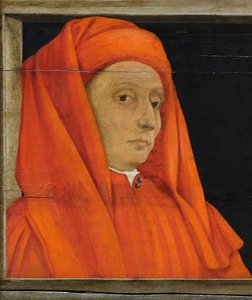
Джотто ди Бондоне
1267 - 1337 , Италия
Основные сведения
- Влияние Художников: ['Чимабуэ']
- Дата Рождения: ок. 1267
- Дата Смерти: 8 января 1337
- Известные Работы: ['Капелла Скровеньи']
- Место Рождения: Флоренция, Италия
- Национальность: Итальянец
- Полное Имя: Джотто ди Бондоне
- Последователи: ['Мазаччо']
- Художественное Направление: Проторенессанс
Похожие статьи
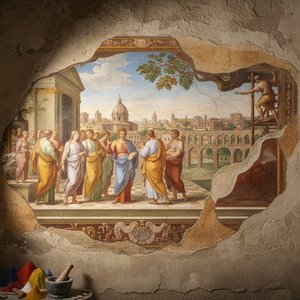
The Enduring Legacy of Fresco: Technique, History & Artistic Expression
Explore the rich history & enduring artistry of fresco painting. Discover techniques from Giotto to Michelangelo, conservation efforts, & modern applications. Learn how ArtsDot brings this timeless art form to your home.

Фреска как Семейное Наследие: Сохранение Истории в Искусстве Стен
Узнайте о фресках как семейном наследии! История, техника создания, реставрация и сохранение. Экспертные советы и вдохновение для вашего дома. .

The Enduring Legacy of Fresco Painting: Techniques, History & Contemporary Relevance
Explore the rich history & enduring artistry of fresco painting – from Giotto to Michelangelo! Discover techniques, conservation efforts, & modern applications. Learn how ArtsDot brings this timeless art form to your home.

The Enduring Legacy of Fresco: Technique, History & Artistic Expression Across Cultures
Explore the rich history & enduring legacy of fresco painting! Discover ancient techniques, Giotto's masterpieces, and modern applications. Expert insights for art lovers & professionals.
Джотто ди Бондоне: 25 шедевров великого флорентийского мастера | ArtsDot
Погрузитесь в мир Джотто ди Бондоне! 25 величайших шедевров флорентийского мастера – фрески, картины, религиозная живопись. Узнайте историю создания и значение каждой работы. Репродукции картин высокого качества для вашего интерьера на ArtsDot.com