


 Предпросмотр
 Поделиться
 Поделиться
 Детали произведения

 Скачать
 Похожие работы
 Рентгенография
 Слайд-шоу
 Статистика
Return of the Bucentoro to the Molo on Ascension Day (detail)


 Читать далее
Приобретите цифровое изображение высокого разрешения в улучшенном качестве, которое значительно превосходит онлайн-превью.
Каждый файл тщательно подготавливается нашими специалистами с использованием передовых инструментов и экспертной ручной ретуши. Мы гарантируем исключительную четкость, точную цветопередачу и детальную проработку каждого изображения.
Финальный файл доставляется по электронной почте в течение 72 часов и оптимизирован для немедленного использования в профессиональной среде, при верстке и печати. Это тот же уровень качества, которому доверяют ведущие дизайнерские студии, издательства и галереи.
Цифровое изображение
Скачайте файл высокого разрешения для личного использования, печати и творческих проектов. ( Перейти к печати Купить картину ручной работы)
Включено в каждый заказ цифровых изображений
Гарантия экспертной цифровой доставки
Выбирая ArtsDot.com, вы получаете не просто изображение — вы приобретаете профессионально обработанное цифровое произведение искусства, созданное с безупречной точностью и под защитой гарантии качества. Вот всё, что автоматически входит в ваш заказ:

Мгновенная доставка по e-mail
Ваш цифровой файл в высоком разрешении будет отправлен вам по электронной почте в течение 72 часов после оформления заказа — и сразу станет доступен для использования.

Цифровой файл с ИИ-улучшением
Ваше произведение искусства проходит профессиональную оптимизацию с использованием передовых инструментов ИИ и ручной обработки, что гарантирует максимальную детализацию, четкость и точность цветопередачи.

Бессрочная бесплатная повторная доставка
Случайно удалили или потеряли файл? Не беспокойтесь — мы отправим его вам повторно в любое время и совершенно бесплатно.

Без импортных пошлин — навсегда
Наслаждайтесь вашим произведением искусства мгновенно без таможенных пошлин, сборов или затрат на доставку — цифровые загрузки всегда не облагаются налогом.

Гарантия точности цветопередачи
Мы гарантируем, что ваше цифровое изображение максимально точно передает оригинальные цвета благодаря использованию профессиональных инструментов и систем управления цветом.

Гарантия удовлетворенности 100 дней
Если вы не будете удовлетворены своим цифровым изображением, мы внесем правки или вернем 100% стоимости в течение 100 дней — без лишних вопросов.

100% Гарантия возврата средств
Не удовлетворены покупкой? Получите полный возврат средств в течение 100 дней после получения цифрового файла — без лишних вопросов.

Скидки на оптовые заказы
Купите 3 изображения, сэкономьте 10% — Купите 5, сэкономьте 15% — Купите 10+, сэкономьте 20%. Отличное решение для творческих проектов, галерей и агентств.
A Glimpse into 18th-Century Venice
Giovanni Antonio Canal, universally known as Canaletto, possessed a singular gift – the ability to capture not just the appearance of Venice, but its very soul. His “Return of the Bucentoro to the Molo on Ascension Day” (circa 1733-4), currently residing within the Royal Collection at Buckingham Palace, is more than simply a depiction of a festive procession; it’s a vibrant snapshot of a city brimming with life, tradition, and civic pride. The scene unfolds on the bustling waterfront of the Molo, Venice's main commercial port, as the grand Bucentoro – a magnificent ceremonial boat adorned in elaborate decorations – returns after celebrating the feast of Ascension Day. This wasn’t merely a religious observance; it was a potent symbol of Venetian power and maritime dominance, a testament to their victory over Dalmatian pirates nearly a thousand years prior.
_-_Return_of_the_Bucentoro_to_the_Molo_on_Ascension_Day,_c._1733-4._Royal_Collection_Buckingham_Palace.jpg)
The Art of Canaletto: Precision and Light
Canaletto’s mastery lies in his meticulous observation and remarkably precise technique. Trained initially by his father, a stage designer, he quickly developed a distinctive style – topographical views that prioritized accuracy and realism. Unlike the looser brushstrokes of many contemporary artists, Canaletto employed a method often attributed to the use of a camera obscura, a device that projected an image onto a surface, allowing him to render distant figures with astonishing clarity and perspective. This technique, combined with his careful attention to light and shadow, creates a remarkable sense of depth and atmosphere within the painting. The interplay of sunlight on the water, reflecting off the buildings and boats, is particularly captivating – it’s not just a visual representation; it's an experience of warmth and vibrancy.
The composition itself is carefully orchestrated. The focal point is undoubtedly the Bucentoro, its richly decorated hull dominating the scene. Around it swirl a multitude of gondolas, barges, and smaller boats, each contributing to the dynamic energy of the waterfront. The figures – merchants, sailors, citizens – are rendered with remarkable detail, capturing their individual expressions and gestures. Notice how Canaletto subtly uses color to differentiate between groups and create visual interest; the bright reds and golds of the Bucentoro contrast sharply with the darker tones of the surrounding buildings.
Symbolism and Historical Context
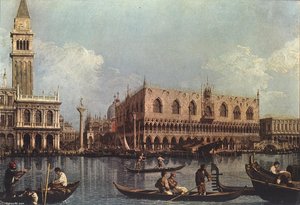
The “Return of the Bucentoro” is deeply rooted in Venetian history. The event depicted commemorates a pivotal moment – the city’s triumph over pirates in 998, an event that cemented Venice's reputation as a powerful maritime republic. The Bucentoro itself became a symbol of this victory and continued to be used for ceremonial occasions throughout Venetian history. By painting this scene, Canaletto wasn’t simply recording a festive procession; he was celebrating the city’s enduring legacy of strength, resilience, and civic pride. The inclusion of prominent buildings like the Palazzo Ducale (Doge's Palace) and the Rialto Bridge further anchors the scene within the historical context of Venice.
A Timeless Masterpiece
Canaletto’s “Return of the Bucentoro to the Molo on Ascension Day” remains a testament to his extraordinary talent and artistic vision. It offers a rare glimpse into 18th-century Venice, capturing not only its physical beauty but also its vibrant culture and historical significance. Reproductions of this masterpiece can bring a touch of Venetian elegance and timeless charm to any interior space, evoking the spirit of a city that has captivated artists and travelers for centuries. Its meticulous detail and luminous quality make it an ideal choice for collectors seeking a truly exceptional work of art.
Похожие произведения
Биография художника
Giovanni Antonio Canal (Canaletto): The Painter of Venetian Light
Giovanni Antonio Canal, universally known as Canaletto, was more than just a painter; he was the chronicler of Venice itself. Born in 1697 into a family steeped in artistic tradition – his father, Bernardo Canal, specialized in theatrical scene painting – Canaletto’s journey led him to capture the vibrant essence of his beloved city with an unprecedented level of detail and atmospheric grace. His work isn't merely documentation; it’s a celebration of light, color, and the everyday rhythms of Venetian life, establishing him as one of the most influential Vedute painters of the 18th century.
Canaletto’s early training was primarily within his father’s workshop. However, he quickly developed an independent style, influenced by the pioneering work of Giovanni Paolo Pannini, a master of topographical views who meticulously documented Italian cities. This influence is evident in Canaletto's systematic approach – creating detailed preparatory drawings before embarking on larger canvases. These sketches weren’t simply studies; they were carefully considered compositions, reflecting his deep understanding of perspective and spatial relationships.
The Rise to Prominence: Rome and the Opera Stages
In 1718, Canaletto traveled to Rome, a pivotal moment in his artistic development. He found employment designing backdrops for two operas by Alessandro Scarlatti – a demanding but invaluable experience. This immersion in theatrical scenery honed his skills in color mixing, composition, and the creation of illusionistic space. Crucially, it exposed him to the techniques of stage lighting and the importance of capturing fleeting moments with dramatic effect. The vibrant colors and dynamic scenes he encountered in Rome undoubtedly shaped his later approach to Venetian landscapes.
A Master of the Veduta: Capturing Venice’s Soul
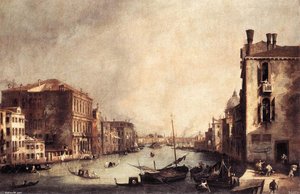
Upon returning to Venice, Canaletto swiftly established himself as a leading painter of Vedute – views of cities. Unlike earlier artists who often depicted buildings in an idealized or fantastical manner, Canaletto sought to represent Venice with remarkable accuracy and realism. He meticulously observed the city's architecture, canals, bridges, and bustling streets, capturing their intricate details and the play of light upon them. His most famous works, such as “The Stonemason’s Yard” (circa 1725) and “Regatta on the Grand Canal,” are not simply depictions of physical spaces; they are windows into a specific time and place, imbued with a sense of atmosphere and human activity.
Collaboration and Influence: Bellotto and Beyond
Canaletto’s artistic legacy extends beyond his own individual achievements. He maintained a close working relationship with his nephew, Bernardo Bellotto, who became an accomplished painter in his own right. Together, they produced a series of panoramic views of Venice, showcasing their shared style and techniques. Bellotto's work often served as a continuation or expansion of Canaletto’s vision, particularly in documenting the city’s architecture after significant changes.
Legacy and Enduring Appeal
Canaletto’s paintings are now celebrated for their technical brilliance, atmospheric depth, and intimate portrayal of Venetian life. His work is housed in major museums around the world, including the National Gallery in London and the Getty Museum in Los Angeles, testament to his enduring influence on art history. Canaletto's meticulous approach, combined with a keen eye for light and color, continues to captivate viewers today, offering a timeless glimpse into the beauty and complexity of Venice.
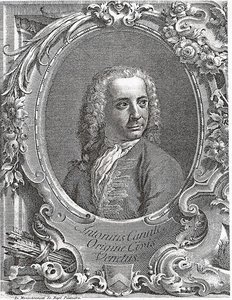
Каналлетто
1697 - 1768 , Италия
Основные сведения
- Artistic Movement Or Style: Ветюты Венеции
- Artists Or Movements Influenced By This Artist: ['Бернардо Кано']
- Artists Who Influenced This Artist: ['Джованни Паоло Паньни']
- Date Of Birth: 18 октября 1697 г.
- Date Of Death: 19 апреля 1768 г.
- Full Name: Giovanni Antonio Canal
- Nationality: Итальянец
- Notable Artworks:
- Двор каменщика
- Регата на Гранд-канале
- Этон
- Place Of Birth: Венеция, Италия