

 Предпросмотр
 Поделиться
 Поделиться
 Детали произведения

 Скачать
 Похожие работы
 Рентгенография
 Слайд-шоу
 Статистика
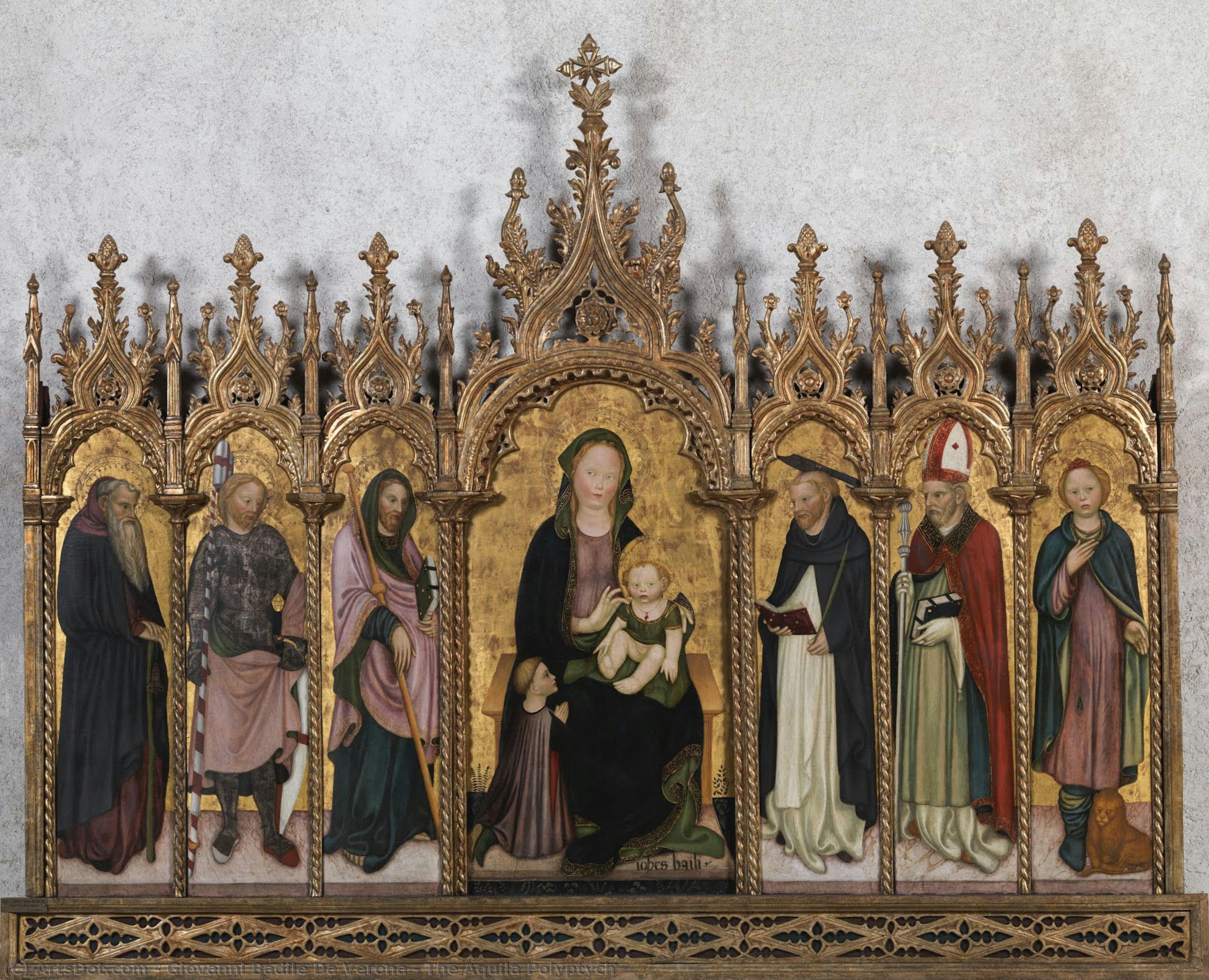
The Aquila Polyptych


 Читать далее
Масляная репродукция ручной работы
Картина маслом на холсте в выбранном вами размере и раме, написанная на заказ нашими художниками. ( Перейти к печати Перейти к цифровым изображениям)




P118B $10

P118H $10

P118W $10

P438Z $10

P508JH $12

P508YH $12

P805H $10

P805Z $10

P919BZ $10

P919G $10

P919XJ $10

P959ZH $10

P968JZ $12

W106C $8

W218G $10

W218JH $8

W218Y $10

W307PJ $10

W316G $10

W316PJ $8

W316Y $10

W398PJ $8

W4111J $10

W500HY $15

W500JH $15

W692G $12

W849H $8

W940BG $15

W953PJ $8




Выберите один из наших стандартных размеров, соответствующих оригинальным пропорциям произведения искусства.

Вы можете указать собственные размеры, чтобы картина идеально вписалась в выбранную раму или пространство. Если выбранный вами размер не соответствует пропорциям оригинала, мы либо обрежем полотно, либо расширим его за счет дополнительных элементов, написанных вручную. Цифровой макет будет отправлен вам на утверждение перед началом производства.
Обратите внимание, что предварительный просмотр на экране не отражает фактическую обрезку или расширение. Только макет точно покажет окончательную композицию.
Хотя доступны индивидуальные размеры, мы рекомендуем выбирать вариант из предопределенного списка, чтобы сохранить исходные пропорции.
После оформления заказа команда ArtsDot.com свяжется с клиентом по электронной почте для уточнения деталей и предоставит предварительный макет
Доставка по всему миру () за 3–4 недели вместо стандартных 5 недель. (11 Сентябрь). Без компромиссов в качестве.

Бесплатная экспресс-доставка по всему миру

Высококачественный льняной холст

Полное страхование доставки

Гарантия возмещения таможенных пошлин

Гарантия точного соответствия цветов

100-дневная политика возврата (только при обнаружении дефектов)

Гарантия возврата 100% средств

Предложение оптовых скидок
 Вариант со стеклом доступен только для размеров менее 110 см

The Aquila Polyptych
Техника репродукции
Размер репродукции
-


Итоговая стоимость
$ 438
A Celestial Gathering in Gold: The Splendor of The Aquila Polyptych
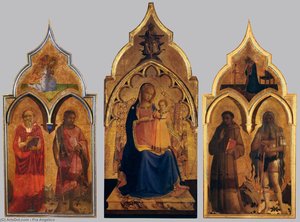
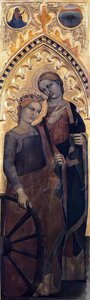
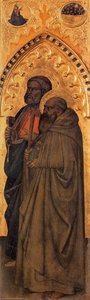
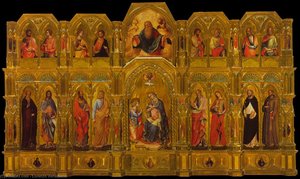
In the quiet, hallowed atmosphere of the early 15th century, few works captured the divine hierarchy as breathtakingly as The Aquila Polyptych. Painted by the Veronese master Giovanni Badile da Verona around 1430, this magnificent altarpiece serves as a luminous window into the Late Gothic soul. At its heart sits the Virgin Mary, cradling an infant Jesus with a sweetness that balances tender divinity with a charming, almost human awkwardness. This central devotion is not solitary; rather, it is surrounded by a celestial court of saints—Anthony the Abbot, George, James, Peter Martyr, Zeno, and Mammas of Cesarea—each meticulously placed within an elaborate, gilded architectural framework that seems to vibrate with spiritual light.
The visual experience of this polyptych is one of profound richness and rhythmic geometry. Badile utilizes a technique of meticulous tempera layering over a prepared gesso ground, a method that allows for the incredible depth of color seen in the deep crimsons, royal blues, and earthy browns. The most striking element, however, is the masterful application of gold leaf. This shimmering texture does more than decorate; it creates a sense of eternal, unearthly light that transcends the physical boundaries of the wooden panel. As light hits the gilded architectural elements, the piece transforms, offering a dynamic interplay of shadow and brilliance that would have originally mesmerized worshippers in a candlelit chapel.
Symbolism and the Gothic Vision
Every brushstroke in this work is imbued with theological significance, designed to guide the viewer from the earthly realm toward the divine. The composition follows a rigid, hierarchical structure typical of the Gotico Internazionale style, where size and placement denote spiritual importance. The saints are arranged in receding rows, creating a sense of depth that, while not possessing the mathematical perspective of the later Renaissance, achieves a powerful emotional resonance through layering and scale. The architectural frame acts as both a window and a barrier, separating the sacred space of the holy figures from the mundane world of the viewer.
For the modern collector or interior designer, this piece offers more than just historical value; it provides a profound sense of prestige and timelessness. The interplay of straight, geometric lines with the soft, stylized outlines of the figures creates a balanced aesthetic that complements both classical and contemporary settings. To possess a high-quality reproduction of such a masterpiece is to invite a sense of history, stability, and quiet grandeur into a space. It is an invitation to contemplate the intersection of human craftsmanship and divine inspiration, making it a centerpiece of unparalleled emotional and decorative impact.
Похожие произведения
Биография художника
Tommaso da Modena: A Veronese Pioneer of the Late Medieval Period
Tommaso Barisini, more commonly known as Tommaso da Modena (c. 1326 – 1379), stands as a pivotal figure in the development of painting during the late 14th century, particularly within the burgeoning artistic landscape of Verona and Padua. Often overshadowed by his contemporaries, yet possessing a uniquely compelling style, he represents a bridge between the Gothic traditions of his early career and the nascent Renaissance sensibilities that were beginning to take root. His work offers a fascinating glimpse into the religious fervor and civic pride of his time, revealing both technical mastery and a profound engagement with human emotion.
Born in Modena, Tommaso’s early life remains shrouded in relative obscurity. While precise details are scarce – a common characteristic of artists during this period – it is believed he received his initial training within the established workshops of Verona. This formative experience undoubtedly instilled in him a deep appreciation for the regional artistic heritage, characterized by its emphasis on narrative clarity and a somewhat stylized approach to representation. However, Tommaso quickly distinguished himself through an increasingly expressive use of color and a heightened sensitivity to the psychological nuances of his subjects.
The Padua Frescoes: A Masterclass in Narrative and Emotion
Tommaso’s most enduring legacy rests upon two monumental fresco cycles executed in Padua between 1370 and 1379. Commissioned by Duke Francesco I Carrara, these works – the Chapel of San Felice in the Basilica of San Antonio and the Cappella di San Giorgio – represent a culmination of his artistic development and showcase his distinctive style. The Chapel of San Felice features a dramatic Crucifixion scene alongside depictions of key episodes from the life of Saint James, demonstrating Tommaso’s ability to convey intense emotion through gesture and composition. The figures are imbued with a palpable sense of suffering and devotion, reflecting a deeply felt spirituality.
The Cappella di San Giorgio presents a more diverse program, encompassing scenes from the lives of Saint George, Saint Sebastian, and other significant saints. Here, Tommaso’s technical skill is equally impressive, but his focus shifts towards a greater emphasis on realism and naturalism. The drapery flows with dynamic grace, the faces exhibit subtle expressions of personality, and the architectural settings are rendered with remarkable detail. Notably, these frescoes demonstrate a conscious departure from the rigid formality of earlier Gothic styles, incorporating elements that foreshadow the innovations of the early Renaissance.
Influences and Artistic Style
Tommaso’s artistic style is often described as transitional, reflecting his position at the cusp of two distinct artistic movements. He clearly drew inspiration from the established traditions of Giotto di Bondone, particularly in his use of monumental figures and dramatic spatial arrangements. However, unlike Giotto's somewhat stylized approach, Tommaso imbued his figures with a greater sense of psychological depth and emotional intensity. His palette is rich and vibrant, employing a carefully considered range of colors to create visual harmony and enhance the expressive power of his scenes.
Furthermore, Tommaso’s work reveals an awareness of contemporary artistic trends, including those emerging in Florence. The influence of Altichiero da Verona, another prominent Veronese painter active during this period, is evident in their shared emphasis on narrative clarity and a naturalistic depiction of human figures. However, Tommaso developed his own unique voice, characterized by a heightened sense of drama and an unparalleled ability to capture the emotional core of religious narratives.
Legacy and Historical Significance
Despite his relatively short career – he died in 1379 – Tommaso da Modena left an indelible mark on the artistic landscape of Northern Italy. His frescoes in Padua are considered masterpieces of late medieval painting, representing a crucial link between Gothic tradition and the burgeoning Renaissance. His innovative use of color, his dramatic compositions, and his profound understanding of human emotion established him as a leading figure in Veronese art and influenced generations of subsequent painters. While often overlooked by mainstream art historical narratives, Tommaso da Modena deserves recognition as a significant contributor to the development of Italian painting during a pivotal period in its history.
Further Research: Tommaso da Modena - Wikipedia
giovanni badile da verona
1379 - 1448 , Italy
Основные сведения
- Artistic Movement Or Style: Early Renaissance
- Artists Or Movements Influenced By This Artist: ['Altichiero da Verona']
- Artists Who Influenced This Artist: ['Giotto']
- Date Of Birth: 1326
- Date Of Death: 1379
- Full Name: Tommaso da Modena
- Nationality: Italian
- Notable Artworks:
- Crucifixion
- St. James life
- St. George life
- Place Of Birth: Verona, Italy
Похожие статьи
The Radiant Dusk of Medieval Vision: Exploring Late Gothic Art's Synthesis of Faith, Form & Emotionality (c. 1300-1500)
Explore the exquisite beauty & spiritual depth of Late Gothic art (c. 1300-1500). Discover key artists, symbolism, and its lasting influence on the Renaissance. Expert insights at ArtsDot.
Giovanni Giacometti: Sculpting Existentialism – A Study of Form, Space, and the Human Condition
Explore the profound artistic journey of Giovanni Giacometti, father to Alberto. Discover his unique transition from Surrealism to Existentialist sculpture and painting – a compelling study for elite collectors and art enthusiasts.
The Shadow of Faith: Exploring Gothic Art's Spiritual Intensity & Architectural Innovation
Explore the spiritual intensity & architectural innovation of Gothic art! Discover the symbolism behind cathedrals, stained glass & master artists like Giotto and Monet. A deep dive into medieval history & artistic expression.
Beyond Borders: The Spiritual & Stylistic Innovations of International Gothic Art
Explore the exquisite beauty & spiritual depth of International Gothic art. Discover key artists like Simone Martini & Pol de Limbourg, its origins, symbolism, and lasting influence on European painting. Expert insights at ArtsDot.
Illuminating the Fourteenth Century: Art, Innovation & Enduring Legacies (1300-1400)
Explore the transformative art of the 14th century! Discover Gothic masterpieces, International Style innovations, and the precursors to the Renaissance. Expert insights & historical context at ArtsDot.