

 Предпросмотр
 Поделиться
 Поделиться
 Детали произведения

 Скачать
 Похожие работы
 Рентгенография
 Слайд-шоу
 Статистика
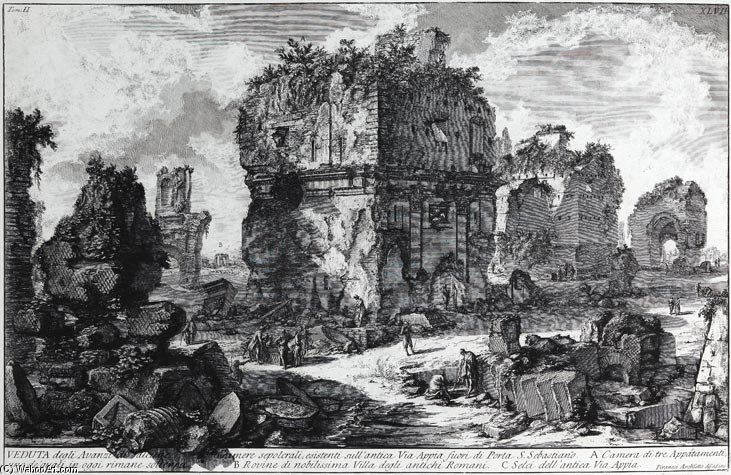
Veduta degli avanzi di alcune camere sepolcrali, esistenti sull’antica Via Appia fuori di Porta S. Sebastiano
 Читать далее
Приобретите цифровое изображение высокого разрешения в улучшенном качестве, которое значительно превосходит онлайн-превью.
Каждый файл тщательно подготавливается нашими специалистами с использованием передовых инструментов и экспертной ручной ретуши. Мы гарантируем исключительную четкость, точную цветопередачу и детальную проработку каждого изображения.
Финальный файл доставляется по электронной почте в течение 72 часов и оптимизирован для немедленного использования в профессиональной среде, при верстке и печати. Это тот же уровень качества, которому доверяют ведущие дизайнерские студии, издательства и галереи.
Цифровое изображение
Скачайте файл высокого разрешения для личного использования, печати и творческих проектов. ( Перейти к печати Купить картину ручной работы)
Включено в каждый заказ цифровых изображений
Гарантия экспертной цифровой доставки
Выбирая ArtsDot.com, вы получаете не просто изображение — вы приобретаете профессионально обработанное цифровое произведение искусства, созданное с безупречной точностью и под защитой гарантии качества. Вот всё, что автоматически входит в ваш заказ:

Мгновенная доставка по e-mail
Ваш цифровой файл в высоком разрешении будет отправлен вам по электронной почте в течение 72 часов после оформления заказа — и сразу станет доступен для использования.

Цифровой файл с ИИ-улучшением
Ваше произведение искусства проходит профессиональную оптимизацию с использованием передовых инструментов ИИ и ручной обработки, что гарантирует максимальную детализацию, четкость и точность цветопередачи.

Бессрочная бесплатная повторная доставка
Случайно удалили или потеряли файл? Не беспокойтесь — мы отправим его вам повторно в любое время и совершенно бесплатно.

Без импортных пошлин — навсегда
Наслаждайтесь вашим произведением искусства мгновенно без таможенных пошлин, сборов или затрат на доставку — цифровые загрузки всегда не облагаются налогом.

Гарантия точности цветопередачи
Мы гарантируем, что ваше цифровое изображение максимально точно передает оригинальные цвета благодаря использованию профессиональных инструментов и систем управления цветом.

Гарантия удовлетворенности 100 дней
Если вы не будете удовлетворены своим цифровым изображением, мы внесем правки или вернем 100% стоимости в течение 100 дней — без лишних вопросов.

100% Гарантия возврата средств
Не удовлетворены покупкой? Получите полный возврат средств в течение 100 дней после получения цифрового файла — без лишних вопросов.

Скидки на оптовые заказы
Купите 3 изображения, сэкономьте 10% — Купите 5, сэкономьте 15% — Купите 10+, сэкономьте 20%. Отличное решение для творческих проектов, галерей и агентств.
Похожие произведения





Биография художника
Early Life and Artistic Foundations
Giovanni Battista Fontana, born in Ala near Verona in 1524, emerged from a family deeply rooted in the artistic traditions of Italy. His initial training was profoundly shaped by the masters of the Venetian school—Titian and Veronese, whose influence would become readily apparent in his later works. This early exposure instilled within him a love for rich color palettes, dynamic compositions, and a keen attention to detail that characterized Renaissance painting. While Verona provided the initial spark, Fontana’s artistic journey truly blossomed when he relocated to Innsbruck, Austria, in 1573, marking a pivotal shift in his career and establishing him as a prominent figure within the Habsburg court.A Court Painter in Austria
The appointment of Fontana as court painter to Ferdinand II, Archduke of Austria, in 1575 propelled him into a period of prolific creation. He quickly became integral to the artistic landscape of the region, undertaking numerous commissions that showcased his versatility and skill. His work wasn’t confined to canvas; Fontana masterfully executed frescoes adorning significant religious spaces like the oratory of the Hofkirche, transforming these interiors into vibrant displays of faith and artistry. The Spheristerion also benefited from his talents, as did the Silberne Kapelle, a chapel built by his brother, Giulio Fontana, where he painted fourteen scenes depicting the Passion of Christ—a testament to both their collaborative spirit and Giovanni Battista’s narrative prowess. These early Austrian projects weren't merely decorative; they were statements of power, piety, and artistic sophistication, solidifying Fontana’s reputation within the imperial circle.The Frescoes of Schloss Ambras: A Zenith of Artistic Expression
Perhaps Fontana’s most enduring legacy lies in his breathtaking frescoes at Schloss Ambras, a magnificent castle near Innsbruck. Between 1583 and 1584, he embarked on an ambitious project to decorate the dining hall's ceiling with allegorical representations of the Zodiac, the Elements, and the Planets. This undertaking wasn’t simply a display of technical skill; it was a complex synthesis of classical mythology, astrological symbolism, and Renaissance humanism. The frescoes are characterized by their intricate detail, vibrant colors, and dynamic compositions—a testament to Fontana's mastery of illusionistic painting techniques. The work at Schloss Ambras stands as a remarkable example of his ability to blend artistic beauty with intellectual depth, creating a space that was both visually stunning and intellectually stimulating.Engravings and Artistic Legacy
Beyond his frescoes and paintings, Fontana also produced a substantial body of engravings—seventy-eight in total between 1559 and 1579. While the stylistic inconsistencies within this collection suggest possible collaboration with others, including his brother Giulio, they nonetheless offer valuable insight into his artistic process and his engagement with contemporary themes. These prints often served as reproductions of paintings by masters like Titian and Veronese, demonstrating Fontana’s respect for established traditions while also showcasing his own unique interpretation of these works. Giovanni Battista Fontana died in Innsbruck in 1587, leaving behind a rich artistic legacy that continues to captivate audiences today. His ability to seamlessly blend Italian Renaissance aesthetics with the demands of the Habsburg court cemented his place as a significant figure in Austrian art history—a testament to his skill, versatility, and enduring creative vision.
Giovanni Battista Fontana
1690 - 1752 , Italy
Основные сведения
- Artistic Movement Or Style: Renaissance & Mannerism
- Artists Or Movements Influenced By This Artist: ['Baroque']
- Artists Who Influenced This Artist:
- Titian
- Veronese
- Date Of Birth: 1524 Ala, Italy
- Date Of Death: 1587 Innsbruck, Austria
- Full Name: Giovanni Battista Fontana
- Nationality: Italian
- Notable Artworks:
- Thetis Consoling Achilles
- Rachel Hiding The Idols From Her Father Laban
- Veduta Interna Dell Camera Sepolcrale Nella Vigna Casali A Porta A. Sebastiano
- Place Of Birth: Ala, Verona Province, Italy