 Предпросмотр
 Поделиться
 Поделиться
 Детали произведения

 Скачать
 Похожие работы
 Рентгенография
 Слайд-шоу
 Статистика
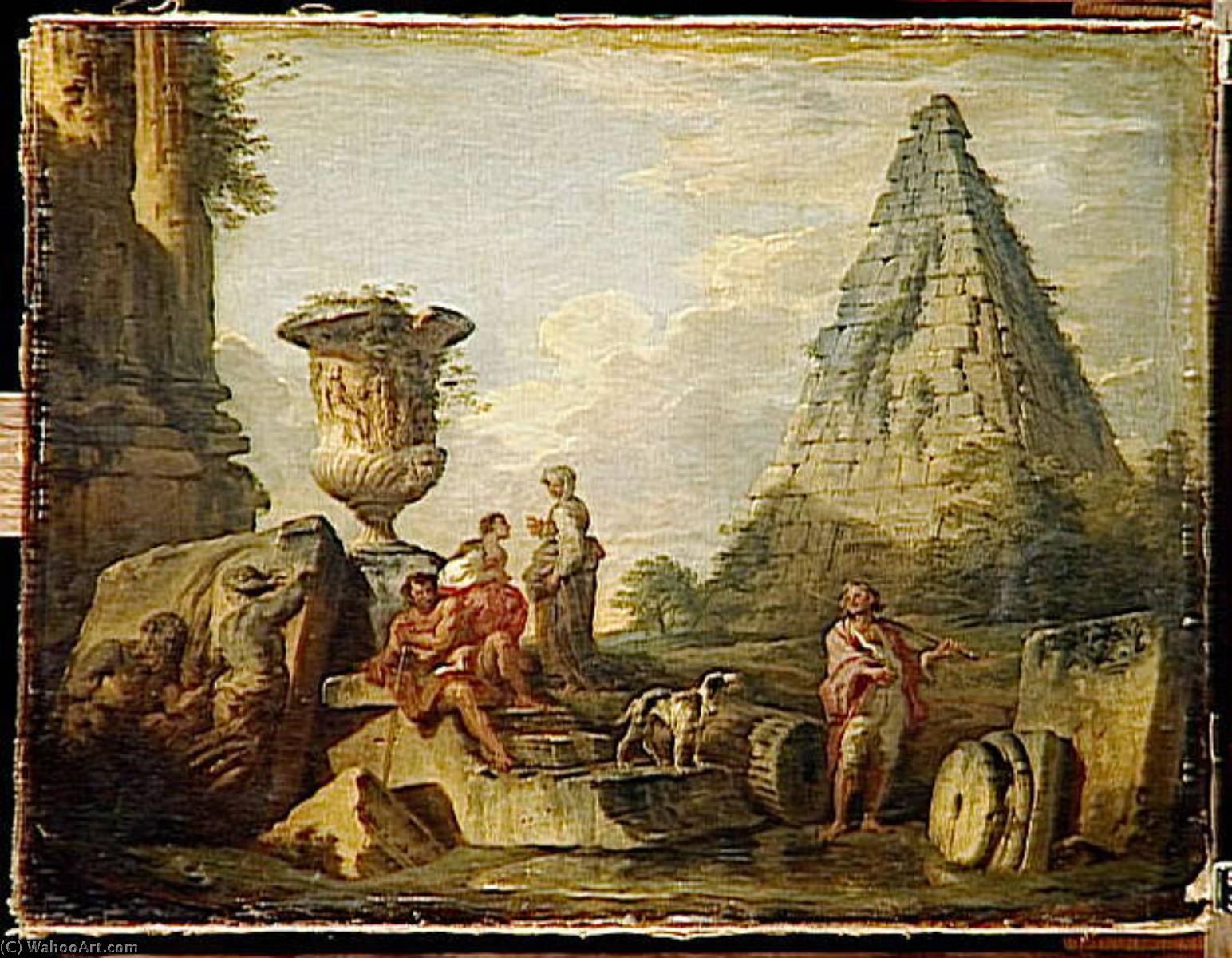
RUINES ANTIQUES AVEC LA PYRAMIDE DE CAIUS CESTIUS


 Читать далее
Масляная репродукция ручной работы
Картина маслом на холсте в выбранном вами размере и раме, написанная на заказ нашими художниками. ( Перейти к печати Перейти к цифровым изображениям)




P118B $10

P118H $10

P118W $10

P438Z $10

P508JH $12

P508YH $12

P805H $10

P805Z $10

P919BZ $10

P919G $10

P919XJ $10

P959ZH $10

P968JZ $12

W106C $8

W218G $10

W218JH $8

W218Y $10

W307PJ $10

W316G $10

W316PJ $8

W316Y $10

W398PJ $8

W4111J $10

W500HY $15

W500JH $15

W692G $12

W849H $8

W940BG $15

W953PJ $8




Выберите один из наших стандартных размеров, соответствующих оригинальным пропорциям произведения искусства.

Вы можете указать собственные размеры, чтобы картина идеально вписалась в выбранную раму или пространство. Если выбранный вами размер не соответствует пропорциям оригинала, мы либо обрежем полотно, либо расширим его за счет дополнительных элементов, написанных вручную. Цифровой макет будет отправлен вам на утверждение перед началом производства.
Обратите внимание, что предварительный просмотр на экране не отражает фактическую обрезку или расширение. Только макет точно покажет окончательную композицию.
Хотя доступны индивидуальные размеры, мы рекомендуем выбирать вариант из предопределенного списка, чтобы сохранить исходные пропорции.
После оформления заказа команда ArtsDot.com свяжется с клиентом по электронной почте для уточнения деталей и предоставит предварительный макет
Доставка по всему миру () за 3–4 недели вместо стандартных 5 недель. (12 Сентябрь). Без компромиссов в качестве.

Бесплатная экспресс-доставка по всему миру

Высококачественный льняной холст

Полное страхование доставки

Гарантия возмещения таможенных пошлин

Гарантия точного соответствия цветов

100-дневная политика возврата (только при обнаружении дефектов)

Гарантия возврата 100% средств

Предложение оптовых скидок
 Вариант со стеклом доступен только для размеров менее 110 см

RUINES ANTIQUES AVEC LA PYRAMIDE DE CAIUS CESTIUS
Техника репродукции
Размер репродукции
-


Итоговая стоимость
$ 363
A Roman Reverie: Giovanni Paolo Panini’s Ruines Antiques avec la Pyramide de Caius Cestius
Giovanni Paolo Panini's "Ruines Antiques avec la Pyramide de Caius Cestius" isn’t merely a painting; it’s a meticulously crafted illusion, a nostalgic echo of Rome’s grandeur captured with the delicate hand of an 18th-century artist. Completed around 1740, this captivating work transports us to a realm where the past and present intertwine, inviting contemplation on time's relentless passage and the enduring allure of antiquity. More than just a depiction of ruins, it’s a carefully constructed fantasy—a testament to Panini’s mastery of perspective, his profound understanding of Roman architecture, and his ability to evoke a powerful sense of historical romance.
The scene unfolds within a deliberately ambiguous space, dominated by the imposing Pyramid of Caius Cestius. This real-life monument, a tomb erected in honor of the Roman magistrate Gaius Cestius, serves as the focal point, rendered with remarkable precision and detail. However, Panini doesn’t present it in isolation. Instead, he seamlessly integrates it into a landscape populated by fragmented columns, weathered sarcophagi, and hints of a vanished city – all elements conjured from his imagination. This deliberate layering creates a captivating sense of depth and invites the viewer to become an explorer, piecing together fragments of a lost world.
The Art of Illusion: Technique and Perspective
Panini’s technique is characterized by a remarkable commitment to realism blended with a masterful understanding of illusionistic space. He employs linear perspective with exceptional skill, guiding the eye through the scene and creating a convincing sense of depth. Yet, this isn't a straightforward topographical representation; it’s an artful construction designed to evoke a specific mood and atmosphere. Notice how distant elements subtly diminish in size, while atmospheric perspective—a softening of colors and details—suggests the vastness of the landscape. The artist utilizes glazing techniques, applying thin layers of translucent paint over underpaintings to build up color gradually, achieving subtle tonal variations and adding richness to the textures of stone and fabric.
The brushwork itself is remarkably controlled, particularly evident in the rendering of the pyramid’s stonework – each block meticulously defined with careful attention to surface detail. This level of precision speaks to Panini's dedication to his craft and his desire to capture not just the appearance but also the *feeling* of ancient stone.
A Symbol of Time: Historical Context and Meaning
“Ruines Antiques avec la Pyramide de Caius Cestius” is deeply rooted in the historical context of 18th-century Rome, a city undergoing a fervent revival of classical ideals. Following the decline of the Roman Empire, artists and intellectuals were increasingly drawn to the ruins of ancient Rome, seeking inspiration and attempting to reconstruct its lost glory. Panini’s work reflects this trend, aligning with the broader movement known as “vedute” – Italian landscape paintings that focused on depicting urban views and architectural monuments.
The painting carries a potent symbolic weight. The ruins themselves represent the passage of time, the inevitable decay of empires, and the fragility of human endeavors. Yet, amidst this melancholy reminder of mortality, Panini introduces figures engaged in leisurely activities – strolling through the ancient landscape, observing the ruins with curiosity and contemplation. This juxtaposition suggests a connection between the past and the present, inviting viewers to reflect on history, beauty, and the enduring spirit of humanity.
A Romantic Vision: Style and Emotional Impact
Stylistically, “Ruines Antiques avec la Pyramide de Caius Cestius” firmly places Panini within the tradition of Italian painting of the 18th century. His work shares affinities with Giovanni Paolo Pannini, another prominent figure in the field of Roman vedute, though Panini’s approach is characterized by a greater degree of imaginative license and a more pronounced sense of romanticism. The muted color palette—dominated by earthy browns, tans, and ochres—contributes to the painting's serene and contemplative mood.
Ultimately, this artwork transcends its technical brilliance and offers a profound emotional experience. It’s an invitation to step back in time, to lose oneself in the beauty of ancient Rome, and to contemplate the enduring mysteries of history and human existence. ArtsDot's hand-painted reproductions capture not only the visual details but also the very essence of Panini’s vision—a testament to a master artist’s ability to evoke both wonder and melancholy.
Похожие произведения
Биография художника
Giovanni Paolo Pannini (1691–1765): Master of Roman Vedute & Architectural Fantasies
Giovanni Paolo Pannini, a name synonymous with the grandeur and romantic allure of 18th-century Rome, was more than just a painter; he was a visual architect of memory. Born in Piacenza in 1691, his artistic journey began under the tutelage of Giuseppe Natali and Andrea Galluzzi, but it was his exposure to the theatrical designs of Francesco Galli-Bibiena that truly ignited his imagination. This early immersion in stagecraft would profoundly influence his later work, imbuing it with a sense of dramatic composition and illusionistic space. In 1711, Panini relocated to Rome, a city already steeped in artistic history, where he honed his skills under the guidance of Benedetto Luti, mastering the art of drawing and laying the foundation for his future mastery of perspective.Early Training & Influences: Shaping a Vision
Giovanni Paolo Pannini’s formative years were marked by rigorous training in Piacenza, where he studied under Giuseppe Natali and Andrea Galluzzi—artists known for their meticulous realism and attention to detail. However, it was Francesco Galli-Bibiena's theatrical productions that proved particularly transformative. Galli-Bibiena’s innovative use of perspective and dramatic staging instilled in Pannini a fascination with illusionistic space—a technique he would later employ extensively in his paintings. This influence extended beyond mere visual style; it fostered a broader intellectual sensibility, encouraging Pannini to consider how artists could manipulate perception to convey emotion and create immersive experiences. The early works of Giovanni Ghisolfi, who had pioneered the depiction of Roman ruins with remarkable accuracy, served as another important source of inspiration for Pannini—demonstrating the power of combining observation with imaginative reconstruction.From Frescoes to Vedute: The Evolution of an Artistic Style
Panini’s initial success didn't come as a canvas painter but as a decorator of palaces. His frescoes adorned the walls of prominent Roman residences, including the Villa Patrizi (1719–1725), Palazzo de Carolis (1720) and Seminario Romano (1721–1722). These commissions allowed him to develop his technical prowess and establish a reputation within Rome’s artistic circles. He skillfully employed *quadratura*, or scenic perspective—a technique perfected by Ferdinando Galli Bibiena—to create monumental compositions that captivated viewers and conveyed grandeur. However, it was Pannini's embrace of the *veduta*, or view painting, that would ultimately define his legacy. Unlike earlier topographical artists who focused on precise documentation, Pannini infused his depictions of Rome with a sense of imaginative reconstruction. He didn’t merely record what he saw; he re-imagined it, blending existing structures with fragments of ancient ruins and fanciful architectural elements—a practice known as *capriccio*. This approach—often likened to that of Marco Ricci—enabled him to create scenes that were both recognizable and dreamlike, capturing the spirit of Rome’s layered history.The Pantheon & Beyond: Pannini's Iconic Views
Among Pannini’s most celebrated achievements is his depiction of the interior of Saint Peter’s Basilica (c. 1734), a masterpiece of illusionistic perspective that remains unsurpassed in its ambition and technical virtuosity. Pannini meticulously recreated the basilica’s vast space, employing innovative techniques to convey depth and grandeur—a feat that cemented his reputation as one of Rome's foremost artists. Similarly impressive is his view of the Pantheon (c. 1754), where he skillfully captured the ethereal quality of light filtering through the dome’s oculus—creating a scene that embodies both scientific precision and poetic beauty. Pannini’s prolific output extended beyond architectural interiors; he produced numerous landscapes featuring Roman ruins, capturing their desolate grandeur with remarkable sensitivity. These paintings—particularly *Paesti qvod Posidoniam etiam dixere rvdera* (Rovine della citta' di Pesto detta ancora Posidonia)—demonstrate Pannini’s ability to transform ordinary subjects into extraordinary visions—infused with a profound appreciation for the passage of time and the enduring legacy of antiquity.Legacy & Influence: Shaping Romantic Vision
Giovanni Paolo Pannini’s influence extended far beyond his own lifetime, shaping the artistic sensibilities of subsequent generations. He was recognized as a teacher at both the Accademia di San Luca and the Académie de France in Rome—a distinction that underscored his stature within the Roman art world. Notably, he mentored Hubert Robert, whose fantastical landscapes would become equally renowned for their imaginative embellishment and masterful use of perspective—reflecting Pannini’s pioneering approach to architectural painting. Pannini's style resonated with other *vedutisti*, including Antonio Joli and Charles-Louis Clérisseau, inspiring them to explore the possibilities of capturing Rome’s atmosphere and grandeur through innovative visual techniques. His enduring legacy can be seen in the works of artists who followed him—artists who embraced Romantic ideals while retaining Pannini's meticulous attention to detail and his profound understanding of illusionistic space—solidifying his place as a pivotal figure in the history of European art.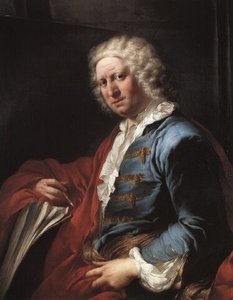
Джан Паоло Панини
1691 - 1765 , Италия
Основные сведения
- Artistic Movement Or Style: Барокко, Ведутизм
- Artists Or Movements Influenced By This Artist: ['Жан Оноре Фрагонард']
- Artists Who Influenced This Artist:
- Джозеф Натали
- Эндреа Гальци Бибеена
- Date Of Birth: 1691
- Full Name: Giovanni Paolo Pannini
- Nationality: Итальянский
- Notable Artworks:
- Интерьер Пантеона
- Виды Рима
- Каприцио
- Place Of Birth: Piacenza, Италия
Похожие статьи

Барочная драма: Искусство величия в современном интерьере
Погрузитесь в мир роскоши и величия барокко! Узнайте об истории стиля, ключевых элементах интерьера и архитектуре. Вдохновляйтесь с и создайте свой неповторимый дизайн.

10 Шедевров Барокко: Искусство, изменившее мир | ArtsDot.com
Погрузитесь в мир барокко! 10 шедевров Караваджо, Рембрандта и других великих художников. Узнайте историю создания культовых картин и найдите идеальную репродукцию для вашего интерьера на ArtsDot.com

The Dramatic Flourish: Exploring the Baroque Movement's Enduring Legacy in Art History
Explore the dramatic world of Baroque art! Discover iconic artists like Caravaggio & Rubens, defining techniques, and its lasting impact on art history. Expert insights for collectors & enthusiasts at ArtsDot.
Giovanni Paolo Panini: Capturing Roman Grandeur – A Vedute Master's Legacy
Explore the captivating world of Giovanni Paolo Panini, master of Roman vedute painting. Discover his technique, iconic works, influence on art history & collecting advice from experts at ArtsDot.
Simon Vouet: A Baroque Master's Journey from Italian Influence to French Classicism
Explore the life & art of Simon Vouet, a pivotal French Baroque painter who introduced Italian styles to France. Discover his masterpieces and lasting influence on 17th-century art.