


 Предпросмотр
 Поделиться
 Поделиться
 Детали произведения

 Скачать
 Похожие работы
 Рентгенография
 Слайд-шоу
 Статистика
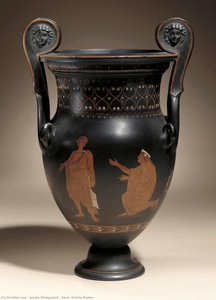
Volute krater depicting the liberation of Andromeda\n\n- A side

 Читать далее
Приобретите цифровое изображение высокого разрешения в улучшенном качестве, которое значительно превосходит онлайн-превью.
Каждый файл тщательно подготавливается нашими специалистами с использованием передовых инструментов и экспертной ручной ретуши. Мы гарантируем исключительную четкость, точную цветопередачу и детальную проработку каждого изображения.
Финальный файл доставляется по электронной почте в течение 72 часов и оптимизирован для немедленного использования в профессиональной среде, при верстке и печати. Это тот же уровень качества, которому доверяют ведущие дизайнерские студии, издательства и галереи.
Цифровое изображение
Скачайте файл высокого разрешения для личного использования, печати и творческих проектов. ( Перейти к печати Купить картину ручной работы)
Включено в каждый заказ цифровых изображений
Гарантия экспертной цифровой доставки
Выбирая ArtsDot.com, вы получаете не просто изображение — вы приобретаете профессионально обработанное цифровое произведение искусства, созданное с безупречной точностью и под защитой гарантии качества. Вот всё, что автоматически входит в ваш заказ:

Мгновенная доставка по e-mail
Ваш цифровой файл в высоком разрешении будет отправлен вам по электронной почте в течение 72 часов после оформления заказа — и сразу станет доступен для использования.

Цифровой файл с ИИ-улучшением
Ваше произведение искусства проходит профессиональную оптимизацию с использованием передовых инструментов ИИ и ручной обработки, что гарантирует максимальную детализацию, четкость и точность цветопередачи.

Бессрочная бесплатная повторная доставка
Случайно удалили или потеряли файл? Не беспокойтесь — мы отправим его вам повторно в любое время и совершенно бесплатно.

Без импортных пошлин — навсегда
Наслаждайтесь вашим произведением искусства мгновенно без таможенных пошлин, сборов или затрат на доставку — цифровые загрузки всегда не облагаются налогом.

Гарантия точности цветопередачи
Мы гарантируем, что ваше цифровое изображение максимально точно передает оригинальные цвета благодаря использованию профессиональных инструментов и систем управления цветом.

Гарантия удовлетворенности 100 дней
Если вы не будете удовлетворены своим цифровым изображением, мы внесем правки или вернем 100% стоимости в течение 100 дней — без лишних вопросов.

100% Гарантия возврата средств
Не удовлетворены покупкой? Получите полный возврат средств в течение 100 дней после получения цифрового файла — без лишних вопросов.

Скидки на оптовые заказы
Купите 3 изображения, сэкономьте 10% — Купите 5, сэкономьте 15% — Купите 10+, сэкономьте 20%. Отличное решение для творческих проектов, галерей и агентств.
Похожие произведения




Биография художника
The Enigmatic World of the Sisyphus and Karneia Painters
The world of ancient Greek vase painting is populated by a fascinating cast of anonymous artists, known to us only through their surviving works—identified by conventional names derived from scenes or inscriptions on their pottery. Among these figures stand the Sisyphus Painter and the closely related Karneia Painter, two Apulian red-figure vase painters whose artistry flourished in the late fifth and early fourth centuries BC. Their story is one of cultural fusion, stylistic innovation, and a gradual shift in artistic priorities within the vibrant Greek colonies of southern Italy. While separating their individual contributions remains a challenge for scholars, they represent a pivotal moment in Apulian pottery production, bridging the gap between Athenian influence and a distinctly Italic aesthetic.Origins and Early Influences
The Sisyphus Painter emerged during a period when Apulia—the southeastern region of Italy—was experiencing increasing contact with the Greek mainland. Prior to this time, Apulian vase painting was relatively undeveloped compared to the established traditions of Athens and Corinth. The Sisyphus Painter is believed to have begun his career in the workshop of the Painter of the Berlin Dancing Girl, absorbing the foundational techniques of red-figure pottery. This early training instilled a mastery of anatomical detail and narrative clarity. However, unlike his predecessors who largely replicated Attic styles, the Sisyphus Painter quickly began to incorporate local motifs and subject matter into his compositions. His conventional name stems from an inscription on a heart-shaped gift held by a youth depicted in a wedding scene—a testament to the importance of ritual and everyday life in Apulian culture. The influence of other Attic artists, such as the Dwarf Painter and Kodros Painter, is also discernible in his early works, particularly in the rendering of heads and drapery.A Blossoming Style: Themes and Techniques
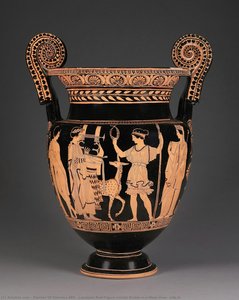
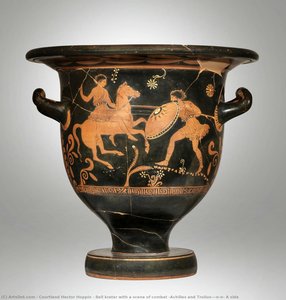
The Sisyphus Painter’s mature style is characterized by large-scale vessels—primarily volute kraters and column kraters—decorated with elaborate scenes. He favored depictions of everyday life, Dionysiac rituals, and mythological episodes. Early works often feature three figures arranged in dynamic compositions on the bell *kraters*. A hallmark of his technique is a meticulous attention to detail, particularly in the rendering of faces, frequently depicted in three-quarter profile, conveying a sense of individuality and emotion. The backs of his vases consistently showcase draped male youths, adding another layer of narrative or symbolic meaning. While initially demonstrating exceptional quality, especially in head painting, his later works reveal a slight decline in consistency, with figures becoming somewhat more stereotypical and faces losing some of their earlier nuance. This shift may reflect the demands of prolific production or changing artistic tastes within the Apulian market.The Karneia Painter: A Close Associate
The Karneia Painter is inextricably linked to the Sisyphus Painter, often considered a close associate or even a pupil within the same workshop. The name derives from an inscription *Karneios* on one of his most significant vases—a volute krater depicting scenes connected with the festival of Apollo Karneia in Sparta. This vase provides valuable insight into the cultural exchanges between Apulia and other Greek regions, including Sparta. The Karneia Painter shares many stylistic similarities with the Sisyphus Painter, including a fondness for figure-hugging drapery and jewelry reminiscent of late fifth-century Athenian pottery. However, he also introduces unique elements—"fancy/exotic" dress and expressions that reveal a distinct local sensibility. The discovery of his name vase in Taras (modern-day Taranto), a Spartan colony, further emphasizes the interconnectedness of artistic traditions in Magna Graecia.Legacy and Historical Significance
The Sisyphus Painter stands as a pivotal figure in the development of South Italian vase painting. He successfully fused Athenian stylistic conventions with indigenous Apulian motifs, establishing a uniquely Italic branch of Greek ceramics. His influence extended to subsequent generations of painters, shaping the evolution of both the “Plain Style” and the “Ornate Style”—two major currents within Apulian pottery production. Painters like the Hearst Painter and Tarporley Painter were directly connected with his workshop, carrying forward his artistic legacy. The vases produced by the Sisyphus and Karneia Painters offer invaluable insights into the cultural landscape of Magna Graecia—a region characterized by constant exchange between Greek colonists and local Italic peoples. Their works are not merely decorative objects; they are windows into the rituals, beliefs, and daily lives of a vibrant and complex society. They represent a fascinating chapter in the history of art, demonstrating how artistic innovation can arise from the interplay of diverse cultural influences. Their contribution lies in their ability to transform imported styles into something distinctly Apulian, forging a new aesthetic identity for South Italian pottery.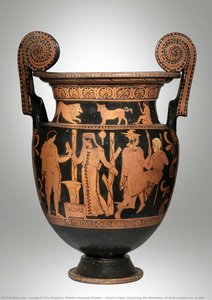
Основные сведения
- Artistic Movement Or Style: Apulian red-figure vase painting
- Artists Or Movements Influenced By This Artist:
- Tarporley Painter
- Plain Style
- Ornate Style
- Artists Who Influenced This Artist:
- Painter of Berlin Dancing Girl
- Dwarf Painter
- Kodros Painter
- Polion
- Date Of Death: Living
- Full Name: Sisyphus Painter/Karneia Painter
- Notable Artworks:
- Volute Krater (Munich)
- Heart-shaped gift depiction