

 Предпросмотр
 Поделиться
 Поделиться
 Детали произведения

 Скачать
 Похожие работы
 Рентгенография
 Слайд-шоу
 Статистика
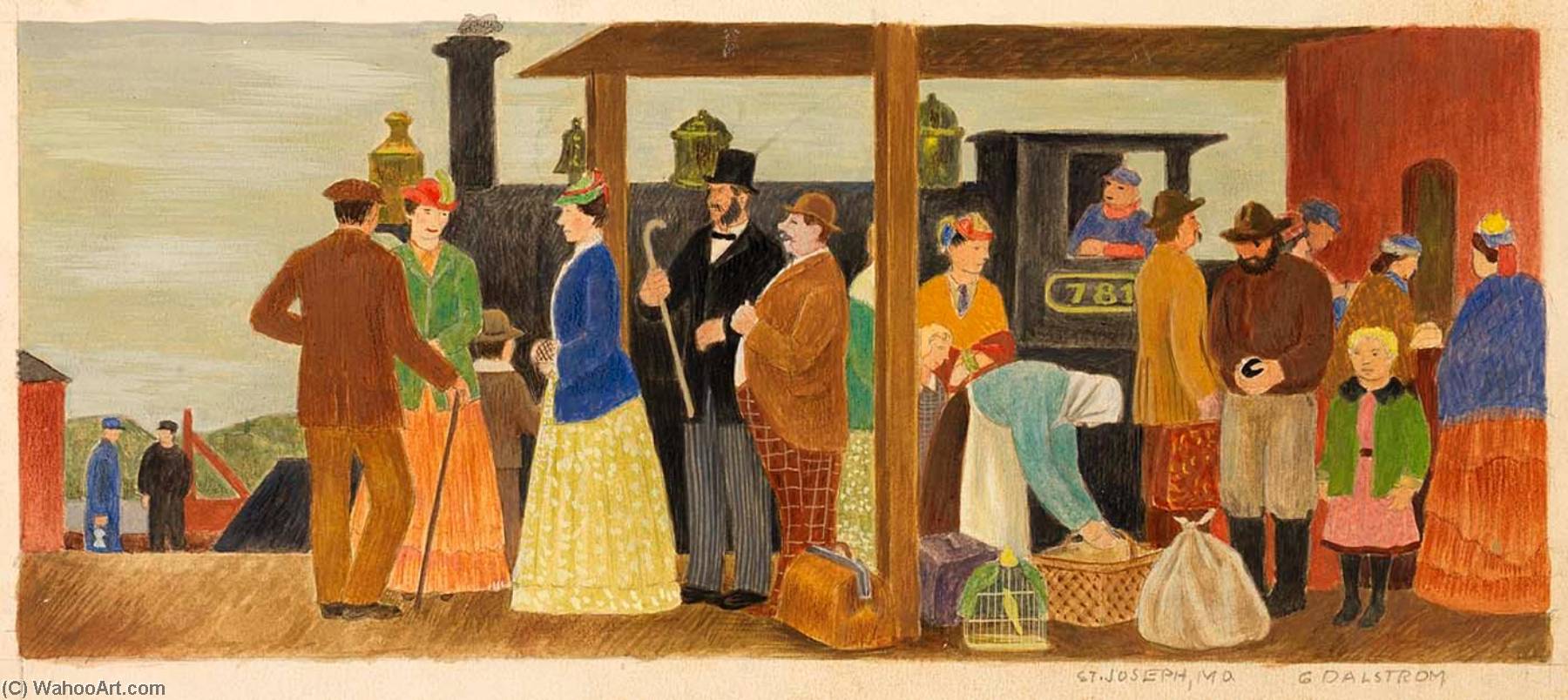
Railroad Station 1880 (mural study, St. Joseph, Missouri Post Office and Courthouse)
 1941
1941 17.0 x 34.0 cm
 Читать далее
Жикле / Арт-принт
Печать (жикле) или холст музейного качества с быстрыми сроками изготовления и широким выбором вариантов отделки. ( Купить картину ручной работы Перейти к цифровым изображениям)




































Выберите один из наших стандартных размеров, соответствующих оригинальным пропорциям произведения искусства.

Вы можете указать свои собственные размеры, чтобы репродукция идеально подошла под конкретную раму или пространство. Если выбранный вами размер не будет соответствовать пропорциям оригинала, мы либо обрежем произведение, либо дополним изображение зеркальным отражением краев или однотонной заливкой. Перед началом производства вам будет отправлен цифровой макет для утверждения.
Пожалуйста, обратите внимание, что предварительный просмотр на экране не отображает фактическую обрезку или расширение изображения. Только макет точно покажет финальную композицию.
Несмотря на возможность заказа индивидуальных размеров, мы рекомендуем выбирать размер из предопределенного списка, чтобы сохранить оригинальные пропорции.
Доставка по всему миру () за 2 недели вместо стандартных 4/5 недель. (12 Сентябрь)

Бесплатная экспресс-доставка по всему миру

Высококачественный льняной холст

Полное страхование доставки

Гарантия возмещения таможенных пошлин

Гарантия точного соответствия цветов

100-дневная политика возврата (только при обнаружении дефектов)

Гарантия возврата 100% средств

Предложение оптовых скидок
 Вариант со стеклом доступен только для размеров менее 110 см

Railroad Station 1880 (mural study, St. Joseph, Missouri Post Office and Courthouse)
Жикле / Арт-принт
Размер репродукции
-


Итоговая стоимость
$ 62
Похожие произведения




Биография художника
The Visionary of the American Frontier: The Life of Gustaf Oscar Dalström
In the sweeping tapestry of American art history, few threads are as evocative and culturally resonant as those woven by Gustaf Oscar Dalström. A Swedish-born master whose eyes were forever attuned to the grandeur of the New World, Dalström possessed a rare ability to translate the rugged spirit of the American West into a visual language of profound depth and atmosphere. Born in 1893 in Gothland, Sweden, his journey from the quiet landscapes of his homeland to the bustling artistic hubs of Chicago represents more than just a geographical migration; it was an artistic metamorphosis. When he emigrated to the United States in 1925, he brought with him a sophisticated European sensibility—a foundation built upon the rigorous traditions of the Royal Swedish Academy of Arts—which he would later use to illuminate the untamed beauty of the American frontier.
Dalström’s early training in Stockholm immersed him in the nuanced techniques of Impressionism and Symbolism. These movements, characterized by their focus on light, color theory, and emotional resonance, became the bedrock of his creative process. He did not merely seek to replicate a scene; he sought to capture its soul. This mastery of tonal harmonies and meticulous detail allowed him to render the vastness of the prairie and the grit of pioneer life with a palpable sense of presence. His work often feels as though it is breathing, caught in a moment of eternal stillness where the light of a setting sun or the mist over a river tells a story of endurance and discovery.
A Legacy Carved in Murals and Memory
The true zenith of Dalström’s career was reached through his monumental contributions to American muralism. During an era when public art served as a vital bridge between history and the citizenry, Dalström undertook ambitious commissions that celebrated the heritage of the American heartland. His work for the St. Joseph, Missouri Post Office and Courthouse stands as a testament to his ability to weave complex historical narratives into large-scale compositions. Through these murals, he transformed public spaces into galleries of collective memory, inviting passersby to witness the triumphs and struggles of those who preceded them.
His studies for these murals reveal an artist deeply engaged with the evolution of American life. In works such as "River Packet Ship" and "Pony Express," one can observe his fascination with the mechanics of progress and the rhythm of early transportation. These were not merely historical records but poetic explorations of movement and connectivity. Even in more intimate studies, like his vibrant watercolor of a "Horseless Carriage," Dalström demonstrates a masterful blend of keen observation and imaginative flair, capturing the transition from the horse-drawn era to the dawn of the automotive age with remarkable clarity.
The significance of Dalström’s oeuvre extends far beyond the borders of Missouri or the halls of Chicago. His recognition by prestigious institutions such as the Smithsonian American Art Museum and The Art Institute of Chicago underscores his standing within the canon of American landscape painting. His ability to blend the romanticism of the frontier with a realistic, almost documentary precision allowed him to create art that was both historically significant and emotionally accessible. Today, his works remain vital touchstones for anyone seeking to understand the visual identity of the American West—a legacy defined by a profound respect for the land and the enduring spirit of those who called it home.
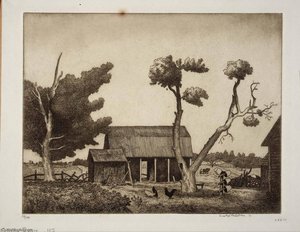
gustaf oscar dalström
1893 - 1971
Основные сведения
- Artistic Movement Or Style: American Primitive
- Artists Or Movements Influenced By This Artist: ['Timothy Cole']
- Artists Who Influenced This Artist: ['']
- Date Of Birth: 1893
- Full Name: Gustaf Oscar Dalström
- Nationality: Swedish
- Notable Artworks:
- Horseless Carriage (mural study)
- Houses on a Hill
- Place Of Birth: Gothland, Sweden