

 Поделиться
 Поделиться
 Детали произведения

 Скачать
 Похожие работы
 Слайд-шоу
 Статистика
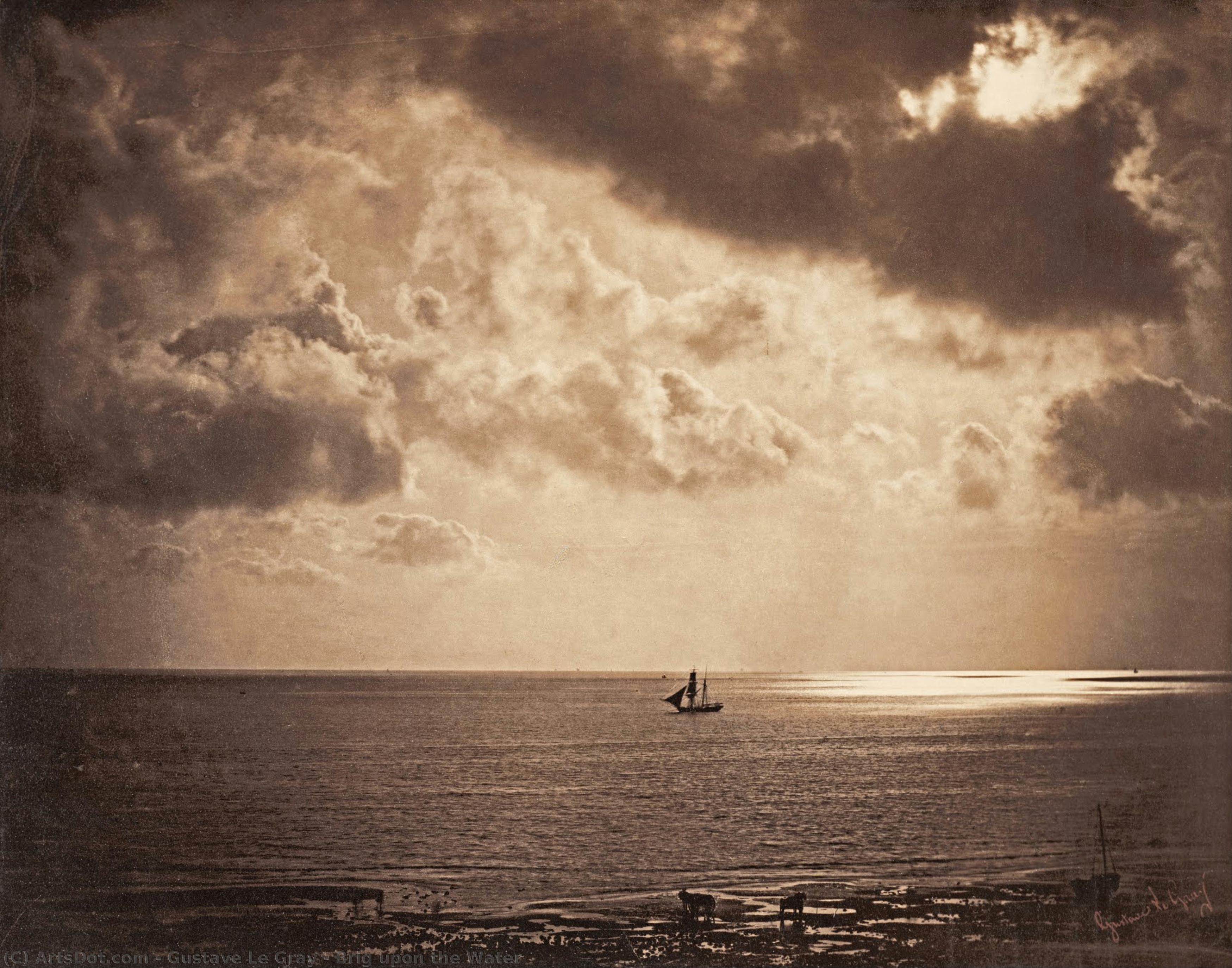
Brig upon the Water
 Black and White Photography
- Photo
- Photographic Impressionism
 1856
1856- 19th Century
 Музей Нэлсона-Аткинса
 Читать далее
Масляная репродукция ручной работы
Картина маслом на холсте в выбранном вами размере и раме, написанная на заказ нашими художниками. ( Перейти к печати Перейти к цифровым изображениям)




































Выберите один из наших стандартных размеров, соответствующих оригинальным пропорциям произведения искусства.

Вы можете указать собственные размеры, чтобы картина идеально вписалась в выбранную раму или пространство. Если выбранный вами размер не соответствует пропорциям оригинала, мы либо обрежем полотно, либо расширим его за счет дополнительных элементов, написанных вручную. Цифровой макет будет отправлен вам на утверждение перед началом производства.
Обратите внимание, что предварительный просмотр на экране не отражает фактическую обрезку или расширение. Только макет точно покажет окончательную композицию.
Хотя доступны индивидуальные размеры, мы рекомендуем выбирать вариант из предопределенного списка, чтобы сохранить исходные пропорции.
После оформления заказа команда ArtsDot.com свяжется с клиентом по электронной почте для уточнения деталей и предоставит предварительный макет
Доставка по всему миру () за 3–4 недели вместо стандартных 5 недель. (10 Сентябрь). Без компромиссов в качестве.

Бесплатная экспресс-доставка по всему миру

Высококачественный льняной холст

Полное страхование доставки

Гарантия возмещения таможенных пошлин

Гарантия точного соответствия цветов

100-дневная политика возврата (только при обнаружении дефектов)

Гарантия возврата 100% средств

Предложение оптовых скидок
 Вариант со стеклом доступен только для размеров менее 110 см

Brig upon the Water
Техника репродукции
Размер репродукции
-


Итоговая стоимость
$ 263
A Symphony of Light and Sea
In the quiet expanse of Brig upon the Water, created in 1856, we encounter a moment frozen in time by the visionary hand of Gustave Le Gray. This breathtaking monochrome masterpiece captures a solitary vessel navigating the gentle undulations of the sea, set against a dramatic, cloud-swept sky. The composition is a masterclass in balance; the boat sits anchored in the heart of the frame, acting as a focal point that draws the eye through a labyrinth of soft light and deep shadows. As the clouds drift across the heavens, they create a textured canopy that mirrors the rhythmic movement of the water below, establishing a profound sense of continuity between the celestial and the terrestrial realms.
The presence of two figures near the vessel introduces a poignant human element to an otherwise vast and elemental landscape. Their smallness in comparison to the infinite horizon serves as a subtle reminder of our place within the grandeur of nature, yet their proximity to one another suggests a shared experience of wonder. This delicate touch of humanity transforms the photograph from a mere topographical record into a narrative poem, inviting the viewer to imagine the salt spray on their skin and the rhythmic creak of the wooden hull against the tide.
The Pioneer of Photographic Impressionism
To understand the technical brilliance of this work, one must look toward Le Gray’s revolutionary approach to the medium. During an era when photography was often viewed as a purely scientific tool for documentation, Le Gray sought to infuse it with the soul of painting. He was a pioneer of what many now call Photographic Impressionism, utilizing advanced techniques to manipulate light and shadow in ways that were previously thought impossible. In Brig upon the Water, his ability to capture the subtle gradations of the sky—the way light filters through heavy mist and breaks through silver linings—demonstrates a profound mastery over the chemical processes of the 19th century.
His work transcends the limitations of early heliography, moving beyond simple imitation to achieve an atmospheric depth that resonates with the emotional weight of a Romantic landscape. For the discerning collector or interior designer, this piece offers more than just visual beauty; it provides a window into a pivotal moment in art history when the camera first learned to dream. The interplay of light and texture makes it a versatile centerpiece, capable of anchoring a room with its serene, timeless elegance.
An Eternal Presence for Modern Spaces
For those seeking to curate an environment of tranquility and intellectual depth, this reproduction serves as an exquisite choice. The monochromatic palette offers a sophisticated neutrality that complements both contemporary minimalist aesthetics and classic, traditional interiors. The image does not merely occupy space; it commands it through its quiet intensity and the evocative power of its textures. Whether placed in a sunlit gallery or a moody, dimly lit study, Brig upon the Water brings with it an aura of peace and a contemplative spirit.
Investing in such a high-quality reproduction allows the legacy of Le Gray to live on within the modern home. It is a piece that invites long periods of reflection, encouraging anyone who gazes upon it to pause, breathe, and reconnect with the elemental beauty of the natural world. In an age of digital chaos, the enduring stillness of this 1856 masterpiece remains a profound source of inspiration and aesthetic grace.
Похожие произведения


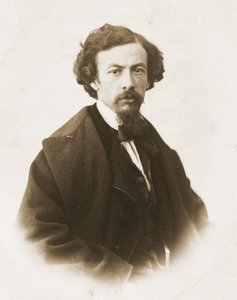
Биография художника
The Visionary of Light: The Life and Legacy of Gustave Le Gray
In the mid-nineteenth century, a period defined by the tension between scientific discovery and Romantic expression, Gustave Le Gray emerged as a transformative force who bridged the gap between the painter's brush and the photographer's lens. Born in 1820 in Villiers-le-Bel to a family of distinguished military lineage—his father being the celebrated Marshal Jean Lannes—Le Gray possessed a temperament that blended disciplined observation with an extraordinary, almost poetic, imagination. While his early training was rooted in the academic traditions of painting under masters such as François-Édouard Picot and Paul Delaroche, his true destiny lay in capturing the ephemeral nuances of the natural world through the burgeoning medium of photography.
Le Gray’s journey was one of relentless experimentation and technical mastery. He did not merely accept the limitations of early photographic processes like the daguerreotype; instead, he sought to transcend them. His profound influence on the medium stems from his refusal to view photography as a mere tool for documentation. To Le Gray, the camera was an instrument of art. This philosophy led him to develop the revolutionary waxed paper negative, a breakthrough that allowed for greater tonal range and the ability to produce multiple prints, effectively democratizing the photographic image and expanding its artistic potential. His work became a precursor to what many now call Photographic Impressionism, where the goal was not just to record a scene, but to evoke the very atmosphere of the moment.
Mastery of the Elements: Technique and Innovation
One of Le Gray’s most enduring contributions to art history was his ingenious solution to one of photography's greatest nineteenth-century challenges: the disparate exposure requirements of sky and sea. In a single exposure, the bright sky would often appear washed out while the darker waves remained underexposed. With the soul of a painter, Le Gray approached this technical hurdle with a creative manipulation known as combination printing. By meticulously merging two separate negatives—one captured for the luminous heavens and another for the textured ocean—he achieved a level of realism and dramatic depth that seemed almost supernatural to his contemporaries.
This technique is nowhere more evident than in his breathtaking seascapes, such as Brig upon the Water. In these works, one can witness a symphony of light and shadow where the clouds appear as heavy, textured tapestries mirroring the rhythmic movement of the tides below. His ability to capture the subtle gradations of light filtering through mist or breaking through silver linings transformed maritime photography from topographical records into narrative poems. Through his lens, the vastness of the Mediterranean or the solitude of a coastal vessel became vessels for profound emotional resonance, inviting viewers to contemplate their own place within the grandeur of nature.
A Lasting Impression on Art History
The historical significance of Gustave Le Gray extends far beyond his technical patents. He was a central figure in the French photographic movement of the 1850s, serving as a teacher and mentor to subsequent generations of photographers. His insistence that photography should belong to the realm of fine art rather than mere commerce helped elevate the medium's status within the global art community. His influence can be traced through the evolution of landscape photography and the eventual rise of pictorialism, as he proved that the camera could possess an extraordinary imagination.
As we reflect on his life, which concluded in Cairo in 1884, we see a man who successfully navigated the transition from the Romantic era to the age of modern technology. His legacy remains etched in the silvered surfaces of his prints—images that continue to captivate us with their scientific precision and their haunting, atmospheric beauty. Le Gray did not just photograph the world; he taught us how to see the light within it.
gustave le gray
1820 - 1884
Основные сведения
- Artistic Movement Or Style: Photography
- Artists Or Movements Influenced By This Artist: ['Impressionism']
- Artists Who Influenced This Artist:
- John Beasley Greene
- Henri Le Secq
- Date Of Death: 1884
- Full Name: Gustave Le Gray
- Nationality: French
- Notable Artworks:
- The Great Wave, Sète
- Cloudy Sky, Mediterranean Sea
- Place Of Birth: France
Похожие статьи
Топ-10 произведений искусства для создания атмосферы спокойствия и гармонии | ArtsDot.com
Погрузитесь в мир спокойствия с топ-10 шедеврами искусства! От Моне до Ван Гога – откройте истории, техники и эмоции великих художников. Репродукции картин высокого качества для вашего интерьера на ArtsDot.com. Исследуйте коллекцию онлайн!
Fluid Reflections: Exploring Water's Symbolism in Art History – From Myth to Impressionism
Explore the rich symbolism of water in art history – from ancient myths to Impressionism's fleeting beauty. Discover masterpieces & find your perfect serene artwork with ArtsDot.com.
Топ-10 шедевров искусства для создания атмосферы спокойствия и гармонии | ArtsDot.com
Погрузитесь в мир спокойствия с Топ-10 шедеврами искусства! От Моне и Ван Гога до японской гравюры – откройте истории художников, техники и гармонию цвета. Репродукции картин премиум-качества для вашего интерьера на ArtsDot.com. Explore the full collection online!
Топ-25 шедевров Клода Моне: Искусство света и импрессионизма для вашего интерьера
Погрузитесь в мир Клода Моне! 25 шедевров импрессионизма, от "Водных лилий" до знаменитых пейзажей. Узнайте историю создания картин и вдохновитесь для декора интерьера. Репродукции музейного качества на ArtsDot.com.
The Allure of the Horizon: A Comprehensive Exploration of Seascape Art Through History & Emotion
Explore the captivating world of seascape art! Discover its history, key artists & movements – from Dutch Masters to Impressionism. Expert insights for collectors and enthusiasts at ArtsDot.