

 Предпросмотр
 Поделиться
 Поделиться
 Детали произведения

 Скачать
 Похожие работы
 Рентгенография
 Слайд-шоу
 Статистика
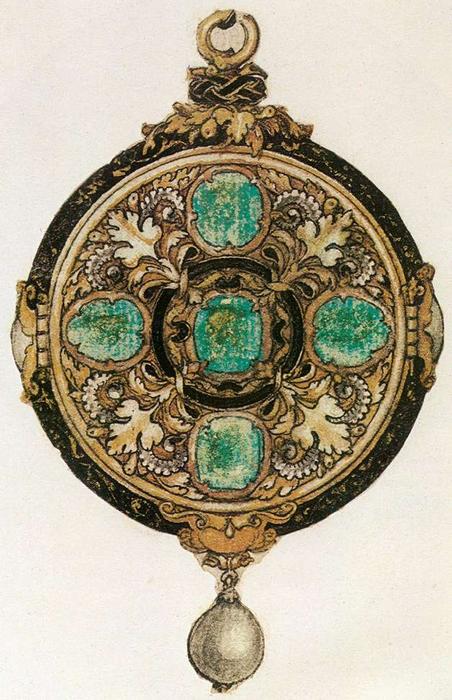
Design for a Pendant
 Acrylic On Canvas
- WallArt
- Northern Renaissance
 1535
1535- Renaissance
 37.0 x 14.0 cm
 Читать далее
Приобретите цифровое изображение высокого разрешения в улучшенном качестве, которое значительно превосходит онлайн-превью.
Каждый файл тщательно подготавливается нашими специалистами с использованием передовых инструментов и экспертной ручной ретуши. Мы гарантируем исключительную четкость, точную цветопередачу и детальную проработку каждого изображения.
Финальный файл доставляется по электронной почте в течение 72 часов и оптимизирован для немедленного использования в профессиональной среде, при верстке и печати. Это тот же уровень качества, которому доверяют ведущие дизайнерские студии, издательства и галереи.
Цифровое изображение
Скачайте файл высокого разрешения для личного использования, печати и творческих проектов. ( Перейти к печати Купить картину ручной работы)
Включено в каждый заказ цифровых изображений
Гарантия экспертной цифровой доставки
Выбирая ArtsDot.com, вы получаете не просто изображение — вы приобретаете профессионально обработанное цифровое произведение искусства, созданное с безупречной точностью и под защитой гарантии качества. Вот всё, что автоматически входит в ваш заказ:

Мгновенная доставка по e-mail
Ваш цифровой файл в высоком разрешении будет отправлен вам по электронной почте в течение 72 часов после оформления заказа — и сразу станет доступен для использования.

Цифровой файл с ИИ-улучшением
Ваше произведение искусства проходит профессиональную оптимизацию с использованием передовых инструментов ИИ и ручной обработки, что гарантирует максимальную детализацию, четкость и точность цветопередачи.

Бессрочная бесплатная повторная доставка
Случайно удалили или потеряли файл? Не беспокойтесь — мы отправим его вам повторно в любое время и совершенно бесплатно.

Без импортных пошлин — навсегда
Наслаждайтесь вашим произведением искусства мгновенно без таможенных пошлин, сборов или затрат на доставку — цифровые загрузки всегда не облагаются налогом.

Гарантия точности цветопередачи
Мы гарантируем, что ваше цифровое изображение максимально точно передает оригинальные цвета благодаря использованию профессиональных инструментов и систем управления цветом.

Гарантия удовлетворенности 100 дней
Если вы не будете удовлетворены своим цифровым изображением, мы внесем правки или вернем 100% стоимости в течение 100 дней — без лишних вопросов.

100% Гарантия возврата средств
Не удовлетворены покупкой? Получите полный возврат средств в течение 100 дней после получения цифрового файла — без лишних вопросов.

Скидки на оптовые заказы
Купите 3 изображения, сэкономьте 10% — Купите 5, сэкономьте 15% — Купите 10+, сэкономьте 20%. Отличное решение для творческих проектов, галерей и агентств.
Design for a Pendant – A Glimpse into Renaissance Ornamentation
Hans Holbein the Younger’s “Design for a Pendant,” created in 1535, isn't merely a study of jewelry; it’s a meticulously crafted window into the aesthetic sensibilities of the Northern Renaissance. This exquisite drawing, now housed within the British Museum’s collection, offers a captivating glimpse into the world of courtly decoration and the burgeoning interest in geometric abstraction that characterized this pivotal era. More than just a technical exercise, it reveals Holbein's profound understanding of color, proportion, and the interplay between natural forms and stylized design – elements he would later masterfully employ in his renowned portraits.
The piece immediately draws the eye with its elegant simplicity and sophisticated balance. A circular form dominates, acting as the framework for a complex arrangement of interlocking circles and delicate lines. Within this central motif resides a captivating array of green jewels—a vibrant counterpoint to the predominantly neutral tones of the parchment. These aren’t simply decorative embellishments; they are carefully positioned to create a dynamic visual rhythm, suggesting movement and depth. The use of varying shades of green – from deep emeralds to lighter, almost translucent hues – adds richness and complexity to the composition, hinting at the luxurious materials that would have been employed in the actual pendant.
The Artist’s Hand: Holbein's Northern Renaissance Style
Hans Holbein the Younger was a pivotal figure in the transition from late Gothic to Renaissance art. Trained by his father, Hans Holbein the Elder, a master painter and printmaker, he inherited a strong foundation in observation and technique but quickly developed his own distinctive style. Unlike the heavily ornamented and often emotionally charged works of his father, Holbein’s art is characterized by its clarity, precision, and a remarkable ability to capture likeness with astonishing accuracy. “Design for a Pendant” exemplifies this approach – it's not about dramatic expression, but rather about meticulous detail and harmonious composition. The drawing showcases Holbein’s mastery of linear perspective and his understanding of how geometric shapes could be used to create illusions of depth and volume.
The influence of the Northern Renaissance is palpable in this piece. Holbein's work reflects a shift away from the purely religious focus that dominated much of European art at the time, embracing humanist ideals and a greater interest in secular subjects. The geometric patterns—a hallmark of the period—were inspired by classical antiquity but adapted to suit the tastes of the wealthy elite. This drawing demonstrates Holbein’s ability to synthesize these diverse influences into a cohesive and visually compelling whole.
Symbolism and Context: Courtly Decoration in Tudor England
“Design for a Pendant” was created during a period of significant political and cultural change in England. Henry VIII's rise to power brought with it a renewed interest in luxury, ornamentation, and courtly display. Jewelry played a crucial role in this culture of extravagance, serving as symbols of status, wealth, and royal authority. The fleur-de-lis motif, prominently featured within the design, was a potent symbol of French royalty – a subtle nod to the political landscape of the time. The pendant itself would have been a prized possession, likely commissioned by Anne Boleyn, Henry VIII’s second wife, known for her lavish tastes and patronage of the arts.
The drawing's focus on geometric patterns and symmetrical arrangements reflects the prevailing aesthetic trends in Tudor England. These designs were often incorporated into furniture, textiles, and other decorative objects, creating a cohesive and opulent environment within the royal court. Holbein’s “Design for a Pendant” provides valuable insight into this world of luxury and refinement, offering a tangible connection to the artistic tastes of one of England's most influential monarchs.
Reproducing a Masterpiece: ArtsDot.com’s Commitment to Authenticity
At ArtsDot.com, we understand the profound appreciation for original artwork and strive to capture its essence in our meticulously crafted reproductions. Our team of skilled artists utilizes 100% cotton canvas and archival-quality inks to faithfully recreate “Design for a Pendant” by Hans Holbein the Younger. We painstakingly replicate every detail – from the delicate lines of the geometric patterns to the subtle variations in color—ensuring that your reproduction is as close as possible to the original drawing. With ArtsDot.com, you’re not just acquiring a beautiful piece of art; you're investing in a legacy of artistic excellence.
Explore our collection of Hans Holbein reproductions and discover how we can bring this captivating masterpiece into your home or office. Browse other works by Hans Holbein the Younger on our website today.
Похожие произведения
Биография художника
A Life Etched in Detail: The World of Hans Holbein the Younger
Born around 1497 in Augsburg, Germany, Hans Holbein the Younger emerged as a defining figure of the Northern Renaissance—a master portraitist whose work continues to resonate with breathtaking realism and psychological depth. His upbringing within an artistically gifted family laid the foundation for his exceptional talent; his father, Hans Holbein the Elder, was a respected painter and printmaker who instilled in young Hans a meticulous approach to observation and technique. This early training wasn’t merely about mastering brushstrokes or mixing pigments—it was about learning to *see*, to capture not just likeness but the very essence of a subject. Holbein's initial artistic explorations occurred within his father’s workshop, where he honed his skills before embarking on a journey that would lead him through Switzerland and ultimately to the heart of the English court.From Basel to the Tudor Court: A Rising Star
After completing his apprenticeship, Holbein traveled extensively throughout Switzerland, establishing himself as an independent artist with a growing reputation. He spent several formative years in Basel, creating not only striking portraits but also religious works and intricate woodcut designs—most notably the haunting series depicting the *Dance of Death*. These early pieces reveal a burgeoning mastery of composition and a developing fascination with capturing the complexities of human emotion. His father’s influence was paramount; Holbein absorbed the meticulous techniques of his elder brother, Matthias Holbein, who practiced in Basel, mastering the art of etching and printmaking alongside painting. This dual skillset would prove invaluable throughout his career, allowing him to produce both monumental paintings and exquisitely detailed prints—a hallmark of his distinctive style. It was in 1526 that fate intervened, drawing Holbein towards England, an event that would irrevocably alter his artistic trajectory. He arrived bearing a letter of introduction from Erasmus, the renowned humanist scholar, which opened doors to the influential circles of English society. His talent quickly captivated prominent figures like Sir Thomas More, who became both a patron and a subject for several compelling portraits. This connection proved pivotal, leading Holbein’s ascent to prominence within the Tudor court—a position he held, with some interruptions, until his untimely death in 1543.The Art of Perception: Style and Masterpieces
Holbein's artistic style is characterized by an extraordinary commitment to realism, achieved through painstaking attention to detail in rendering textures, fabrics, and the subtle nuances of facial features. He didn’t simply *paint* portraits; he meticulously constructed them, layer upon layer, capturing not just physical appearances but also the personality and inner life of his sitters. His innovative compositions further enhanced the impact of his work, often employing symbolic objects or backgrounds to convey deeper meaning. The Ambassadors (1533) stands as a testament to this approach—a complex and symbolically rich double portrait showcasing both Holbein’s technical brilliance and intellectual depth. The anamorphic skull subtly embedded within the painting serves as a stark *memento mori*, reminding viewers of the inevitability of death. This masterful use of perspective and shading exemplifies Holbein's dedication to capturing the illusion of three dimensions—a technique that would become synonymous with Renaissance portraiture. He skillfully blended the precision of German artistic traditions with the compositional principles of the Italian Renaissance, demonstrating a remarkable breadth of knowledge and artistic influence.Notable Achievements: A Legacy of Detail
Holbein’s prolific output spanned across various mediums, cementing his reputation as one of the most versatile artists of his time. Beyond portraiture, he produced monumental frescoes for churches in Basel and Strasbourg—demonstrating his ability to execute ambitious projects with unwavering dedication. His religious works are imbued with profound spiritual contemplation, reflecting the humanist ideals prevalent during the Reformation. Furthermore, Holbein’s etchings achieved unparalleled renown, establishing him as a pioneer of printmaking and influencing countless artists who followed. The *Dance of Death* series—a macabre depiction of mortality—became an enduring symbol of the era, showcasing Holbein's mastery of etching technique and his ability to convey complex emotions through visual imagery. His meticulous attention to detail—evident in every brushstroke and engraving—transformed artistic representation forever. He didn’t merely record appearances—he captured moments in time, preserving them for posterity.Historical Significance: Shaping the Tudor Image
Hans Holbein the Younger's portraits played a crucial role in shaping the image of Henry VIII and his court during the tumultuous Reformation period. His depictions of the king conveyed both regal authority and human vulnerability—a nuanced portrayal that reflected the complexities of Tudor politics and religion. Holbein’s work served as invaluable documentation of the era, capturing not only visual likenesses but also conveying the social and cultural context of Elizabethan England. He remains one of the most admired and studied painters of the Renaissance—a master whose artistry continues to inspire and enthrall audiences worldwide.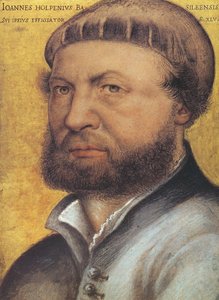
Ганс Гольбейн Младший
1497 - 1543 , Германия
Основные сведения
- Artistic Movement Or Style: Северное Возрождение
- Artists Or Movements Influenced By This Artist: ['Более поздние портретисты']
- Artists Who Influenced This Artist: ['Альбрехт Дюрер']
- Date Of Birth: c. 1497
- Date Of Death: October or November 1543
- Full Name: Hans Holbein der Jüngere
- Nationality: Германия и Швейцария
- Notable Artworks: ['«Портрет Эразма Роттердамского», «Сэр Брайан Тюк», «Великое произведение искусства эпохи Тюдоров! Портрет Томаса Ховарда, 3-го герцога Норфолка от Ханса Гольбеинца']
- Place Of Birth: Augsburg, Германия