 Предпросмотр
 Поделиться
 Поделиться
 Детали произведения

 Скачать
 Похожие работы
 Рентгенография
 Слайд-шоу
 Статистика
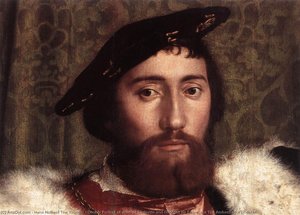
passion (detail - )

 Читать далее
Масляная репродукция ручной работы
Картина маслом на холсте в выбранном вами размере и раме, написанная на заказ нашими художниками. ( Перейти к печати Перейти к цифровым изображениям)




P118B $10

P118H $10

P118W $10

P438Z $10

P508JH $12

P508YH $12

P805H $10

P805Z $10

P919BZ $10

P919G $10

P919XJ $10

P959ZH $10

P968JZ $12

W106C $8

W218G $10

W218JH $8

W218Y $10

W307PJ $10

W316G $10

W316PJ $8

W316Y $10

W398PJ $8

W4111J $10

W500HY $15

W500JH $15

W692G $12

W849H $8

W940BG $15

W953PJ $8




Выберите один из наших стандартных размеров, соответствующих оригинальным пропорциям произведения искусства.

Вы можете указать собственные размеры, чтобы картина идеально вписалась в выбранную раму или пространство. Если выбранный вами размер не соответствует пропорциям оригинала, мы либо обрежем полотно, либо расширим его за счет дополнительных элементов, написанных вручную. Цифровой макет будет отправлен вам на утверждение перед началом производства.
Обратите внимание, что предварительный просмотр на экране не отражает фактическую обрезку или расширение. Только макет точно покажет окончательную композицию.
Хотя доступны индивидуальные размеры, мы рекомендуем выбирать вариант из предопределенного списка, чтобы сохранить исходные пропорции.
После оформления заказа команда ArtsDot.com свяжется с клиентом по электронной почте для уточнения деталей и предоставит предварительный макет
Доставка по всему миру () за 3–4 недели вместо стандартных 5 недель. (10 Сентябрь). Без компромиссов в качестве.

Бесплатная экспресс-доставка по всему миру

Высококачественный льняной холст

Полное страхование доставки

Гарантия возмещения таможенных пошлин

Гарантия точного соответствия цветов

100-дневная политика возврата (только при обнаружении дефектов)

Гарантия возврата 100% средств

Предложение оптовых скидок
 Вариант со стеклом доступен только для размеров менее 110 см

passion (detail - )
Техника репродукции
Размер репродукции
-


Итоговая стоимость
$ 263
Passion (Detail) – A Window into Renaissance Grief
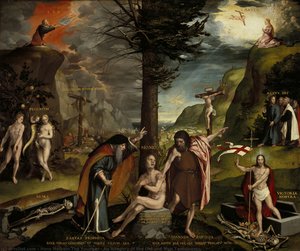
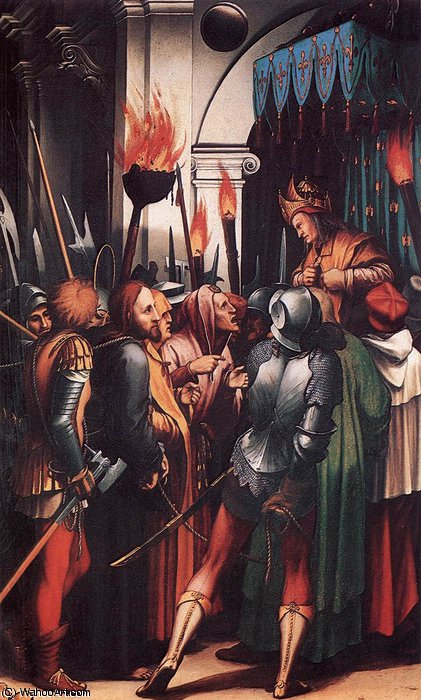
The painting “Passion” by Hans Holbein the Younger, a poignant fragment from his monumental depiction of The Dance of Death, transcends mere visual representation; it’s an invitation to contemplate mortality and faith with breathtaking precision. Executed in 1523, this engraving captures a moment of profound sorrow – specifically, the crucifixion of Jesus Christ – rendered with Holbein's signature meticulous attention to anatomical detail and tonal gradation. The artwork resides within the Getty Museum’s collection, offering visitors a chance to experience firsthand the artistry of one of Europe’s most influential Renaissance masters.- Subject Matter & Context: Holbein’s “Death & The Miser” isn't simply illustrating religious iconography; it serves as part of a broader artistic commentary on human existence during the Reformation era. The Dance of Death series challenged societal norms and confronted viewers with the inescapable reality of death, presenting figures from all walks of life – nobility, clergy, merchants—facing their final reckoning.
- Style & Technique: Holbein’s engraving exemplifies Northern Renaissance artistic ideals. He employed a hatching technique—a method of shading using closely spaced parallel lines—to achieve remarkable realism and depth. This painstaking process allowed him to convey the textures of skin, clothing, and even the rough surface of the wooden cross itself.
- Symbolism: The composition is laden with symbolic significance. The central figure of Jesus Christ dominates the scene, positioned prominently on the cross—a universal emblem of sacrifice and redemption. Surrounding him are figures representing various aspects of human life, highlighting the universality of death’s dominion. Notably, the inclusion of a crown symbolizes royalty or spiritual authority.
Detailed Examination: Anatomical Precision & Emotional Resonance
Holbein's mastery is evident in his anatomical accuracy—a hallmark of Renaissance art driven by humanist ideals. He meticulously studied human anatomy to depict Jesus’s body with unparalleled realism, capturing the subtle musculature and contours that convey both physical suffering and spiritual grace. The artist skillfully utilizes tonal variation to create a sense of drama and pathos, emphasizing the vulnerability of Christ amidst the solemn atmosphere of the crucifixion.- Material & Process: Engraving is a printing process where an image etched onto metal plate is transferred onto paper using ink. Holbein’s skill lay not only in his artistic vision but also in mastering this technique, ensuring that every line and shade faithfully reproduced.
- Emotional Impact: “Passion” compels viewers to confront the uncomfortable truth of mortality while simultaneously offering solace through the depiction of divine compassion. The engraving's subdued palette—primarily browns and blacks—contributes to its melancholic mood, fostering contemplation on themes of faith, suffering, and transcendence.
Beyond Reproduction: Experiencing Holbein’s Legacy
A high-quality reproduction of “Passion” allows admirers to appreciate Holbein's artistic genius without the constraints of museum visits. ArtsDot.com offers exceptional reproductions that faithfully capture the original artwork’s nuances—the subtle shading, textural detail, and emotional depth—bringing Renaissance artistry into your home or workspace. Explore the Getty Museum’s collection for inspiration and delve deeper into Holbein’s contribution to European art history.Похожие произведения
![Страсть [деталь] — Ганс Гольбейн Младший, Северное Возрождение](/media/artworks/images-thumb/9b/5d/9b5d8412d848d5e710af768e85daff42.jpg)
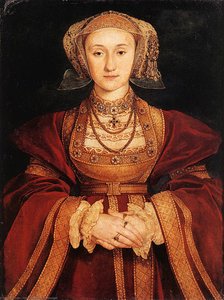
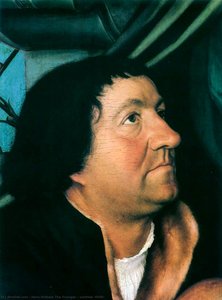
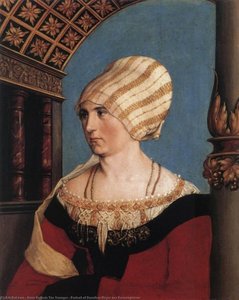
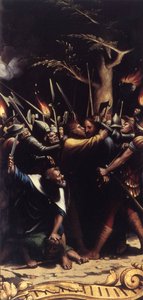
Биография художника
A Life Etched in Detail: The World of Hans Holbein the Younger
Born around 1497 in Augsburg, Germany, Hans Holbein the Younger emerged as a defining figure of the Northern Renaissance—a master portraitist whose work continues to resonate with breathtaking realism and psychological depth. His upbringing within an artistically gifted family laid the foundation for his exceptional talent; his father, Hans Holbein the Elder, was a respected painter and printmaker who instilled in young Hans a meticulous approach to observation and technique. This early training wasn’t merely about mastering brushstrokes or mixing pigments—it was about learning to *see*, to capture not just likeness but the very essence of a subject. Holbein's initial artistic explorations occurred within his father’s workshop, where he honed his skills before embarking on a journey that would lead him through Switzerland and ultimately to the heart of the English court.From Basel to the Tudor Court: A Rising Star
After completing his apprenticeship, Holbein traveled extensively throughout Switzerland, establishing himself as an independent artist with a growing reputation. He spent several formative years in Basel, creating not only striking portraits but also religious works and intricate woodcut designs—most notably the haunting series depicting the *Dance of Death*. These early pieces reveal a burgeoning mastery of composition and a developing fascination with capturing the complexities of human emotion. His father’s influence was paramount; Holbein absorbed the meticulous techniques of his elder brother, Matthias Holbein, who practiced in Basel, mastering the art of etching and printmaking alongside painting. This dual skillset would prove invaluable throughout his career, allowing him to produce both monumental paintings and exquisitely detailed prints—a hallmark of his distinctive style. It was in 1526 that fate intervened, drawing Holbein towards England, an event that would irrevocably alter his artistic trajectory. He arrived bearing a letter of introduction from Erasmus, the renowned humanist scholar, which opened doors to the influential circles of English society. His talent quickly captivated prominent figures like Sir Thomas More, who became both a patron and a subject for several compelling portraits. This connection proved pivotal, leading Holbein’s ascent to prominence within the Tudor court—a position he held, with some interruptions, until his untimely death in 1543.The Art of Perception: Style and Masterpieces
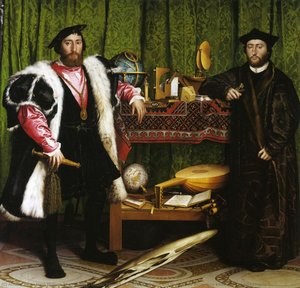
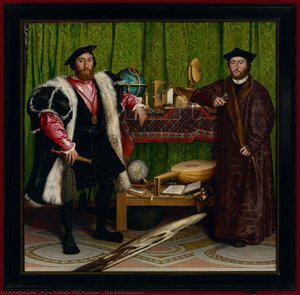
Holbein's artistic style is characterized by an extraordinary commitment to realism, achieved through painstaking attention to detail in rendering textures, fabrics, and the subtle nuances of facial features. He didn’t simply *paint* portraits; he meticulously constructed them, layer upon layer, capturing not just physical appearances but also the personality and inner life of his sitters. His innovative compositions further enhanced the impact of his work, often employing symbolic objects or backgrounds to convey deeper meaning. The Ambassadors (1533) stands as a testament to this approach—a complex and symbolically rich double portrait showcasing both Holbein’s technical brilliance and intellectual depth. The anamorphic skull subtly embedded within the painting serves as a stark *memento mori*, reminding viewers of the inevitability of death. This masterful use of perspective and shading exemplifies Holbein's dedication to capturing the illusion of three dimensions—a technique that would become synonymous with Renaissance portraiture. He skillfully blended the precision of German artistic traditions with the compositional principles of the Italian Renaissance, demonstrating a remarkable breadth of knowledge and artistic influence.Notable Achievements: A Legacy of Detail
Holbein’s prolific output spanned across various mediums, cementing his reputation as one of the most versatile artists of his time. Beyond portraiture, he produced monumental frescoes for churches in Basel and Strasbourg—demonstrating his ability to execute ambitious projects with unwavering dedication. His religious works are imbued with profound spiritual contemplation, reflecting the humanist ideals prevalent during the Reformation. Furthermore, Holbein’s etchings achieved unparalleled renown, establishing him as a pioneer of printmaking and influencing countless artists who followed. The *Dance of Death* series—a macabre depiction of mortality—became an enduring symbol of the era, showcasing Holbein's mastery of etching technique and his ability to convey complex emotions through visual imagery. His meticulous attention to detail—evident in every brushstroke and engraving—transformed artistic representation forever. He didn’t merely record appearances—he captured moments in time, preserving them for posterity.Historical Significance: Shaping the Tudor Image
Hans Holbein the Younger's portraits played a crucial role in shaping the image of Henry VIII and his court during the tumultuous Reformation period. His depictions of the king conveyed both regal authority and human vulnerability—a nuanced portrayal that reflected the complexities of Tudor politics and religion. Holbein’s work served as invaluable documentation of the era, capturing not only visual likenesses but also conveying the social and cultural context of Elizabethan England. He remains one of the most admired and studied painters of the Renaissance—a master whose artistry continues to inspire and enthrall audiences worldwide.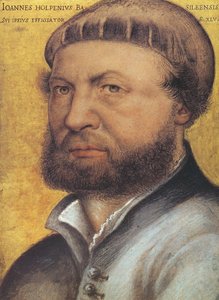
Ганс Гольбейн Младший
1497 - 1543 , Германия
Основные сведения
- Artistic Movement Or Style: Северное Возрождение
- Artists Or Movements Influenced By This Artist: ['Более поздние портретисты']
- Artists Who Influenced This Artist: ['Альбрехт Дюрер']
- Date Of Birth: c. 1497
- Date Of Death: October or November 1543
- Full Name: Hans Holbein der Jüngere
- Nationality: Германия и Швейцария
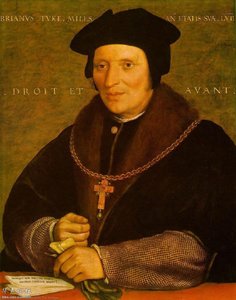
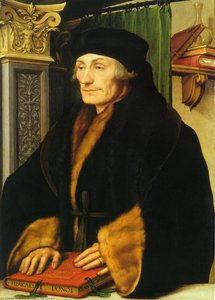
- Notable Artworks: ['«Портрет Эразма Роттердамского», «Сэр Брайан Тюк», «Великое произведение искусства эпохи Тюдоров! Портрет Томаса Ховарда, 3-го герцога Норфолка от Ханса Гольбеинца']
- Place Of Birth: Augsburg, Германия
Похожие статьи
The Northern Renaissance: A Flourishing of Realism, Religious Reform & Artistic Innovation
Explore the Northern Renaissance! Discover Jan van Eyck's innovations, religious shifts, & key artists of this influential period. Expert analysis and insights into Early Netherlandish painting at ArtsDot.
Hans Holbein the Younger: A Renaissance Portraitist's Mastery of Realism & Psychological Insight
Explore the life & art of Hans Holbein the Younger, a Renaissance master renowned for his strikingly realistic portraits and psychological insight. Discover iconic works like 'The Ambassadors' and delve into his lasting legacy.
Топ-10 шедевров Северного Возрождения: искусство для вашего дома от ArtsDot.com
Погрузитесь в мир Северного Возрождения! Откройте 10 шедевров Ван Эйка, Дюрера и других великих художников. Узнайте историю создания культовых картин и вдохновитесь для декора вашего дома с ArtsDot.com. Explore the full collection online!
Sacred Narratives on Canvas: Exploring Religious Scenes & Their Enduring Influence
Explore the rich history of religious art from Giotto to the Renaissance masters with ArtsDot. Discover symbolism, techniques & enduring legacies. Museum-quality reproductions available.
Sacred Narratives Embodied: A Comprehensive Exploration of Religious Iconography in Art History
Explore the rich history of religious iconography in art! Discover symbolism, movements & masterpieces from Byzantine to Renaissance periods. Expert insights for collectors and enthusiasts at ArtsDot.