 Предпросмотр
 Поделиться
 Поделиться
 Детали произведения

 Скачать
 Похожие работы
 Рентгенография
 Слайд-шоу
 Статистика
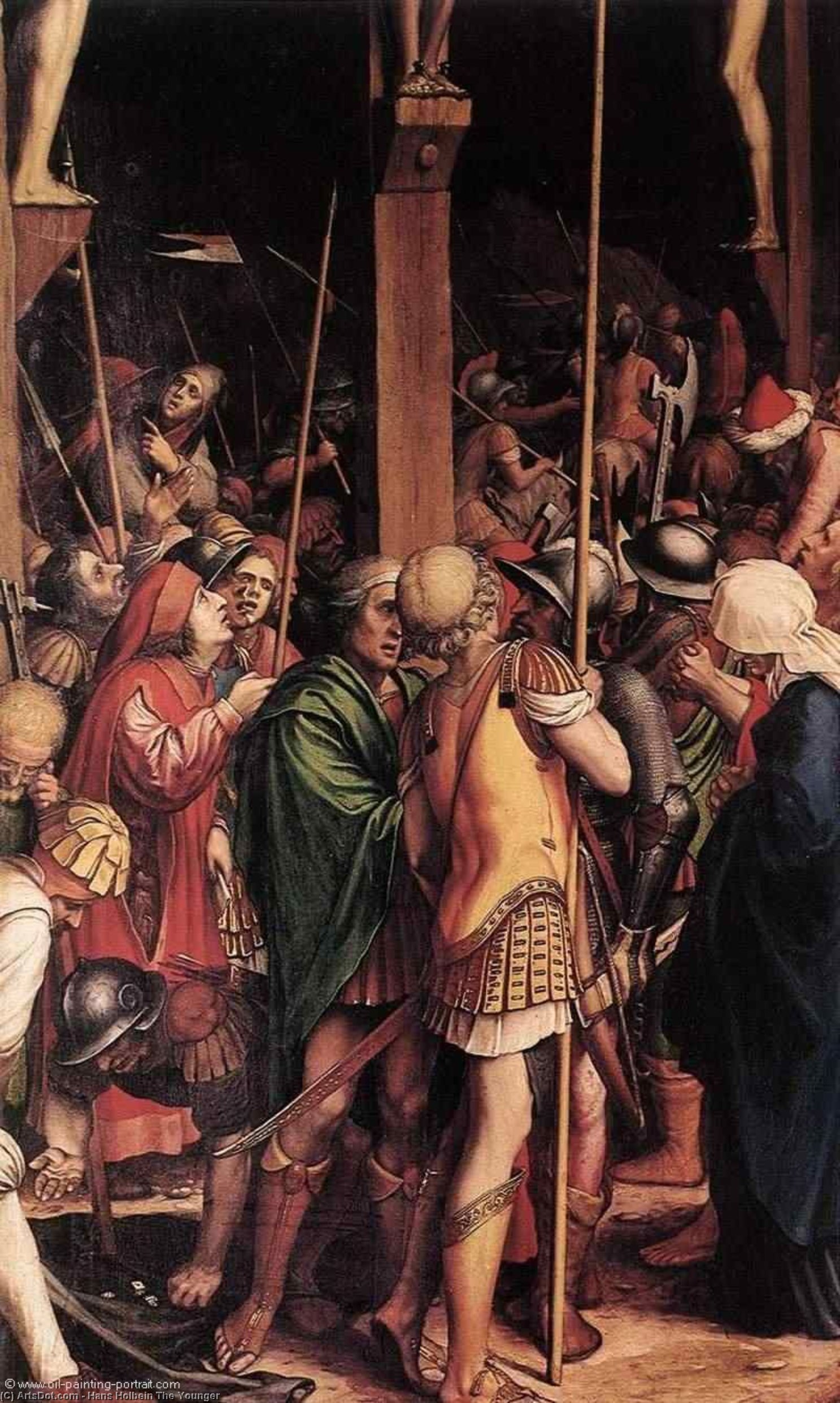
passion (detail - )


 Читать далее
Масляная репродукция ручной работы
Картина маслом на холсте в выбранном вами размере и раме, написанная на заказ нашими художниками. ( Перейти к печати Перейти к цифровым изображениям)




P118B $10

P118H $10

P118W $10

P438Z $10

P508JH $12

P508YH $12

P805H $10

P805Z $10

P919BZ $10

P919G $10

P919XJ $10

P959ZH $10

P968JZ $12

W106C $8

W218G $10

W218JH $8

W218Y $10

W307PJ $10

W316G $10

W316PJ $8

W316Y $10

W398PJ $8

W4111J $10

W500HY $15

W500JH $15

W692G $12

W849H $8

W940BG $15

W953PJ $8




Выберите один из наших стандартных размеров, соответствующих оригинальным пропорциям произведения искусства.

Вы можете указать собственные размеры, чтобы картина идеально вписалась в выбранную раму или пространство. Если выбранный вами размер не соответствует пропорциям оригинала, мы либо обрежем полотно, либо расширим его за счет дополнительных элементов, написанных вручную. Цифровой макет будет отправлен вам на утверждение перед началом производства.
Обратите внимание, что предварительный просмотр на экране не отражает фактическую обрезку или расширение. Только макет точно покажет окончательную композицию.
Хотя доступны индивидуальные размеры, мы рекомендуем выбирать вариант из предопределенного списка, чтобы сохранить исходные пропорции.
После оформления заказа команда ArtsDot.com свяжется с клиентом по электронной почте для уточнения деталей и предоставит предварительный макет
Доставка по всему миру () за 3–4 недели вместо стандартных 5 недель. (10 Сентябрь). Без компромиссов в качестве.

Бесплатная экспресс-доставка по всему миру

Высококачественный льняной холст

Полное страхование доставки

Гарантия возмещения таможенных пошлин

Гарантия точного соответствия цветов

100-дневная политика возврата (только при обнаружении дефектов)

Гарантия возврата 100% средств

Предложение оптовых скидок
 Вариант со стеклом доступен только для размеров менее 110 см

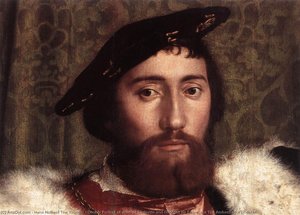
passion (detail - )
Техника репродукции
Размер репродукции
-


Итоговая стоимость
$ 263
A Scene of Devotion and Anguish: Exploring Holbein’s *Passion* (Detail)
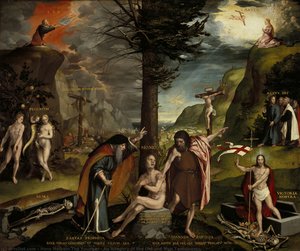
This compelling detail from Hans Holbein the Younger's monumental altarpiece, *The Passion*, offers a powerful glimpse into one of the most significant events in Christian history – the crucifixion of Christ. Created around 1525, this work exemplifies the Northern Renaissance’s meticulous realism and profound emotional depth. While only a fragment presented here, it encapsulates the drama and complexity inherent within the larger composition.Style & Technique: Northern Renaissance Mastery
Holbein, celebrated as one of the greatest portraitists of his era, demonstrates an equally impressive skill in narrative painting with *The Passion*. The detail showcases his signature style – a remarkable commitment to realism. Notice the precise rendering of textures; from the rough weave of fabrics to the gleaming surfaces of armor. This is achieved through masterful oil painting techniques, employing layering and glazing to create depth and luminosity. The composition, even in this fragment, feels densely populated, typical of Northern Renaissance art, with figures tightly grouped within a relatively shallow pictorial space. Lines are predominantly straight and angular, defining forms with clarity and contributing to the overall sense of formality and gravity.Subject & Historical Context
*The Passion* was commissioned during a period of religious upheaval – the early stages of the Reformation. Holbein navigated this turbulent era by serving both traditional Catholic patrons and those embracing reformist ideals. This detail depicts Roman soldiers observing the crucifixion, their expressions ranging from detached curiosity to subtle disbelief. The scene is not idealized; it’s presented with unflinching honesty, reflecting a shift towards more humanistic interpretations of religious narratives. Holbein's work stands apart from the Italian Renaissance emphasis on ideal beauty, instead focusing on detailed observation and psychological insight.Symbolism & Emotional Impact
The symbolism within *The Passion* is rich and layered. The cross itself represents sacrifice and redemption, while the soldiers embody earthly power confronted with a spiritual event. The color palette – dominated by browns, ochres, and reds – evokes the materiality of the scene: earth, blood, and metal. These colors contribute to the somber mood and underscore the gravity of Christ’s suffering. The overall effect is one of solemnity and tragedy. Holbein doesn't shy away from depicting the harsh realities of crucifixion; instead, he invites viewers to contemplate the weight of religious significance and the profound emotional impact of this pivotal moment. The detail powerfully conveys a sense of immediacy, drawing the viewer into the heart of the scene.For Collectors & Designers
A reproduction of this detail from *The Passion* would serve as a striking focal point in any collection or interior design scheme. Its rich textures and dramatic composition lend themselves well to both traditional and contemporary settings. The artwork’s historical significance and artistic merit make it a conversation starter, while its somber beauty adds depth and contemplation to any space. Consider pairing this detail with complementary colors – deep reds, muted golds, and earthy browns – to enhance its visual impact.Похожие произведения
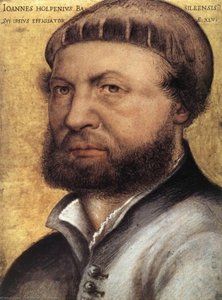
Биография художника
A Life Etched in Detail: The World of Hans Holbein the Younger
Born around 1497 in Augsburg, Germany, Hans Holbein the Younger emerged as a defining figure of the Northern Renaissance—a master portraitist whose work continues to resonate with breathtaking realism and psychological depth. His upbringing within an artistically gifted family laid the foundation for his exceptional talent; his father, Hans Holbein the Elder, was a respected painter and printmaker who instilled in young Hans a meticulous approach to observation and technique. This early training wasn’t merely about mastering brushstrokes or mixing pigments—it was about learning to *see*, to capture not just likeness but the very essence of a subject. Holbein's initial artistic explorations occurred within his father’s workshop, where he honed his skills before embarking on a journey that would lead him through Switzerland and ultimately to the heart of the English court.From Basel to the Tudor Court: A Rising Star
After completing his apprenticeship, Holbein traveled extensively throughout Switzerland, establishing himself as an independent artist with a growing reputation. He spent several formative years in Basel, creating not only striking portraits but also religious works and intricate woodcut designs—most notably the haunting series depicting the *Dance of Death*. These early pieces reveal a burgeoning mastery of composition and a developing fascination with capturing the complexities of human emotion. His father’s influence was paramount; Holbein absorbed the meticulous techniques of his elder brother, Matthias Holbein, who practiced in Basel, mastering the art of etching and printmaking alongside painting. This dual skillset would prove invaluable throughout his career, allowing him to produce both monumental paintings and exquisitely detailed prints—a hallmark of his distinctive style. It was in 1526 that fate intervened, drawing Holbein towards England, an event that would irrevocably alter his artistic trajectory. He arrived bearing a letter of introduction from Erasmus, the renowned humanist scholar, which opened doors to the influential circles of English society. His talent quickly captivated prominent figures like Sir Thomas More, who became both a patron and a subject for several compelling portraits. This connection proved pivotal, leading Holbein’s ascent to prominence within the Tudor court—a position he held, with some interruptions, until his untimely death in 1543.The Art of Perception: Style and Masterpieces
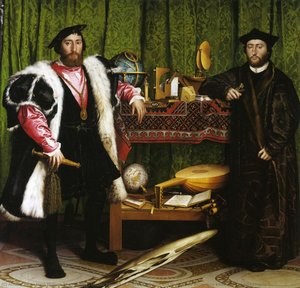
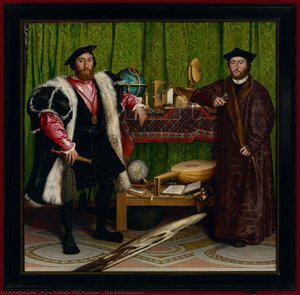
Holbein's artistic style is characterized by an extraordinary commitment to realism, achieved through painstaking attention to detail in rendering textures, fabrics, and the subtle nuances of facial features. He didn’t simply *paint* portraits; he meticulously constructed them, layer upon layer, capturing not just physical appearances but also the personality and inner life of his sitters. His innovative compositions further enhanced the impact of his work, often employing symbolic objects or backgrounds to convey deeper meaning. The Ambassadors (1533) stands as a testament to this approach—a complex and symbolically rich double portrait showcasing both Holbein’s technical brilliance and intellectual depth. The anamorphic skull subtly embedded within the painting serves as a stark *memento mori*, reminding viewers of the inevitability of death. This masterful use of perspective and shading exemplifies Holbein's dedication to capturing the illusion of three dimensions—a technique that would become synonymous with Renaissance portraiture. He skillfully blended the precision of German artistic traditions with the compositional principles of the Italian Renaissance, demonstrating a remarkable breadth of knowledge and artistic influence.Notable Achievements: A Legacy of Detail
Holbein’s prolific output spanned across various mediums, cementing his reputation as one of the most versatile artists of his time. Beyond portraiture, he produced monumental frescoes for churches in Basel and Strasbourg—demonstrating his ability to execute ambitious projects with unwavering dedication. His religious works are imbued with profound spiritual contemplation, reflecting the humanist ideals prevalent during the Reformation. Furthermore, Holbein’s etchings achieved unparalleled renown, establishing him as a pioneer of printmaking and influencing countless artists who followed. The *Dance of Death* series—a macabre depiction of mortality—became an enduring symbol of the era, showcasing Holbein's mastery of etching technique and his ability to convey complex emotions through visual imagery. His meticulous attention to detail—evident in every brushstroke and engraving—transformed artistic representation forever. He didn’t merely record appearances—he captured moments in time, preserving them for posterity.Historical Significance: Shaping the Tudor Image
Hans Holbein the Younger's portraits played a crucial role in shaping the image of Henry VIII and his court during the tumultuous Reformation period. His depictions of the king conveyed both regal authority and human vulnerability—a nuanced portrayal that reflected the complexities of Tudor politics and religion. Holbein’s work served as invaluable documentation of the era, capturing not only visual likenesses but also conveying the social and cultural context of Elizabethan England. He remains one of the most admired and studied painters of the Renaissance—a master whose artistry continues to inspire and enthrall audiences worldwide.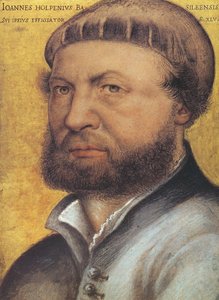
Ганс Гольбейн Младший
1497 - 1543 , Германия
Основные сведения
- Artistic Movement Or Style: Северное Возрождение
- Artists Or Movements Influenced By This Artist: ['Более поздние портретисты']
- Artists Who Influenced This Artist: ['Альбрехт Дюрер']
- Date Of Birth: c. 1497
- Date Of Death: October or November 1543
- Full Name: Hans Holbein der Jüngere
- Nationality: Германия и Швейцария
- Notable Artworks: ['«Портрет Эразма Роттердамского», «Сэр Брайан Тюк», «Великое произведение искусства эпохи Тюдоров! Портрет Томаса Ховарда, 3-го герцога Норфолка от Ханса Гольбеинца']
- Place Of Birth: Augsburg, Германия
Похожие статьи
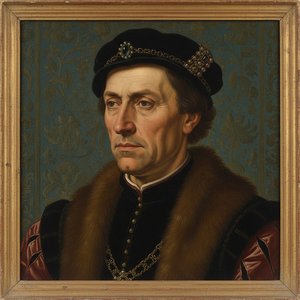
Hans Holbein the Younger: A Renaissance Portraitist's Mastery of Realism & Psychological Insight
Explore the life & art of Hans Holbein the Younger, a Renaissance master renowned for his strikingly realistic portraits and psychological insight. Discover iconic works like 'The Ambassadors' and delve into his lasting legacy.

The Enduring Power of Painting: A Historical & Contemporary Exploration of Form and Emotion
Explore the rich history & enduring techniques of oil painting with ArtsDot. Discover masterpieces, learn about art collecting, and find authentic handmade reproductions crafted by skilled artists.

Oil on Canvas: A Historical & Technical Exploration of a Timeless Artistic Medium
Explore the rich history & enduring techniques of oil painting on canvas. Discover the science behind its longevity, conservation practices, and contemporary relevance. Expert insights for art enthusiasts.

The Enduring Legacy of Oil on Canvas: Technique, History & Aesthetic Impact
Explore the rich history & techniques of oil painting – from Renaissance masters to Impressionism. Discover pigments, layering methods, and why this timeless medium endures. Expert insights for artists & art enthusiasts.

Масляная живопись: История, техника и непреходящее наследие
Узнайте все о масляной живописи: история техники, секреты мастеров и современные тенденции. Погрузитесь в мир искусства с экспертами !