

 Предпросмотр
 Поделиться
 Поделиться
 Детали произведения

 Скачать
 Похожие работы
 Рентгенография
 Слайд-шоу
 Статистика
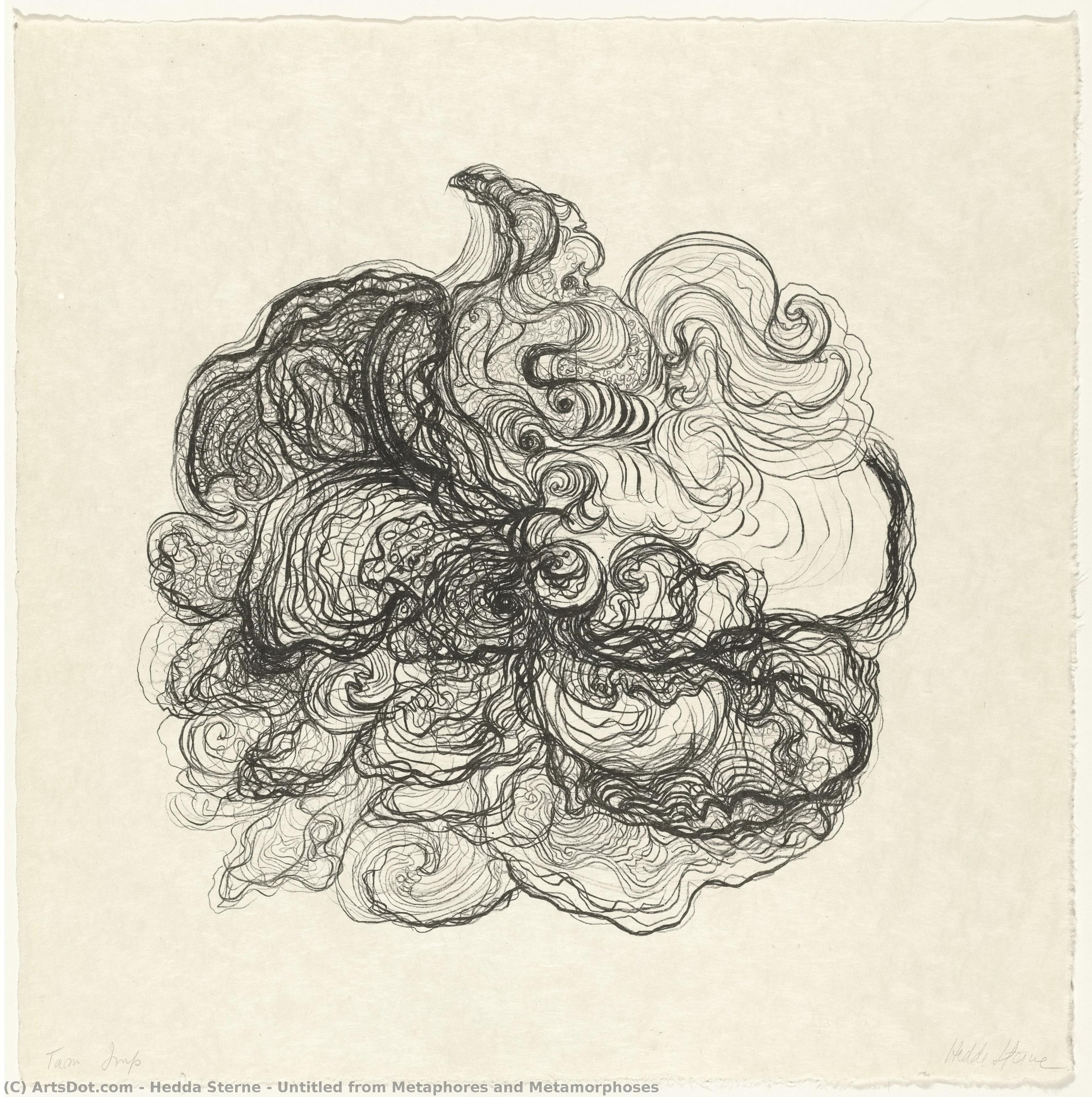
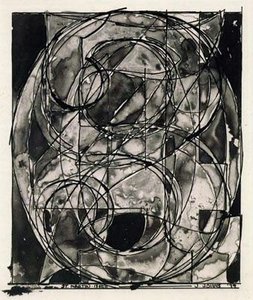
Untitled from Metaphores and Metamorphoses


 Читать далее
Жикле / Арт-принт
Печать (жикле) или холст музейного качества с быстрыми сроками изготовления и широким выбором вариантов отделки. ( Купить картину ручной работы Перейти к цифровым изображениям)




P118B $10

P118H $10

P118W $10

P438Z $10

P508JH $12

P508YH $12

P805H $10

P805Z $10

P919BZ $10

P919G $10

P919XJ $10

P959ZH $10

P968JZ $12

W106C $8

W218G $10

W218JH $8

W218Y $10

W307PJ $10

W316G $10

W316PJ $8

W316Y $10

W398PJ $8

W4111J $10

W500HY $15

W500JH $15

W692G $12

W849H $8

W940BG $15

W953PJ $8




Выберите один из наших стандартных размеров, соответствующих оригинальным пропорциям произведения искусства.

Вы можете указать свои собственные размеры, чтобы репродукция идеально подошла под конкретную раму или пространство. Если выбранный вами размер не будет соответствовать пропорциям оригинала, мы либо обрежем произведение, либо дополним изображение зеркальным отражением краев или однотонной заливкой. Перед началом производства вам будет отправлен цифровой макет для утверждения.
Пожалуйста, обратите внимание, что предварительный просмотр на экране не отображает фактическую обрезку или расширение изображения. Только макет точно покажет финальную композицию.
Несмотря на возможность заказа индивидуальных размеров, мы рекомендуем выбирать размер из предопределенного списка, чтобы сохранить оригинальные пропорции.
Доставка по всему миру () за 2 недели вместо стандартных 4/5 недель. (11 Сентябрь)

Бесплатная экспресс-доставка по всему миру

Высококачественный льняной холст

Полное страхование доставки

Гарантия возмещения таможенных пошлин

Гарантия точного соответствия цветов

100-дневная политика возврата (только при обнаружении дефектов)

Гарантия возврата 100% средств

Предложение оптовых скидок
 Вариант со стеклом доступен только для размеров менее 110 см

Untitled from Metaphores and Metamorphoses
Жикле / Арт-принт
Размер репродукции
-


Итоговая стоимость
$ 62
Exploring the Turbulent Beauty of “Untitled” by Hedda Sterne
“Untitled,” created in 1967 by Hedda Sterne, stands as a striking emblem of abstract expressionism and embodies the artist’s profound engagement with both visual language and philosophical inquiry. This deceptively simple drawing—a circular expanse dominated by dense black ink lines against a creamy beige background—holds within it layers of meaning that resonate far beyond its surface appearance. It's not merely an image; it’s a meditation on growth, chaos, and interconnectedness, rendered with meticulous technique and imbued with symbolic resonance.A Synthesis of Influences: Sterne’s Artistic Evolution
Sterne’s artistic journey began in Bucharest, Romania, where she absorbed the intellectual currents of her time—particularly German phenomenology—influencing her conceptual approach to artmaking. Initially drawn to music alongside her brother, she skillfully redirected her ambitions toward painting, recognizing its capacity for conveying complex ideas and emotions. Her formative years instilled a sensitivity to nuance and an appreciation for exploring the boundaries between representation and abstraction, qualities that would become hallmarks of her distinctive style. The drawing itself reflects this intellectual grounding; it’s less about depicting something tangible than interrogating fundamental concepts of form and movement.The Language of Line: Technique and Texture
The artwork's power derives largely from Sterne’s masterful use of ink—specifically a fine-tipped pen—to achieve remarkable textural effects. Layers of interwoven lines, varying subtly in thickness, create an illusion of depth and dynamism. Crosshatching techniques build up density in certain areas, mimicking the appearance of tangled roots or dense foliage, while spaces between the lines introduce lighter tones that contribute to the overall composition’s ethereal quality. This deliberate manipulation of line isn't accidental; it’s a conscious decision to communicate not just visual information but also emotional resonance—a palpable sense of turbulent energy contained within a carefully crafted frame.Symbolism Within Simplicity: Organic Growth and Contained Chaos
The circular form serves as an intriguing container for the chaotic network of lines, suggesting themes of cyclical renewal and the inherent instability of existence. The absence of recognizable shapes amplifies this symbolic dimension, inviting viewers to engage in active interpretation. Like many abstract expressionist works, “Untitled” resists easy categorization, prompting contemplation about concepts such as growth, decay, and interconnectedness—themes that align with Sterne’s broader philosophical interests. The drawing's stark contrast between black ink and cream paper underscores its visual austerity, emphasizing the primacy of line and inviting viewers to consider the profound implications of formlessness.A Legacy of Quiet Intensity
Hedda Sterne’s contribution to modern art is characterized by a quiet intensity—a dedication to exploring fundamental questions about perception and experience through uncompromising artistic vision. “Untitled,” with its deceptively understated elegance, exemplifies this ethos perfectly. It stands as a testament to Sterne's ability to distill complex ideas into a single, evocative image, securing her place among the most influential figures of abstract expressionism and inspiring generations of artists to embrace experimentation and emotional honesty. Its enduring appeal lies in its capacity to provoke contemplation and resonate with viewers on a deeply personal level—a timeless exploration of beauty born from chaos.Похожие произведения
Биография художника
A Life Bridging Worlds: The Artistic Journey of Hedda Sterne
Hedda Sterne, born Hedwig Lindenberg in Bucharest, Romania, in 1910, was an artist whose life and work embodied a fascinating intersection of cultures, movements, and personal philosophies. Her journey from the vibrant avant-garde scene of pre-war Europe to the heart of the New York School is a testament to her resilience, intellectual curiosity, and unwavering dedication to artistic exploration. Growing up in a household that valued both music and languages – her brother became a renowned conductor – Sterne received a broad education that fostered an appreciation for nuance and expression. This early exposure, coupled with a burgeoning interest in art history and German philosophical texts, laid the groundwork for a deeply thoughtful and conceptually driven practice. Initially encouraged towards a musical path, she skillfully navigated familial expectations to pursue her true calling: painting. Her formal training began in 1918 under the tutelage of Frederic Storck, a sculptor who had taught her instructor Max Hermann Maxy, setting her on a course that would see her engage with some of the most pivotal artistic currents of the twentieth century.From Bucharest to New York: A Surrealist Foundation
The intellectual and artistic ferment of Bucharest in the 1920s proved crucial in Sterne’s formative years. She became immersed in a thriving avant-garde community, working alongside Dada co-founder Marcel Janco and forging close friendships with artists like Victor Brauner. This period instilled in her an early affinity for Surrealism, which she described as something she “grew up with.” Frequent travels to Vienna, where she studied ceramics, and Paris, where she briefly attended ateliers of Fernand Léger and André Lhote, broadened her artistic horizons and exposed her to the latest developments in European Modernism. These experiences were not merely technical exercises; they were opportunities to absorb different approaches to form, color, and composition, all while deepening her understanding of Surrealist principles like automatism – a technique she would later employ in creating unique collages. The looming shadow of war forced a difficult decision in 1939 when Sterne returned to Bucharest from France for what would be the last time before the outbreak of World War II. The subsequent years were marked by increasing political unrest and, tragically, witnessing the horrors of the Bucharest pogrom in January 1941. After months of struggle securing visas, she finally embarked on a perilous journey to New York aboard the S.S. Excambion in October 1941, leaving behind a life irrevocably altered by conflict.The New York School and Beyond: Finding Her Voice
Arriving in New York, Sterne reunited with her estranged husband, Fritz Stern (later Frederick Stafford), though they would soon adopt the surname “Stafford.” However, she quickly established herself as "Hedda Sterne," subtly reclaiming a connection to her European past while forging a new identity within the burgeoning American art scene. Her proximity to Peggy Guggenheim’s gallery on Beekman Place proved pivotal, reintroducing her to many of the Surrealist artists she had known in Paris – André Breton, Marcel Duchamp, and Max Ernst among them. She also formed a close friendship with Antoine de Saint-Exupéry, even offering crucial advice that influenced his iconic illustrations for *The Little Prince*. Sterne’s work during this period reflected her unique position as an outsider looking in, grappling with the complexities of American culture while retaining a distinctly European sensibility. She became associated with the Abstract Expressionist movement and famously appeared in the 1951 *Life* magazine photograph of “The Irascibles,” though she was the only woman included in the group—a subtle but significant acknowledgment of her presence within this influential circle. However, Sterne resisted easy categorization, consistently pushing boundaries and refusing to be confined by stylistic labels.A Visual Diary: Themes and Techniques
Hedda Sterne’s art is often described as a visual diary, reflecting not only external observations but also internal states of mind and philosophical inquiries. Her paintings, collages, and drawings explore themes of displacement, memory, and the search for meaning in a rapidly changing world. She was particularly fascinated by the interplay between order and chaos, often employing layered textures, fragmented forms, and ambiguous spaces to create works that are both visually compelling and intellectually stimulating. The influence of Surrealism is evident in her early collages, which utilize chance encounters and unexpected juxtapositions to evoke a sense of dreamlike disorientation. Later, she experimented with industrial materials like aerosol spray paint, embracing the immediacy and fluidity of this medium to capture the energy and dynamism of urban life. Her paintings frequently feature abstracted landscapes, architectural motifs, and enigmatic figures, inviting viewers to engage in their own interpretive journeys. Third Avenue El, for example, powerfully conveys the chaotic rhythm of New York City, while her *Tondo* series demonstrates a continued exploration of form and space through circular compositions. Throughout her long career, Sterne remained committed to pushing the boundaries of artistic expression, creating a body of work that is both deeply personal and universally resonant.Legacy and Historical Significance
Hedda Sterne’s contribution to twentieth-century art extends beyond her individual paintings and collages. She served as a vital bridge between European Modernism and the American avant-garde, bringing with her a unique perspective shaped by a life lived across continents and cultures. Her unwavering commitment to artistic independence and her refusal to conform to prevailing trends paved the way for future generations of artists who challenged conventional norms. While she achieved recognition during her lifetime, including exhibitions at prominent galleries and museums, Sterne’s work has gained increasing attention in recent years as scholars and curators reassess the contributions of women artists within the Abstract Expressionist movement. The establishment of the Hedda Sterne Foundation ensures that her legacy will continue to inspire and challenge audiences for years to come, solidifying her place as a significant figure in the history of modern art—an artist who fearlessly navigated a world in flux, transforming personal experience into enduring visual poetry.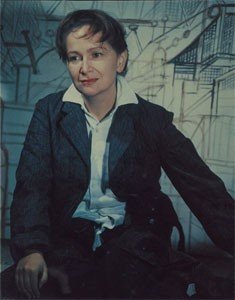
Хедда Стерн
1910 - 2011 , Румыния
Основные сведения
- Artistic Movement Or Style: Абстрактный экспрессионизм и сюрреализм
- Artists Or Movements Influenced By This Artist: ['Новая школа Нью-Йорка']
- Artists Who Influenced This Artist:
- Марсель Жанко
- Виктор Браунер
- Фернан Леже
- Э André Бретон
- Date Of Birth: August 4, 1910
- Date Of Death: 2011
- Full Name: Hedda Sterne
- Nationality: Румынско-американская
- Notable Artworks:
- Тондо
- Третья Авеню ЭЛ
- Place Of Birth: Бухарест, Румыния
Похожие статьи

Геометрическая абстракция: 10 шедевров, изменивших искусство | ArtsDot.com
Погрузитесь в мир геометрической абстракции! От Кандинского до Малевича – 10 шедевров, изменивших искусство. Узнайте историю создания и значение культовых картин. Репродукции музейного качества на ArtsDot.com. Вдохновение для вашего интерьера!
Топ-10 шедевров абстрактного экспрессионизма: искусство для вашего интерьера от ArtsDot.com
Погрузитесь в мир абстрактного экспрессионизма! Откройте для себя 10 шедевров Поллока, Ротко и других гениев. История искусства, техники живописи и вдохновение для вашего интерьера от ArtsDot.com. Explore the full collection online!

Топ-25 шедевров Василия Кандинского: Абстрактное искусство для вашего интерьера
Погрузитесь в мир абстрактного искусства с Василием Кандинским! 25 шедевров экспрессионизма, баухауса и русского авангарда. Репродукции картин Кандинского для вдохновения и декора вашего интерьера. Откройте всю коллекцию на ArtsDot.com
Beyond Representation: Exploring the Emotional Landscape of Abstract Expressionism
Explore the profound emotional world of Abstract Expressionism with ArtsDot. Discover key artists like Pollock & Rothko, learn about collecting, and find museum-quality reproductions to inspire your space.

Топ-10 знаменитых картин в черных тонах: шедевры искусства для вашего интерьера
Погрузитесь в мир темных шедевров! Топ-10 знаменитых картин в черных тонах от Гойи, Рембрандта и Мунка. История искусства, техники живописи и вдохновение для вашего интерьера. Купите репродукции высокого качества на ArtsDot.com