 Предпросмотр
 Поделиться
 Поделиться
 Детали произведения

 Скачать
 Похожие работы
 Рентгенография
 Слайд-шоу
 Статистика
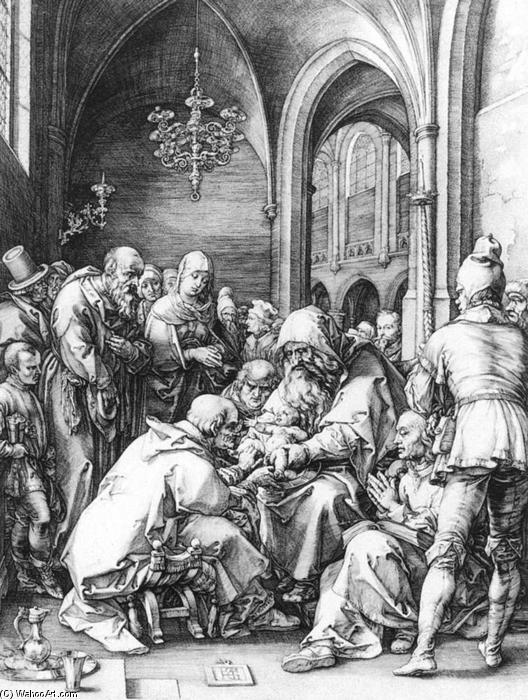
Circumcision in the Church of St Bavo at Haarlem
 Engraving
- WallArt
- Northern Mannerism
 1594
1594 470.0 x 355.0 cm
 Британский музей
 Читать далее
Масляная репродукция ручной работы
Картина маслом на холсте в выбранном вами размере и раме, написанная на заказ нашими художниками. ( Перейти к печати Перейти к цифровым изображениям)




P118B $10

P118H $10

P118W $10

P438Z $10

P508JH $12

P508YH $12

P805H $10

P805Z $10

P919BZ $10

P919G $10

P919XJ $10

P959ZH $10

P968JZ $12

W106C $8

W218G $10

W218JH $8

W218Y $10

W307PJ $10

W316G $10

W316PJ $8

W316Y $10

W398PJ $8

W4111J $10

W500HY $15

W500JH $15

W692G $12

W849H $8

W940BG $15

W953PJ $8




Выберите один из наших стандартных размеров, соответствующих оригинальным пропорциям произведения искусства.

Вы можете указать собственные размеры, чтобы картина идеально вписалась в выбранную раму или пространство. Если выбранный вами размер не соответствует пропорциям оригинала, мы либо обрежем полотно, либо расширим его за счет дополнительных элементов, написанных вручную. Цифровой макет будет отправлен вам на утверждение перед началом производства.
Обратите внимание, что предварительный просмотр на экране не отражает фактическую обрезку или расширение. Только макет точно покажет окончательную композицию.
Хотя доступны индивидуальные размеры, мы рекомендуем выбирать вариант из предопределенного списка, чтобы сохранить исходные пропорции.
После оформления заказа команда ArtsDot.com свяжется с клиентом по электронной почте для уточнения деталей и предоставит предварительный макет
Доставка по всему миру () за 3–4 недели вместо стандартных 5 недель. (13 Сентябрь). Без компромиссов в качестве.

Бесплатная экспресс-доставка по всему миру

Высококачественный льняной холст

Полное страхование доставки

Гарантия возмещения таможенных пошлин

Гарантия точного соответствия цветов

100-дневная политика возврата (только при обнаружении дефектов)

Гарантия возврата 100% средств

Предложение оптовых скидок
 Вариант со стеклом доступен только для размеров менее 110 см

Circumcision in the Church of St Bavo at Haarlem
Техника репродукции
Размер репродукции
-


Итоговая стоимость
$ 688
Circumcision in St Bavo at Haarlem: A Renaissance Masterpiece Revisited
This engraving by Hendrick Goltzius, created in 1594, offers a captivating glimpse into the artistic fervor of the Northern Mannerist period. More than just a depiction of biblical narrative—the circumcision ceremony—it’s a testament to Goltzius's unparalleled skill as an engraver and his profound understanding of visual language. Examining this artwork reveals layers of meaning interwoven with meticulous craftsmanship, inviting contemplation on faith, artistry, and the enduring legacy of Renaissance ideals.- Composition & Setting: The scene unfolds within a grand Gothic church interior—specifically St Bavo’s Church in Haarlem—a space deliberately chosen to convey solemnity and spiritual significance. Goltzius skillfully employs linear perspective to create depth, guiding the viewer's eye through the architectural framework towards the central group of figures engaged in the ritual. The arrangement is densely populated, reflecting the artistic conventions of the time and emphasizing the importance of the event depicted.
- Technique & Style: Goltzius’s mastery lies in his innovative ‘swelling line’ technique—a hallmark of Mannerism—which distinguishes him from earlier Renaissance engravers like Dürer. This method involves applying pressure to the burin tool to create lines that subtly vary in thickness, generating shading and volume that imbues the image with remarkable realism. The engraving's surface texture mirrors the materiality of its subject matter, capturing the smoothness of skin and the solidity of stone with impressive accuracy.
- Symbolism & Narrative: At the heart of the composition is the circumcision ceremony itself—a pivotal moment in Jewish tradition symbolizing purification and covenant renewal. The figures surrounding the ritual are rendered with meticulous detail, conveying emotion and portraying roles within the religious hierarchy. Goltzius’s artistic choices resonate with broader humanist concerns about human dignity and spiritual contemplation.
- Historical Context: Produced during Philip II's reign in Spain, this engraving reflects the intellectual currents of the Renaissance—characterized by a renewed interest in classical art and philosophy alongside fervent devotion to Christianity. Goltzius’s ambition was to surpass his predecessors, notably Dürer, demonstrating that he could achieve artistic excellence while simultaneously adhering to established stylistic conventions.
- Emotional Impact: The engraving's monochrome palette—achieved through masterful hatching and cross-hatching—creates a mood of solemn reverence. Goltzius’s careful attention to detail captures not only the visual elements but also the psychological atmosphere of the scene, prompting viewers to consider themes of faith, ritual observance, and artistic virtuosity.
Похожие произведения
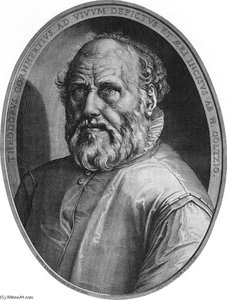
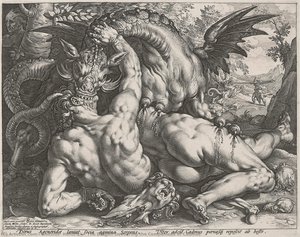
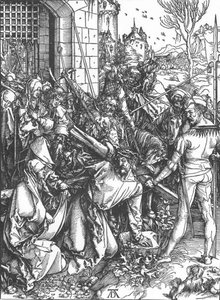
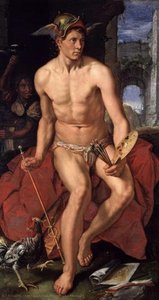
Биография художника
Early Life and Artistic Foundations
Hendrik Goltzius, a name synonymous with the vibrant dynamism of Northern Mannerism in Dutch art, was born in Braunschweig (Braunschweig), Germany, in 1558. His early years were steeped in artistic tradition; his family’s lineage included painters who had served as court artists in Venlo, and his father, Jan Goltz II, was a skilled glass painter in Duisburg. This environment fostered an appreciation for visual arts from a young age, laying the groundwork for his future endeavors. At the tender age of three, tragedy struck when a fire claimed his childhood home, leaving him with a permanently deformed right hand – a physical characteristic that would ironically become a defining feature of his distinctive engraving style. Recognizing this unique adaptation, Goltzius’s father secured his apprenticeship under Dirck Volckertszoon Coornhert, a renowned printmaker and master engraver in Haarlem, the burgeoning artistic center of the Dutch Republic. This formative period instilled within him not only technical proficiency but also an understanding of the intricate processes involved in creating detailed prints – a foundation upon which he would build his illustrious career.A Career Forged in Haarlem
Moving to Haarlem in 1577, Goltzius quickly established himself as a prominent figure in the city’s thriving printmaking scene. He secured employment with Philip Galle, a leading printer and publisher of the time, where he honed his skills and gained invaluable experience working on large-scale projects, including the celebrated series depicting the history of Lucretia. This association exposed him to diverse artistic styles and broadened his creative horizons. The marriage of Goltzius to Margaretha Jansdr. in 1579 proved pivotal, providing him with financial stability and allowing him to establish an independent printmaking business – a bold move for the time. He quickly gained recognition for his meticulous attention to detail, his innovative approach to line work, and his ability to capture both the grandeur and the subtle nuances of his subjects. His distinctive style, characterized by a sense of movement and dramatic intensity, began to distinguish him from his contemporaries.Technique and Innovation: The "Swelling Line"
Goltzius’s artistic legacy rests significantly on his revolutionary technique – what is now known as the “swelling line.” This innovative approach involved manipulating the burin (a sharp tool used in engraving) to create varying thicknesses of lines, effectively simulating tonal shading without resorting to hatching or cross-hatching. This technique, born from the limitations imposed by his deformed right hand—allowing for a more fluid and expressive swing of the burin—resulted in engravings that possessed an unprecedented depth and richness of tone. He was a pioneer of the “dot and lozenge” technique, meticulously placing dots within lozenge-shaped spaces created through cross-hatching to further refine tonal shading and create a sense of texture. His command of the burin was widely considered to rival that of Albrecht Dürer, one of the greatest printmakers of all time, and he frequently produced engravings of works by other masters like Bartholomaeus Spranger and Annibale Carracci, elevating their fame through his skilled reproductions.Influence and Legacy
Hendrik Goltzius’s influence extended far beyond the borders of the Netherlands. He was a sought-after engraver throughout Europe, producing prints for royalty and nobility across the continent. His work served as a bridge between the artistic traditions of Northern Europe and Italy, introducing Mannerist styles to a wider audience. His engravings are now housed in major museums worldwide, including the Metropolitan Museum of Art, the Rijksmuseum Amsterdam, and the British Museum, testament to their enduring value and significance. Goltzius’s legacy is not merely one of technical mastery; it's also a reflection of his artistic vision—a bold embrace of dynamism, dramatic intensity, and an innovative approach to printmaking that continues to inspire artists today. His work stands as a powerful reminder of the transformative potential of individual creativity and the enduring power of art to captivate and move us across centuries.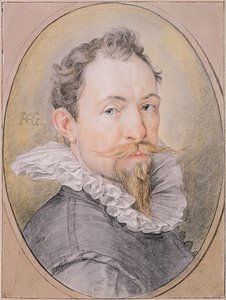
Гендрик Голтциус
1558 - 1617 , Германия
Основные сведения
- Artistic Movement Or Style: Северный маньеризм
- Artists Or Movements Influenced By This Artist: ['Бartholomeus Spranger']
- Artists Who Influenced This Artist: ['Дирк Волкертсзон Корнхерт']
- Date Of Birth: Янв/Фев 1558
- Date Of Death: 1617
- Full Name: Hendrik Goltzius
- Nationality: Нидерландский
- Notable Artworks:
- Встреча Юпитера и Геро
- Минерва
- Пророк Михаи
- Place Of Birth: Брауншвейг, Италия
Похожие статьи
Renaissance Mannerism: Style, Subtlety & the Transition from Harmony to Artifice
Explore the captivating world of Renaissance Mannerism! Discover its key characteristics, pioneering artists like Pontormo & Bronzino, and its pivotal role in art history. Expert insights & museum-quality reproductions at ArtsDot.
Hendrick Goltzius: Master Engraver & the Flourishing of Dutch Mannerism
Explore the life & art of Hendrick Goltzius, a master engraver of Dutch Mannerism. Discover his innovative techniques, iconic engravings like 'Jahel', and lasting influence on Baroque art. Learn about collecting Goltzius today.
Манеризм: 10 шедевров, изменивших искусство. Купить картины онлайн | ArtsDot
Погрузитесь в мир манеризма! 10 шедевров от Понтормо до Пармиджанино. Узнайте историю, технику и влияние этого уникального стиля живописи. Купите репродукции картин высокого качества на ArtsDot.com – вдохновение для вашего интерьера!
Топ-10 шедевров Северного Возрождения: искусство для вашего дома от ArtsDot.com
Погрузитесь в мир Северного Возрождения! Откройте 10 шедевров Ван Эйка, Дюрера и других великих художников. Узнайте историю создания культовых картин и вдохновитесь для декора вашего дома с ArtsDot.com. Explore the full collection online!
Mannerism: Bridging Renaissance Harmony & Baroque Drama – A Study of Style & Affectation
Explore the fascinating world of Mannerism! Discover its key characteristics, pioneering artists like Pontormo & Bronzino, and its pivotal role in bridging Renaissance harmony to Baroque drama. A comprehensive guide for art enthusiasts.