 Предпросмотр
 Поделиться
 Поделиться
 Детали произведения

 Скачать
 Похожие работы
 Рентгенография
 Слайд-шоу
 Статистика
Dirck Volkertsz Coornhert


 Читать далее
Жикле / Арт-принт
Печать (жикле) или холст музейного качества с быстрыми сроками изготовления и широким выбором вариантов отделки. ( Купить картину ручной работы Перейти к цифровым изображениям)




P118B $10

P118H $10

P118W $10

P438Z $10

P508JH $12

P508YH $12

P805H $10

P805Z $10

P919BZ $10

P919G $10

P919XJ $10

P959ZH $10

P968JZ $12

W106C $8

W218G $10

W218JH $8

W218Y $10

W307PJ $10

W316G $10

W316PJ $8

W316Y $10

W398PJ $8

W4111J $10

W500HY $15

W500JH $15

W692G $12

W849H $8

W940BG $15

W953PJ $8




Выберите один из наших стандартных размеров, соответствующих оригинальным пропорциям произведения искусства.

Вы можете указать свои собственные размеры, чтобы репродукция идеально подошла под конкретную раму или пространство. Если выбранный вами размер не будет соответствовать пропорциям оригинала, мы либо обрежем произведение, либо дополним изображение зеркальным отражением краев или однотонной заливкой. Перед началом производства вам будет отправлен цифровой макет для утверждения.
Пожалуйста, обратите внимание, что предварительный просмотр на экране не отображает фактическую обрезку или расширение изображения. Только макет точно покажет финальную композицию.
Несмотря на возможность заказа индивидуальных размеров, мы рекомендуем выбирать размер из предопределенного списка, чтобы сохранить оригинальные пропорции.
Доставка по всему миру () за 2 недели вместо стандартных 4/5 недель. (11 Сентябрь)

Бесплатная экспресс-доставка по всему миру

Высококачественный льняной холст

Полное страхование доставки

Гарантия возмещения таможенных пошлин

Гарантия точного соответствия цветов

100-дневная политика возврата (только при обнаружении дефектов)

Гарантия возврата 100% средств

Предложение оптовых скидок
 Вариант со стеклом доступен только для размеров менее 110 см

Dirck Volkertsz Coornhert
Жикле / Арт-принт
Размер репродукции
-


Итоговая стоимость
$ 62
A Vision of Renaissance Intellect
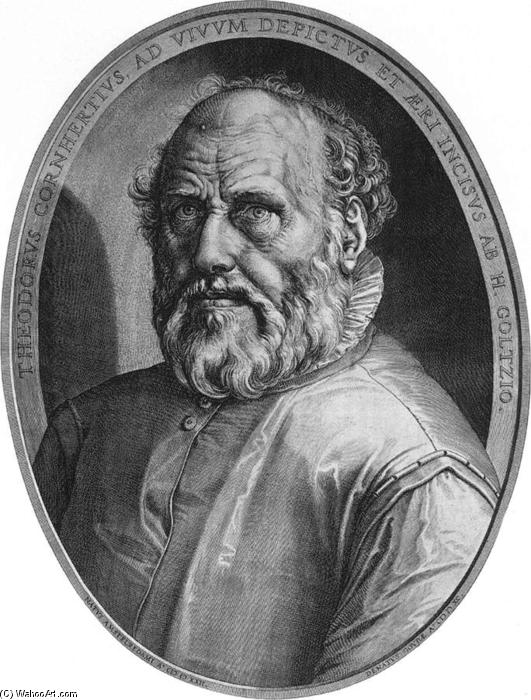
In the quiet, meticulous lines of Hendrick Goltzius’s 1590 engraving, Dirck Volkertsz Coornhert, we encounter more than a mere portrait; we witness the very soul of Northern Mannerism. This striking black and white work captures the essence of a man who was a pillar of Dutch Renaissance scholarship—a philosopher, theologian, and humanist whose influence shaped the intellectual landscape of his era. As the viewer gazes upon this bust-length composition, framed within a formal oval border, there is an immediate sense of encountering a presence that is both profoundly human and timelessly dignified. The subject’s gaze, directed slightly to the side, suggests a mind deeply immersed in contemplation, inviting the observer to share in a moment of silent, scholarly reflection.
The artistry of Goltzius shines through in the masterful execution of the swelling line technique, a hallmark of his unparalleled skill with the burin. Rather than relying on traditional linear perspective to create depth, Goltzius employs varying densities of closely packed lines to sculpt volume and texture out of the void. One can almost feel the tactile contrast between the wiry, textured strands of Coornhert’s beard and the smooth, heavy folds of his dark tunic. Through sophisticated cross-hatching, the artist builds shadows that possess a palpable weight, lending the portrait a three-dimensional vitality that breathes life into the paper. This technical prowess transforms a flat print into a window through which we glimpse the physical reality of a historical giant.
Symbolism and the Humanist Spirit
Beyond its technical brilliance, the engraving serves as a profound tribute to the humanist ideals of the late sixteenth century. The Latin inscriptions encircling the portrait—“AD VIVVM DICTVM ET FACTVM” (As if alive, a true likeness)—are not merely decorative; they are a bold declaration of the artist's intent to capture the eternal essence of the subject. This pursuit of "living" art reflects the Renaissance belief that through precise observation and technical mastery, an artist could immortalize the virtues and intellect of the human spirit. The interplay of light and shadow, emerging from an unseen source above, further enhances this sense of divine or intellectual illumination, casting a soft glow upon the features of a man celebrated for his wisdom.
For the discerning collector or interior designer, this piece offers a sophisticated anchor for any curated space. Its monochromatic palette and classical composition provide a versatile elegance that complements both traditional studies and contemporary, minimalist environments. The artwork does not merely decorate a wall; it commands attention through its historical gravity and the quiet intensity of its subject. To possess a reproduction of this caliber is to bring a piece of the Northern Renaissance into the modern home, fostering an atmosphere of erudition, stability, and refined aesthetic taste.
Похожие произведения
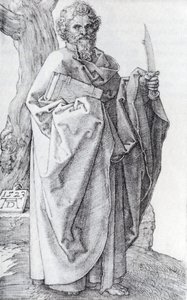
Биография художника
Early Life and Artistic Foundations
Hendrik Goltzius, a name synonymous with the vibrant dynamism of Northern Mannerism in Dutch art, was born in Braunschweig (Braunschweig), Germany, in 1558. His early years were steeped in artistic tradition; his family’s lineage included painters who had served as court artists in Venlo, and his father, Jan Goltz II, was a skilled glass painter in Duisburg. This environment fostered an appreciation for visual arts from a young age, laying the groundwork for his future endeavors. At the tender age of three, tragedy struck when a fire claimed his childhood home, leaving him with a permanently deformed right hand – a physical characteristic that would ironically become a defining feature of his distinctive engraving style. Recognizing this unique adaptation, Goltzius’s father secured his apprenticeship under Dirck Volckertszoon Coornhert, a renowned printmaker and master engraver in Haarlem, the burgeoning artistic center of the Dutch Republic. This formative period instilled within him not only technical proficiency but also an understanding of the intricate processes involved in creating detailed prints – a foundation upon which he would build his illustrious career.A Career Forged in Haarlem
Moving to Haarlem in 1577, Goltzius quickly established himself as a prominent figure in the city’s thriving printmaking scene. He secured employment with Philip Galle, a leading printer and publisher of the time, where he honed his skills and gained invaluable experience working on large-scale projects, including the celebrated series depicting the history of Lucretia. This association exposed him to diverse artistic styles and broadened his creative horizons. The marriage of Goltzius to Margaretha Jansdr. in 1579 proved pivotal, providing him with financial stability and allowing him to establish an independent printmaking business – a bold move for the time. He quickly gained recognition for his meticulous attention to detail, his innovative approach to line work, and his ability to capture both the grandeur and the subtle nuances of his subjects. His distinctive style, characterized by a sense of movement and dramatic intensity, began to distinguish him from his contemporaries.Technique and Innovation: The "Swelling Line"
Goltzius’s artistic legacy rests significantly on his revolutionary technique – what is now known as the “swelling line.” This innovative approach involved manipulating the burin (a sharp tool used in engraving) to create varying thicknesses of lines, effectively simulating tonal shading without resorting to hatching or cross-hatching. This technique, born from the limitations imposed by his deformed right hand—allowing for a more fluid and expressive swing of the burin—resulted in engravings that possessed an unprecedented depth and richness of tone. He was a pioneer of the “dot and lozenge” technique, meticulously placing dots within lozenge-shaped spaces created through cross-hatching to further refine tonal shading and create a sense of texture. His command of the burin was widely considered to rival that of Albrecht Dürer, one of the greatest printmakers of all time, and he frequently produced engravings of works by other masters like Bartholomaeus Spranger and Annibale Carracci, elevating their fame through his skilled reproductions.Influence and Legacy
Hendrik Goltzius’s influence extended far beyond the borders of the Netherlands. He was a sought-after engraver throughout Europe, producing prints for royalty and nobility across the continent. His work served as a bridge between the artistic traditions of Northern Europe and Italy, introducing Mannerist styles to a wider audience. His engravings are now housed in major museums worldwide, including the Metropolitan Museum of Art, the Rijksmuseum Amsterdam, and the British Museum, testament to their enduring value and significance. Goltzius’s legacy is not merely one of technical mastery; it's also a reflection of his artistic vision—a bold embrace of dynamism, dramatic intensity, and an innovative approach to printmaking that continues to inspire artists today. His work stands as a powerful reminder of the transformative potential of individual creativity and the enduring power of art to captivate and move us across centuries.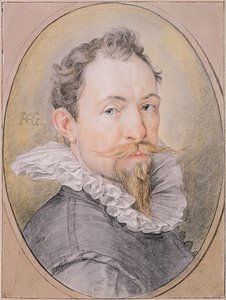
Гендрик Голтциус
1558 - 1617 , Германия
Основные сведения
- Artistic Movement Or Style: Северный маньеризм
- Artists Or Movements Influenced By This Artist: ['Бartholomeus Spranger']
- Artists Who Influenced This Artist: ['Дирк Волкертсзон Корнхерт']
- Date Of Birth: Янв/Фев 1558
- Date Of Death: 1617
- Full Name: Hendrik Goltzius
- Nationality: Нидерландский
- Notable Artworks:
- Встреча Юпитера и Геро
- Минерва
- Пророк Михаи
- Place Of Birth: Брауншвейг, Италия
Похожие статьи
10 шедевров гравюры, изменивших искусство навсегда | ArtsDot
Откройте для себя 10 легендарных шедевров гравюры от Дюрера, Гойи и Рембрандта! Узнайте историю создания этих культовых работ и их влияние на искусство. Репродукции высокого качества для вашего интерьера – ArtsDot.

Giclée Prints: Archival Quality & Aesthetic Nuances for the Discerning Collector
Explore the world of giclée prints with ArtsDot. Learn about archival quality, aesthetic nuances & investment potential. Expert guidance for discerning art collectors seeking museum-quality reproductions and lasting value.
Engraving: A Historical Survey of Technique, Artistic Expression & Enduring Legacy
Explore the rich history of engraving with ArtsDot. Discover techniques, iconic artists like Dürer & Callot, collecting tips, and expert guidance for preserving your art investment. Learn about intaglio printing & more!
Hendrick Goltzius: Master Engraver & the Flourishing of Dutch Mannerism
Explore the life & art of Hendrick Goltzius, a master engraver of Dutch Mannerism. Discover his innovative techniques, iconic engravings like 'Jahel', and lasting influence on Baroque art. Learn about collecting Goltzius today.
The Intricate World of Engraving: A Historical Survey of Technique, Artistic Expression & Enduring Legacy
Explore the rich history of engraving with ArtsDot. Discover techniques, iconic artists like Dürer & Callot, collecting tips, and expert guidance for preserving your art investment. Learn about intaglio printing & more!