

 Поделиться
 Поделиться
 Детали произведения

 Скачать
 Похожие работы
 Слайд-шоу
 Статистика
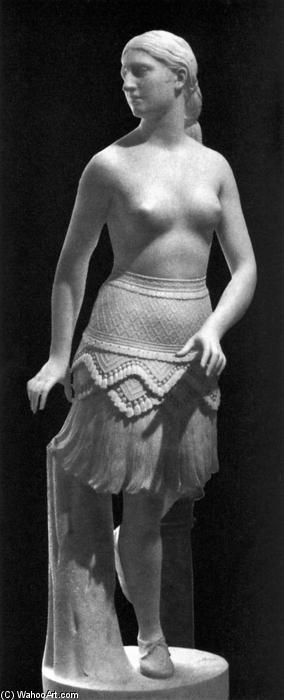
Last of the Tribe


 Читать далее
Жикле / Арт-принт
Печать (жикле) или холст музейного качества с быстрыми сроками изготовления и широким выбором вариантов отделки. ( Купить картину ручной работы Перейти к цифровым изображениям)




































Выберите один из наших стандартных размеров, соответствующих оригинальным пропорциям произведения искусства.

Вы можете указать свои собственные размеры, чтобы репродукция идеально подошла под конкретную раму или пространство. Если выбранный вами размер не будет соответствовать пропорциям оригинала, мы либо обрежем произведение, либо дополним изображение зеркальным отражением краев или однотонной заливкой. Перед началом производства вам будет отправлен цифровой макет для утверждения.
Пожалуйста, обратите внимание, что предварительный просмотр на экране не отображает фактическую обрезку или расширение изображения. Только макет точно покажет финальную композицию.
Несмотря на возможность заказа индивидуальных размеров, мы рекомендуем выбирать размер из предопределенного списка, чтобы сохранить оригинальные пропорции.
Доставка по всему миру () за 2 недели вместо стандартных 4/5 недель. (11 Сентябрь)

Бесплатная экспресс-доставка по всему миру

Высококачественный льняной холст

Полное страхование доставки

Гарантия возмещения таможенных пошлин

Гарантия точного соответствия цветов

100-дневная политика возврата (только при обнаружении дефектов)

Гарантия возврата 100% средств

Предложение оптовых скидок
 Вариант со стеклом доступен только для размеров менее 110 см

Last of the Tribe
Жикле / Арт-принт
Размер репродукции
-


Итоговая стоимость
$ 62
A Silent Sentinel: Hiram Powers’ “Last of the Tribe”
Hiram Powers' "Last of the Tribe," sculpted in marble between 1867 and 1877, isn’t merely a representation of an Indigenous woman; it’s a poignant embodiment of a nation grappling with its identity and legacy. This powerful work transcends simple portraiture, offering a complex meditation on displacement, loss, and the enduring spirit of a vanishing culture within the context of America's westward expansion. Powers, one of the first American sculptors to achieve international acclaim, masterfully blended classical ideals with a distinctly American subject matter, creating an artwork that continues to resonate deeply today.
The sculpture depicts a young Native American woman, her posture conveying both vulnerability and resolute strength. She stands poised on a slight incline, gazing backward over her shoulder as if contemplating a lost homeland. Her clothing—a meticulously detailed skirt adorned with diamond patterns and tassels—is an intriguing blend of realism and artistic license; while undoubtedly inspired by the garments of certain tribes, it’s clear that Powers imbued it with a romanticized aesthetic, reflecting the prevailing, often problematic, narratives surrounding Indigenous peoples at the time. The sculpture's placement within the broader context of 19th-century America—a period marked by rapid industrialization, westward expansion, and increasing tensions between settlers and Native American tribes—is crucial to understanding its emotional weight.
The Classical Foundation & Innovative Technique
Powers’ artistic journey began in Woodstock, Vermont, where he honed his skills under the tutelage of Frederick Eckstein, a Cincinnati clockmaker and sculptor. This early training instilled within him a deep appreciation for craftsmanship and observation—qualities that would become hallmarks of his work. He later moved to Florence, Italy, immersing himself in the traditions of classical sculpture while simultaneously developing his own distinctive style. “Last of the Tribe” exemplifies this synthesis; it’s rooted in the principles of Neoclassicism – a movement emphasizing idealized form, anatomical accuracy, and a return to the artistic values of ancient Greece and Rome – yet imbued with a distinctly American sensibility.
The sculpture's creation involved a sophisticated combination of techniques. Powers utilized a “pointing machine,” a revolutionary device developed by French sculptor Jean-Baptiste Carpeaux, which allowed him to accurately transfer sketches onto the marble block. This mechanized process ensured precision and facilitated the creation of intricate details, particularly in the figure’s flowing drapery and expressive face. Furthermore, Powers' mastery of carving techniques is evident in the subtle gradations of tone and texture that bring the sculpture to life—the smooth polish of the torso contrasts with the rougher surface of the skirt, creating a dynamic interplay of visual elements.
Symbolism & Historical Context
The title itself, “Last of the Tribe,” carries immense symbolic weight. It speaks directly to the devastating consequences of westward expansion and the systematic displacement of Native American populations. Powers’ statement—“the time is not distant when the last Indian will pass away”—reveals a profound awareness of the impending tragedy. The sculpture can be interpreted as both a lament for lost cultures and a critique of the policies that led to their demise. It's important to acknowledge that this interpretation must be considered within the context of 1867-1877, when Powers created the work; prevailing attitudes toward Native Americans were often shaped by romanticized notions of savagery and a belief in their inevitable extinction.
Interestingly, Powers drew inspiration from James Fenimore Cooper’s *Last of the Mohicans*, a popular novel that perpetuated similar narratives. By aligning his sculpture with this literary work, Powers tapped into a widespread cultural fascination with Indigenous peoples—a fascination often intertwined with both admiration and exploitation. The woman's gaze backward is particularly evocative, suggesting a longing for a past that can never be reclaimed and a poignant awareness of the irreversible changes sweeping across her land.
A Timeless Masterpiece & Reproduction Possibilities
"Last of the Tribe" remains a powerful and enduring work of art. Its combination of classical form, emotional depth, and historical significance ensures its continued relevance in contemporary discourse. The sculpture’s themes—loss, displacement, cultural identity—are as pertinent today as they were over a century ago. For those seeking to incorporate this artwork into their homes or collections, high-quality reproductions offer an accessible way to experience the beauty and emotional resonance of Powers' masterpiece. These reproductions faithfully capture the sculpture’s intricate details and evocative atmosphere, allowing viewers to connect with its profound message.
Похожие произведения
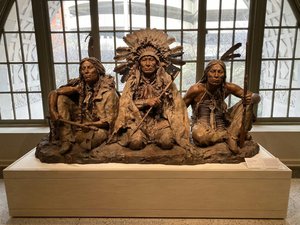
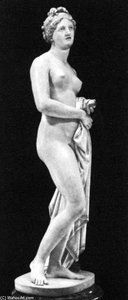
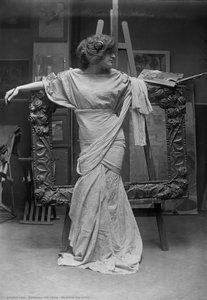
Биография художника
The Sculptor Who Brought Greece to America
Hiram Powers (1805 – 1873) stands as a pivotal figure in the history of American art, marking one of the earliest instances of an artist achieving international acclaim based on sculptural prowess. Born in Woodstock, Vermont, his journey from humble beginnings to celebrated sculptor embodies the spirit of self-reliance and artistic ambition that characterized the burgeoning nation. His legacy resides not merely in individual masterpieces but also in establishing a precedent for American artists to pursue excellence beyond domestic borders.
Powers’ formative years instilled within him a profound appreciation for craftsmanship and observation—skills honed during his brief stint as a clerk in Cincinnati's general store. However, it was his encounter with Frederick Eckstein, Cincinnati’s pioneering clockmaker and sculptor, that truly ignited his artistic passion. Eckstein recognized Powers’ talent and encouraged him to immerse himself in the study of modeling and casting techniques, propelling him toward mastery of stone carving and bronze fabrication. This dedication would prove instrumental in shaping his distinctive style—characterized by idealized figures imbued with classical elegance and informed by Roman sculptural traditions.
A Journey Through Classical Idealism
A significant turning point arrived when Powers secured a position as general assistant and artist at Joseph Dorfeuille’s Western Museum, fostering connections with influential naturalist Louis Agassiz. Here, he undertook ambitious projects inspired by Dante's Inferno, producing stunning marble representations of scenes from the epic poem that captivated audiences and cemented his reputation as a visionary sculptor. Notably, Fanny Trollope championed Powers’ career by commissioning him to sculpt Dante’s “Commedia,” securing him considerable recognition within literary circles.
The zenith of his career was undoubtedly reached with the creation of The Greek Slave (1843). This breathtaking marble sculpture, depicting a captive woman with an expression of quiet dignity and sorrow, became a sensation. It did more than just showcase his technical ability to render the softness of skin in cold stone; it tapped into the contemporary American zeitgeist regarding liberty and morality. Through this work, Powers achieved what few of his contemporaries could: a truly international reputation that bridged the gap between the rugged American identity and the refined aesthetics of European Neoclassicism.
Legacy and the Florentine Years
As his fame grew, so did his geographic reach. By 1834, Powers relocated to Washington, D.C., where he quickly gained prominence through portraits of prominent figures. Eventually, seeking the heart of the classical tradition, he moved to Florence, Italy. This relocation allowed him to immerse himself in the very cradle of the Renaissance and Neoclassical ideals that informed his work. In Florence, his studio became a hub for artists and intellectuals, and he continued to produce works that blended mythological themes with profound human emotion.
His later works, such as Proserpine and Last of the Tribe, demonstrate a continuing evolution of thought:
- Proserpine: A masterful bust exploring the tragic beauty of Roman mythology through the lens of divine abduction.
- Last of the Tribe: A poignant marble work that reflects on displacement and the enduring spirit of a vanishing culture.
- Portraiture: His ability to capture the lifelike essence of contemporary figures, such as Andrew Jackson, alongside his mythological subjects.
Hiram Powers passed away in Florence in 1873, leaving behind a body of work that remains a testament to the power of Neoclassicism. He did not merely imitate the ancients; he translated their grandeur into an American idiom, proving that the language of marble and light could speak to the soul of a new world.
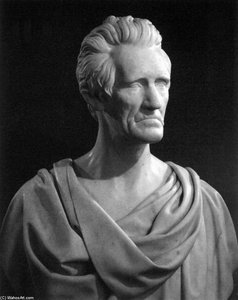
Hiram Powers
1805 - 1873
Основные сведения
- Artistic Movement Or Style: Neoclassical Sculpture
- Artists Or Movements Influenced By This Artist: ['Horatio Greenough']
- Artists Who Influenced This Artist: ['Frederick Eckstein']
- Date Of Birth: July 29, 1805
- Date Of Death: 1873
- Full Name: Hiram Powers
- Nationality: American
- Notable Artworks:
- The Greek Slave
- Fisher Boy
- Proserpine
- Eve Disconsolate
- Place Of Birth: Woodstock, Vermont
Похожие статьи
Paul Manship: Reassessing the Master of American Art Deco Sculpture
Explore the captivating world of Paul Manship, a leading figure in American Art Deco sculpture. Discover his iconic works like Prometheus, influence on modernism, and investment potential. Expert insights for collectors.
The Enduring Allure of Marble in Art History: From Classical Sculpture to Modern Abstraction
Explore the captivating history of marble sculpture from ancient Greece to modern art. Discover renowned artists like Canova & Michelangelo, carving techniques, and investment insights at ArtsDot.

The Enduring Form: Exploring Themes & Techniques in Sculpture Across Historical Periods
Explore the rich history of sculpture from ancient masterpieces to contemporary innovations. Discover key techniques, influential artists & investment potential for discerning art collectors.

10 легендарных бронзовых скульптур, изменивших искусство навсегда | ArtsDot
Погрузитесь в мир великих бронзовых скульптур! От Давида Микеланджело до работ Родена – история искусства, техники и вдохновения. Купите репродукции шедевров для вашего интерьера на ArtsDot.com

The Enduring Form: Sculpture Across History, Technique & Emotional Resonance
Explore the rich history of sculpture with ArtsDot. Discover key techniques, influential artists & investment potential for discerning collectors. Expert insights into valuing and collecting timeless masterpieces.