Предпросмотр
 Поделиться
 Поделиться
 Детали произведения

 Скачать
 Похожие работы
 Рентгенография
 Слайд-шоу
 Статистика
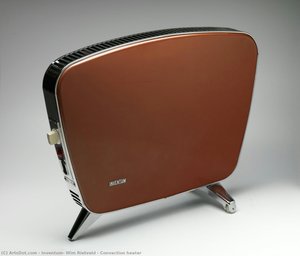
Конвекторный обогреватель
 Акрил на холсте
- Настенный декор
- Functional Minimalism
 1960
1960 45.0 x 61.0 cm
 NEMO Science Museum
 Читать далее
Жикле / Арт-принт
Печать (жикле) или холст музейного качества с быстрыми сроками изготовления и широким выбором вариантов отделки. ( Купить картину ручной работы Перейти к цифровым изображениям)




P118B $10

P118H $10

P118W $10

P438Z $10

P508JH $12

P508YH $12

P805H $10

P805Z $10

P919BZ $10

P919G $10

P919XJ $10

P959ZH $10

P968JZ $12

W106C $8

W218G $10

W218JH $8

W218Y $10

W307PJ $10

W316G $10

W316PJ $8

W316Y $10

W398PJ $8

W4111J $10

W500HY $15

W500JH $15

W692G $12

W849H $8

W940BG $15

W953PJ $8
Выберите один из наших стандартных размеров, соответствующих оригинальным пропорциям произведения искусства.

Вы можете указать свои собственные размеры, чтобы репродукция идеально подошла под конкретную раму или пространство. Если выбранный вами размер не будет соответствовать пропорциям оригинала, мы либо обрежем произведение, либо дополним изображение зеркальным отражением краев или однотонной заливкой. Перед началом производства вам будет отправлен цифровой макет для утверждения.
Пожалуйста, обратите внимание, что предварительный просмотр на экране не отображает фактическую обрезку или расширение изображения. Только макет точно покажет финальную композицию.
Несмотря на возможность заказа индивидуальных размеров, мы рекомендуем выбирать размер из предопределенного списка, чтобы сохранить оригинальные пропорции.
Доставка по всему миру () за 2 недели вместо стандартных 4/5 недель. (15 Сентябрь)

Бесплатная экспресс-доставка по всему миру

Высококачественный льняной холст

Полное страхование доставки

Гарантия возмещения таможенных пошлин

Гарантия точного соответствия цветов

100-дневная политика возврата (только при обнаружении дефектов)

Гарантия возврата 100% средств

Предложение оптовых скидок
 Вариант со стеклом доступен только для размеров менее 110 см

Конвекторный обогреватель
Жикле / Арт-принт
Размер репродукции
-


Итоговая стоимость
$ 62
Convection Heater: A Testament to Functional Minimalism
The image captures a deceptively simple convection heater – a piece of industrial design born from the crucible of postwar reconstruction in Holland. Created by inventum and Wim Rietveld in 1960, this unassuming object embodies the core tenets of functional minimalism championed by Gerrit Rietveld’s son, Wim.
Artist's Vision: Inheriting Minimalism
Wim Rietveld (1924-1985) firmly believed that beauty resided in purposeful design. Heavily influenced by his father’s architectural explorations of geometric abstraction – notably the Mondrian House – Rietveld sought to distill form and function into their purest expressions. This conviction drove him to become a pivotal figure in Dutch industrial design, prioritizing clarity and efficiency above ornamentation.
Design Innovation: Gispen & Inventum Collaboration
Rietveld’s partnership with W. H. Gispen proved instrumental in translating his aesthetic principles into tangible objects. Facing material scarcity following the Second World War, Rietveld ingeniously utilized steel and plywood – materials readily available at the time – to craft furniture that was both aesthetically striking and economically viable. The resulting pieces showcased a masterful blend of structural integrity and understated elegance.
Iconic Form: The Mondial Chair
Perhaps Rietveld’s most celebrated creation is the Mondial chair, conceived collaboratively with his father Gerrit Rietveld. Designed for Expo 58 in Brussels, this stackable and linkable K-shaped chair exemplifies Rietveld's commitment to geometric abstraction and innovative material usage—aluminum was envisioned but ultimately unattainable. Its delicate form speaks volumes about the designer’s pursuit of lightness and beauty within constrained parameters.
Historical Context & Emotional Resonance
The convection heater itself represents more than just a heating appliance; it embodies the broader ethos of postwar Dutch design – a reaction against the excesses of prewar styles. Its clean lines and minimalist aesthetic reflect a desire for order, rationality, and optimism amidst rebuilding efforts. Viewing this reproduction evokes a sense of calm sophistication, reminding us that true artistry lies in achieving maximum impact with minimum visual clutter.
Похожие произведения




Биография художника
The Legacy of Functional Elegance: The Life of Wim Rietveld
In the grand tapestry of Dutch modernism, few names resonate with as much quiet authority as Wim Rietveld. Born in 1924 in Utrecht, Wim was more than just a successor to a design dynasty; he was a visionary who translated the radical architectural principles of his father, Gerrit Rietveld, into the intimate language of everyday objects. Growing up in the shadow of the legendary Mondrian House, Wim was immersed from infancy in an environment where geometric abstraction and structural honesty were not merely aesthetic choices but fundamental truths. This early exposure to the avant-scale spatial experiments of his father provided a fertile ground for a career that would eventually redefine the boundaries between industrial utility and artistic grace.
His journey toward mastery began with a rigorous technical foundation, moving from an apprenticeship in construction to formal studies at the Royal Academy of Art in The Hague. This unique blend of technical prowess and artistic intuition allowed him to approach design not as a decorator, but as a constructor. He understood the soul of materials—the strength of steel, the warmth of laminated wood, and the versatility of plywood. As he navigated the post-war reconstruction era, a period marked by both scarcity and a desperate need for renewal, Wim’s work emerged as a beacon of hope, offering solutions that were as durable as they were beautiful.
A Symphony of Steel and Wood: The Design Evolution
The mid-century period saw the blossoming of Rietveld’s most iconic collaborations, most notably his transformative tenure at W. H. Gispen between 1953 and 1957. It was during these years that he truly mastered the art of functional minimalism. Working alongside talented peers like Friso Kramer, Wim sought to strip away the superfluous, leaving behind only the essential essence of form. His designs were characterized by a rhythmic interplay of lines and surfaces, often utilizing mass-production techniques to bring high-quality design to the broader public. The Mondrian Chair stands as a testament to this era, a piece that breathes the same geometric spirit as the De Stijl movement while remaining firmly rooted in the practical needs of modern living.
As his career progressed, Rietveld’s creative reach expanded far beyond the confines of furniture. He became a master of diverse industrial landscapes, applying his minimalist philosophy to everything from household appliances for Inventum to large-scale urban transport solutions for Werkspoor. His ability to imbue even a radiator or a drafting table with a sense of sculptural dignity is what separates him from his contemporaries. Whether it was the award-winning 1407 armchair, which earned him gold at the Milan Triennale, or the sleek, stackable seating that optimized modern office spaces, his work always maintained a certain poetic economy—a way of saying much with very little.
Historical Significance and the Enduring Modernist Spirit
The significance of Wim Rietveld lies in his ability to bridge the gap between the radical, often unapproachable experiments of early modernism and the practical requirements of a changing society. He did not merely design objects; he designed a way of life that valued clarity, efficiency, and aesthetic integrity. His later years, including his role as Head of Industrial Design at the University of Delft, allowed him to mentor a new generation, ensuring that the principles of Dutch functionalism would endure long after his passing in 1985.
Today, the works of Wim Rietveld are cherished not only as museum-grade artifacts but as living components of modern interiors. His legacy is found in:
- The mastery of materials: The seamless integration of metal and wood that defined mid-century Dutch style.
- The democratization of design: Creating high-quality, mass-producible items that brought beauty to the everyday person.
- A lasting aesthetic influence: A minimalist vocabulary that continues to inspire contemporary industrial designers worldwide.
In every clean line and purposeful curve of his creations, one can still feel the pulse of a designer who believed that true beauty is found in the perfect resolution of function and form.
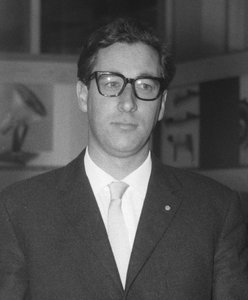
inventum, wim rietveld
1924 - 1985 , Netherlands
Основные сведения
- Artistic Movement Or Style: Modernism
- Artists Or Movements Influenced By This Artist: ['Industrial design']
- Artists Who Influenced This Artist: ['Gerrit Rietveld']
- Date Of Birth: 1924 Utrecht, Netherlands
- Date Of Death: 1985 Badhoevedorp, Netherlands
- Full Name: Wim Rietveld
- Nationality: Dutch
- Notable Artworks:
- Convection heater
- Mondial chair
- Place Of Birth: Utrecht
Похожие статьи
Beyond Form & Color: Geometric Abstraction's Evolution in 20th/21st Century Art
Explore the evolution of geometric abstraction from Cubism to contemporary art. Discover key artists like Malevich & Mondrian, investment insights, and expert collecting advice at ArtsDot.
Beyond Form: Exploring the Philosophical Foundations of Geometric Abstraction
Explore the philosophical roots & artistic evolution of geometric abstraction with ArtsDot. Discover Mondrian, Malevich, De Stijl & more. Expert insights for collectors and art enthusiasts.

Геометрическая абстракция: 10 шедевров, изменивших искусство | ArtsDot.com
Погрузитесь в мир геометрической абстракции! От Кандинского до Малевича – 10 шедевров, изменивших искусство. Узнайте историю создания и значение культовых картин. Репродукции музейного качества на ArtsDot.com. Вдохновение для вашего интерьера!
Топ-25 шедевров Василия Кандинского: Абстрактное искусство для вашего интерьера
Погрузитесь в мир абстрактного искусства с Василием Кандинским! 25 шедевров экспрессионизма, баухауса и русского авангарда. Репродукции картин Кандинского для вдохновения и декора вашего интерьера. Откройте всю коллекцию на ArtsDot.com
Beyond Form & Color: Geometric Abstraction's Enduring Legacy in Art History
Explore the captivating world of geometric abstraction! Discover its origins, key artists like Malevich & Mondrian, and why this movement remains highly valued by art collectors today. Expert insights at ArtsDot.