

 Предпросмотр
 Поделиться
 Поделиться
 Детали произведения

 Скачать
 Похожие работы
 Рентгенография
 Слайд-шоу
 Статистика
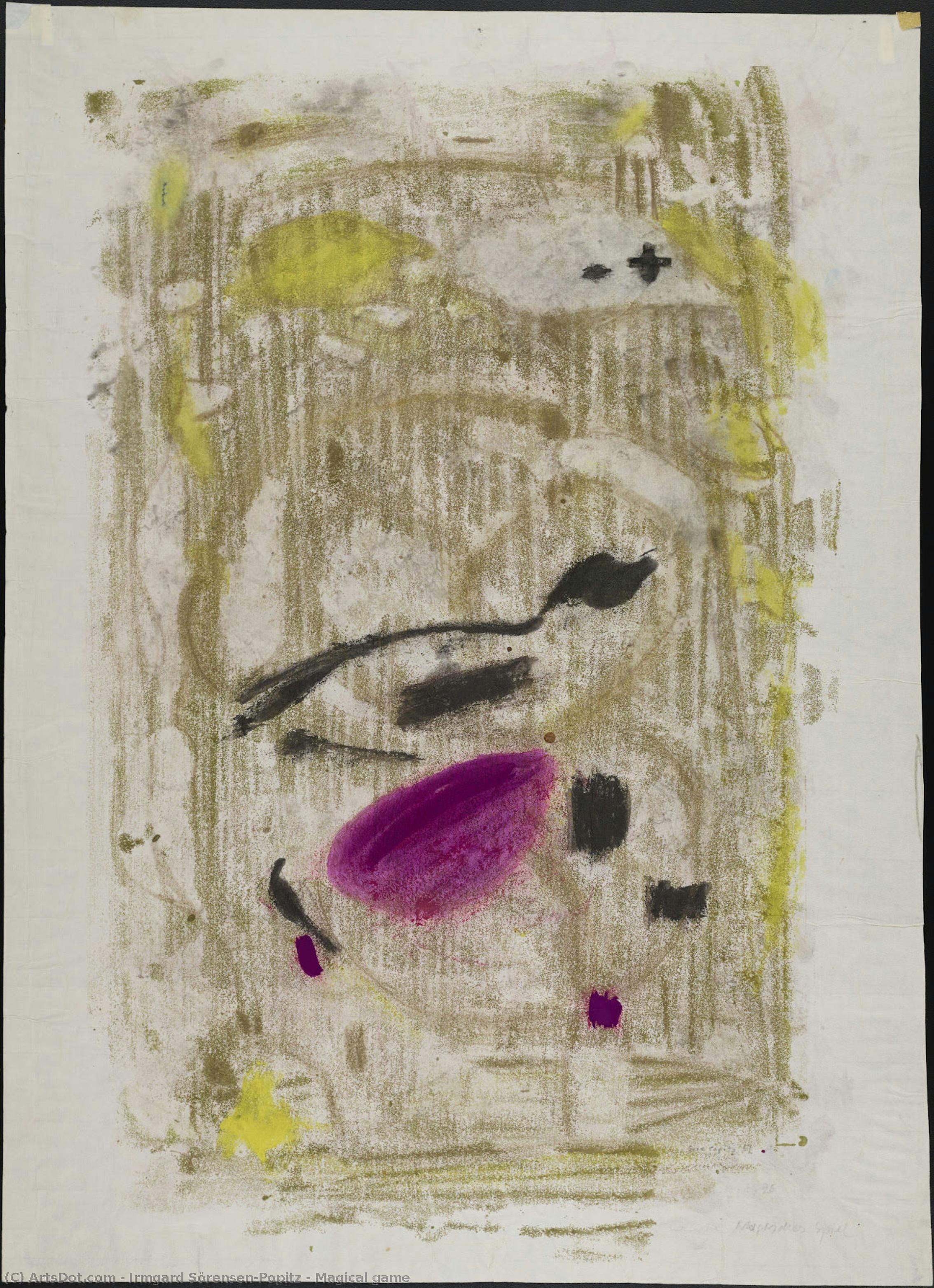
Magical game
 Painting
- Bauhaus
 1957
1957- Modern
 57.0 x 42.0 cm
 Баухаус Дессу (Bauhaus Dessau)
 Читать далее
Приобретите цифровое изображение высокого разрешения в улучшенном качестве, которое значительно превосходит онлайн-превью.
Каждый файл тщательно подготавливается нашими специалистами с использованием передовых инструментов и экспертной ручной ретуши. Мы гарантируем исключительную четкость, точную цветопередачу и детальную проработку каждого изображения.
Финальный файл доставляется по электронной почте в течение 72 часов и оптимизирован для немедленного использования в профессиональной среде, при верстке и печати. Это тот же уровень качества, которому доверяют ведущие дизайнерские студии, издательства и галереи.
Цифровое изображение
Скачайте файл высокого разрешения для личного использования, печати и творческих проектов. ( Перейти к печати Купить картину ручной работы)
Включено в каждый заказ цифровых изображений
Гарантия экспертной цифровой доставки
Выбирая ArtsDot.com, вы получаете не просто изображение — вы приобретаете профессионально обработанное цифровое произведение искусства, созданное с безупречной точностью и под защитой гарантии качества. Вот всё, что автоматически входит в ваш заказ:

Мгновенная доставка по e-mail
Ваш цифровой файл в высоком разрешении будет отправлен вам по электронной почте в течение 72 часов после оформления заказа — и сразу станет доступен для использования.

Цифровой файл с ИИ-улучшением
Ваше произведение искусства проходит профессиональную оптимизацию с использованием передовых инструментов ИИ и ручной обработки, что гарантирует максимальную детализацию, четкость и точность цветопередачи.

Бессрочная бесплатная повторная доставка
Случайно удалили или потеряли файл? Не беспокойтесь — мы отправим его вам повторно в любое время и совершенно бесплатно.

Без импортных пошлин — навсегда
Наслаждайтесь вашим произведением искусства мгновенно без таможенных пошлин, сборов или затрат на доставку — цифровые загрузки всегда не облагаются налогом.

Гарантия точности цветопередачи
Мы гарантируем, что ваше цифровое изображение максимально точно передает оригинальные цвета благодаря использованию профессиональных инструментов и систем управления цветом.

Гарантия удовлетворенности 100 дней
Если вы не будете удовлетворены своим цифровым изображением, мы внесем правки или вернем 100% стоимости в течение 100 дней — без лишних вопросов.

100% Гарантия возврата средств
Не удовлетворены покупкой? Получите полный возврат средств в течение 100 дней после получения цифрового файла — без лишних вопросов.

Скидки на оптовые заказы
Купите 3 изображения, сэкономьте 10% — Купите 5, сэкономьте 15% — Купите 10+, сэкономьте 20%. Отличное решение для творческих проектов, галерей и агентств.
A Dance of Abstraction: The Luminous World of Magical Game
In the vibrant tapestry of mid-century abstraction, few works capture the whimsical essence of spontaneous creation quite like Irmgard Sörensen-Popitz’s Magical Game. Painted in 1957, this captivating piece serves as a window into a realm where geometry and emotion collide. The canvas is bathed in a radiant, sun-drenched yellow that immediately commands the viewer's attention, acting as a warm, energetic stage for the rhythmic dance of shapes unfolding across its surface. It is not merely a painting, but an invitation to a sensory experience, where the boundaries between the physical and the metaphysical seem to dissolve into a joyful, chromatic play.
The composition is a masterclass in balanced spontaneity. Sörensen-Popitz utilizes a sophisticated interplay of organic forms and scattered purple accents that punctuate the golden expanse like celestial bodies in a bright, midday sky. These deep violet spots provide a necessary visual weight, creating a rhythmic tension against the lightness of the background. The technique reflects her roots in graphic design and the Bauhaus tradition, where every shape feels intentional yet retains a sense of liberated movement. There is an unmistakable elegance in how the artist manages the negative space, allowing the eye to wander through the intricate patterns without ever losing its sense of structural harmony.
Beyond its striking visual appeal, Magical Game carries a profound emotional resonance that makes it a timeless treasure for any collection. The title itself suggests a ritualistic, almost playful engagement with the medium—a game played with color and form to uncover hidden truths. For the discerning collector or interior designer, this artwork offers more than just decoration; it provides a focal point of optimism and intellectual curiosity. Its bright, uplifting palette is perfectly suited for modern, light-filled spaces, where it can act as a source of daily inspiration, evoking the warmth of summer and the limitless possibilities of the creative spirit.
Integrating such a piece into a curated environment allows for a sophisticated dialogue between historical abstraction and contemporary aesthetics. Whether placed in a minimalist gallery setting or used to add a burst of character to a luxurious living space, the painting’s legacy as a work of mid-century brilliance remains undiminished. To possess a reproduction of this masterpiece is to hold a fragment of 1950s avant-garde history, capturing the very moment when color became a language of pure, unadulterated joy.
Похожие произведения








Биография художника
John Everett Millais: A Pre-Raphaelite Pioneer of Light and Nature
Born in Southampton, England, on June 8th, 1829, John Everett Millais was a pivotal figure in the vibrant artistic movement known as the Pre-Raphaelites. His life, intertwined with intellectual circles and personal drama, profoundly shaped his distinctive style – one characterized by meticulous observation of nature, a fascination with medieval and Renaissance themes, and an innovative use of light and color. From humble beginnings to international recognition, Millais’s journey reflects both the challenges and opportunities faced by artists during a period of rapid social and artistic change.
Millais's early life was marked by privilege and access to education uncommon for his time. The son of a wealthy gentleman, he received an unusually thorough upbringing, including schooling at prestigious institutions like Sass’s Art School in London and later studying at the Royal Academy Schools. This foundation, coupled with the influence of his family’s connections – particularly his sister’s association with the poet Julian del Casal – exposed him to intellectual discourse and a broader artistic landscape than many of his contemporaries. His early training emphasized drawing from antique casts, a technique that would later inform his meticulous attention to detail and his deep engagement with classical subjects.
The formation of the Pre-Raphaelite Brotherhood in 1848 proved to be a watershed moment in Millais’s career and artistic development. Alongside William Holman Hunt and Dante Gabriel Rossetti, he sought to reject the academic conventions of the Royal Academy and return to what they perceived as the sincerity and truthfulness of art before Raphael. The brotherhood's core principles – a commitment to direct observation, detailed realism, vibrant color palettes, and a rejection of idealized representations – profoundly influenced Millais’s artistic vision. His early works, such as *Isabella* (1848-9) and *Ophelia* (1851-2), exemplify this approach, capturing scenes from literature with remarkable accuracy and emotional intensity.
The Iconic Ophelia and the Pursuit of Naturalism
*Ophelia*, perhaps Millais’s most famous painting, stands as a testament to his artistic ambition and technical skill. Commissioned for *The Illustrated London News* in 1851-2, the work depicted the tragic heroine from Shakespeare's *Hamlet* floating in a stream, surrounded by wildflowers. Millais spent months meticulously studying the subject, sketching directly from nature under various lighting conditions to achieve the painting’s luminous quality and unparalleled realism. The painstaking detail of the flowers – each identified and accurately rendered – was revolutionary for its time, demonstrating a commitment to scientific observation rarely seen in Romantic art.
However, *Ophelia* also sparked controversy. Critics initially condemned the painting's perceived lack of poetic interpretation and its overly literal depiction of Shakespeare’s tragedy. Millais, however, remained steadfast in his belief that truthfulness was paramount. He continued to explore themes of nature and mythology throughout his career, producing works such as *The Proclamation* (1854-5), a vibrant depiction of the marriage of Louis XIV and Marie Therese of Austria, and *Fishing*, which showcased his mastery of capturing fleeting moments of light and atmosphere.
A Shift Towards Portraiture and Later Works
As the Pre-Raphaelite Brotherhood fragmented in the 1860s, Millais increasingly focused on portraiture. He established a successful practice as a painter of wealthy patrons, producing numerous portraits that reflected his refined artistic sensibilities and technical expertise. His portraits of prominent figures like Gladstone, Tennyson, and Disraeli are notable for their psychological depth and subtle nuances of expression.
Despite the shift in focus, Millais never abandoned his interest in landscape and narrative subjects. He continued to paint scenes from literature and mythology, often employing a more subdued palette and a looser brushstroke than in his earlier works. His later paintings, such as *Stella* (1868) and *The Shadow of the House*, demonstrate a growing awareness of contemporary artistic trends and a willingness to experiment with new techniques. He also embraced commercial illustration work, producing numerous images for magazines and books.
Legacy and Historical Significance
John Everett Millais died in London on August 13th, 1896, at the age of 67. His legacy as a Pre-Raphaelite painter is undeniable. He was instrumental in shaping the movement’s aesthetic principles and establishing its reputation for realism, beauty, and intellectual rigor. His meticulous attention to detail, his innovative use of light and color, and his profound engagement with nature continue to inspire artists today.
Millais's influence extends beyond the realm of painting. He helped to elevate the status of the artist as a professional and contributed to the development of art education in England. His work remains a vital part of the British artistic heritage, offering a window into a fascinating period of social and artistic transformation.

irmgard sörensen-popitz
1896 - 1993