 Предпросмотр
 Поделиться
 Поделиться
 Детали произведения

 Скачать
 Похожие работы
 Рентгенография
 Слайд-шоу
 Статистика
Silent cloister
 Oil On Canvas
- WallArt
- Contemporary Realism
 1890
1890 88.0 x 108.0 cm
 Третьяковская галерея
 Читать далее
Масляная репродукция ручной работы
Картина маслом на холсте в выбранном вами размере и раме, написанная на заказ нашими художниками. ( Перейти к печати Перейти к цифровым изображениям)




P118B $10

P118H $10

P118W $10

P438Z $10

P508JH $12

P508YH $12

P805H $10

P805Z $10

P919BZ $10

P919G $10

P919XJ $10

P959ZH $10

P968JZ $12

W106C $8

W218G $10

W218JH $8

W218Y $10

W307PJ $10

W316G $10

W316PJ $8

W316Y $10

W398PJ $8

W4111J $10

W500HY $15

W500JH $15

W692G $12

W849H $8

W940BG $15

W953PJ $8




Выберите один из наших стандартных размеров, соответствующих оригинальным пропорциям произведения искусства.

Вы можете указать собственные размеры, чтобы картина идеально вписалась в выбранную раму или пространство. Если выбранный вами размер не соответствует пропорциям оригинала, мы либо обрежем полотно, либо расширим его за счет дополнительных элементов, написанных вручную. Цифровой макет будет отправлен вам на утверждение перед началом производства.
Обратите внимание, что предварительный просмотр на экране не отражает фактическую обрезку или расширение. Только макет точно покажет окончательную композицию.
Хотя доступны индивидуальные размеры, мы рекомендуем выбирать вариант из предопределенного списка, чтобы сохранить исходные пропорции.
После оформления заказа команда ArtsDot.com свяжется с клиентом по электронной почте для уточнения деталей и предоставит предварительный макет
Доставка по всему миру () за 3–4 недели вместо стандартных 5 недель. (11 Сентябрь). Без компромиссов в качестве.

Бесплатная экспресс-доставка по всему миру

Высококачественный льняной холст

Полное страхование доставки

Гарантия возмещения таможенных пошлин

Гарантия точного соответствия цветов

100-дневная политика возврата (только при обнаружении дефектов)

Гарантия возврата 100% средств

Предложение оптовых скидок
 Вариант со стеклом доступен только для размеров менее 110 см

Silent cloister
Техника репродукции
Размер репродукции
-


Итоговая стоимость
$ 263
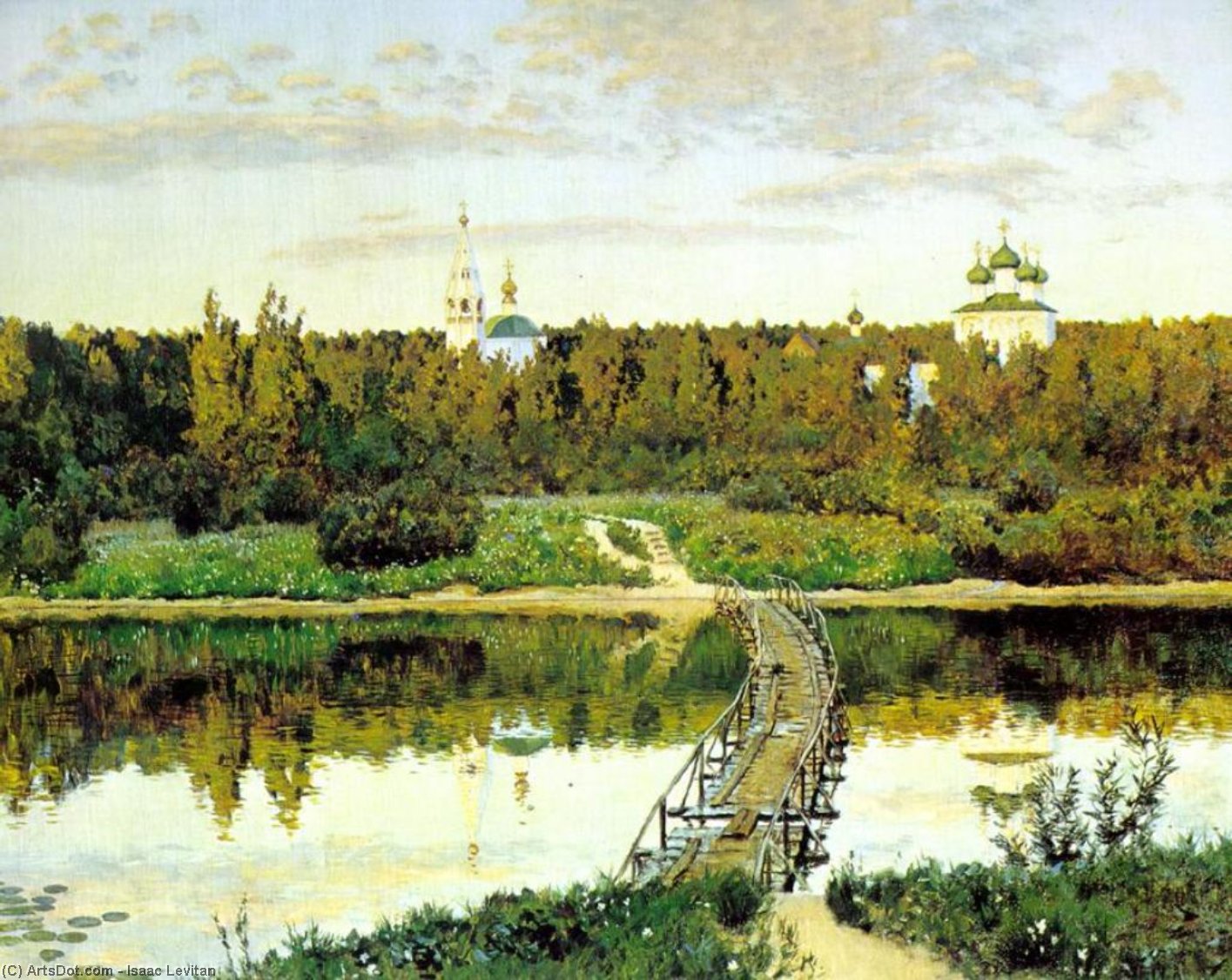
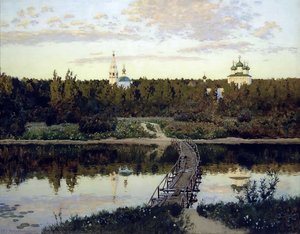
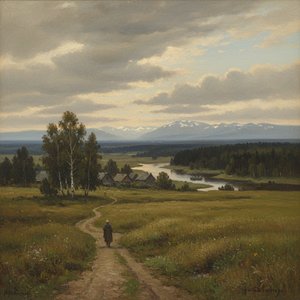
Quiet Cloister (1890; Russian Federation) by Isaac Levitan
Isaac Levitan’s “Quiet Cloister,” painted in 1890 during his journey abroad, stands as a cornerstone of Russian landscape painting and embodies the very essence of what Levitan termed "moodscapes." More than just a depiction of scenery, it's a profound meditation on solitude, spirituality, and the sublime beauty of the natural world—a characteristic hallmark of his artistic vision. This masterpiece resides in the Tretyakov Gallery in Moscow, Russia, measuring 87.5 x 108 cm and executed in oil on canvas using meticulous Realism techniques. ### Composition and Technique: A Symphony of Light and Color The painting’s composition immediately draws the viewer into a tranquil forest scene dominated by a gently curving river and a weathered wooden bridge. The artist skillfully employs atmospheric perspective, subtly blurring distant elements to convey depth and creating an immersive experience for the observer. Levitan's brushstrokes are deliberate and textured, capturing the nuances of light and shadow—particularly the ethereal glow of the evening sun filtering through the foliage. He meticulously blended colors to achieve a harmonious palette that reflects the serenity of the landscape, prioritizing tonal gradations over bold hues. The artist’s attention to detail is evident in the depiction of individual trees, branches, and ripples on the water surface. ## Subject Matter & Composition The painting depicts a secluded monastery nestled amidst a tranquil forest—a quintessential motif in Levitan's oeuvre. The composition centers around the bridge and river, framing the church spire as a focal point, symbolizing faith and contemplation. This deliberate arrangement reinforces the overarching theme of solitude and communion with nature, reflecting Levitan’s deep appreciation for the Russian landscape and its spiritual resonance. ## Artistic Style & Technique “Quiet Cloister” exemplifies Realism—a movement characterized by meticulous observation and faithful representation of visual reality. Levitan employed oil paints on canvas to achieve a luminous texture and subtle tonal gradations that capture the ethereal quality of twilight. The artist skillfully utilized glazing techniques, layering thin washes of color over underpaintings to build up depth and create atmospheric perspective. Careful attention was paid to detail—the reflections in the river, the textures of bark and foliage—demonstrating Levitan’s mastery of artistic craft. ## Historical Context & Significance Painted in 1890 during Levitan's formative years as an artist, “Quiet Cloister” aligns with the broader trends of the Peredvizhniki movement, which championed realism and focused on depicting Russian landscapes with honesty and sensitivity. The painting reflects the Romantic spirit of its time—a fascination with nature’s sublime beauty and a yearning for spiritual contemplation. It captures the mood of the Volga region during the summer months, portraying a scene of tranquil solitude amidst the grandeur of the natural world. ### Artistic Technique & Style Isaac Levitan's approach to landscape painting is characterized by meticulous observation and an ability to convey atmosphere with remarkable precision. “Quiet Cloister” exemplifies his distinctive style—often referred to as “moodscapes”—where he prioritizes capturing not just visual details but also emotional resonance. The artist skillfully employs soft brushstrokes and subtle tonal variations to create a luminous effect, reminiscent of the evening sun filtering through the trees. He meticulously renders textures – bark, foliage, water surfaces – achieving an astonishing level of realism.Subject Matter & Composition
“Quiet Cloister” presents a quintessential Russian landscape scene: a tranquil forest bathed in twilight hues. At its core is a meandering river spanned by a simple wooden bridge, leading the eye towards distant church domes—symbols of faith and tradition deeply ingrained in Russian culture. Scattered figures add scale to the panorama, subtly emphasizing the grandeur of nature while hinting at human presence within it. The artist meticulously crafted this composition to convey not just visual beauty but also an emotional resonance rooted in the contemplative spirit of rural Russia.Style & Technique
Isaac Levitan’s masterpiece exemplifies Realism—a movement that championed truthful depiction of observable reality without embellishment or idealization. He achieved this goal through masterful brushwork, characterized by delicate layering and subtle tonal variations. The artist skillfully utilized oil paints on canvas to capture the nuances of light and shadow, creating a palpable sense of atmosphere. Precise observation of the landscape informed every stroke, resulting in an image that feels both grounded and imbued with poetic feeling.Historical Context
Painted in 1890 during the height of the Russian Symbolist movement, “Quiet Cloister” reflects the artistic sensibilities of its time—a preoccupation with spirituality, melancholy, and the sublime beauty of the natural world. Isaac Levitan’s work aligns closely with the broader trend toward depicting landscapes as expressions of inner emotion rather than mere representations of visual reality. The painting's creation coincided with Levitan's extensive travels throughout Europe, where he absorbed influences from Impressionism and Post-Impressionism, subtly shaping his artistic vision. ## Subject Matter & Composition “Quiet Cloister” presents a quintessential Russian landscape—a tranquil forest bathed in the soft glow of twilight. At its core lies a meandering river bordered by dense foliage, punctuated by a rustic wooden bridge that invites contemplation. Dominating the horizon are church domes and spires, symbolizing faith and serenity amidst the grandeur of nature. The artist’s meticulous attention to detail captures the subtle nuances of light and shadow, creating an immersive experience for the viewer. ## Artistic Style & Technique Isaac Levitan's masterpiece exemplifies Realism—a movement that sought to depict the natural world with uncompromising accuracy and emotional honesty. He employed oil paint on canvas, utilizing a layering technique known as glazing to achieve luminous colors and subtle tonal variations. The artist skillfully blended brushstrokes to convey textures – from the rough bark of trees to the smooth surface of water – capturing the essence of the Volga landscape. ## Historical Context & Significance Painted in 1890 during Levitan’s formative years, “A Quiet Cloister” reflects the burgeoning Symbolist movement's influence on Russian art. However, Levitan firmly rooted his work in observation and emotion, prioritizing a truthful representation of nature over abstract concepts. The painting was exhibited at the XIXth Exhibition of Traveling Art Exhibitions (“Peredvizhniki”), marking an important milestone in Levitan’s artistic career and establishing him as one of Russia's foremost landscape painters. Critics lauded its masterful composition and tonal harmonies, recognizing it as a pinnacle of Realism. ## Artistic Technique & Composition The artwork employs meticulous detail—evident in the rendering of individual leaves and branches—demonstrating Levitan’s dedication to capturing the nuances of natural light and texture. The artist skillfully utilizes atmospheric perspective, subtly diminishing colors and details in the distant landscape to convey depth and realism. The horizontal orientation of the canvas emphasizes the expansive nature of the scene, while the diagonal line formed by the bridge draws the viewer's eye into the composition. The muted palette—dominated by greens, browns, and blues—creates a tranquil mood and reinforces the painting’s contemplative character. ## Subject Matter & Composition: A Moment of Serenity “Quiet Cloister,” painted in 1890 by Isaac Levitan, transports viewers to a secluded Russian forest bathed in the ethereal glow of twilight. The central focus is a picturesque river crossing, spanned by a simple wooden bridge—a motif frequently employed by Levitan to symbolize pilgrimage and spiritual contemplation. Scattered throughout the landscape are figures representing pilgrims or visitors, subtly enhancing the sense of tranquility and inviting reflection on the beauty of nature’s stillness. The artist meticulously captures the interplay between light and shadow, emphasizing the profound connection between humanity and the natural world. ## Artistic Style & Technique: Realism Embodied Levitan's masterful execution exemplifies the tenets of Russian Realism—a movement that sought to depict everyday life with uncompromising honesty and accuracy. He achieved this goal through painstaking observation and meticulous brushwork, utilizing oil paints on canvas to create textured surfaces that faithfully reproduce the nuances of light and color. The artist’s palette is dominated by muted greens, browns, and blues, reflecting the subdued hues of a late summer evening. Attention to detail—the reflections in the river, the texture of bark, the subtle variations in foliage—underscores Levitan's commitment to capturing the essence of his subject matter. ## Subject Matter & Composition “Quiet Cloister,” painted in 1890, presents a quintessential Russian landscape scene: a tranquil forest bathed in the golden light of dusk. Dominating the composition is a meandering river flowing serenely through the verdant expanse, spanned by a simple wooden bridge—a visual motif frequently employed by Levitan to symbolize solitude and contemplation. In the distance rises a church spire, its domes glowing faintly against the darkening sky, representing faith and spiritual solace. Scattered throughout the landscape are figures of people – likely pilgrims or visitors – adding scale and subtly hinting at human interaction with the natural world. The artist’s meticulous attention to detail—the texture of bark, the ripples on the water surface, the subtle gradations of color—creates a remarkably realistic portrayal of an evening forest. ## Subject Matter & Composition: A Symphony of Tranquility “Quiet Cloister,” painted in 1890 by Isaac Levitan, embodies the quintessential Russian landscape genre – moodscapes designed to convey profound emotion through visual representation. Levitan’s masterful composition centers around a river flowing serenely through a dense forest, culminating in a wooden bridge spanning its course. Dominating the horizon are church domes, symbolizing piety and tradition, creating a harmonious blend of natural beauty and spiritual contemplation. Scattered throughout the scene are figuresПохожие произведения

Биография художника
A Symphony of the Russian Soul: The Life and Art of Isaak Ilyich Levitan
Isaak Ilyich Levitan, a name inextricably linked to the heart of Russian landscape painting, was far more than simply a recorder of nature’s beauty. He was a poet of the land, a translator of its moods into visual form—a profound interpreter of Russia's soul. Born in 1860 in Kibarty (present-day Lithuania), a small settlement within the vastness of the Russian Empire, Levitan’s life unfolded against a backdrop of both immense hardship and an unwavering dedication to his art. The early loss of his parents – his mother succumbing to illness when he was just fifteen, followed by his father two years later – instilled in him a deep sensitivity, a melancholic awareness that would permeate his canvases with an enduring sense of longing and quiet contemplation. This profound personal experience, coupled with the restrictions faced by Jewish communities within Tsarist Russia, fueled a powerful desire for solace and self-expression—a need to find beauty and meaning amidst adversity, reflected in the landscapes he so meticulously captured. His journey began at the Moscow School of Painting, Sculpture and Architecture in 1873, where he found his mentor in Alexei Savrasov, whose influence would shape the very core of Levitan’s artistic vision.The Genesis of the “Mood Landscape”
Levitan quickly distinguished himself as an artist capable of conveying profound emotion through landscape—a departure from the purely representational approach prevalent at the time. He wasn't interested in achieving photographic accuracy or meticulous topographical detail; rather, he sought to imbue his paintings with a palpable *mood*, a feeling that resonated deeply within the viewer’s soul, evoking a sense of tranquility, solitude, or even poignant melancholy. This distinctive approach earned him the title of pioneer of the “mood landscape,” a genre that transcended simple depiction and ventured into the realm of spiritual connection—a recognition of nature's capacity to stir the emotions and reflect the human condition. His palette was often deliberately restrained, favoring naturalistic colors and subtle poetic elements over bold, vibrant displays. He masterfully employed light and shadow, creating atmospheric effects that were both breathtakingly beautiful and deeply evocative, transporting the viewer into a world of quiet contemplation. Works such as *Autumn Day. Sokolniki* (1879), painted when he was barely nineteen years old, already demonstrated this remarkable ability to capture the subtle nuances of the Russian countryside—a scene imbued with a sense of wistful nostalgia and the poignant awareness of time’s passage. The painting's muted tones and delicate rendering of light create an atmosphere of quiet reflection, hinting at the transience of beauty and the inevitability of change. Later masterpieces like *The Vladimirka Road* (1892) and *Eternal Rest* (1894), prominently displayed in the Tretyakov Gallery, further solidified his reputation as a master of emotional landscape painting—each canvas a testament to his evolving style and deepening understanding of the human experience within the natural world.Influences and Artistic Kinships
While deeply indebted to Savrasov’s foundational influence – particularly his exploration of lyricism in Russian landscape painting – Levitan was also receptive to broader artistic currents. He benefited from the guidance of other esteemed teachers at the Moscow School, including Vasily Perov and Vasily Polenov, each contributing unique perspectives to his artistic development. Crucially, he cultivated close relationships with fellow artists, most notably Nikolai Chekhov—the brother of the renowned playwright Anton Chekhov, who became a lifelong friend and confidant. This circle fostered an environment of intellectual exchange and mutual support, enriching Levitan’s creative process and broadening his artistic horizons. Though he briefly experimented with Impressionistic techniques – influenced by the vibrant colors and fleeting effects of light that characterized the movement – Levitan ultimately maintained a uniquely Russian sensibility in his work, prioritizing emotional resonance over strict adherence to stylistic conventions. He found inspiration not only in the visual world but also in music and literature—seeking to translate their evocative power into his paintings. His designs for scenery for Savva Mamontov’s private Russian Opera demonstrate his versatility and willingness to explore different artistic mediums – a testament to his broad creative range.Major Achievements and Artistic Evolution
Levitan's career unfolded against the backdrop of significant social and political changes in Russia, particularly the tumultuous years following the assassination of Tsar Alexander II in 1881. The subsequent wave of anti-Jewish pogroms forced many Jewish artists to flee Moscow, including Levitan, who was temporarily exiled from the city. Despite these challenges, he continued to produce a prolific body of work, exploring diverse themes and landscapes—from the vast plains of Crimea to the serene banks of the Volga River. His paintings during this period often reflected a sense of melancholy and introspection, mirroring his own personal experiences with loss and displacement. However, in the early 1890s, Levitan’s style underwent a subtle but significant transformation, influenced by the burgeoning Impressionist movement. He began to incorporate brighter colors, looser brushstrokes, and a greater emphasis on capturing fleeting moments of light and atmosphere—a shift that can be seen in works such as *Over Eternal Peace* (1894) and *The Golden Shore*. Yet, despite these influences, he never fully abandoned his distinctly Russian sensibility, retaining a profound connection to the national landscape and its cultural heritage.Legacy and Enduring Resonance
Isaac Levitan’s untimely death in 1900 at the age of thirty-nine cut short a brilliant career but left an indelible mark on the history of Russian art. His paintings—characterized by their emotional depth, atmospheric beauty, and profound connection to the Russian landscape—continue to resonate with audiences today. He is remembered as a pioneer of the “mood landscape,” a genre that elevated Russian landscape painting to new heights of artistic expression. His legacy extends beyond his individual works; he profoundly influenced generations of artists who followed in his footsteps, shaping the course of Russian art and solidifying its place on the international stage. His remains were interred in the Novodevichy Cemetery in Moscow alongside Anton Chekhov—a poignant symbol of their shared artistic kinship and enduring contribution to the cultural landscape of Russia.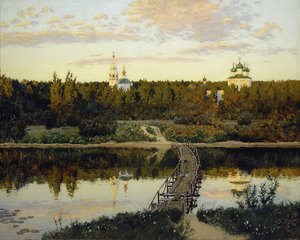
Isaak Ilyich Levitan
1860 - 1900 , Россия
Основные сведения
- Artistic Movement Or Style: Пейзаж настроения
- Artists Or Movements Influenced By This Artist: ['Импрессионизм']
- Artists Who Influenced This Artist:
- Алексей Саврасов
- Василий Перов
- Date Of Birth: 30 августа 1860
- Date Of Death: 22 июля 1900
- Full Name: Исаак Ильич Левитан
- Nationality: Русский
- Notable Artworks:
- Осенний день. Сокольники
- Владимирка
- Вечный покой
- Place Of Birth: Кибартай, Литва
Похожие статьи
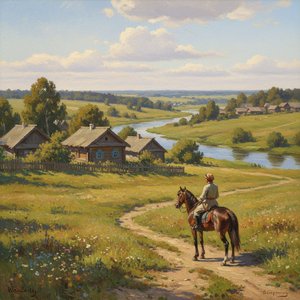
Vasily Polenov: A Pioneer of Landscape Impressionism & Russian National Identity
Explore the captivating landscapes of Vasily Polenov, a pivotal figure in Russian art history. Discover his lyrical realism, biblical series & influence on Impressionism. Learn about the 'Knight of Beauty' and his enduring legacy.
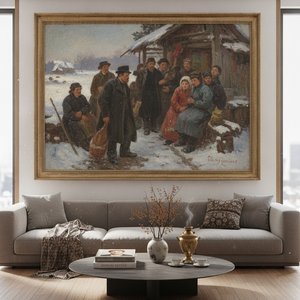
Discover Russian Realism: Soulful Masterpieces and the Timeless Spirit of the Peredvizhniki for Your Modern Home
Elevate your home with the soulful beauty of Russian Realism. Discover exquisite hand-painted reproductions of Peredvizhniki masterpieces, from lyrical landscapes to profound portraits, curated to bring historical depth and timeless elegance to your modern interior design.
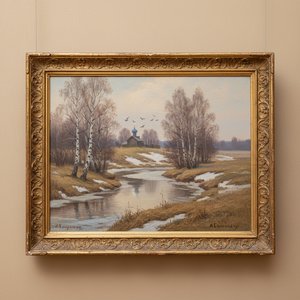
Aleksey Savrasov: The Poetic Realism That Defined Russian Landscape Painting
Explore the poetic realism of Aleksey Savrasov, founder of Russian lyrical landscape painting. Discover his masterpieces like 'The Rooks Have Returned' and learn about his lasting influence on 19th-century art. ArtsDot offers high-quality reproductions.
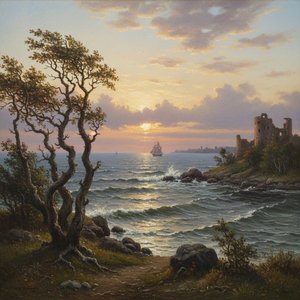
Alexei Bogolyubov: Bridging Realism & Romanticism in the Russian Landscape Tradition
Explore the captivating world of Alexei Bogolyubov, a master of Russian Realism & Romanticism. Discover his stunning landscapes, maritime scenes, and lasting influence on 19th-century art. Learn more at ArtsDot.
Fyodor Vasilyev: A Poetic Vision of Russian Landscape – Life, Legacy, and the Transience of Nature
Explore the captivating world of Fyodor Vasilyev, a pioneering Russian landscape painter. Discover his lyrical style, influential works like 'Clouds' & lasting legacy. Learn about his life, artistic journey & impact on Russian art history.