 Предпросмотр
 Поделиться
 Поделиться
 Детали произведения

 Скачать
 Похожие работы
 Рентгенография
 Слайд-шоу
 Статистика
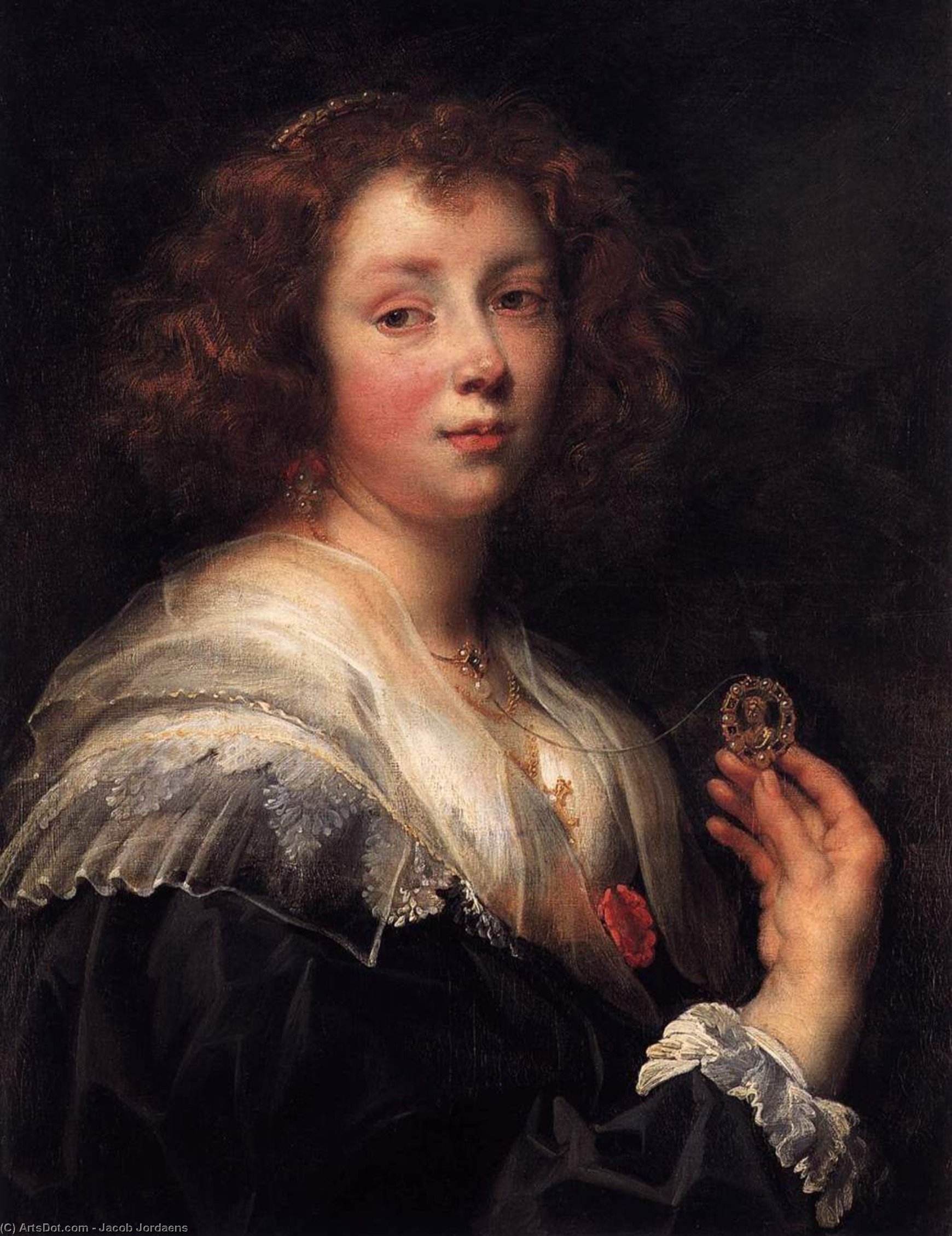
Portrait of the Artist's Daughter Elizabeth
 Acrylic On Canvas
- WallArt
- Baroque
 1637
1637 75.0 x 55.0 cm
 Academy of Fine Arts Vienna
 Читать далее
Масляная репродукция ручной работы
Картина маслом на холсте в выбранном вами размере и раме, написанная на заказ нашими художниками. ( Перейти к печати Перейти к цифровым изображениям)




P118B $10

P118H $10

P118W $10

P438Z $10

P508JH $12

P508YH $12

P805H $10

P805Z $10

P919BZ $10

P919G $10

P919XJ $10

P959ZH $10

P968JZ $12

W106C $8

W218G $10

W218JH $8

W218Y $10

W307PJ $10

W316G $10

W316PJ $8

W316Y $10

W398PJ $8

W4111J $10

W500HY $15

W500JH $15

W692G $12

W849H $8

W940BG $15

W953PJ $8




Выберите один из наших стандартных размеров, соответствующих оригинальным пропорциям произведения искусства.

Вы можете указать собственные размеры, чтобы картина идеально вписалась в выбранную раму или пространство. Если выбранный вами размер не соответствует пропорциям оригинала, мы либо обрежем полотно, либо расширим его за счет дополнительных элементов, написанных вручную. Цифровой макет будет отправлен вам на утверждение перед началом производства.
Обратите внимание, что предварительный просмотр на экране не отражает фактическую обрезку или расширение. Только макет точно покажет окончательную композицию.
Хотя доступны индивидуальные размеры, мы рекомендуем выбирать вариант из предопределенного списка, чтобы сохранить исходные пропорции.
После оформления заказа команда ArtsDot.com свяжется с клиентом по электронной почте для уточнения деталей и предоставит предварительный макет
Доставка по всему миру () за 3–4 недели вместо стандартных 5 недель. (13 Сентябрь). Без компромиссов в качестве.

Бесплатная экспресс-доставка по всему миру

Высококачественный льняной холст

Полное страхование доставки

Гарантия возмещения таможенных пошлин

Гарантия точного соответствия цветов

100-дневная политика возврата (только при обнаружении дефектов)

Гарантия возврата 100% средств

Предложение оптовых скидок
 Вариант со стеклом доступен только для размеров менее 110 см

Portrait of the Artist's Daughter Elizabeth
Техника репродукции
Размер репродукции
-


Итоговая стоимость
$ 263
Portrait of the Artist’s Daughter Elizabeth – A Viennese Jewel
Jacob Jordaens' "Portrait of the Artist’s Daughter Elizabeth," painted in 1640, isn’t merely a likeness; it’s a carefully constructed tableau brimming with symbolic resonance and a palpable sense of quiet dignity. This captivating work, housed within the confines of a private collection, offers a rare glimpse into the domestic life of a prominent Antwerp family during a pivotal era in Flemish art. Jordaens, known for his vibrant depictions of everyday scenes and his masterful command of light and shadow, here presents Elizabeth, around twenty years old, not as a passive subject but as an active participant within her own narrative.
The painting immediately draws the eye to Elizabeth’s face – a study in serene composure. Her gaze, subtly directed towards the viewer, conveys both intelligence and a hint of melancholy. The delicate rendering of her features—the slight tilt of her head, the subtle curve of her lips—reveals an artist deeply attuned to capturing the nuances of human expression. Her attire, a simple yet elegant black dress, speaks volumes about her social standing and the prevailing fashion of the time. The inclusion of a piece of jewelry, likely a brooch or pendant, adds a touch of opulence without overwhelming the overall composition.
A Master’s Technique – Light, Shadow, and Composition
Jordaens' skill lies not just in his ability to reproduce a likeness but in his masterful manipulation of light and shadow. He employs a technique known as *chiaroscuro*, dramatically contrasting areas of illumination with deep shadows, creating a sense of depth and volume that brings the portrait to life. The soft glow emanating from Elizabeth’s face highlights her features while simultaneously enveloping the background in a gentle haze. This interplay of light and dark not only enhances the realism of the painting but also contributes significantly to its emotional impact.
The composition itself is carefully considered. Jordaens utilizes a pyramidal structure, with Elizabeth as the central focal point, drawing the viewer’s eye directly to her face. The background, featuring a wall adorned with a clock and a subtle suggestion of a window, provides context without distracting from the primary subject. Note the meticulous detail in the rendering of the architectural elements – a testament to Jordaens' attention to accuracy and his understanding of perspective.
Historical Context & Symbolism
Painted in 1640, “Portrait of the Artist’s Daughter Elizabeth” reflects the burgeoning artistic landscape of Antwerp during the Dutch Golden Age. Jordaens was a leading figure within the city's vibrant art scene, known for his ability to capture both the grandeur and the intimacy of everyday life. The portrait also speaks to the social dynamics of the time – the importance of family, wealth, and status. Elizabeth’s youth and beauty were undoubtedly valued assets within her family.
The inclusion of the clock in the background is particularly significant. Clocks were symbols of time, order, and control—values highly prized by the wealthy elite. It subtly reinforces Elizabeth's position as a member of a respected household. The subtle suggestion of a window hints at a world beyond the confines of the domestic sphere, perhaps alluding to her future role within society.
A Legacy – Research & Inspiration
Numerous resources illuminate Jordaens’ life and work, offering deeper insights into this captivating portrait. The Web Gallery of Art (
The portrait stands as a testament to Jordaens' artistic skill and his ability to capture not just a likeness but also the essence of human character. It is a poignant reminder of a bygone era and a captivating window into the lives of those who shaped it.
Похожие произведения
Биография художника
A Flemish Master of Life’s Abundance: Jacob Jordaens
Jacob Jordaens, born in Antwerp in 1593, stands as a pivotal figure in the vibrant tapestry of the Flemish Baroque. Unlike many of his contemporaries who sought artistic enlightenment in Italy, he remained firmly rooted in his native Flanders, cultivating a distinctive style that celebrated the joys and realities of everyday life with remarkable energy and warmth. His father, a successful linen merchant, provided him with a comfortable upbringing, affording him an education befitting his social standing before he embarked on his artistic journey under the tutelage of Adam van Noort – also the master of Peter Paul Rubens. This formative training instilled in Jordaens a solid foundation in meticulous technique and a keen understanding of composition, yet he swiftly diverged to forge his own unique path, establishing himself as a distinct voice within the artistic landscape. In 1616, he solidified his connection to the established Antwerp art world by marrying Van Noort’s daughter, Katharina, creating a family bond that profoundly influenced his creative trajectory.The Painter of Peasant Revelry and Baroque Grandeur
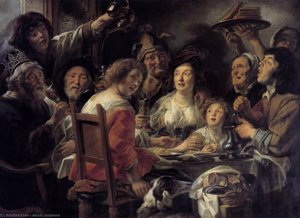
Jordaens' artistic output was remarkably diverse, encompassing a wide spectrum of subjects – from grand religious narratives and mythological scenes to allegorical compositions brimming with symbolism, lively genre paintings depicting peasant life, and even portraits capturing the essence of his patrons. However, he is perhaps most renowned for his boisterous depictions of peasant festivals and tavern scenes—works that radiate an infectious energy and an uninhibited celebration of earthly pleasures. Paintings such as *The King Drinks* (also known as the Feast of the Bean King) exemplify this characteristic style: crowded compositions teeming with robust figures engaged in lively revelry, rendered in warm, glowing colors and dramatic chiaroscuro. These scenes weren’t merely celebrations of merriment; they often carried subtle moralizing undertones, reflecting the complex relationship between indulgence and restraint that characterized 17th-century society. Yet, Jordaens was equally adept at handling grander, more formal commissions. His involvement in decorating the Huis ten Bosch palace near The Hague – alongside collaborations with Rubens – showcased his ability to create monumental allegorical works that seamlessly integrated painting and architecture, transforming entire rooms into immersive visual narratives.Influences and a Distinct Artistic Voice
While Jordaens never ventured to Italy, as many of his contemporaries did, he was deeply influenced by the artistic currents flowing through Northern Europe, particularly those emanating from Italy. He studied the works of masters like Jacopo Bassano, Paolo Veronese, and Caravaggio—artists whose techniques and sensibilities resonated with the Flemish spirit. The influence of Caravaggio is particularly striking in Jordaens’s use of light and shadow – a technique known as *chiaroscuro* – which dramatically intensifies the emotional impact of his scenes. However, Jordaens didn't simply imitate these influences; he skillfully synthesized them with his own Flemish sensibilities, creating a style that was uniquely his own. He distinguished himself from Rubens and Van Dyck in his preference for realism over idealized beauty, embracing a more direct and unrefined approach to depicting the human form. His figures are often substantial, even corpulent, their faces flushed with health and vitality—a testament to his commitment to portraying the authentic realities of life. This dedication to naturalism, combined with his masterful command of color and composition, set him apart from his contemporaries and firmly established him as a leading figure in Flemish Baroque painting.Major Works and Artistic Development
Throughout his prolific career, Jordaens produced an astonishing volume of work, demonstrating remarkable versatility across various genres. Key works include *The Return of the Holy Family from Egypt*, a dramatic narrative brimming with emotional intensity; *Argus and Mercury*, a dynamic mythological scene showcasing his technical skill and compositional prowess; and numerous genre paintings depicting scenes of everyday life—from bustling tavern gatherings to lively market squares. His artistic development can be traced through a progression from more tightly controlled, formally structured compositions in his early years to increasingly loose and exuberant arrangements as he matured. Notably, his later works often feature a greater emphasis on movement, color, and the depiction of human emotion, reflecting a shift towards a more expressive and personal style. The influence of his pupils is also evident in many of these paintings, suggesting that Jordaens was not merely a painter but also an educator, shaping the artistic landscape of Antwerp for generations to come.Legacy and Historical Significance
Jacob Jordaens’s legacy extends far beyond his individual masterpieces. He played a crucial role in preserving and developing the traditions of Flemish painting during a period of significant change. His commitment to depicting the realities of everyday life—particularly the lives of ordinary people—challenged traditional artistic hierarchies and offered a fresh perspective on the world around him. His influence can be seen in the work of later artists, including Jan Steen, who shared his penchant for portraying lively genre scenes with a touch of humor and social commentary. Jordaens’s paintings continue to resonate with audiences today, offering a glimpse into the vibrant culture and complex values of 17th-century Flanders—a testament to the enduring power of his artistic vision. His ability to seamlessly blend realism with allegory, sensuality with morality, and grandeur with intimacy solidifies his position as one of the most compelling and influential figures in the history of Baroque art.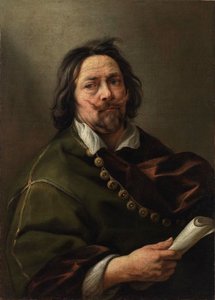
Якоб Йордаенс
1593 - 1678 , Бельгия
Основные сведения
- Artistic Movement Or Style: Фламандский барокко
- Artists Or Movements Influenced By This Artist: ['Ян Стен']
- Artists Who Influenced This Artist:
- Адам ван Ноорт
- Рубенс
- Date Of Birth: 19 мая 1593
- Date Of Death: 18 октября 1678
- Full Name: Якоб Йордаенс
- Nationality: Нидерландский барокко
- Notable Artworks:
- «Возвращение Святой семьи из Египта»
- «Праздник короля»
- Place Of Birth: Антверпен, Бельгия
Похожие статьи
10 шедевров модерна: искусство, изменившее декор и вдохновившее художников
Погрузитесь в мир модерна! 10 шедевров от Мухи, Климта и Гауди – история искусства, изящные линии, флоральные мотивы. Купите репродукции картин модерн премиум-качества на ArtsDot.com и вдохновите свой интерьер!
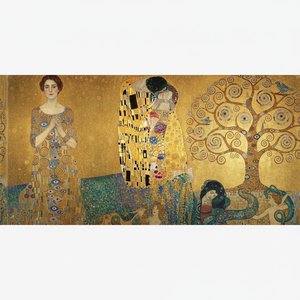
25 Шедевров Густава Климта: Искусство, Декор и Золотой Век Австрийского Модерна
Погрузитесь в мир Густава Климта! 25 шедевров австрийского модерна, символизма и золотой живописи. Узнайте истории создания знаменитых картин Климта и вдохновитесь для декора интерьера. Репродукции музейного качества на ArtsDot.com.

10 Шедевров Барокко: Искусство, изменившее мир | ArtsDot.com
Погрузитесь в мир барокко! 10 шедевров Караваджо, Рембрандта и других великих художников. Узнайте историю создания культовых картин и найдите идеальную репродукцию для вашего интерьера на ArtsDot.com
The Grandeur of Baroque Portraiture: Power, Emotion & Artistic Innovation
Explore the grandeur of Baroque portraiture! Discover Rubens, Van Dyck & the masters of 17th-century art. Uncover symbolism, techniques & lasting influence. Expert insights for collectors and enthusiasts.
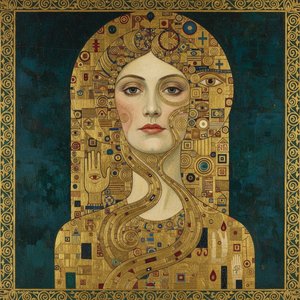
Gustav Klimt: A Golden Legacy of Sensuality & Symbolism in Viennese Art
Explore the captivating world of Gustav Klimt with ArtsDot. Discover his iconic paintings, the Vienna Secession movement, & enduring legacy. High-quality reproductions available.