 Предпросмотр
 Поделиться
 Поделиться
 Детали произведения

 Скачать
 Похожие работы
 Рентгенография
 Слайд-шоу
 Статистика
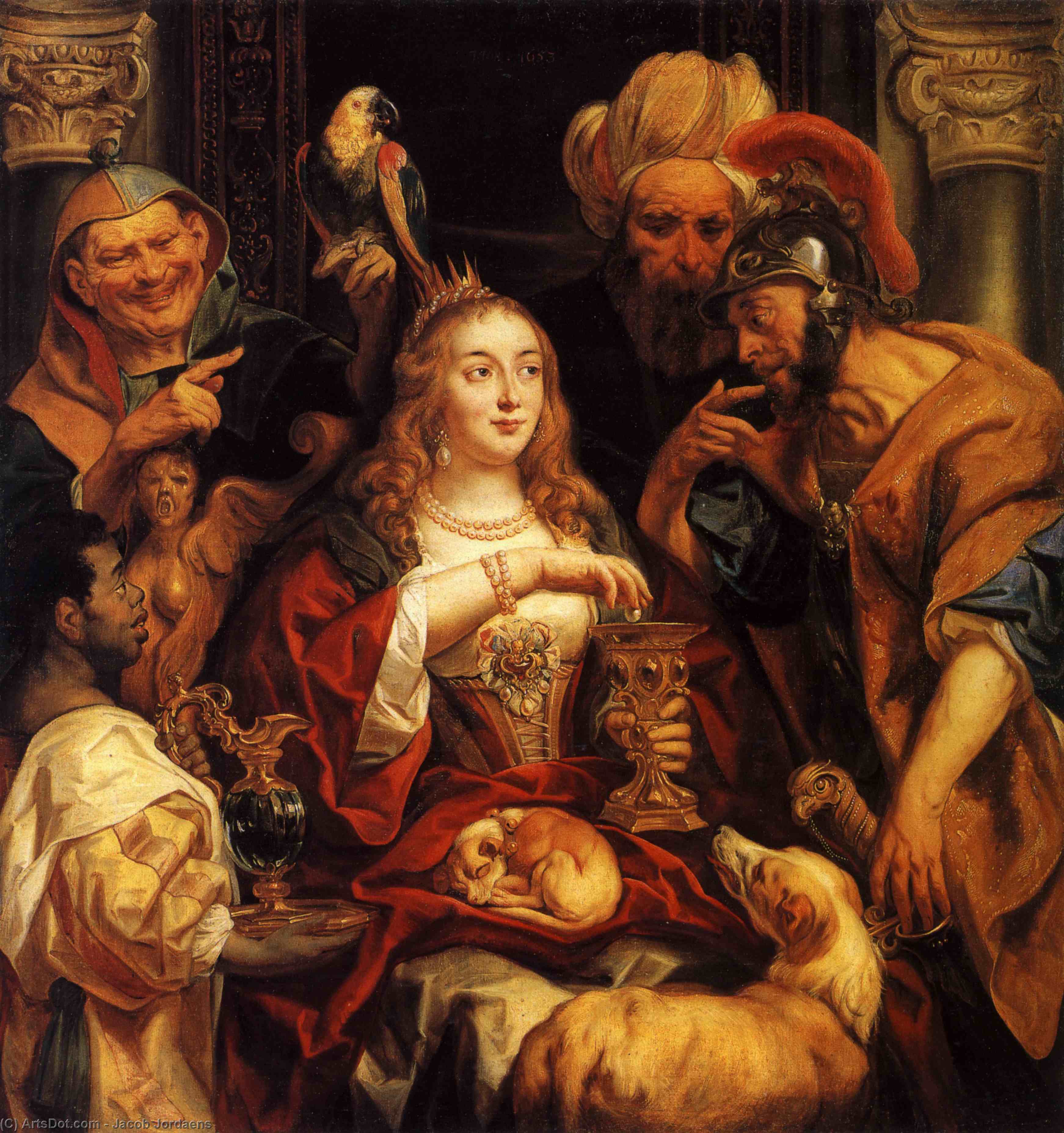
The Banquet of Cleopatra
 Oil
Oil- WallArt
- Baroque
 1653
1653- Early Modern
 156.0 x 149.0 cm
 Читать далее
Жикле / Арт-принт
Печать (жикле) или холст музейного качества с быстрыми сроками изготовления и широким выбором вариантов отделки. ( Купить картину ручной работы Перейти к цифровым изображениям)




P118B $10

P118H $10

P118W $10

P438Z $10

P508JH $12

P508YH $12

P805H $10

P805Z $10

P919BZ $10

P919G $10

P919XJ $10

P959ZH $10

P968JZ $12

W106C $8

W218G $10

W218JH $8

W218Y $10

W307PJ $10

W316G $10

W316PJ $8

W316Y $10

W398PJ $8

W4111J $10

W500HY $15

W500JH $15

W692G $12

W849H $8

W940BG $15

W953PJ $8




Выберите один из наших стандартных размеров, соответствующих оригинальным пропорциям произведения искусства.

Вы можете указать свои собственные размеры, чтобы репродукция идеально подошла под конкретную раму или пространство. Если выбранный вами размер не будет соответствовать пропорциям оригинала, мы либо обрежем произведение, либо дополним изображение зеркальным отражением краев или однотонной заливкой. Перед началом производства вам будет отправлен цифровой макет для утверждения.
Пожалуйста, обратите внимание, что предварительный просмотр на экране не отображает фактическую обрезку или расширение изображения. Только макет точно покажет финальную композицию.
Несмотря на возможность заказа индивидуальных размеров, мы рекомендуем выбирать размер из предопределенного списка, чтобы сохранить оригинальные пропорции.
Доставка по всему миру () за 2 недели вместо стандартных 4/5 недель. (13 Сентябрь)

Бесплатная экспресс-доставка по всему миру

Высококачественный льняной холст

Полное страхование доставки

Гарантия возмещения таможенных пошлин

Гарантия точного соответствия цветов

100-дневная политика возврата (только при обнаружении дефектов)

Гарантия возврата 100% средств

Предложение оптовых скидок
 Вариант со стеклом доступен только для размеров менее 110 см

The Banquet of Cleopatra
Жикле / Арт-принт
Размер репродукции
-


Итоговая стоимость
$ 62
A Grand Spectacle of Baroque Opulence
In the heart of the seventeenth century, few artists could capture the visceral energy of human indulgence quite like Jacob Jordaens. His masterpiece, The Banquet of Cleopatra, serves as a breathtaking window into the Flemish Baroque era, inviting the viewer to partake in a scene of unparalleled luxury and dramatic tension. The painting centers on the legendary Queen of Egypt, depicted not merely as a political figure, but as the radiant focal point of an extravagant feast. Surrounded by a courtly assembly of men whose gazes are fixed upon her with a mixture of awe and desire, Cleopatra sits enthroned in a moment of profound historical theater. The composition is thick with life; every corner of the canvas teems with movement, from the subtle interaction of the guests to the presence of watchful birds that add an organic, almost voyeuristic layer to the gathering.
The sheer scale of the work, measuring 156 x 149 cm, commands any room it inhabits, making it a definitive statement piece for discerning collectors and interior designers alike. Jordaens utilizes a robust, earthy palette that is characteristic of his unique style—a departure from the more ethereal Italianate traditions. Instead, he embraces a tactile realism where the sheen of silk, the weight of gold crowns, and the glint of silver vessels feel almost tangible. The lighting is masterfully handled, employing dramatic chiaroscity to pull the figures forward from the shadows, creating a sense of three-dimensional depth that draws the eye into the very center of the banquet.
Symbolism and the Art of the Feast
Beyond its surface beauty, The Banquet of Cleopatra is steeped in the symbolic language of the Baroque period. The scene alludes to the famous historical wager between Cleopatra and Marc Antony, where the Queen famously dissolved a priceless pearl in vinegar to prove her extravagance. While Jordaens focuses on the atmospheric aftermath of such grandeur, the presence of fine glassware, overflowing abundance, and the regal posture of the Queen all whisper of themes involving wealth, power, and the fleeting nature of sensory pleasure. The birds perched within the scene act as subtle metaphors for the watchful eyes of history and the untamed nature of passion that permeates the room.
For those looking to integrate fine art into a sophisticated interior, this painting offers more than just decoration; it offers an emotional anchor. It evokes a sense of timelessness and prestige, perfect for creating a focal point in a formal dining hall, a grand library, or a curated gallery space. The interplay of light and shadow provides a rhythmic complexity that complements both classical and contemporary decor, lending an air of intellectual depth and historical gravity to any architectural setting.
A Legacy of Flemish Mastery
To possess a reproduction of such a work is to honor the legacy of the Antwerp masters. Jacob Jordaens, a contemporary of Rubens, brought a distinctively grounded and vigorous spirit to his subjects. Unlike the idealized figures found in much of the era's art, Jordaens’ characters possess a fleshy, breathing reality that makes their triumphs and dramas feel immediate and relatable. This painting is a testament to his ability to elevate a historical anecdote into a universal celebration of life’s most opulent moments.
Whether you are an art historian captivated by the technical precision of the Flemish school or an interior designer seeking to evoke the drama of a bygone era, The Banquet of Cleopatra stands as an enduring icon of artistic achievement. It is a piece that does not merely hang on a wall; it breathes life into a space, telling a story of royalty, excess, and the eternal allure of beauty.
Похожие произведения
Биография художника
A Flemish Master of Life’s Abundance: Jacob Jordaens
Jacob Jordaens, born in Antwerp in 1593, stands as a pivotal figure in the vibrant tapestry of the Flemish Baroque. Unlike many of his contemporaries who sought artistic enlightenment in Italy, he remained firmly rooted in his native Flanders, cultivating a distinctive style that celebrated the joys and realities of everyday life with remarkable energy and warmth. His father, a successful linen merchant, provided him with a comfortable upbringing, affording him an education befitting his social standing before he embarked on his artistic journey under the tutelage of Adam van Noort – also the master of Peter Paul Rubens. This formative training instilled in Jordaens a solid foundation in meticulous technique and a keen understanding of composition, yet he swiftly diverged to forge his own unique path, establishing himself as a distinct voice within the artistic landscape. In 1616, he solidified his connection to the established Antwerp art world by marrying Van Noort’s daughter, Katharina, creating a family bond that profoundly influenced his creative trajectory.The Painter of Peasant Revelry and Baroque Grandeur
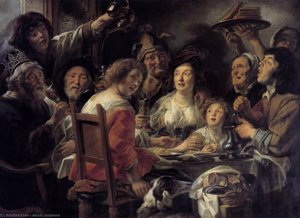
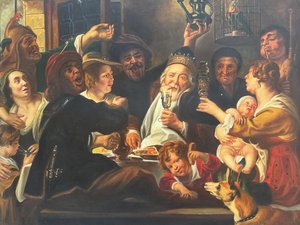
Jordaens' artistic output was remarkably diverse, encompassing a wide spectrum of subjects – from grand religious narratives and mythological scenes to allegorical compositions brimming with symbolism, lively genre paintings depicting peasant life, and even portraits capturing the essence of his patrons. However, he is perhaps most renowned for his boisterous depictions of peasant festivals and tavern scenes—works that radiate an infectious energy and an uninhibited celebration of earthly pleasures. Paintings such as *The King Drinks* (also known as the Feast of the Bean King) exemplify this characteristic style: crowded compositions teeming with robust figures engaged in lively revelry, rendered in warm, glowing colors and dramatic chiaroscuro. These scenes weren’t merely celebrations of merriment; they often carried subtle moralizing undertones, reflecting the complex relationship between indulgence and restraint that characterized 17th-century society. Yet, Jordaens was equally adept at handling grander, more formal commissions. His involvement in decorating the Huis ten Bosch palace near The Hague – alongside collaborations with Rubens – showcased his ability to create monumental allegorical works that seamlessly integrated painting and architecture, transforming entire rooms into immersive visual narratives.Influences and a Distinct Artistic Voice
While Jordaens never ventured to Italy, as many of his contemporaries did, he was deeply influenced by the artistic currents flowing through Northern Europe, particularly those emanating from Italy. He studied the works of masters like Jacopo Bassano, Paolo Veronese, and Caravaggio—artists whose techniques and sensibilities resonated with the Flemish spirit. The influence of Caravaggio is particularly striking in Jordaens’s use of light and shadow – a technique known as *chiaroscuro* – which dramatically intensifies the emotional impact of his scenes. However, Jordaens didn't simply imitate these influences; he skillfully synthesized them with his own Flemish sensibilities, creating a style that was uniquely his own. He distinguished himself from Rubens and Van Dyck in his preference for realism over idealized beauty, embracing a more direct and unrefined approach to depicting the human form. His figures are often substantial, even corpulent, their faces flushed with health and vitality—a testament to his commitment to portraying the authentic realities of life. This dedication to naturalism, combined with his masterful command of color and composition, set him apart from his contemporaries and firmly established him as a leading figure in Flemish Baroque painting.Major Works and Artistic Development
Throughout his prolific career, Jordaens produced an astonishing volume of work, demonstrating remarkable versatility across various genres. Key works include *The Return of the Holy Family from Egypt*, a dramatic narrative brimming with emotional intensity; *Argus and Mercury*, a dynamic mythological scene showcasing his technical skill and compositional prowess; and numerous genre paintings depicting scenes of everyday life—from bustling tavern gatherings to lively market squares. His artistic development can be traced through a progression from more tightly controlled, formally structured compositions in his early years to increasingly loose and exuberant arrangements as he matured. Notably, his later works often feature a greater emphasis on movement, color, and the depiction of human emotion, reflecting a shift towards a more expressive and personal style. The influence of his pupils is also evident in many of these paintings, suggesting that Jordaens was not merely a painter but also an educator, shaping the artistic landscape of Antwerp for generations to come.Legacy and Historical Significance
Jacob Jordaens’s legacy extends far beyond his individual masterpieces. He played a crucial role in preserving and developing the traditions of Flemish painting during a period of significant change. His commitment to depicting the realities of everyday life—particularly the lives of ordinary people—challenged traditional artistic hierarchies and offered a fresh perspective on the world around him. His influence can be seen in the work of later artists, including Jan Steen, who shared his penchant for portraying lively genre scenes with a touch of humor and social commentary. Jordaens’s paintings continue to resonate with audiences today, offering a glimpse into the vibrant culture and complex values of 17th-century Flanders—a testament to the enduring power of his artistic vision. His ability to seamlessly blend realism with allegory, sensuality with morality, and grandeur with intimacy solidifies his position as one of the most compelling and influential figures in the history of Baroque art.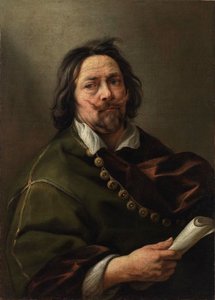
Якоб Йордаенс
1593 - 1678 , Бельгия
Основные сведения
- Artistic Movement Or Style: Фламандский барокко
- Artists Or Movements Influenced By This Artist: ['Ян Стен']
- Artists Who Influenced This Artist:
- Адам ван Ноорт
- Рубенс
- Date Of Birth: 19 мая 1593
- Date Of Death: 18 октября 1678
- Full Name: Якоб Йордаенс
- Nationality: Нидерландский барокко
- Notable Artworks:
- «Возвращение Святой семьи из Египта»
- «Праздник короля»
- Place Of Birth: Антверпен, Бельгия
Похожие статьи
Jacob Jordaens: Baroque Dynamism & Genre Innovation of the Antwerp School
Discover Jacob Jordaens, a leading Flemish Baroque painter renowned for his dynamic compositions & realistic genre scenes. Explore his life, art, and lasting influence with ArtsDot.

Baroque Classicism: Reconciling Drama & Order in 17th-Century Art
Explore the captivating world of Baroque Classicism! Discover its history, key artists like Caravaggio & Rubens, and defining characteristics. Expert insights & high-quality reproductions at ArtsDot.

The Visceral Stage: Exploring Dramatic Narratives & Emotional Intensity in Baroque Art
Explore the dramatic world of Baroque art! Discover iconic masters like Caravaggio & Rembrandt, their techniques, and the movement's lasting impact. Expert insights for collectors & enthusiasts at ArtsDot.

10 Шедевров Барокко: Искусство, изменившее мир | ArtsDot.com
Погрузитесь в мир барокко! 10 шедевров Караваджо, Рембрандта и других великих художников. Узнайте историю создания культовых картин и найдите идеальную репродукцию для вашего интерьера на ArtsDot.com

The Dramatic Flourish: Exploring the Baroque Movement's Enduring Legacy in Art History
Explore the dramatic world of Baroque art! Discover iconic artists like Caravaggio & Rubens, defining techniques, and its lasting impact on art history. Expert insights for collectors & enthusiasts at ArtsDot.