 Предпросмотр
 Поделиться
 Поделиться
 Детали произведения

 Скачать
 Похожие работы
 Рентгенография
 Слайд-шоу
 Статистика
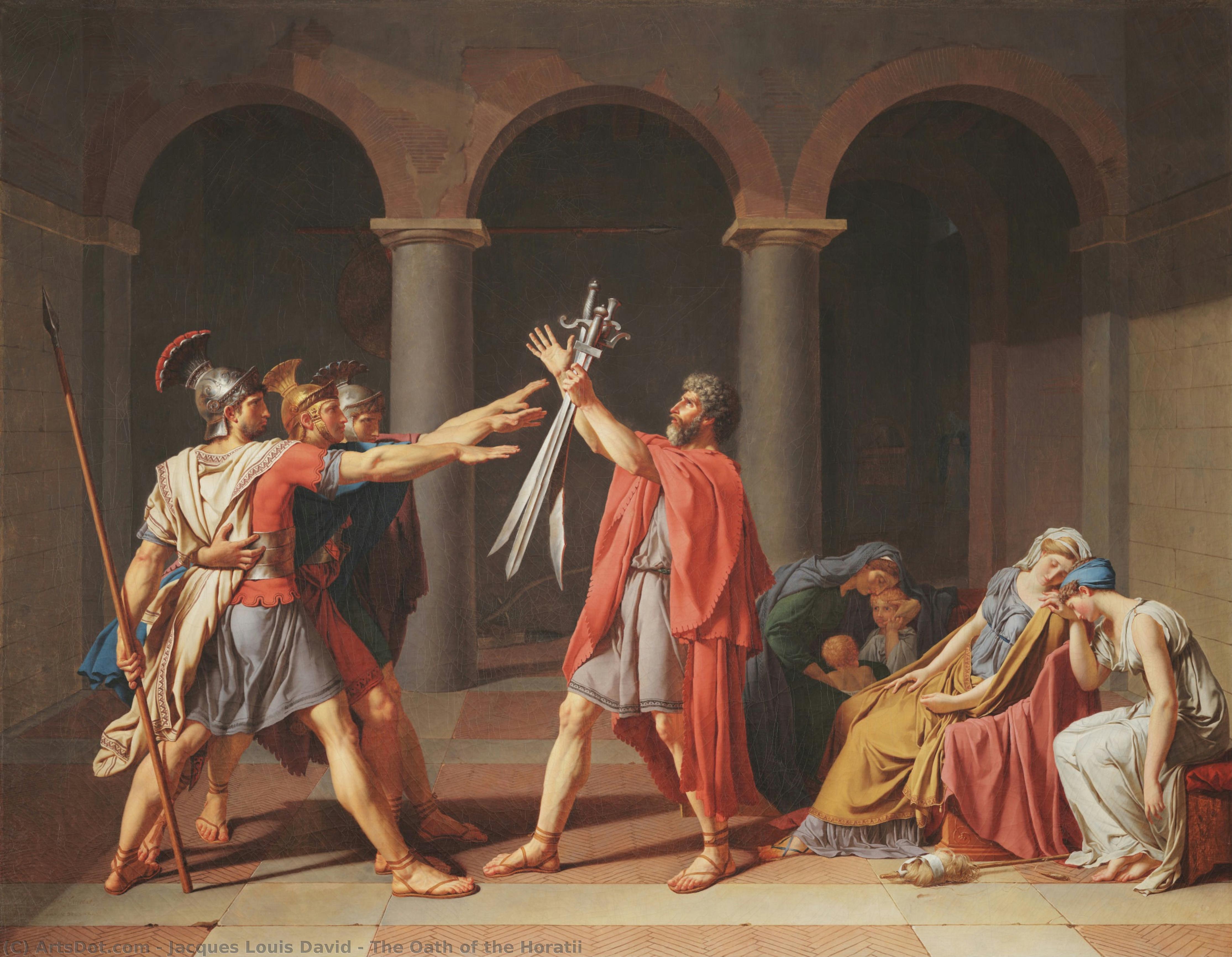
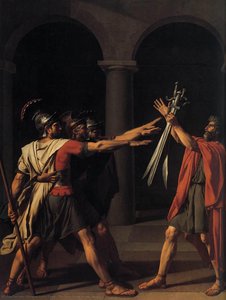
The Oath of the Horatii
 Акрил на холсте
- Настенный декор
- Neoclassicism
 1786
1786 130.0 x 166.0 cm
 Toledo Museum of Art
 Читать далее
Масляная репродукция ручной работы
Картина маслом на холсте в выбранном вами размере и раме, написанная на заказ нашими художниками. ( Перейти к печати Перейти к цифровым изображениям)




P118B $10

P118H $10

P118W $10

P438Z $10

P508JH $12

P508YH $12

P805H $10

P805Z $10

P919BZ $10

P919G $10

P919XJ $10

P959ZH $10

P968JZ $12

W106C $8

W218G $10

W218JH $8

W218Y $10

W307PJ $10

W316G $10

W316PJ $8

W316Y $10

W398PJ $8

W4111J $10

W500HY $15

W500JH $15

W692G $12

W849H $8

W940BG $15

W953PJ $8




Выберите один из наших стандартных размеров, соответствующих оригинальным пропорциям произведения искусства.

Вы можете указать собственные размеры, чтобы картина идеально вписалась в выбранную раму или пространство. Если выбранный вами размер не соответствует пропорциям оригинала, мы либо обрежем полотно, либо расширим его за счет дополнительных элементов, написанных вручную. Цифровой макет будет отправлен вам на утверждение перед началом производства.
Обратите внимание, что предварительный просмотр на экране не отражает фактическую обрезку или расширение. Только макет точно покажет окончательную композицию.
Хотя доступны индивидуальные размеры, мы рекомендуем выбирать вариант из предопределенного списка, чтобы сохранить исходные пропорции.
После оформления заказа команда ArtsDot.com свяжется с клиентом по электронной почте для уточнения деталей и предоставит предварительный макет
Доставка по всему миру () за 3–4 недели вместо стандартных 5 недель. (10 Сентябрь). Без компромиссов в качестве.

Бесплатная экспресс-доставка по всему миру

Высококачественный льняной холст

Полное страхование доставки

Гарантия возмещения таможенных пошлин

Гарантия точного соответствия цветов

100-дневная политика возврата (только при обнаружении дефектов)

Гарантия возврата 100% средств

Предложение оптовых скидок
 Вариант со стеклом доступен только для размеров менее 110 см

The Oath of the Horatii
Техника репродукции
Размер репродукции
-


Итоговая стоимость
$ 388
A Moment Frozen in Time: Jacques-Louis David’s “The Oath of the Horatii”
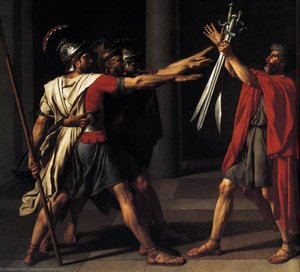
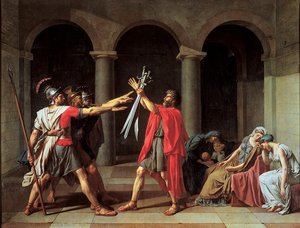
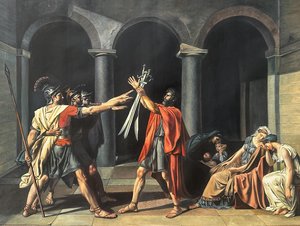
“The Oath of the Horatii,” completed in 1786, is arguably Jacques-Louis David's most iconic work and a cornerstone of Neoclassical painting. This compelling canvas, a reduced replica commissioned by Comte de Vaudreuil from the original housed in the Louvre, captures a dramatic moment of Roman legend – the Horatii brothers pledging their lives for Rome. The addition of a distaff with spun thread near the women’s feet in this version adds a subtle yet intriguing detail.The Story and its Historical Context
The painting depicts a pivotal episode from the conflict between Rome and Alba Longa, settled not through large-scale warfare but by a champion duel. Three brothers from each city – the Horatii and the Curiatii – were chosen to fight to the death, minimizing bloodshed while determining the victor. David masterfully portrays the moment before battle, as the Horatii swear an oath to their father, vowing unwavering loyalty to Rome even at the cost of familial ties. This scene resonated deeply with pre-Revolutionary France, where themes of civic duty, sacrifice, and patriotism were gaining prominence. The painting served as a powerful call for restraint, order, and prioritizing the state over individual desires – ideals that would soon be tested in the tumultuous years to come.A Masterclass in Neoclassical Style
David’s artistic approach is firmly rooted in Neoclassicism, a style characterized by its reverence for classical antiquity, clarity of form, and emphasis on reason and order. The composition is strikingly structured, reminiscent of classical relief sculpture. A strong diagonal axis created by the swords draws the eye towards the focal point – the brothers’ resolute pledge. Linear perspective creates depth within the shallow space of the colonnaded hall, enhancing the sense of drama and confinement.Technique and Composition
The artist employed meticulous brushwork and layering techniques to achieve a smooth, polished surface. The figures are rendered with idealized forms and precise lines, typical of the Neoclassical aesthetic. Geometric shapes – rectangles and triangles – dominate the composition, reinforcing its sense of stability and rationality. Notice the stark contrast between the dynamic, angular poses of the men and the fluid, curving contours of the grieving women. This deliberate juxtaposition highlights the differing roles assigned to each gender within Roman society and underscores the emotional weight of the impending conflict. The dramatic lighting, originating from a single source, casts deep shadows and emphasizes key elements like the swords and faces, heightening the overall impact.Symbolism and Emotional Resonance
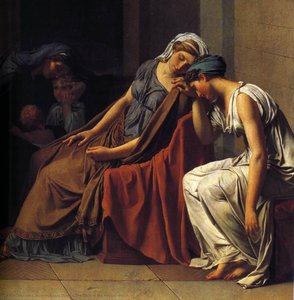
Beyond its historical narrative, “The Oath of the Horatii” is rich in symbolism. The raised swords represent courage, duty, and unwavering commitment to Rome. The women’s slumped postures embody grief, resignation, and the personal cost of conflict – a poignant reminder that even victory comes with sacrifice. The complex relationships between the families—brothers facing cousins, husbands/fiancés against each other—add layers of emotional complexity. The painting evokes a powerful sense of solemnity, gravity, and impending tragedy, prompting viewers to contemplate themes of honor, patriotism, and the difficult choices individuals face when duty clashes with personal feelings.A Timeless Masterpiece for Today’s Spaces
“The Oath of the Horatii” is more than just a historical painting; it's a powerful statement about human values that continues to resonate today. Its strong composition, dramatic lighting, and profound symbolism make it an exceptional addition to any collection or interior design scheme. A high-quality reproduction captures the essence of David’s masterpiece, bringing a touch of classical grandeur and intellectual depth to homes, offices, and galleries alike. Its enduring appeal lies in its ability to provoke thought, inspire conversation, and remind us of the timeless struggle between personal desires and civic responsibility.Похожие произведения
Биография художника
A Brushstroke Across Revolution: The Life and Art of Jacques-Louis David
Jacques-Louis David, born in Paris in 1748, was more than just a painter; he was a visual chronicler of an era defined by upheaval, idealism, and the relentless pursuit of new orders. His life mirrored the dramatic shifts unfolding across France – from the waning opulence of the Rococo to the austere clarity of Neoclassicism, and ultimately, through the tumultuous years of revolution and Napoleonic glory. A childhood marked by the early loss of his father and a facial impediment that initially hindered his speech seemed only to sharpen his observational skills and fuel an unwavering dedication to artistic mastery. Though initially apprenticed to François Boucher, David quickly found himself drawn to the more morally resonant work of Joseph-Marie Vien, whose emphasis on history painting and classical subjects resonated with a burgeoning sense of purpose within the young artist. His early attempts to win the prestigious Prix de Rome were fraught with frustration, yet these repeated setbacks only intensified his resolve, forging a relentless perfectionism that would characterize his entire career.The Birth of Neoclassical Drama
David’s artistic evolution wasn't merely a stylistic shift; it was a philosophical statement. He rejected the frivolous ornamentation and playful themes of the Rococo, embracing instead the clarity, order, and moral seriousness inherent in classical antiquity. This commitment was profoundly influenced by archaeological discoveries at Pompeii and Herculaneum, which unveiled a world of Roman art and architecture previously lost to time. These ruins ignited within him a passion for recreating the grandeur and heroic ideals of the ancient world. His breakthrough came with “Oath of the Horatii” (1784), a painting that transcended mere artistic skill to become an emblem of civic virtue and patriotic sacrifice. The stark composition, dramatic lighting – carefully calculated to heighten emotion – and precise draftsmanship were revolutionary, signaling a decisive break from the past. It wasn’t simply *what* he painted but *how* – a deliberate construction designed to evoke powerful emotional responses and inspire contemplation on themes of duty, honor, and self-sacrifice. The figures are rendered with an almost sculptural quality, embodying Roman ideals of strength and virtue. This work didn't just announce a new style; it foreshadowed the ideological currents that would soon sweep across France.Revolution and Remembrance: Art as Political Weapon
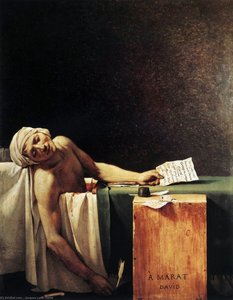
As the French Revolution erupted in 1789, David was not merely an observer but an active participant. A fervent supporter of the revolutionary cause and a close associate of Maximilien Robespierre, he saw art as a powerful tool for shaping public opinion and immortalizing the ideals of the new republic. His paintings during this period became potent symbols of revolutionary martyrdom and republican fervor. Perhaps his most iconic work from this era is “The Death of Marat” (1793), a hauntingly realistic depiction of the assassinated journalist, transformed into a secular saint. The pale body, the makeshift desk, the poignant letter clutched in Marat's hand – all contribute to an image of profound sorrow and sacrifice for the cause of liberty. David’s deliberate use of chiaroscuro (strong contrasts between light and dark) intensifies the drama and draws the viewer’s eye directly to the central figure. He served on the Committee of Public Safety during the Reign of Terror, even signing Robespierre’s death warrant, demonstrating his deep entanglement with the political machinations of the time – a controversial act that reflects the complexities of his commitment to revolutionary ideals.From Revolution to Empire: Serving Napoleon
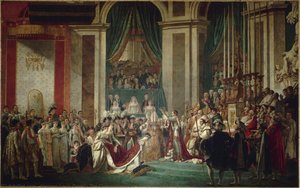
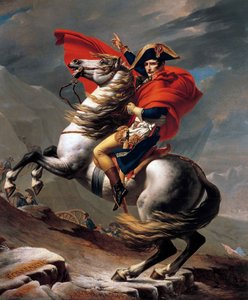
The fall of Robespierre marked another turning point in David's career. With remarkable adaptability, he navigated the shifting political landscape and aligned himself with Napoleon Bonaparte, becoming the First Consul’s official court painter. This new patronage ushered in a period of grand-scale commissions designed to glorify Napoleon’s victories and achievements. “Napoleon Crossing the Alps” (1801-1805) is perhaps the most famous example – a masterful piece of propaganda that presents Napoleon as a heroic, almost mythical figure conquering both nature and adversity. The dramatic lighting, the dynamic composition, and the carefully chosen details all contribute to an image of unparalleled power and authority. “The Coronation of Napoleon” (1807), an immense canvas capturing the opulence and grandeur of the imperial ceremony, further cemented David’s position as the preeminent artist of the Napoleonic era. During this time, his palette subtly shifted, incorporating warmer Venetian colors while maintaining the precision and clarity that defined his style – a reflection of Napoleon's ambition to emulate the splendor of the Roman emperors.Exile, Legacy, and Enduring Influence
The Bourbon Restoration in 1814 brought renewed peril for David, whose association with the fallen Napoleon made him a target of persecution. He chose exile in Brussels in 1816, where he continued to paint and teach until his death on December 29, 1825. Even in exile, his influence remained profound. He trained numerous pupils, including Jean-Auguste-Dominique Ingres, who would become one of the most important neoclassical painters of the 19th century. David’s emphasis on draftsmanship, composition, and historical accuracy left an indelible mark on French art. *His legacy extends beyond mere imitation*; his expressive distortions of form and space even foreshadowed the innovations of later artists like Henri Matisse and Pablo Picasso. Jacques-Louis David was not simply a painter of his time; he *defined* it, capturing its spirit of revolution, ambition, and enduring ideals on canvas for generations to come.- Major Achievements: Established Neoclassicism as the dominant style in French painting.
- Historical Significance: Created iconic images that captured the spirit of the French Revolution and the Napoleonic era.
- Influence: Trained a generation of influential artists who carried on his legacy.
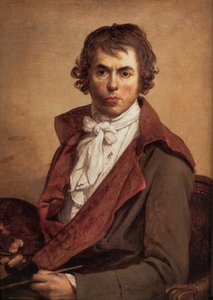
Давид
1748 - 1800 , Франция
Основные сведения
- Artistic Movement Or Style: Неоклассицизм
- Artists Or Movements Influenced By This Artist:
- Жан-Луи Тоссайн д’Анжубер
- Романтизм
- Artists Who Influenced This Artist:
- Жан-Август-Доминик Дюран
- Жозеф-Мари Виен
- Date Of Birth: 30 августа 1748 г.
- Date Of Death: 29 декабря 1825 г.
- Full Name: Jacques-Louis David
- Nationality: Француз
- Notable Artworks:
- Клятва Горатиев
- Смерть Марата
- Наполеон переходит Альпы
- Place Of Birth: Париж, Франция
Похожие статьи
10 Шедевров Неоклассицизма: Искусство, Определившее Эпоху | ArtsDot
Погрузитесь в мир неоклассицизма! 10 шедевров от Давида, Кановы и других великих художников. Узнайте историю создания культовых картин и найдите идеальную репродукцию для вашего интерьера на ArtsDot.com
The Revival of Antiquity: Exploring the Ideals & Innovations of Neoclassical Art
Explore the revival of classical art with our deep dive into Neoclassicism! Discover key artists like Jacques-Louis David, Enlightenment influences & lasting impact on art history. Learn more now.
The Revival of Antiquity: Exploring Ideals of Beauty & Power in Neoclassical Portraiture
Explore the captivating world of Neoclassical portraiture! Discover the power & ideals behind masterpieces by David, Girodet & more. Expert analysis, custom reproductions & art appraisal at ArtsDot.
Anne-Louis Girodet: Bridging Neoclassicism & Romanticism with Emotional Truth
Explore the captivating world of Anne-Louis Girodet, a pivotal figure bridging Neoclassicism & Romanticism. Discover his masterpieces and unique artistic vision with ArtsDot.
Jacques-Louis David: Neoclassical Ideals & Revolutionary Witness
Explore the life & art of Jacques-Louis David, leading Neoclassical painter of the French Revolution. Discover iconic works like 'The Death of Marat' and his lasting impact on art history. Expert analysis & high-quality reproductions at ArtsDot.