 Предпросмотр
 Поделиться
 Поделиться
 Детали произведения

 Скачать
 Похожие работы
 Рентгенография
 Слайд-шоу
 Статистика
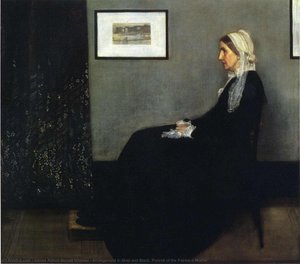
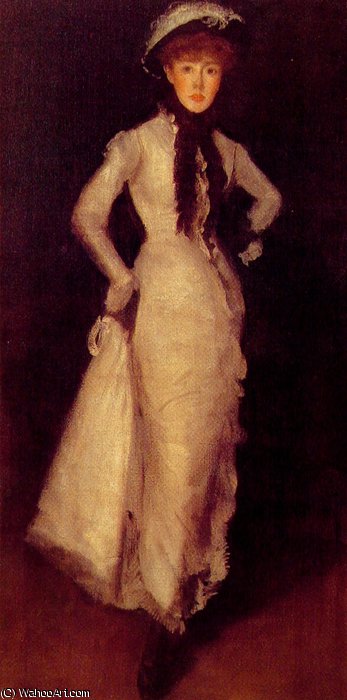
Arragnement in White and Black

 Читать далее
Масляная репродукция ручной работы
Картина маслом на холсте в выбранном вами размере и раме, написанная на заказ нашими художниками. ( Перейти к печати Перейти к цифровым изображениям)




P118B $10

P118H $10

P118W $10

P438Z $10

P508JH $12

P508YH $12

P805H $10

P805Z $10

P919BZ $10

P919G $10

P919XJ $10

P959ZH $10

P968JZ $12

W106C $8

W218G $10

W218JH $8

W218Y $10

W307PJ $10

W316G $10

W316PJ $8

W316Y $10

W398PJ $8

W4111J $10

W500HY $15

W500JH $15

W692G $12

W849H $8

W940BG $15

W953PJ $8




Выберите один из наших стандартных размеров, соответствующих оригинальным пропорциям произведения искусства.

Вы можете указать собственные размеры, чтобы картина идеально вписалась в выбранную раму или пространство. Если выбранный вами размер не соответствует пропорциям оригинала, мы либо обрежем полотно, либо расширим его за счет дополнительных элементов, написанных вручную. Цифровой макет будет отправлен вам на утверждение перед началом производства.
Обратите внимание, что предварительный просмотр на экране не отражает фактическую обрезку или расширение. Только макет точно покажет окончательную композицию.
Хотя доступны индивидуальные размеры, мы рекомендуем выбирать вариант из предопределенного списка, чтобы сохранить исходные пропорции.
После оформления заказа команда ArtsDot.com свяжется с клиентом по электронной почте для уточнения деталей и предоставит предварительный макет
Доставка по всему миру () за 3–4 недели вместо стандартных 5 недель. (10 Сентябрь). Без компромиссов в качестве.

Бесплатная экспресс-доставка по всему миру

Высококачественный льняной холст

Полное страхование доставки

Гарантия возмещения таможенных пошлин

Гарантия точного соответствия цветов

100-дневная политика возврата (только при обнаружении дефектов)

Гарантия возврата 100% средств

Предложение оптовых скидок
 Вариант со стеклом доступен только для размеров менее 110 см

Arragnement in White and Black
Техника репродукции
Размер репродукции
-


Итоговая стоимость
$ 263
A Study in Monochrome: Whistler’s Exploration of Aesthetic Principles
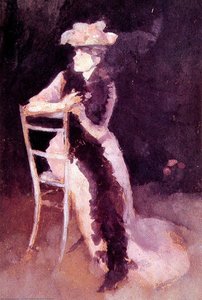
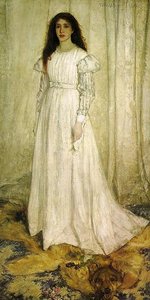
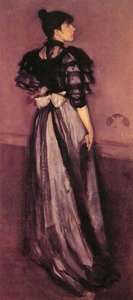
James Abbott McNeill Whistler's "Arrangement in White and Black," painted circa 1866, stands as a cornerstone of Aestheticism—a movement that prioritized beauty and sensory experience above didactic moral instruction. More than just a portrait, it’s an investigation into the very essence of artistic expression, reflecting Whistler’s profound conviction that art should exist solely for its own intrinsic value. The painting depicts a woman dressed in white lace, her gaze directed outwards, capturing a moment of quiet contemplation within what appears to be a Victorian parlor setting.- Style and Technique: Whistler employed a tonalist approach—a deliberate rejection of traditional chiaroscuro—focusing on subtle gradations of color rather than dramatic contrasts. This technique allowed him to convey mood and atmosphere with remarkable precision, prioritizing the interplay of light and shadow to create an illusionistic depth that transcends mere representation.
- Historical Context: Whistler’s work emerged during a period of significant artistic upheaval in Britain. The Pre-Raphaelites championed idealized beauty and narrative storytelling, while Impressionists sought to capture fleeting moments of sensory perception. Whistler deliberately distanced himself from these movements, arguing passionately for the supremacy of “art for art’s sake,” aligning himself with the burgeoning Aesthetic circle.
- Symbolism: The woman herself embodies a deliberate ambiguity—she is not merely an individual but rather a vessel for exploring broader concepts of femininity and stillness. The white dress symbolizes purity and grace, while the lace collar adds textural detail that contributes to the overall visual richness. Importantly, Whistler’s intention wasn't to convey a specific story but to evoke emotion through carefully considered composition.
Compositional Harmony: Whistler’s Pursuit of Visual Balance
Whistler meticulously crafted his painting’s arrangement—a deliberate effort to achieve visual equilibrium. The woman occupies the central position, framed by two figures on either side who are rendered in muted tones. This asymmetrical balance isn't jarring; rather, it reinforces the painting’s contemplative mood and invites viewers to engage with its subtle nuances. Whistler believed that beauty resided not just in accurate depiction but also in harmonious visual relationships—a principle he relentlessly pursued throughout his oeuvre.Emotional Resonance: Capturing a Moment of Serenity
“Arrangement in White and Black” transcends mere visual aesthetics; it aspires to elicit an emotional response. Whistler’s masterful use of tonal color creates a sense of quiet intimacy, conveying the serenity of a domestic scene without resorting to overt sentimentality. The painting speaks to a deeper yearning for beauty—a desire to experience art as pure sensation, untainted by moral judgment. It remains a testament to Whistler's unwavering commitment to his artistic vision and continues to inspire admiration for its understated elegance.Похожие произведения
Биография художника
A Life Shaped by Aestheticism: The World of James Abbott McNeill Whistler
James Abbott McNeill Whistler, born in Lowell, Massachusetts in 1834, was a figure perpetually at odds with convention—a painter who championed “art for art’s sake” during an era obsessed with moralizing narratives. His early life, marked by frequent relocations due to his father's railroad engineering career, instilled within him a sense of adaptability and exposure to diverse environments. A brief, unhappy stint at West Point proved ill-suited to his artistic temperament, followed by work with the U.S. Coast and Geodetic Survey that, while delaying, did not extinguish his burgeoning passion for art. These formative years were characterized by an innate talent for drawing and a resolute desire to forge a path as a professional artist, a pursuit that would ultimately lead him across the Atlantic and into the heart of the European avant-garde. The seeds of Whistler’s artistic rebellion were sown early, nurtured by a spirit that resisted conformity and embraced aesthetic exploration above all else.Parisian Beginnings and the Cultivation of Style
The pivotal moment in Whistler's artistic journey arrived with his move to Paris in 1855. Here, under the tutelage of Sébastien Bouré, he honed his skills in oil painting, watercolor, and printmaking, absorbing the influences of French Realism and the Barbizon School painters. However, Whistler quickly transcended mere imitation, developing a distinctive style characterized by tonal harmonies and atmospheric effects. He wasn’t interested in replicating reality; rather, he sought to capture its *essence*, its fleeting moods and subtle nuances. This period marked a crucial shift from representational accuracy towards an exploration of pure aesthetic form. His early works already hinted at the delicate balance between observation and abstraction that would define his mature style. It was in Paris that Whistler began to articulate his belief that art should be judged solely on its aesthetic qualities, free from didactic or moralizing constraints—a philosophy that would become the cornerstone of his artistic practice and a defining characteristic of the Aesthetic movement. He experimented with Japanese prints (ukiyo-e), finding inspiration in their bold compositions and evocative use of color, which profoundly influenced his own approach to design and arrangement.Nocturnes, Portraits, and the Pursuit of Harmony
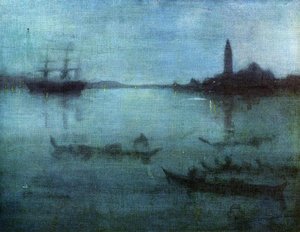
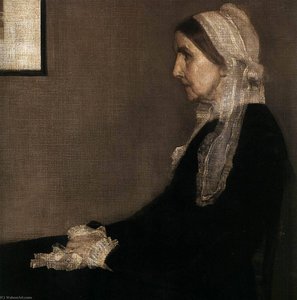
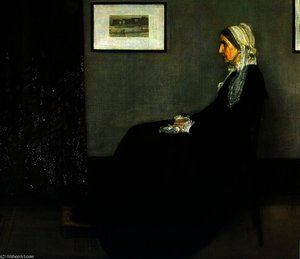
Whistler’s artistic vision crystallized in several key themes and stylistic choices. He championed the concept of “art for art’s sake,” rejecting narratives laden with moral or social commentary. His work became an exercise in capturing subtle nuances of light, color, and atmosphere—a pursuit that led to his iconic *Nocturnes*. These atmospheric paintings of twilight scenes, often depicting the Thames River at night, were not intended as literal depictions but rather as evocative impressions, studies in tonal harmony and mood. He frequently employed limited palettes and delicate brushwork, creating a sense of ethereal beauty and quiet contemplation. Whistler also developed a unique approach to portraiture, treating his sitters not merely as likenesses but as compositional elements within a carefully constructed aesthetic framework. *Arrangement in Grey and Black No. 1*—better known as *Whistler’s Mother*—demonstrates this approach perfectly, transforming a familial portrait into an iconic image of Victorian motherhood through its masterful use of form and tone. The painting's power lies not in a realistic portrayal but in the carefully balanced arrangement of shapes and colors, evoking a sense of serenity and dignity.Controversy, Influence, and Lasting Legacy
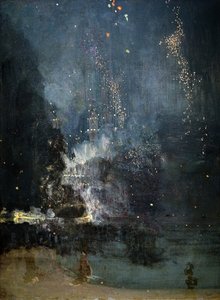
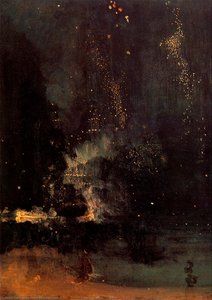
Whistler’s career was not without controversy. The infamous libel suit brought against him by the critic John Ruskin in 1878, sparked by *Nocturne in Black and Gold – The Falling Rocket*, became a landmark moment in art history. Whistler successfully defended his artistic autonomy, arguing that his paintings were not intended to be realistic representations but rather aesthetic arrangements of color and form. This case elevated his profile and ignited important debates about the nature of art criticism and artistic freedom. Beyond this legal battle, Whistler’s influence extended far and wide. He was deeply inspired by Japanese prints (ukiyo-e), which informed his compositional principles and emphasis on decorative patterns, as well as the tonal mastery of Spanish painters like Velázquez. His advocacy for “art for art’s sake” profoundly impacted the Aesthetic movement in England and America, paving the way for modernism and challenging conventional notions about artistic purpose. He left an indelible mark on American art, inspiring generations of artists to embrace formalist approaches and explore the expressive potential of color and composition. Whistler died in London in 1903, leaving behind a body of work that continues to captivate and inspire. His unwavering commitment to artistic principles and his relentless pursuit of aesthetic beauty cemented his place as a pivotal figure in the history of art.- Notable Works: *The Forge* (1861), *Portrait of Charles Lang Freer* (1873), *Brown and Gold: The Gold Girl—Connie Gilchrist* (1876-77), *Arrangement in Grey and Black No. 1 (Whistler’s Mother)* (1871), *Nocturne in Black and Gold – The Falling Rocket* (1875).
- Influences: Japanese prints, Velázquez.
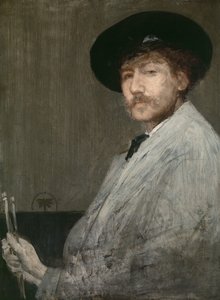
Уистлер
1834 - 1903 , Соединенные Штаты Америки
Основные сведения
- Artistic Movement Or Style: Эстетизм, тонализм
- Artists Or Movements Influenced By This Artist:
- Эстетическое движение
- Современное искусство
- Artists Who Influenced This Artist:
- Веласкес
- Японские гравюры
- Date Of Birth: 14 июля 1834 г.
- Date Of Death: 1903 г.
- Full Name: James Abbott McNeill Whistler
- Nationality: Американский
- Notable Artworks:
- Мать Уиттлера
- Ноктюрн: Синий и Серебро
- Forge
- Place Of Birth: Лоуэлл, США
Похожие статьи
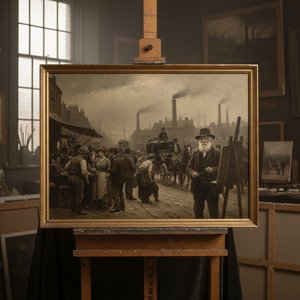
Walter Greaves: A Study in Victorian Realism & the Social Landscape of British Art
Explore the life & work of Walter Greaves, a key Victorian realist painter influenced by Whistler. Discover his London streetscapes, portraits, and enduring legacy. Learn about art appraisal & reproduction options at ArtsDot.
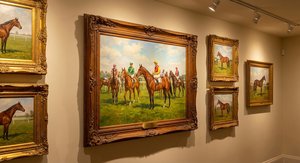
Альфред Муннингс: 25 шедевров британского импрессионизма для вашего интерьера | ArtsDot
Погрузитесь в мир Альфреда Муннингса! 25 шедевров британского импрессионизма, запечатлевших красоту лошадей и сельской Англии. Репродукции картин высокого качества для вашего интерьера на ArtsDot.com.
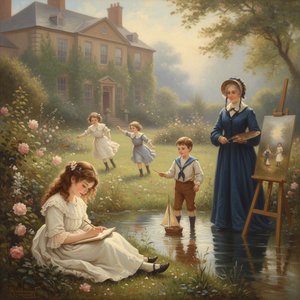
James Sant: Capturing Victorian Childhood & the Evolving Landscape of British Genre Painting
Explore the life & art of James Sant (1820-1916), renowned Victorian portraitist to Queen Victoria. Discover his captivating depictions of childhood, landscapes, and aristocratic society. Learn about his legacy & find fine art reproductions.
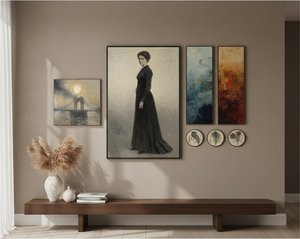
Джеймс Уистлер: Топ-25 шедевров художника для ценителей искусства и декора
Погрузитесь в мир Джеймса Уистлера! Топ-25 шедевров художника, от знаменитых ноктюрнов до изысканных портретов. Узнайте историю создания и эстетику каждой картины. Репродукции высокого качества для вашего интерьера на ArtsDot.com.

Белые шедевры: 10 знаменитых картин, покоривших мир (репродукции, декор)
Откройте для себя 10 знаменитых картин, где белый цвет – главный герой! Моне, Дега и другие мастера. История искусства, техники живописи и вдохновение для вашего интерьера. Репродукции высокого качества на ArtsDot.com