 Предпросмотр
 Поделиться
 Поделиться
 Детали произведения

 Скачать
 Похожие работы
 Рентгенография
 Слайд-шоу
 Статистика
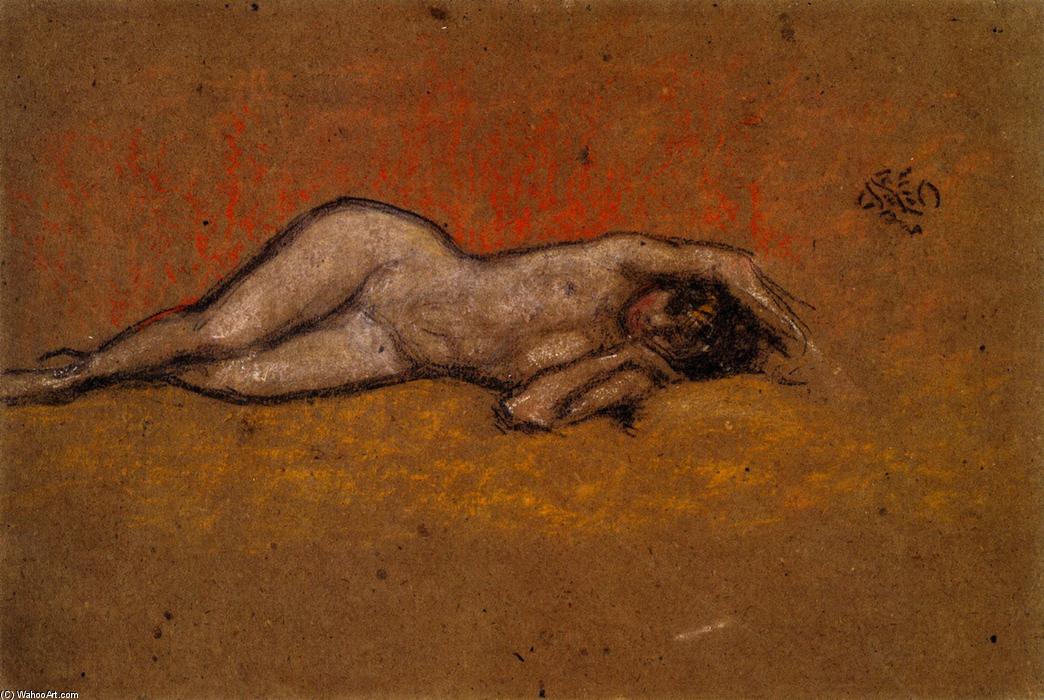
Nude Reclining


 Читать далее
Масляная репродукция ручной работы
Картина маслом на холсте в выбранном вами размере и раме, написанная на заказ нашими художниками. ( Перейти к печати Перейти к цифровым изображениям)




P118B $10

P118H $10

P118W $10

P438Z $10

P508JH $12

P508YH $12

P805H $10

P805Z $10

P919BZ $10

P919G $10

P919XJ $10

P959ZH $10

P968JZ $12

W106C $8

W218G $10

W218JH $8

W218Y $10

W307PJ $10

W316G $10

W316PJ $8

W316Y $10

W398PJ $8

W4111J $10

W500HY $15

W500JH $15

W692G $12

W849H $8

W940BG $15

W953PJ $8




Выберите один из наших стандартных размеров, соответствующих оригинальным пропорциям произведения искусства.

Вы можете указать собственные размеры, чтобы картина идеально вписалась в выбранную раму или пространство. Если выбранный вами размер не соответствует пропорциям оригинала, мы либо обрежем полотно, либо расширим его за счет дополнительных элементов, написанных вручную. Цифровой макет будет отправлен вам на утверждение перед началом производства.
Обратите внимание, что предварительный просмотр на экране не отражает фактическую обрезку или расширение. Только макет точно покажет окончательную композицию.
Хотя доступны индивидуальные размеры, мы рекомендуем выбирать вариант из предопределенного списка, чтобы сохранить исходные пропорции.
После оформления заказа команда ArtsDot.com свяжется с клиентом по электронной почте для уточнения деталей и предоставит предварительный макет
Доставка по всему миру () за 3–4 недели вместо стандартных 5 недель. (12 Сентябрь). Без компромиссов в качестве.

Бесплатная экспресс-доставка по всему миру

Высококачественный льняной холст

Полное страхование доставки

Гарантия возмещения таможенных пошлин

Гарантия точного соответствия цветов

100-дневная политика возврата (только при обнаружении дефектов)

Гарантия возврата 100% средств

Предложение оптовых скидок
 Вариант со стеклом доступен только для размеров менее 110 см

Nude Reclining
Техника репродукции
Размер репродукции
-


Итоговая стоимость
$ 263
A Moment Frozen in Light: Exploring Whistler’s ‘Nude Reclining’
James Abbott McNeill Whistler, born in Lowell, Massachusetts in 1834, represents a pivotal figure in the burgeoning Aesthetic movement—a painter who vehemently rejected the didactic impulses of Victorian society and championed “art for art’s sake.” His upbringing was characterized by constant relocation due to his father's railroad engineering career, fostering within him an adaptability that would prove invaluable throughout his artistic journey. Despite a brief, disappointing stint at West Point, where he found himself ill-equipped for the rigid discipline of military life, Whistler persevered with commissions from the U.S. Coast and Geodetic Survey—work that provided financial stability but never stifled his creative spirit. These formative years instilled in him an innate talent for drawing and a profound conviction that art should exist independently of moral instruction; this belief would become the cornerstone of his artistic philosophy.The Composition: Elegance and Restraint
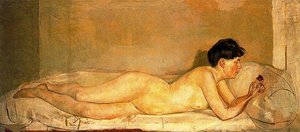
“Nude Reclining,” painted in 1878, exemplifies Whistler’s signature style—a deliberate pursuit of tonal harmony and subtle color palettes designed to capture a fleeting impression rather than depict realistic detail. The artwork depicts a woman lying on her side, head resting upon her hand, bathed in diffused light that emanates from an unseen source. This pose is deliberately understated, conveying a sense of serene repose and hinting at contemplation. Whistler meticulously crafted the scene using encaustic paint—a technique combining beeswax and resin—allowing for exceptional luminosity and textural richness. The careful layering of pigments creates depth and nuance, mirroring the artist’s desire to distill emotion into pure visual form.Symbolism Beyond Representation
Beyond its formal beauty lies a rich tapestry of symbolic references. The presence of two birds perched atop the woman's hand is particularly noteworthy. Birds have long been associated with freedom and aspiration in Western art, representing spiritual transcendence and conveying an unspoken longing for release from earthly constraints. Whistler’s inclusion of these avian figures elevates the painting beyond mere depiction; it invites viewers to consider themes of serenity, contemplation, and perhaps even a yearning for something greater than oneself. The muted color scheme—primarily creams and browns—further reinforces this mood of quiet introspection.Historical Context: Aestheticism's Challenge
Whistler’s artistic vision emerged during the height of Aestheticism, a movement that vehemently opposed Victorian moralizing narratives in favor of prioritizing beauty for its own sake. Artists like Whistler rejected the conventions of realism and melodrama, arguing that art should strive to evoke emotion without resorting to didactic storytelling. “Nude Reclining” stands as a testament to this rebellious spirit—a refusal to conform to societal expectations and an unwavering commitment to artistic experimentation. It reflects the broader Aesthetic preoccupation with capturing fleeting moments of sensory experience and exploring the sublime qualities of nature and art.Emotional Resonance: A Quiet Masterpiece
Ultimately, “Nude Reclining” succeeds in conveying a profound sense of tranquility and understated beauty. The painting’s luminous quality captures the ethereal glow of candlelight—a deliberate choice that underscores Whistler's belief in the power of visual art to inspire contemplation and evoke emotion without explicit narrative content. It is a piece that speaks volumes through its stillness, inviting viewers to immerse themselves in its harmonious composition and allowing them to experience the quiet grandeur of artistic expression at its finest.Похожие произведения
Биография художника
A Life Shaped by Aestheticism: The World of James Abbott McNeill Whistler
James Abbott McNeill Whistler, born in Lowell, Massachusetts in 1834, was a figure perpetually at odds with convention—a painter who championed “art for art’s sake” during an era obsessed with moralizing narratives. His early life, marked by frequent relocations due to his father's railroad engineering career, instilled within him a sense of adaptability and exposure to diverse environments. A brief, unhappy stint at West Point proved ill-suited to his artistic temperament, followed by work with the U.S. Coast and Geodetic Survey that, while delaying, did not extinguish his burgeoning passion for art. These formative years were characterized by an innate talent for drawing and a resolute desire to forge a path as a professional artist, a pursuit that would ultimately lead him across the Atlantic and into the heart of the European avant-garde. The seeds of Whistler’s artistic rebellion were sown early, nurtured by a spirit that resisted conformity and embraced aesthetic exploration above all else.Parisian Beginnings and the Cultivation of Style
The pivotal moment in Whistler's artistic journey arrived with his move to Paris in 1855. Here, under the tutelage of Sébastien Bouré, he honed his skills in oil painting, watercolor, and printmaking, absorbing the influences of French Realism and the Barbizon School painters. However, Whistler quickly transcended mere imitation, developing a distinctive style characterized by tonal harmonies and atmospheric effects. He wasn’t interested in replicating reality; rather, he sought to capture its *essence*, its fleeting moods and subtle nuances. This period marked a crucial shift from representational accuracy towards an exploration of pure aesthetic form. His early works already hinted at the delicate balance between observation and abstraction that would define his mature style. It was in Paris that Whistler began to articulate his belief that art should be judged solely on its aesthetic qualities, free from didactic or moralizing constraints—a philosophy that would become the cornerstone of his artistic practice and a defining characteristic of the Aesthetic movement. He experimented with Japanese prints (ukiyo-e), finding inspiration in their bold compositions and evocative use of color, which profoundly influenced his own approach to design and arrangement.Nocturnes, Portraits, and the Pursuit of Harmony
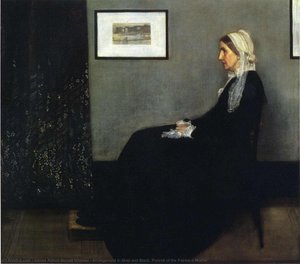
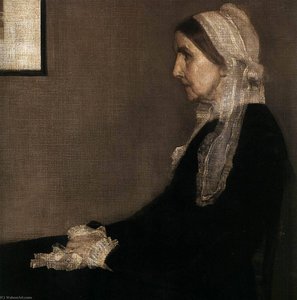
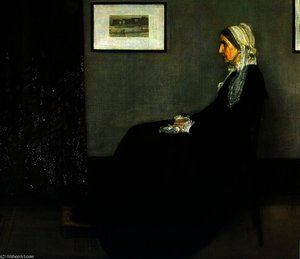
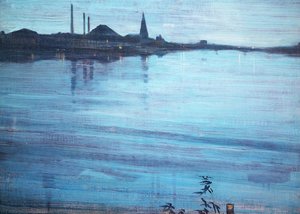
Whistler’s artistic vision crystallized in several key themes and stylistic choices. He championed the concept of “art for art’s sake,” rejecting narratives laden with moral or social commentary. His work became an exercise in capturing subtle nuances of light, color, and atmosphere—a pursuit that led to his iconic *Nocturnes*. These atmospheric paintings of twilight scenes, often depicting the Thames River at night, were not intended as literal depictions but rather as evocative impressions, studies in tonal harmony and mood. He frequently employed limited palettes and delicate brushwork, creating a sense of ethereal beauty and quiet contemplation. Whistler also developed a unique approach to portraiture, treating his sitters not merely as likenesses but as compositional elements within a carefully constructed aesthetic framework. *Arrangement in Grey and Black No. 1*—better known as *Whistler’s Mother*—demonstrates this approach perfectly, transforming a familial portrait into an iconic image of Victorian motherhood through its masterful use of form and tone. The painting's power lies not in a realistic portrayal but in the carefully balanced arrangement of shapes and colors, evoking a sense of serenity and dignity.Controversy, Influence, and Lasting Legacy
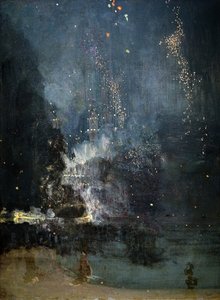
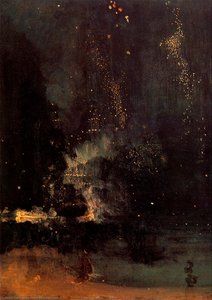
Whistler’s career was not without controversy. The infamous libel suit brought against him by the critic John Ruskin in 1878, sparked by *Nocturne in Black and Gold – The Falling Rocket*, became a landmark moment in art history. Whistler successfully defended his artistic autonomy, arguing that his paintings were not intended to be realistic representations but rather aesthetic arrangements of color and form. This case elevated his profile and ignited important debates about the nature of art criticism and artistic freedom. Beyond this legal battle, Whistler’s influence extended far and wide. He was deeply inspired by Japanese prints (ukiyo-e), which informed his compositional principles and emphasis on decorative patterns, as well as the tonal mastery of Spanish painters like Velázquez. His advocacy for “art for art’s sake” profoundly impacted the Aesthetic movement in England and America, paving the way for modernism and challenging conventional notions about artistic purpose. He left an indelible mark on American art, inspiring generations of artists to embrace formalist approaches and explore the expressive potential of color and composition. Whistler died in London in 1903, leaving behind a body of work that continues to captivate and inspire. His unwavering commitment to artistic principles and his relentless pursuit of aesthetic beauty cemented his place as a pivotal figure in the history of art.- Notable Works: *The Forge* (1861), *Portrait of Charles Lang Freer* (1873), *Brown and Gold: The Gold Girl—Connie Gilchrist* (1876-77), *Arrangement in Grey and Black No. 1 (Whistler’s Mother)* (1871), *Nocturne in Black and Gold – The Falling Rocket* (1875).
- Influences: Japanese prints, Velázquez.
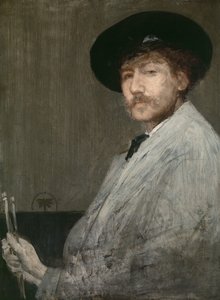
Уистлер
1834 - 1903 , Соединенные Штаты Америки
Основные сведения
- Artistic Movement Or Style: Эстетизм, тонализм
- Artists Or Movements Influenced By This Artist:
- Эстетическое движение
- Современное искусство
- Artists Who Influenced This Artist:
- Веласкес
- Японские гравюры
- Date Of Birth: 14 июля 1834 г.
- Date Of Death: 1903 г.
- Full Name: James Abbott McNeill Whistler
- Nationality: Американский
- Notable Artworks:
- Мать Уиттлера
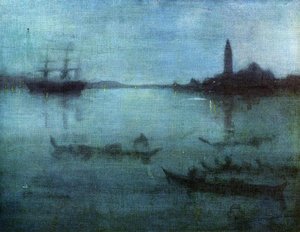
- Ноктюрн: Синий и Серебро
- Forge
- Place Of Birth: Лоуэлл, США
Похожие статьи
Топ-25 шедевров Амедео Модильяни: искусство, история и декор для вашего дома
Погрузитесь в мир Амедео Модильяни! 25 шедевров итальянского модернизма, полных страсти и меланхолии. Узнайте историю создания знаменитых портретов и обнажённых тел художника. Репродукции картин Модильяни премиум-качества для вашего интерьера на ArtsDot.com.

Альфред Муннингс: 25 шедевров британского импрессионизма для вашего интерьера | ArtsDot
Погрузитесь в мир Альфреда Муннингса! 25 шедевров британского импрессионизма, запечатлевших красоту лошадей и сельской Англии. Репродукции картин высокого качества для вашего интерьера на ArtsDot.com.
Топ-10 знаменитых картин в тонах Гейнсборо: искусство для вашего интерьера
Погрузитесь в мир изысканных тонов Гейнсборо! Откройте топ-10 знаменитых картин, шедевров рококо и английской живописи. История искусства, вдохновение для интерьера и музейное качество репродукций на ArtsDot.com.
The Enduring Allure of the Nude: A Historical & Artistic Exploration of the Human Form
Explore the captivating history of nude art! Discover iconic paintings & artists from classical to modern eras. Uncover symbolism, techniques & find museum-quality reproductions at ArtsDot.
Джеймс Уистлер: Топ-25 шедевров художника для ценителей искусства и декора
Погрузитесь в мир Джеймса Уистлера! Топ-25 шедевров художника, от знаменитых ноктюрнов до изысканных портретов. Узнайте историю создания и эстетику каждой картины. Репродукции высокого качества для вашего интерьера на ArtsDot.com.